
Politics
Kogi Poll: Agency Bans Campaign Posters In Lokoja, Others Slams N50m Caution Fee

As the November 11, 2023 governorship election in Kogi State draws close, the State Signage and Advertisement Agency, KOSSAA, has banned campaign posters in Lokoja, the state capital, besides other guidelines on the use of campaign materials.
A statement by the General Manager of the agency, Osaseyi Richard, urged all political parties, candidates, politicians and supporters to abide by the guidelines.
The agency noted that the development was in accordance with its mandate to control and regulate advert displays in the state, as provided under Section 5(1)(a-o) of the Kogi State Signage and Advertisement Law, 2022.
While warning that defaulters, or anyone involved in any form of impunity, lawlessness in the deployment of political campaign materials would be made to face the consequences of their actions, the agency banned campaign posters of all candidates in Lokoja metropolis, Kabba/Bunu, ljumu, Yagba West, Ankpa, Idah, Ayingba, Adavi, Okene and Okehi towns.
KOSSAA disclosed that it was poised to assisting all political parties, politicians, and supporters in ensuring hitch-free and level playing ground in the use of political campaign and advertising materials in the state.
It urged everyone to comply with the guidelines to ensure sanity and to protect the environment from defilement, visual blight and other adverse effects of uncontrolled deployment and display of political campaign materials within the State before, during and after the poll.
Richard said: “These guidelines are issued without prejudice to any political party, association or candidate as it is the Agency’s intention to ensure fairness among all participants, while judiciously performing its duties and applying the rules without sentiment or bias.’’
“The following are the guidelines as they apply to all political parties before, during and after the November 11, 2023 gubernatorial elections in Kogi State:
“Political campaign materials on billboards may be deployed on existing structures owned and operated by outdoor advertising practitioners who are duly registered with the Agency and have obtained permits for such sites and structures.
“Each billboard erected must be made of standard and sturdy materials to ensure they do not fall or block the roads or constitute risk to citizenry and commuters.
“Posters must not be pasted on public utility structures such as street lamps, poles, transformers, the Ganaja fly-over and other unauthorized surfaces except as duly authorized by the Agency upon payment of relevant fees.
“In addition to the sum of N5,000,000 fee payment to the Agency by political parties wishing to deploy campaign materials within the state, each billboard erected by parties, candidates or supporters attracts fee of N2,000,000.
“The sum of N1,000,000 will be charged as fee payable to the Agency by political parties for every banner displayed in public places.
“A refundable caution fee of N50,000,000 shall be charged by the Agency for the deployment of all campaign materials before, during and after the election.
‘No-go areas’
“Campaign posters of all candidates are hereby banned in the following parts of Kogi State: Lokoja Metropolis, Kabba/Bunu, ljumu, Yagba West, Ankpa, Idah, Ayingba, Adavi, Okene, Okehi.
“All political parties and candidates must remove the campaign materials not more than 10 days after the gubernatorial elections on November 11, 2023.
“Parties, candidates and supporters must refrain from the use of unsavory languages on opponents and to be mindful of the contents of their campaign materials.
“Please, note that all participants are strongly advised to adhere strictly to these guidelines as defaulters, or anyone involved in any forms of impunity, lawlessness in the deployment of political campaign materials will be made to face the consequences of their actions,” the statement read.

Politics
Alleged Coup: Protests Rock N’Assembly As Detained Officers’ Children, Wives Demand Justice

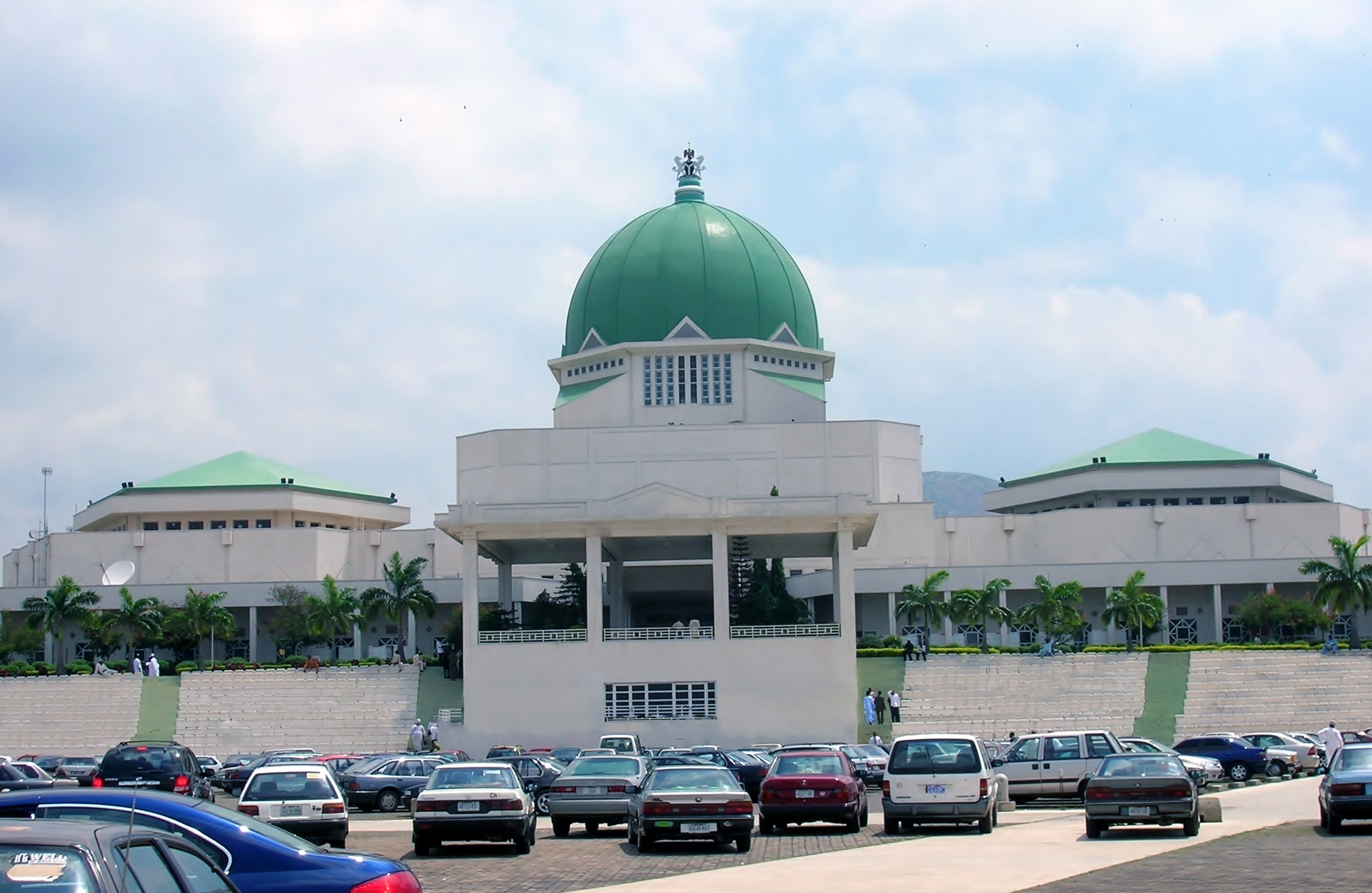
Scores of children and wives of military officers detained over an alleged coup plot yesterday staged a peaceful protest at the National Assembly, demanding a speedy trial and the release of the accused officials.
The protesters who gathered at the entrance of the National Assembly complex, moved in a slow procession while clutching placards with inscriptions such as “Don’t Kill Our Daddies,” “Detention Without Trial is Injustice,” and “Six Months of Torture: Enough Is Enough.”
Amid tears and trembling voices, the children appealed for justice and access to their detained fathers, many of whom they said they had not seen for months.
The appeal was made during a press briefing in Abuja attended by no fewer than 20 wives and several children of the detained officers, including a two-month-old baby.
The families were accompanied by human rights lawyer, Deji Adeyanju and activist Omoyele Sowore.
At the briefing, the families lamented that the officers had been held for over 160 days without trial or contact with their relatives, describing the situation as a violation of their fundamental rights.
Speaking on behalf of the families, Memuna Bashiru said the prolonged detention had thrown their households into uncertainty and emotional distress, noting that while allegations had been widely publicised, families remained in the dark about the fate of their loved ones.
The arrest of the indicted officers was first announced on October 4, 2025, by the then Director of Defense Information, Brigadier General Tukur Gusau, who disclosed that 16 officers were taken into custody for alleged breaches of military regulations and acts of indiscipline.
However, an interim investigation later suggested the existence of a clandestine network of officers, allegedly coordinated by a senior Army officer, which had begun preliminary planning for a coup.
According to the report, the alleged plot involved surveillance of key national assets, including the Presidential Villa, Armed Forces Complex, Niger Barracks in Abuja, and major international airports, with October 25, 2025, cited as the planned date for the operation.
Those reportedly in custody include Brig Gen M. A. Sadiq, Col M. A. Maaji, Lt Col S. Bappah, Lt Col A. A. Hayatu, Lt Col P. Dangnap, Lt Col M. Almakura, Maj A. J. Ibrahim, Maj M. M. Jiddah, Maj M. A. Usman, Maj D. Yusuf, Capt I. Bello, Capt A. A. Yusuf, Lt S. S. Felix, Lt Cdr D. B. Abdullahi, Sqn Ldr S. B. Adamu and Maj I. Dauda.
The alleged plot, according to findings, targeted senior government officials, including President Tinubu and Vice President Kashim Shettima.

In a statement issued yesterday, the party’s National Publicity Secretary, Mr Felix Morka, said the exercise would take place in all wards and designated centres nationwide.
He called on existing members to update their records, while encouraging new entrants to join the party through the digital platform.
“As the electronic membership registration exercise resumes in all wards and designated locations nationwide, we urge existing members to validate their membership while new members are encouraged to register and join the progressive family,” Mr Morka said.
According to him, eligibility for registration is limited to individuals aged 18 and above who possess a valid National Identification Number (NIN).
The party said the initiative is part of efforts to modernise its operations by transitioning to a digital database that would enhance record accuracy and accessibility.
Mr Morka noted that the e-registration would “digitise the party’s membership register, ensure the integrity of records, and enhance efficient access to membership data for planning and management decisions.”
He added that the move is also aimed at promoting internal democracy within the party and strengthening its commitment to democratic innovation.
The APC had previously introduced electronic registration as part of broader reforms to streamline its membership system and improve organisational efficiency.
-
News5 days ago
Decentralizing Pipeline Surveillance Poses Greater Dangers To Niger Delta …. Group Warns
-
 Politics5 days ago
APC Resumes Electronic Membership Registration Nationwide
-
 Rivers5 days ago
Court Rules Out Interim Administration In Jumbo House, Bonny
-
 Business5 days ago
33 Banks Raise N4.65tn As Recapitalisation Ends
-
 Politics5 days ago
Alleged Coup: Protests Rock N’Assembly As Detained Officers’ Children, Wives Demand Justice
-
Sports5 days ago
Lewandowski Leads Top Stars Missing From W/Cup Roll Call
-

 Nation5 days ago
Nile University Hosts ICA Nigeria First National Confab On Global Communication
-

 Sports5 days ago
Para Games: Team Rivers Wins 53 Medals On Day 5 … Director Praise Athletes