
Editorial
Subsidy Removal Without Domestic Refining?

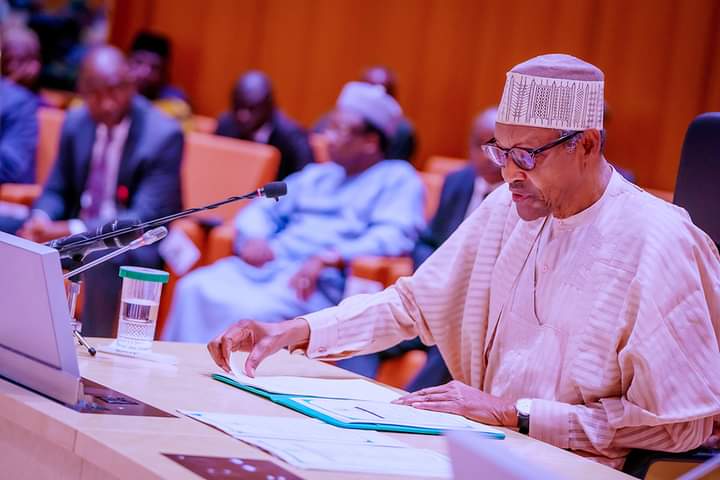
In the 2023 fiscal document presented before the joint sitting of the two chambers of Nigeria’s National Assembly, President Muhammadu Buhari proposed that the subsidy regime would end with his administration on May 29, 2023. However, not a few lawmakers vowed to extend the terminal date for the subsidy removal to the end of 2023.
The Minister of Finance, Budget and National Planning, Zainab Ahmed, disclosed that the Federal Government paid N18.397 billion in subsidies per day. The minister also stated that N6.210 trillion had been disbursed as a fuel subsidy to independent oil marketers from 2013 to 2021. This declaration has elicited reactions from some quarters who feel the subsidy figures are falsified, while others say the subsidy regime is unsustainable as it is hurting the country’s economy.
Recently, the Independent Petroleum Marketers Association of Nigeria (IPMAN) insisted it was opposed to the removal of subsidy on petrol, if the country failed to refine the product. According to the association, with the government importing premium motor spirit (petrol) consumed in the country, removing the over N3.5 trillion subsidy would expose Nigerians to arbitrary pricing.
The Tide remains steadfast in this long-canvassed position that while the subsidy in its present form is destructive and unsustainable, domestic self-sufficiency in refining is the only lasting solution to product availability, price stability and maximisation of the benefits of crude. It defies logic that Nigeria, a leading producer of crude oil, bankrupts itself by importing and subsidising refined petroleum products.
It needs not be said that if the subsidy on PMS is withdrawn, it will plunge several Nigerians into extreme poverty. Recall that Nigeria has maintained the infamous title of ‘World Poverty Capital’ according to the World Bank since 2016. The World Bank data had shown that four in every 10 Nigerians lived below the poverty line of $1.9 per day. Sadly, efforts by the present government to address the rising challenges of poverty through the National Social Investment Programme meant to improve the standard of living of the average Nigerian has yielded no positive result for a project that gulps N500 billion annually.
Next, the current inflation rate of 21.82 per cent is believed will certainly drive more Nigerians below the poverty line by the end of 2023. Globally, economies are devising measures and approaches to cushion the devastating effect of rising prices on the disposable income of their citizens. However, the present federal administration has failed to assist impoverished and vulnerable Nigerians.
Germany, Austria, Qatar, Saudi Arabia, Rwanda, Ghana, and a few other economies are giving out financial incentives to households, cost-of-living allowances, unemployment benefits, an adjustment in wages and salaries, and the roll-out of public transport measures to reduce the impact of inflation. But the Nigerian government has been insensitive to the plight of the citizens, with much attention channelled towards the just-concluded 2023 general election.
Unemployment in the country increases by geometric proportion. The Nigerian Economic Summit Group (NESG) has projected the unemployment rate in Africa’s most populous nation to rise to 37 per cent in 2023. This means that the projected unemployment rate is about four percentage points higher than the National Bureau of Statistics data of 33.3 per cent as of 2020. Additionally, many state governors cannot pay the current minimum wage of N30,000 following financial constraints.
Marketers and other groups in the downstream sector of the Nigerian petroleum industry have said that fuel prices may hit N750 per litre should the petroleum subsidy be removed. Being an OPEC member country, it is a shame for Nigeria to remain the only member that imports over 90 per cent of its refined petroleum needs. The country has no reason not to return its domestic refining. The precipitous removal of the fuel subsidy without making strategic plans or giving particular attention to domestic refining is tantamount to strangulating hand-to-mouth Nigerians.
Nigeria’s energy crisis is self-inflicted. At home, the subsidy thrives on opacity, corruption, abandonment of domestic refining, and a shutting out of the private sector in the downstream oil and gas sector. On the international front, Russia’s war on Ukraine has triggered a jump in prices. Rather than reap a windfall, however, Nigeria’s indefensible reliance on importation is damaging its brittle economy.
Before the fuel subsidy is removed, it will be appropriate for the country to go all out to resuscitate its four comatose refineries and embark on building new ones to mitigate the consequences of the withdrawal. The poser here is: Why are Nigeria’s four ailing refineries yet to be resuscitated? Over the years, previous administrations and the present one have made many attempts to restore those moribund refineries. Unfortunately, they were all in vain, since some avaricious Nigerians sabotaged that much-needed valiant effort.
Certainly, domestic refining will firm up the naira; the total removal of the petrol subsidy will precipitate an economic recession. They should only withdraw it in phases accompanied by a vigorous programme to promote private refineries with incentives, privatisation, and the creation of an investment-friendly environment. The establishment of modular refineries should be approved. These refineries have capacities ranging from 1,000 to 30,000 barrels per day.
Our leaders may just be banking on the coming on stream of Dangote’s 650,000 barrels per day refinery now undergoing finishing touches in Lagos and BUA group’s oil refineries. Dangote industry said in January that the refinery would come on stream before the end of Buhari’s administration. Perhaps this is one of the ways Nigeria would escape the worst case scenario painted by industry watchers. The truth is, there is no alternative to domestic self-sufficiency in refining; that should be the urgent national priority.



Nigeria stands at a critical juncture as the world marked World Press Freedom Day (WPFD) on May 3. This annual observance is a reminder that a free press is central to democratic life, good governance, and public accountability. For Nigeria, it is also a moment for sober reflection on how far the country has come and how far it still has to go in safeguarding the independence of its media.
World Press Freedom Day exists to highlight the fundamental importance of freedom of expression and to honour journalists who risk their lives in pursuit of truth. It underscores the idea that without a free press, societies cannot function transparently, nor can citizens make informed decisions. In countries like Nigeria, where democracy continues to evolve, the observance carries particular urgency.
This year’s theme, “Shaping a Future at Peace: Promoting Press Freedom for Human Rights, Development and Security”, places journalism at the heart of global stability. It emphasises that a peaceful society cannot be built on silence, fear, or manipulated information. Rather, it depends on the free flow of accurate, timely, and independent reporting.
At its core, the theme highlights the role of journalism in fostering accountability, dialogue, and trust. These are not abstract ideals. In Nigeria, where public confidence in institutions is often fragile, the media remains one of the few platforms through which citizens can question authority and demand transparency. When press freedom declines, so too does public trust.
Journalism serves as a foundation for peace, security, and economic recovery. Countries with robust media systems tend to attract greater investment, maintain stronger institutions, and resolve conflicts more effectively. Nigeria’s economic challenges, ranging from inflation to unemployment, require open scrutiny and informed debate, both of which depend on a free press.
However, the issue of information integrity has become increasingly complex in the digital age. Artificial Intelligence (AI) and online platforms have amplified the spread of misinformation and disinformation. In Nigeria, where internet penetration has grown rapidly, false narratives can travel faster than verified facts. This makes the role of credible journalism more vital than ever.
The challenge is not only technological but also ethical. AI-driven manipulation of information threatens to distort public discourse, influence elections, and deepen social divisions. In such an environment, professional journalism must act as a stabilising force, ensuring that truth prevails over sensationalism and propaganda.
Equally troubling is the safety of journalists. Across Nigeria, reporters face growing levels of online harassment, judicial intimidation, and physical threats. Self-censorship is becoming more common, as media practitioners weigh the risks of reporting sensitive issues. This trend undermines the very essence of journalism.
A particularly alarming incident involved a serving minister in the present administration, who openly threatened to shoot a journalist during a televised exchange. Such conduct, broadcast to the public, sends a dangerous signal that hostility towards the press is acceptable. It erodes the norms of democratic engagement and places journalists in harm’s way.
This year’s theme aligns closely with the United Nations Sustainable Development Goal (SDG)16, which promotes peace, justice, and strong institutions. Freedom of expression is a cornerstone of this goal. Without it, institutions weaken, corruption thrives, and justice becomes elusive. Nigeria’s commitment to SDG 16 must therefore include genuine protection for the media.
Historically, the Nigerian press has been a formidable force. From resisting colonial rule to challenging military dictatorships, our journalists have played a central role in shaping the nation’s political landscape. Today, however, that legacy appears to be under strain, as the media operates under what can best be described as a veneer of freedom.
Beneath this facade lies a troubling reality. Journalists are routinely harassed, detained, and prosecuted for performing their constitutional duties. Reports from media watchdogs indicate that dozens of Nigerian journalists face legal threats or arrest each year, often for exposing corruption or criticising those in power.
The Cybercrimes (Prohibition, Prevention, etc.) Act of 2015 has become a focal point of concern. Originally intended to combat cyber threats, it has increasingly been used to silence dissent. Sections 24 and 27(1)(b), in particular, have been invoked to target journalists, bloggers, and social commentators.
Although amendments introduced in February 2024 were meant to safeguard journalists, concerns persist. The law continues to be wielded in ways that stifle investigative reporting and restrict freedom of expression. Legal reforms must go beyond cosmetic changes to address the root causes of misuse.
To safeguard the future of journalism in Nigeria, decisive action is required. The Cybercrimes Act must be revisited to ensure it cannot be weaponised against the press. Law enforcement agencies must operate free from political influence, upholding the rule of law and protecting journalists’ rights. Civil society and international partners must also strengthen independent media through funding, training, and platforms for wider reach.
In this rapidly evolving world shaped by artificial intelligence and digital innovation, Nigeria faces a clear choice. It can either allow press freedom to erode under pressure, or it can champion a truly independent media landscape. The path it chooses will determine not only the future of journalism, but also the strength of its democracy and the peace it seeks to build.

-

 Featured3 days ago
WASSCE: RSG Distributes Science Materials To Secondary Schools
-
News3 days ago
Xenophobic Attacks: Nigerian Lives More Important Than Foreign Investment – Oshiomhole
-
Rivers3 days ago
MBA Forex Trial Adjourn To June 3, Amid Bereavement … As Court Declines Cost Application
-
News3 days ago
ActionAid Demands Probe Of Govs Using Public Funds For Campaign
-
Aviation3 days ago
Passengers Stranded As Delta Airline From Atlanta Route Back Eight Hours After
-
Business3 days ago
Customs Impound N2.35bn Cocaine, 15 Trailers of Rice
-
Politics3 days ago
2027: Bayelsa Senator Gets Critical Endorsement For Second Term
-
 Politics3 days ago
INEC Sets Rivers South-East Senatorial By-Election For June 20