
Featured
FG Refuses To Confirm Electricity Tariffs’ Increase

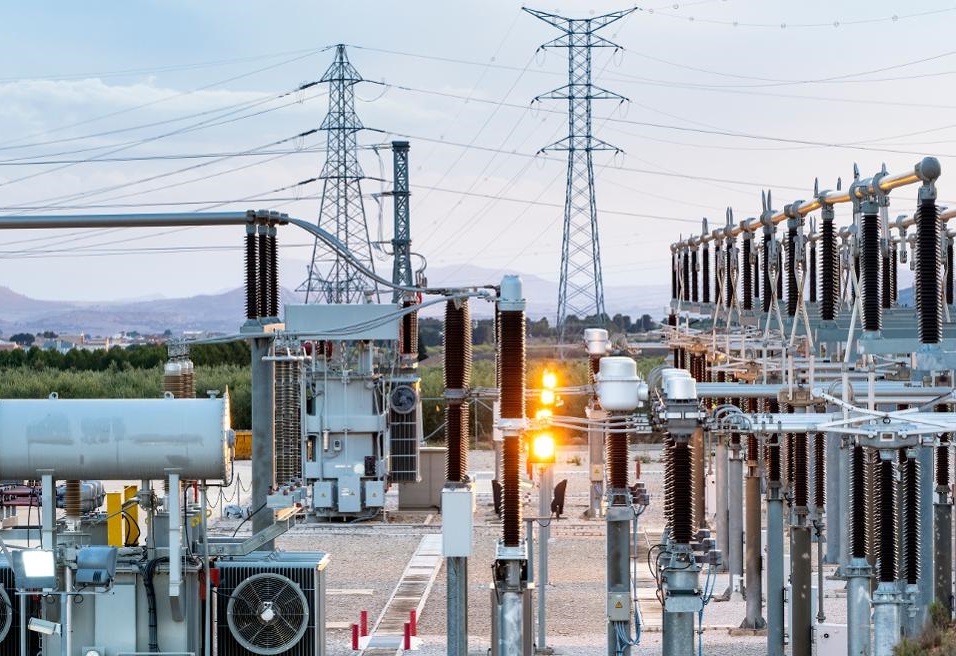
Minister of State for Power, Mr. Goddy Jedy-Agba has said he was incompetent to speak on the speculated secret increment in electricity tariffs.
Speaking to journalists on the sidelines of a public hearing on the bill to amend Electric Power Sector Reform Act, 2005 to Provide the Legal and Institutional Framework for the Implementation and Coordination of Rural Electrification projects, Establishment of the National Power Training Institute and Regulatory provisions to Strengthen the Sector for Efficient Services Delivery and for Related Matters’, held at the instance of House Committee on Power chaired by Hon. Aliyu Magaji, Agba said that all enquires should be channelled to Nigerian Electricity Regulatory Commission (NERC).
The Secretary General of National Union of Electricity Employees (NUEE), Comrade Joe Ajaero had earlier in the hearing condemned the arbitrary increase by NERC
Agba said: “Where is the Chairman NERC? He’s the one that does anything on tariff. I can’t speak on tariff. He’s the chairman of NERC that can speak on tariff.”
Reminded that he was the supervising Minister of NERC and other regulatory agencies, he added “No, no, no, don’t put me in a corner. There’s a chairman responsible for NERC. You want me to tell you what does not apply and you hold me on to that responsibility?”
Earlier in his presentation, Ajaero criticised the injection of about N3trillion into the electricity companies without adequate supply for over 10 years.
He said: “There has not been meaningful improvement or contribution by the current investors 9 years after privatization and 17 years after the Electric Power Sector Reform Act, 2005 was signed into law.
“Our position on privatization is clear, but we are worried whether the amendments are critically based on market private public where we belong now.
“Having tried privatization for 10 years, and we are doing just the amendment of sections of the act and even the review provision in the act which gives provision for the review of the sector after five years and we have written consistently and it has not happened.
“This Act, are we really obeying it? If there is provision for review after five years, and Nigerians are groaning, consistently Nigerians are complaining and we say privatization was based on the fact that government doesn’t have any business in it and government is pumping in money to an individual’s business.
“As we speak now, almost N3trillion has been pumped into the power sector which wasn’t there when it was owned by the government. So, what’s the logic to say government has no business in business and government now has to pump and fund the business of another man. And we need to sit down and see what is working for us.
“That is why we came here to say the laws we made by ourselves, we can pause and look at it and move on. Since nobody has talked about reversion of privatization, but let’s see how it can ft us.
“As we are speaking today, the issue of tariffs is on. If government is pumping in trillions and Nigerians are being compelled to pay, you can see what is happening. The country is suffering.
“If you put two trillion (naira) in the economy of Nigeria today, it will thrive, but it is being pumped into business owned by individuals. Let’s look at. What is the cost benefit analysis of this if we have to take our money, and go and check the records, for about 10 years before privatization, government didn’t put ten percent that money into the sector but it’s putting it now.
“For another 10 years, no increase in generation, no conscious master plan, there is no plan in the country that by next year power plant will come into the system. None for the next two years nor three years for power generation to be constant, at 4,000 Megawatt, and demand will continue to increase because more houses will be built, connect on and on.
“So, if this is reduced to public hearing and no action is taken further on how to make the system work, and Nigeria is still at the bottom of countries suffering power poverty all over the world.
“The normal concept is one million people to one thousand megawatt, and we have a country of 200million people with 4 to 5 thousand Megawatt, nobody is talking about it.
“During the Babangida era there was feasibility study on Mambila which had the capability of giving what we are having in this country today and from that period till now nothing has happened. The same thing with Zungeru.
“The union doesn’t want to bask in the euphoria of the Act/law which does not provide one megawatt to the system. The union doesn’t want to bask in the euphoria of having 19 companies, 19 MD’s and ED’s on 4,000Megawatts.
“The company that was owned by one ED before will now multiply. The multiplication of 19 successor companies did not add one megawatt. So, what’s the honest sense of sweeping in 200 companies knowing the generation is constant.
“The option of government controlling 60percent shares of the facilities as against the present 40% (inclusive of the negotiated 10% equity shareholding for staff in line with the laws setting up the National Council on privatization (NCP) is imminent as the Private Sector Operators have clearly shown lack of capacity to construct a simple Power Plant since the last 9 years.
“Besides, the Federal Government has continued to fund the sector. Available statistics shows that about N400billion was realized from the privatization of the Power sector with the Federal Government investing over one trillion thereafter”.
In his remarks, the House Committee chairman, Hon. Aliyu Magaji disagreed with the Nigerian Governor’s Forum (NGF) over power generation and distribution in the country.
“They think and feel that there is a constitutional provision that gives them the right to form a regulatory agency in the country. NGF also wants each state to generate and distribute power across states of the federation.
“As a committee, we have received their documents, we shall look at it thoroughly and critically and decide the next step to take.
“Our intention as a committee is not to go after anybody but to break the monopoly; the Constitution of the Federal Republic of Nigeria is very clear on power generation and control,” he said.
Similarly, consultant to NGF, Eyo Ekpo, said that states have a right under the law to legislate on electricity issues.
“And the Constitution is quite explicit actually in paragraph 14 of schedule 2 where it is explicitly stated that the states have power to make laws for electricity operations that are conducted within the boundary of their states.
“Of course, like it does not with the federal government which has similar power to make laws for electricity generation and transmission that is across the states, similarly, the Constitution grants to the states the power to make laws for electricity business that is conducted within their states.
“So, to the extent that the chairman has said there is a conflict, I will not say there is a conflict. Rather, there is a clear cut separation. Electricity business that crosses border is quite distinct from electricity business that is conducted entirely within the boundary of a state.
“What we are saying as states is that the moment a state makes its own law for electricity to be conducted within its borders, it has the sole and exclusive responsibility for that aspect alone,” he said.





Featured
Fubara Pledges Support For Corporate Organisations In Rivers …Says PPP Business Model Responsible For NLNG’s Success


Rivers State Governor, Sir Siminalayi Fubara, has pledged the continued support of his administration for the Nigeria Liquified Natural Gas (NLNG) Limited.
Fubara gave the assurance while receiving the new Managing Director and Chief Executive Officer of the NLNG, Mr Adeleye Falade, who paid him a courtesy visit at Government House, Port Harcourt.
He assured that his administration would continue to contribute its own quota in support of the NLNG.
According to him, the success of the organisation is equally the success of the government of Rivers State and the success of the Federal Government.
“Our duty is to make sure that we support whoever is operating in our state. We are the ones here. If we don’t support you and you don’t succeed, we also will not succeed and Mr President will also not succeed.
“So, the success of your establishment is the success of our state, and overall success of Nigeria. So you can count on our support. Wherever you think we need to come in to support you, please do not hesitate to call upon us.
“You just mentioned here that your predecessor left a handover note showcasing the level of support that he got from the state. It is not going to be different in your own case. I can assure you that. I will also ensure that other units of the government will liaise with you when necessary. So even if you can’t get to me, you can always get to them and if there is anything we can do to help your establishment succeed, we will do it for you,” he said.
The governor attributed the success of the NLNG to the Public Private Partnership ( PPP) business model adopted by the Federal Government and the multinational oil companies.
The NLNG is jointly owned by Nigerian National Petroleum Corporation (NNPC) with 49%, Shell Gas B.V. with 25.6%, Total LNG Nigeria Ltd with 15%, and Eni International with 10.4%.
The partnership model allows for shared risks, costs, and expertise in the LNG sector.
The governor noted that the NLNG has not only survived the difficult business environment but has made sustained progress in the nearly three decades of its existence.
According to him, the decision of the Federal Government to allow the multinational oil companies who have the needed expertise to run the establishment while government plays a supervisory role over it has largely been responsible for its success.
“I’m very proud to say that if there is one establishment that has shown resilience, that has survived in the face of all the political issues prevalent in this country, it is the NLNG. And what is the reason? The reason is very simple. Government has no business in business. That is the truth. Leave the business for those people who can operate it. Let the government play its supervisory role to ensure that there is compliance with the laws; ensure that standards are maintained and also ensure that the right people with the needed expertise are at the helm of affairs. That’s all. I think that is the reason why we still record a lot of successes in NLNG,” he said.
In his opening remark, the new NLNG boss, Mr Adeleye Falade, who led other top officials of the company on the visit, expressed appreciation to the governor for granting them audience, and appealed to the State Government to continue to support the organisation.
“We appreciate the opportunity to meet with you and deepen this important relationship.We deeply value the support the Rivers State Government continues to extend in fostering an enabling operating environment for businesses. NLNG remains deliberate in its contribution to Nigeria’s development, and Rivers State, our primary host, continues to be central to that commitment,” he said.
Falade said the company has continued to work with its host communities to strengthen their capacity to identify, prioritise, and deliver sustainable development initiatives that create lasting impact.
According to him, communities including Amadi-ama, Abua, Ekpeye, Okrika, Kalabari, and Emohua have continued to benefit from this model.
He said that beyond community infrastructure, the NLNG has sustained investments in economic empowerment through initiatives such as Vocational Innovation and Business Empowerment Scheme (VIBES) and Micro Small and Medium Enterprise (MSME) schemes.
These, he said, were designed to support small businesses, build capacity, and stimulate local enterprise across the state.
Among officials of the company who accompanied the Managing Director were General Manager, External Relations and Sustainable Development, Dr Sophia Horsfall; Manager, Government Relations, Mr Abdul Umar; Manager, Community Relations, Dr. Yemi Adeyemi; Head of Government Relations, Mr Mike Igoni; Head of Community Liaison and Engagement, Chief Ifeanyi Umeh.
Others are Technical Assistant to Executive Leadership, Mr Hassan Saleh; Senior Media and Publicity Advisor, Mr Emma Nwatu; Government Relations Advisor, Miss Homa Nmegbu; Senior Government Relations Advisor, Mrs Kate Allison, and Audio -Visual Advisor, Mr Dawood Ahmed.
The Federal Government has reassured Nigerians and the international community of the country’s stability following a recent advisory by the United States authorising the departure of non-emergency personnel from its embassy in Abuja.
The Minister of Information and National Orientation, Mohammed Idris, stated this in a statement issued yesterday by his media aide, Rabiu Ibrahim.
According to the minister, public institutions across the country remain fully operational, with no disruption to governance, economic activities, or daily life.
This followed the decision of the United States Mission in Nigeria to suspend visa appointments at its Embassy in Abuja.
The mission’s decision was contained in a post shared on its official X handle, yesterday.
It stated, “U.S. Embassy Abuja is closed for visa appointments. Applicants should check their email for details on rescheduled appointments.”
The mission, however, clarified that visa operations at the U.S. Consulate General in Lagos remain ongoing.
The development comes amid a broader security advisory issued by the United States, which authorised the departure of non-emergency staff from its Abuja embassy and expanded its Nigeria travel blacklist to 23 states.
The State Department issued the authorised departure order on Tuesday, alongside an updated travel advisory that added Plateau, Jigawa, Kwara, Niger and Taraba to its highest warning category, “Do Not Travel.”
While the overall advisory rating for Nigeria remains at Level 3, “Reconsider Travel,” the department warned that some areas face increased risks due to crime, terrorism, unrest, kidnapping and limited healthcare availability.
According to the advisory, Americans are often targeted for kidnapping and robbery, while terrorist attacks continue to pose a threat across multiple locations, including markets, religious centres, hotels and public gatherings.
It also raised concerns about the state of emergency healthcare in the country, noting that hospitals often require immediate cash payments, ambulance services are unreliable and poorly equipped, and blood supply systems are inconsistent.
Medical facilities in Nigeria, the advisory said, generally do not meet United States or European standards, adding that evacuation may be necessary in medical emergencies.
The advisory further urged US citizens in Nigeria to enrol in the Smart Traveller Enrollment Programme, avoid large gatherings, vary their routines and maintain evacuation plans that do not depend on US government assistance.
It also recommended that individuals establish “proof of life” protocols with family members in the event of kidnapping.
The blacklist is divided into regional clusters. Borno, Kogi, Yobe and northern Adamawa remain under the terrorism, crime and kidnapping category, with the State Department warning that terrorist groups continue to plan and carry out attacks, sometimes in collaboration with local gangs.
For Bauchi, Gombe, Kaduna, Kano, Katsina, Sokoto and Zamfara, the advisory points to widespread banditry, communal clashes and kidnapping, while noting that security operations may occur without warning.
In the South-East and Niger Delta, states including Abia, Anambra, Bayelsa, Delta, Enugu, Imo and Rivers (excluding Port Harcourt) are flagged for crime, kidnapping and civil unrest, with armed gangs and violent protests posing significant risks.
The latest update added Plateau, Jigawa, Kwara, Niger and Taraba to the “Do Not Travel” list, citing the spread of insecurity into new regions, particularly in the Middle Belt where farmer-herder conflicts have intensified.
The advisory described the security situation in these newly added states as unstable and unpredictable, with counter-operations by security forces likely to occur without prior notice.
Idris, however, described the US advisory as a routine precaution based on internal protocols, stressing that it does not reflect the overall security situation in the country.
“While we acknowledge isolated security challenges in some areas, there is no general breakdown of law and order, and the vast majority of the country remains stable,” Idris said.
He noted that ongoing security operations have recorded measurable gains across several regions, attributing the progress to coordinated military efforts, intelligence-led interventions, and strengthened inter-agency collaboration.
“Our security agencies remain actively engaged in protecting lives and property, and the results of these efforts are increasingly evident,” he added.
According to the minister, recent operations have disrupted criminal networks, curtailed the activities of armed groups, and improved safety in vulnerable communities.
Idris also maintained that Nigeria remains open for business, travel, and investment, adding that ongoing economic reforms are strengthening investor confidence and enhancing the country’s global standing.
He said, “International partners and investors continue to engage actively with Nigeria, reflecting confidence in the country’s stability and long-term prospects.”
The minister urged foreign governments to ensure that their advisories reflect current realities and ongoing progress in the country.
“We encourage our international partners to continuously engage with Nigerian authorities to obtain a more comprehensive and current understanding of the situation on the ground,” he said.
The Federal Government reiterated its commitment to sustaining security improvements and ensuring the safety of citizens and visitors, assuring that Nigeria remains a safe and welcoming destination.

Rivers State Governor, Sir Siminalayi Fubara, yesterday extended interim relief measures to the people of Bille Kingdom as the government intensifies efforts to address the ongoing environmental degradation affecting the area.
This was contained in a statement by the Head of Information and Public Relations Unit, Office of the Secretary to the State Government, Juliana Masi, yesterday.
The governor, during a working visit to Bille Kingdom in Degema Local Government Area, reassured residents of his deep concern for their health and well-being.
He reiterated his administration’s commitment to finding a lasting solution to the persistent gas emissions observed in the community’s land and water sources since November 2025.
Represented by the Secretary to the State Government, Dagogo Wokoma, the governor announced immediate interventions to address urgent needs.
Some of the relief measures include the provision of potable water and essential medical services through the release of ?100 million as palliative support for the affected community.
According to the SSG, “Governor Fubara remains deeply committed to the welfare of the people of Bille Kingdom. Although unable to attend in person due to pressing state engagements, he is fully aware of the situation and determined to tackle the root cause of the environmental challenge”.
The governor assured residents that the state government would not relent in its efforts to provide a permanent solution to the gas emissions, emphasizing that the current intervention is only a temporary measure to ease the suffering of the people.
He further urged members of the community to remain law-abiding and continue supporting his administration, noting that he has consistently demonstrated a track record of fulfilling his promises.
Earlier, the Chairman, Council of Chief for Bille Kingdom, Chief Bennet Dokubo, expressed joy over the State visit, describing Fubara as a leader who listens to the plight of the people.
He urged the governor to critically look into the gas emission which he described as dangerous to human health.
“If we take you into the river, we notice that the entire environment is bubbling and smelling.
“We most humbly urge you to critically look into this situation. This is something strange we have never experienced before. It is not good for human health,” the monarch stressed.
-
 Editorial4 days ago
Domesticate FG’s Exit Benefit Scheme
-

 News4 days ago
RSU Unveils Five-Year Strategic Dev Plan …Calls For Collective Commitment To Institutional Excellence
-

 News4 days ago
DHQ Confirms Deaths Of Terrorists, Soldiers In Borno Attack
-

 News4 days ago
Tinubu Commissions Bayelsa Gas Turbine, Other Projects Today
-
Business4 days ago
Niger Delta Investment Summit Targets $5bn Inflows, 500,000 Jobs
-
Sports4 days ago
Full Draw For 2026 U-17 AFCON
-
Nation4 days ago
Rumuji Youth Leader Condemns Protest, Disowns Alleged Government Empowerment Claim
-

 Nation4 days ago
Haniel Jack Foundation Awards Five Rivers Indigenes Scholarship