
Focus
FG Has Prioritised Capital Releases In Favour Of Critical Projects -Buhari

I am very pleased to be here today to present the 2023 Budget Proposals at this Joint Session of the National Assembly. This is the last time I will be laying the budget of the Federal Government of Nigeria before the National Assembly.
Mr. President; Mr. Speaker: As I address this Joint Session on the Budget for the last time, let me highlight some of the progress that we have made in last seven and half years, in just two important areas of Critical Infrastructure and Good Governance.
We have made transformational investments in Infrastructure, notably:
a. Establishing the Infrastructure Corporation of Nigeria (‘InfraCorp’), in 2021, seed capital of N1trillion from the Central Bank of Nigeria (‘CBN’), the Nigeria Sovereign Investment Authority (‘NSIA’) and the Africa Finance Corporation (‘AFC’);
b. Leveraging finance through the NSIA into the Presidential Infrastructure Development Fund (‘PIDF’) to facilitate the accelerated completion of the Second Niger Bridge, Lagos-Ibadan Expressway and Abuja-Kano Road;
c. Through the Road Infrastructure Tax Credit Scheme pursuant to Executive Order 7 of 2019, incentivised responsible companies to invest billions of Naira in constructing over 1,500km critical roads in key economic corridors. Under this Scheme, the Dangote Group has substantially completed the Reconstruction of 34km Apapa-Oworonshoki-Ojota Expressway and the 43km Obajana-Kabba Road. Similarly, Nigeria LNG Limited is on track to complete the 38km Bodo-Bonny Road and Bridges Project by the end of 2023;
d. Under our Sukuk Bonds scheme, since 2017, over N600billion has been raised and invested in 941km for over 40 critical road projects nationwide, complement the Ministry of Works and Housing’s Highway Development and Management Initiative and other interventions;
e. Investing significantly to restore our national railways, completing and commissioning the 156km Lagos-Ibadan Standard Gauge Rail (and its 8.72km extension to Lagos Port); the 186km Abuja-Kaduna Standard Gauge Rail; and 327km Itakpe-Warri Standard Gauge Rail. These completed projects complement our ongoing investments in Light Rail, Narrow and Standard Gauge Rail, Ancillary Facilities Yards, Wagon Assembly Plants, E-Ticketing infrastructure as well as the training and development of our rail engineers and other workers;
f. We have completed New Airport Terminals at Lagos, Abuja, Kano and Port Harcourt, and reconstructed the Abuja Airport Runway in its first overhaul since its construction in the early 1980s.
g. Other investments in airports safety facilities, aeronautical meteorological services delivery complement ongoing development of seaports and ancillary infrastructure at the Lekki Deep Sea Port, Bonny Deep Sea Port, Onitsha River Port, as well as the Kaduna, Kano and Katsina Inland Dry Ports to create a truly multimodal transport system;
h. We have transformed Nigeria’s challenging power sector, through bespoke interventions such as the Siemens Power Programme, with the German government under which over $2billion will be invested in the Transmission Grid.
i. We have leveraged over billions of US dollars in concessional and other funds from our partners at the World Bank, International Finance Corporation, African Development Bank, JICA as well as through the Central Bank of Nigeria, working with the Finance Ministry, to support the power sector reforms.
j. The Central Bank has also been impactful in its interventions to roll out over a million meters to on-grid consumers, creating much needed jobs in assembly and installation. Our financing interventions have recently been complemented with the takeover of four electricity distribution companies and the constitution of the Board of the Nigeria Electricity Liability Management Company.
k. On the generation side, we have made significant investments in and incremental 4,000MW of power generating assets, including Zungeru Hydro, Kashimbila Hydro, Afam III Fast Power, Kudenda Kaduna Power Plant, the Okpai Phase 2 Plant, the Dangote Refinery Power Plant, and others.
l. Our generation efforts are making the transition from a reliance on oil and diesel, to gas as a transitional fuel, as well as environmentally friendly solar and hydro sources. Under the Energising Education Programme, we have commissioned solar and gas power solutions at Federal Universities and Teaching Hospitals at Kano, Ebonyi, Bauchi and Delta States. Similarly, our Energising Economies Programme have taken clean, sustainable power solutions to the Sabon-Gari Market in Kano, Ariaria Market in Aba, and Sura Shopping Complex in Lagos.
In terms of Good Governance, one significant challenge this administration met at our inception was the inability of successive Governments to institutionalise reforms to ensure their sustainability. We inherited an archaic set of corporate, banking and capital markets laws; draft but unenacted Bills to reform the critical petroleum sector; an unimplemented Oronsaye White Paper to reform our civil service, amongst others.
I was, therefore, committed, at the onset of this administration’s Good Governance and Fighting Corruption Reforms, to focus on the much-neglected area of law reform, to bequeath a better legacy to the succeeding administration, than the one we met. Our innovative, encompassing and historically significant legislative interventions include:
a. Critical corporate and financial laws to enhance our countries’ global competitiveness, including the repeal and re-enactment of Companies and Allied Matters Act (‘CAMA’) 2020 – the first comprehensive reform since 1990; enacting the Federal Competition and Consumer Protection Commission (FCCPC) Bill, the first legislation in Nigeria’s history focused on curbing anti-competition practices; establishing the Federal Competition and Consumer Protection Commission; re-pealing and re-enacting the Banks and Other Financial Institutions Act (BOFIA) 2020; enacting the Asset Management Corporation of Nigeria, AMCON (Amendment) Acts of 2019 and 2021; enacting the Credit Reporting Act (CRA) 2017 and Secured Transactions in Movable Assets Act (STMAA) 2017, to mention our major legislative interventions;
b. Fundamental anti-corruption, anti-money laundering and financial intelligence laws, such as the Nigeria Police Act, 2020 (being the first comprehensive reform of Police legislation since the Police Act of 1943); the Nigerian Financial Intelligence Unit Act 2017 (which resolved the longstanding impediments to Nigeria’s full participation in the global efforts to combat illicit financing of terrorism and crime under the auspices of the global Egmont Group); the Money Laundering (Prevention and Prohibition) Act, 2022; the Terrorism (Prevention and Prohibition) Act 2022, Proceeds of Crime (Recovery and Management) Act, 2022; Mutual Assistance in Criminal Matters Act, 2019; Nigerian Correctional Services Act, 2019; Suppression of Piracy and other Maritime Offences Act, 2019; amongst others.
c. Historic reforms to our Constitutional and other public laws, including the first ever amendments to the Constitution of the Federal Republic of Nigeria to support the engagement of young persons in our politics by passing Not Too Young to Run legislation, as well as to improve the funding and independence of States’ Legislatures and Judiciaries; enacting overdue reforms through the Electoral Act, 2022;
d. Finally enacting into law the Petroleum Industry Act, 2021 after close to two decades of drafting, debates and delays – leading to the commercialization of NNPC Limited, and other much needed reforms to our energy sector. This important law also complements other landmark legislations such as the Deep Offshore and Inland Basin Production Sharing Contracts Act, 1993 (Amendment) Act, 2019, to increase oil and gas revenues accruing to the Federation;
e. Enacting annual Finance Acts of 2019, 2020 and 2021 to support our annual Budgets and respond to emerging tax, fiscal and economic issues, including:
I. reducing headline corporate tax rates for Small and Medium-Sized Enterprises;
II. reforming archaic tax legislation in line with global best practices to combat Base Erosion and Transfer Pricing;
III. reforming the taxation of securities lending and real estate investment trusts to spur increased investments on our capital markets;
IV. empowering the Federal Inland Revenue Service and the Nigeria Customs Service to optimise their use of technology to more efficiently collect taxes and levies; and
V. increasing VAT revenues predominantly to support our States and Local Governments’ precious finances during and after the impact of the COVID-19 Pandemic on the economy;
f. Furthermore, we have issued eleven Presidential Executive Orders on a range of important issues, including the Promotion of Transparency and Efficiency in the Business Environment, 2017;
I. Promoting Local Procurement by Government Agencies, 2017;
II. the Submission of Annual Budgetary Estimates by all Statutory and non-Statutory Agencies, including Incorporated Companies wholly owned by the Federal Government of Nigeria, 2017;
III. the Voluntary Assets and Income Declaration Scheme, 2017;
IV. Planning and Execution of Projects, Promotion of Nigerian Content in Contracts, Science, Engineering and Technology, 2018;
V. the Voluntary Offshore Assets Regularisation Scheme (VOARS), 2018;
VI. Open Defecation and enhanced sanitation, 2019;
VII. the innovative Road Infrastructure Development and Refurbishment Investment Tax Credit Scheme, 2019; and
VIII. the National Public Buildings Maintenance, 2022.
We could not have made these historical achievements without the exceptional partnership this Administration has had with the Leadership, and Members of the National Assembly. So may I pause here, to once again, thank the Senate and the House of Representatives for your engagement, support and contribution to these successes, which history will remember us all favourably for.
RECENT ECONOMIC DEVELOPMENTS
The 2023 Budget was prepared amidst a very challenging world economy that is weakened by the lingering effects of the COVID-19 pandemic, high inflation, high crude oil prices resulting in huge cost of PMS Subsidy and negative spillover effects of the Russia-Ukraine war.
Many economies around the world are currently contending with fiscal instability, slow growth, food crisis, and high interest rates. Like many other countries, our economy faces headwinds from low revenues, high inflation, exchange rate depreciation and insecurity.
However, Nigeria’s real Gross Domestic Product grew by 3.54percent in the second quarter of 2022, marking the seventh consecutive quarter of growth. Our interventionist and reflationary measures have been very effective and impactful. We must, however, continue to work towards achieving much higher levels of growth, especially given our high population growth rate, so that the average Nigerian can truly feel the impact of planned economic growth.
Distinguished Senators and Honourable Members, despite continuing efforts, unemployment, underemployment, and poverty rates remain high. We are currently implementing several skills development programmes and work opportunity programmes to enhance the employability of our youths and tackle the troubling level of youth unemployment.
While it is evident that our economy still faces significant challenges, what could have happened without the implementation of some of the measure we introduced, would have been much worse for the country.
REVIEW OF 2022 BUDGET IMPLEMENTATION
Distinguished and Honourable Members of the National Assembly, the implementation of the 2022 ‘Budget of Economic Growth and Sustainability commenced on the first day of the year. It was, however, necessary to forward an amended budget proposal to address some exigent issues, especially the significant increase in fuel subsidy.
The amended 2022 Budget was based on a benchmark oil price of $73 per barrel, oil production of 1.60million barrels per day, and exchange rate of N410.15 to Dollar.
As at 31st July 2022, Federal Government’s retained revenues was N3.66trillion, excluding the revenue of Government-Owned Enterprises. Thus, revenue collection was only 63 percent of our target, largely due to the underperformance of oil and gas revenue sources.
Despite higher oil prices in 2022, oil revenue was below target due to significant oil production shortfalls and high petrol subsidy cost resulting from the significant rise in Crude prices which ultimately increased PMS prices worldwide.
Oil output stood at an average of 1.30million barrels per day as at June 2022, while the sum of N1.59trillion was spent on fuel subsidy between January and June 2022. The NNPC, working in collaboration with security and other relevant agencies, is putting in place additional measures to curb the incidence of pipeline vandalism and crude oil theft in order to meet our crude oil production quota.
On the expenditure side, the sum of N8.29trillion had been spent by July 31 2022 out of the total appropriation of N17.32trillion. Despite our revenue challenges, we have consistently met our debt service commitments. Staff salaries and statutory transfers have also been paid as and when due.
Total non-debt recurrent expenditure in January to July 2002 was N3.24trillion, of which N2.87trillion was for Salaries, Pensions and Overheads. A total of N3.09trillion was spent on debt service obligations during the period.
Furthermore, about N1.48trillion had been released to MDAs for capital expenditure as at the end of July 2022. I am pleased to inform you that we expect to fund MDAs’ capital budget fully by the end of the fiscal year 2022.
To further address structural problems in the economy and drive growth, capital releases thus far have been prioritised in favour of critical ongoing projects in the power, roads, rail, agriculture, as well as health and education sectors.
As at the end of July 2022, the fiscal operations of the Federal Government resulted in an estimated budget deficit of N4.63trillion. This represents 63percent of the estimated deficit for the full year. This is largely attributable to revenue shortfalls and higher debt service obligations resulting from rising debt levels and interest rates.
The deficit was mainly financed through domestic borrowing amounting to N4.12trillion. Hence, total public debt stock increased from N39.6trillion as at the end of December 2021 to N42.8trillion as at the end of June, 2022.
However, our debt position remains within cautious and acceptable limits compared to peer countries. As at the end of June 2022, total public debt is within our self-imposed limit of 40percent of GDP, which is significantly below the 55 percent international threshold for comparator countries, and a global average of 99percent post-COVID-19.
Nonetheless, our debt-service-to-revenue ratio needs close attention. The current low revenue performance of government, as reflected in the lowly revenue-to-GDP ratio of just about 8percent. Our medium-term objective remains to raise this ratio to 15percent, at which the debt service to revenue ratio will cease to be a concern.
Mr. Senate President and Rt. Honourable Speaker, revenue shortfalls remain the greatest threat to Nigeria’s fiscal viability. We have therefore accelerated efforts towards ensuring that all taxable Nigerians declare income from all sources and pay taxes due to the appropriate authorities. We are also monitoring the internally generated revenues of MDAs to ensure they are appropriately accounted for and remitted to the Consolidated Revenue Fund.
The 50percent cost-to-income ratio in the Finance Act 2020 has significantly improved operating surplus remittances by Government-Owned Enterprises (GOEs). I, therefore, solicit the continuing cooperation of the National Assembly in enforcing the legal provision and other prudential guidelines imposed on the GOEs during the consideration of the budget proposals of the GOEs.
I am happy to report that the revenue collection and expenditure management reforms we are implementing are yielding positive results, with recent significant improvements in non-oil revenue performance. However, while we continue to implement revenue administration reforms and improve our collection efficiency, we urgently need to find new ways of generating revenue.
As we seek to grow our government revenues, we must also focus on the efficiency of utilisation of our limited resources. Critical steps we are taking include immediate implementation of additional measures towards reducing the cost of governance and the discontinuation of fuel subsidy in 2023 as announced earlier. We are however mindful of the fact that reducing government spending too drastically can be socially destabilising, and so will continue to implement programmes to support the more vulnerable segments of society.
Petrol subsidy has been a recurring and controversial public policy issue in our country since the early eighties. However, its current fiscal impact has clearly shown that the policy is unsustainable. As a country, we must now confront this issue taking cognisance of the need to provide safety nets to cushion the attendant effects on some segments of society.
RECENT ACHIEVEMENTS
Over the last year, this administration has implemented several priority projects. Our focus has been on the completion of key road and rail projects; the effective implementation of power sector projects; the provision of clean water; construction of irrigation infrastructure and dams across the country; and critical health projects such as upgrading Primary Health Care Centres across the six geopolitical zones.
We have also gone further on the implementation of several power generation, transmission, and distribution projects, as well as off-grid solutions, all aimed towards achieving the national goal of optimising power supply by 2025.
In the determination to ramp up grid electricity supply to at least 7,000megawatts by 2024, we have procured purpose-built critical power equipment under the Presidential Power Initiative with Siemens as we promised. These projects will have multiplier effects on the economy.
Under the Road Infrastructure Tax Credit Scheme, we are undertaking the construction and rehabilitation of about two thousand kilometres of roads and bridges, nationwide, to be financed by the grant of tax credits to investing private companies.
As I mentioned earlier, we have made appreciable progress in the rehabilitation and reconstruction of key road networks like the Lagos – Ibadan expressway, Abuja-Kaduna-Kano expressway and East-West Road in Niger Delta. Work has also reached completion stage on the Apapa – Oworonsoki expressway, Loko-Oweto Bridge, and the Second Niger Bridge. We hope to commission these projects before the end of our tenure in 2023.
Furthermore, we have awarded several contracts to rehabilitate, reconstruct and construct major arterial roads to reduce the hardship to commuters and increase economic activity.
Regarding personnel costs, we have extended the coverage of the Integrated Payroll and Personnel Information System (IPPIS) to all MDAs to automate personnel records and the process by which salaries are paid and eliminate the incidence of ghost workers. The system is currently being reviewed to enhance its functionality and applicability to MDAs in the different sectors.
Distinguished Senators and Honourable Members, although we have recorded more achievements over the last year, I will now proceed with an overview of the 2023 Budget proposal.
THEME AND PRIORITIES OF THE 2023 BUDGET
The 2023 Budget proposal is the eighth and final budget of this administration. It reflects the serious challenges currently facing our country, key reforms necessary to address them, and imperatives to achieve higher, more inclusive, diversified and sustainable growth.
The expenditure policy of government in 2023 is designed to achieve the strategic objectives of the National Development Plan 2021 to 2025, including macroeconomic stability; human development; food security; improved business environment; energy sufficiency; improving transport infrastructure; and promoting industrialisation focusing on Small and Medium Scale Enterprises.
Against the backdrop of the challenging global and domestic economic environment, it is imperative that we strengthen our macroeconomic environment and address subsisting challenges as a country. The 2023 Appropriation, therefore, is a Budget of Fiscal Sustainability and Transition. Our principal objective in 2023 is to maintain fiscal viability and ensure smooth transition to the incoming administration.
2023 BUDGET PARAMETERS AND FISCAL ASSUMPTIONS
Distinguished Members of the National Assembly, the 2023 to 2025 Medium Term Expenditure Framework and Fiscal Strategy Paper sets out the parameters for the 2023 Budget as follows:
a. Oil price benchmark of $70 per barrel;
b. Daily oil production estimate of 1.69million barrels (inclusive of Condensates of 300,000 to 400,000 barrels per day);
c. Exchange rate of N435.57 per Dollar; and
d. Projected GDP growth rate of 3.75percent and 17.16percent inflation rate.
2023 REVENUE ESTIMATES
Based on these fiscal assumptions and parameters, total federally-collectible revenue is estimated at N16.87trillion in 2023.
Total federally distributable revenue is estimated at N11.09trillion in 2023, while total revenue available to fund the 2023 Federal Budget is estimated at N9.73trillion. This includes the revenues of 63 Government-Owned Enterprises.
Oil revenue is projected at N1.92trillion, Non-oil taxes are estimated at N2.43trillion, FGN Independent revenues are projected to be N2.21trillion. Other revenues total N762billion, while the retained revenues of the GOEs amount to N2.42trillion.
The 2023 Appropriation Bill aims to maintain the focus of MDAs on the revenue side of the budget and greater attention to internal revenue generation. Sustenance of revenue diversification strategy would further increase the non-oil revenue share of total revenues.
PLANNED 2023 EXPENDITURE
A total expenditure of N20.51trillion is proposed for the Federal Government in 2023. This includes N2.42trillion spending by Government-Owned Enterprises. The proposed N20.51trillion 2023 expenditure comprises:
a. Statutory Transfers of N744.11billion;
b. Non-debt Recurrent Costs of N8.27trillion;
c. Personnel Costs of N4.99trillion;
d. Pensions, Gratuities and Retirees’ Benefits of N854.8billion;
e. Overheads of N1.11trillion;
f. Capital Expenditure of N5.35trillion, including the capital component of Statutory Transfers;
g. Debt Service of N6.31trillion; and
h. Sinking Fund of N247.73billion to retire certain maturing bonds.
FISCAL BALANCE
We expect total fiscal operations of the Federal Government to result in a deficit of N10.78trillion. This represents 4.78percent of estimated GDP, above the 3percent threshold set by the Fiscal Responsibility Act 2007.
As envisaged by the law, we need to exceed this threshold considering the need to continue to tackle the existential security challenges facing the country.
We plan to finance the deficit mainly by new borrowings totalling N8.80trillion, N206.18billion from Privatization Proceeds and N1.77trillion drawdowns on bilateral/multilateral loans secured for specific development projects/programmes.
Over time, we have resorted to borrowing to finance our fiscal gaps. We have been using loans to finance critical development projects and programmes aimed at further improving our economic environment and enhance the delivery of public services to our people.
As you are aware, we have witnessed two economic recessions within the period of this administration. A direct result of this is the significant decline in our revenue generating capacity.
In both cases, we had to spend our way out of recession, resulting in higher public debt and debt service. It is unlikely that our recovery from each of the two recessions would have been as fast without the sustained government expenditure funded by debt.
FINANCE BILL 2022
In line with our plan to accompany annual budgets with Finance Bills, partly to support the realization of fiscal projections, current tax and fiscal laws/regulations are being reviewed to produce a draft Finance Bill 2022.
It is our intention that once ongoing consultations are completed, the Finance Bill 2022 would be submitted to the National Assembly to be considered alongside the 2023 Appropriation Bill.
ENSURING FISCAL SUSTAINABILITY
To ensure fiscal sustainability, we will further improve our business-enabling environment, accelerate current revenue-based fiscal consolidation efforts and strengthen our expenditure and debt management.
BUDGET OF GOVERNMENT-OWNED ENTERPRISES
Distinguished Senators, Honourable Members, you may recall that we earlier integrated the budget of Government-Owned Enterprises into the FGN’s 2019 budget submission. This has helped to enhance the comprehensiveness and transparency of the FGN budget. It has however come to my attention that Government-Owned Enterprises liaise directly with relevant NASS committees to have their budget passed and issued to them directly.
I would like to implore the leadership of the National Assembly to ensure that the budget I lay here today, which includes those of the GOEs, be returned to the Presidency when passed. The current practice where some committees of the National Assembly purport to pass budgets for GOEs, which are at variance with the budgets sanctioned by me, and communicate such directly to the MDAs is against the rules and needs to stop.
FINANCING INFRASTRUCTURE GAP
Nigeria requires a huge outlay of resources to close current infrastructure gaps and boost its economic performance. Government will develop projects that are good candidates for Public Private Partnership (PPP) by their nature for private sector participation.
BUDGET PROCESS BILL 2022
Distinguished Senators, Honourable Members, ladies and gentlemen. Over the course of this administration, we have embarked on a number of reforms in the Public Finance Management space. These reforms are bearing fruits and we have seen some of the benefits of the return to a predictable January to December fiscal year for the FGN budget.
Earlier this year, I was briefed of the impressive performance of Nigeria in the Open Budget Survey, as the third best or most improved country in the world, matching the global average score in budget transparency and exceeding the global average in public participation.
I commend the Budget Office of the Federation and the Supervising Ministry of Finance Budget and National Planning, the National Assembly Leadership, the relevant Appropriation and Finance Committees as well as non-state actors who have worked tirelessly in pushing for greater transparency and accountability in our budget process.
We need to sustain and institutionalize the gains of these reforms. To this end, I have directed the Minister of Finance, Budget and National Planning to immediately work on mainstreaming these reforms and work with the National Assembly on passing an Organic Budget Law, which I hope to assent to before the end of this administration.
HUMAN CAPITAL DEVELOPMENT
The government notes with dismay the crisis that has paralysed activities in the public universities in the country. We expect the staff of these institutions to show a better appreciation of the current state of affairs in the country. In the determined effort to resolve the issue, we have provided a total of N470.0billion in the 2023 budget from our constrained resources, for revitalisation and salary enhancements in the tertiary institutions.
Distinguished Senators and Honourable members, it is instructive to note that today, government alone cannot provide the resources required for funding tertiary education.
In most countries, the cost of education is jointly shared between the government and the people, especially at the tertiary level. It is imperative therefore that we introduce a more sustainable model of funding tertiary education.
The government remains committed to the implementation of agreements reached with staff unions within available resources. This is why we have remained resolute that we will not sign any agreement that we would be unable to implement. Individual institutions would be encouraged to keep faith with any agreement reached in due course to ensure stability in the educational sector.
Government is equally committed to improving the quality of education at other levels. Recently, we implemented various incentives aimed at motivating and enhancing teachers’ development in our schools.
In the health sector, the government intends to focus attention on equipping existing hospitals and rehabilitating infrastructure. Emphasis will also be on local production of basic medicines/vaccines.
As human capital is the most critical resource for national development, our overall policy thrust is to expand our investment in education, health and social protection.
WOMEN’S EMPOWERMENT
To harness the potentials of all Nigerian women and enable them to productively contribute to the economy, we will continue to prioritise women’s empowerment programmes across various MDAs in 2023.
FOOD PRICES
Government is very concerned about the high food prices in the country. Various measures are being implemented to address structural factors underlying the issue. We will also step-up current efforts aimed at boosting food production and distribution in the country. You will recall our efforts in improving production of fertilizer, rice, maize cassava among other earlier initiatives.
BOOSTING MANUFACTU-RING PERFORMANCE
Government is not unaware of the challenges confronting the manufacturing sector. We will ensure effective implementation of policy measures aimed at positioning the manufacturing sector to generate more foreign exchange in the near future. We are also committed to improving the business environment to stimulate local and foreign investment.
SAFE SCHOOLS INITIATIVE
We ratified the Safe Schools Declaration in 2019. We remain committed to the effective implementation of our Safe Schools Policy. A total of N15.2billion has been specifically provided in the 2023 Budget to scale up current measures to provide safer and conducive learning environment in our schools.
DEFENCE AND INTERNAL SECURITY
The government remains firmly committed to the security of life, property and investment across the country. Accordingly, defence and internal security continue to be accorded top priority in 2023. Current efforts to properly equip and motivate our valiant personnel in the armed forces, police and paramilitary units will be sustained.
I assure you, insecurity, especially banditry and kidnapping, will be significantly curtailed before the end of this administration. We will redouble our efforts to ensure we leave a legacy of a peaceful, prosperous and secured nation.
Mr. Senate President, Mr. Speaker, Distinguished and Honourable Members of the National Assembly, let me conclude my address today by again expressing my deep appreciation for your enormous support, patriotic zeal, and cooperation in our efforts to accelerate the socio-economic development of our country and improve the lives of our people.
I appreciate the efforts and commitment of the leadership and staff of the Federal Ministry of Finance, Budget and National Planning, especially the Budget Office of the Federation, who have worked hard to achieve early submission of the 2023 Appropriation Bill.
The 2023 budget proposal is a product of inter-agency collaboration, extensive stakeholder consultations and productive engagements. I would, therefore, like to acknowledge the efforts of the media, the organised private sector, civil society organizations and our development partners for their contributions in the process of preparing the Budget.
Considering the challenging situation in our country presently, we must continue to cooperate and collaborate to ensure fiscal sustainability, macroeconomic stability and smooth transition to the incoming administration.
This administration remains resolutely committed to our goals of improving the living standard of our people and effective delivery of public services.
Distinguished and honourable members of the National Assembly, although no single government can solve all the problems of a country during its own tenure, I have no doubt that you share our aspiration that the 2023 transition budget is designed to address critical issues and lay a solid foundation for the incoming administration.
It is with great pleasure, therefore, that I lay before this distinguished Joint Session of the National Assembly, the 2023 Budget Proposals of the Federal Government of Nigeria.
I thank you most sincerely for your attention. May God bless the Federal Republic of Nigeria.

What is differentiation? Differentiation refers to the learning experiences in which the approach or method of learning is adjusted to meet the needs of individual learners with a focus on the how of personalised learning.” (Culottes, R. 2016). It is a process that helps learners who are struggling and help gifted learners learn faster, this way, teaching becomes easier for the teacher and makes it easier to achieve the desired learning outcome. In differentiation, the learning objective is the same but the means through which it is achieved may be varied. It is like having a destination and arriving there through various means, by road, rail, water or air. It is one of the three elements of individualised learning which involves changing the instructional approach so as to meet the various needs of students.
Differentiation could also entail designing and delivering instruction by using different teaching styles and also giving the learners various alternatives for taking information. It provides flexibility to both the teacher and the learner but the learning objectives must be clearly defined to enable learners work their way towards achieving it. We should not mix up differentiation with learning styles. Learning style presumes that a learner learns better in a certain way, be it visual, auditory, or hands on. Although a learner might find a particular learning style useful for a particular topic, it does not mean that the particular learning style will apply to all other topics, for instance, if a learner learns a topic through songs, it does not mean that the same learner will learn every other topic through songs. Learning is not always as straight forward.
How a teacher can use differentiation in the classroom.
When practising differentiation in the classroom, a teacher can teach a particular topic using various teaching techniques that meet the needs and interests of the learners, a teacher can decide to put learners in groups based on their ability or interest and at the same time has to vary the content of the lesson to meet the needs of the learners. In differentiation, the teacher considers the learner’s personalised learning style and ability when the lesson is being taught. According to Carol Tomlinson, differentiation can be done through the following:
Content: Here differentiation can occur in the learning activities which have to meet the interest and need of the learner. Bloom’ s taxonomy levels of remembering, understanding, applying, analysing, evaluating and creating, which involves different levels of intellectual behaviour from lower to higher level thinking come into play. The teacher applies these in planning the lesson so that various interests and learning styles are taken into consideration. Bearing in mind the objective of the lesson, the teacher then provides the learners with options on the content and together they study to achieve the set objective.
Process: These are methods which a teacher employs in presenting learning materials to keep the learner’s interest. Learners may need different levels of support, some work better on their own while others prefer to work in pairs or in small groups. Grouping can be done depending on the learner’s readiness or as a way of complementing each other. Support can also be given to learners depending on their individual learning styles and so the teacher has to prepare a lesson plan that caters for visual, auditory, kinesthetic or those who learn through words.
Product: At the end of the lesson, the learner shows mastery of the lesson by the product the learner creates. It can be in form of a song, quizzes, tests, a story, an art project or any other activities the teacher may deem fit. All these are to assess how the learner has mastered the concept.
Learning environment: The classroom environment affects learning and so the physical and psychological conditions of the learning environment have to be right such as the furniture, classroom arrangement and classroom management. The learning environment has to be safe, conducive and supporting in order to sustain the interest of the learners. Learning environment can also involve changes to habits and routines such as recess time, circle time, lunch time or outdoor learning.
What are the Importance of Differentiation in Learning?
Differentiation is important in the classroom because it caters for all types of learners, whether high ability learners or additional needs learners. It gives learners the opportunity to learn in diverse ways so as to meet learning objectives the best way they can. Differentiation helps instructors to connect with the different learning styles depending on which works best for the learners. All learners may not respond well with a game, a song may work better for others or reading for others.
Differentiation is a great learning instruction for learners with additional needs.
Differentiation provides a platform for learners to strive to achieve set learning objectives.
Differentiation motivates learners to learn in a manner that meets their interest and personalised learning style. We know that all learners do not learn the same way and so the teacher has to employ various learning styles to know which best resonates with the learners. What Experts say about Differentiation in Learning? According to Carol Tomlinson, differentiation is a way of honoring the reality of the learners. They maybe energetic, outgoing, quiet, shy, confident or self-doubting, they could be interested in a particular thing or in a thousand things, could be academically advanced or struggling with cognitive, sociological, economic or emotional challenges. Many speak a different language at home and learn at different rates and styles and they all come together in our academically diverse classrooms. Carol Ann Tomlinson (William Clay Parrish, Jr. Professor and Chair of Educational leadership, Foundations, and Policy).
Differentiating instruction is really a way of thinking, not a list of strategies. Many times, it is making decisions in the moment based on this mindset. It is recognising that “fair” does not always mean treating everyone equally. It is recognising that all of our students bring different gifts and challenges, and that as educators, we need to recognise those differences and use our professional judgment to flexibly respond to them in our teaching.” Larry Ferlazzo (award-winning teacher at Luther Burbank High School in Sacramento, California, who writes a teacher advice column for Education Week.
Another expert, Lisa Westman posits that all teachers want their students to succeed, and all teachers try to make this happen, that is all differentiation is. She writes that we complicate differentiation by not allowing ourselves to be provisional with how we apply the foundational pieces of differentiated instruction. Instead if we address these four questions in our instructional planning, differentiation will always be the result: what do my students need? How do I know? What will I do to meet their needs? How do I know if what I am doing is working? Lisa Westman (instruction coaching, differentiation, and standards-based grading consultant and professional development facilitator). “Differentiated instruction is dynamic and organic. In a differentiated learning space, teachers and students learn together. Students focus on learning the course content, while teachers tailor their instructional strategies to student learning styles.” Alexa Epitropoulous (media and author relations specialist at ASCD). How to apply Differentiation in Learning. To apply differentiation effectively, the teacher has to do the following:
i.Do a baseline test for all students in order to find out where they are and to device strategies to help each learner achieve the desired objective using appropriate means to deliver the content.
ii.Explain the learning objectives clearly and what the standard for success is, this is the key for differentiation to thrive, a classroom environment where learners work towards a clearly defined goal. Here, the need of the student is very important and the teacher has to identify them and create a supportive environment where differentiation is accepted by the learners themselves and for their peers.
iii. Know the individualised needs of their learners in order for teaching to be effective so that cognitive as well as academic outcomes can be achieved.
What is a learning strategy? A learning strategy is a way a learner organizes and uses certain skills to learn the content of the curriculum and to complete tasks effectively be it in the classroom or outside the classroom. Learners depend upon their senses to process information and many learners make use of one of their senses more than others. There are basically four types of learning strategies and they are as follows:
1. Visual strategies: here learners learn and retain knowledge better when the content is presented in the form of pictures for example, charts, diagrams and symbols. To apply this strategy in a classroom environment, the teacher needs to do the following: Make use of a lot of; colourful visual aids like charts, pictures and diagrams which must be well explained. Use different handouts for various concepts and leave spaces in them so learners can write in them. If using multimedia, screens have to show clearly.
2. Auditory strategies: this involves creating learning experiences where talking and listening take centre stage. These instructional methods can be employed in the following ways: Start a new topic with a background information of the concept to be learnt. Use activities like story-telling and group discussions to encourage vocal collaboration. Learners are encouraged to read aloud the questions. Conclude by giving a summary of the lesson
3. Reading and Writing: this makes use of the traditional ways of learning such as copying of notes, reading textbooks or handouts and taking notes. They seem to learn better by doing the following in the classroom: Provide written information on worksheets and other resources. Students are to rewrite notes. Convert charts and diagrams into written text. If using multimedia, use bullet points. Learn to reference written texts.
4. Kinesthetic strategies: this is also called tactile learning since it has to do with the sense of touch. This is the most physical of the learning strategies because kinesthetic learners learn best through instructional methods that involve movement, motion and touch. These learners are able to sense body position and movement in the classroom environment. Tactile learning is achieved through activities like moving, touching and feeling things. Below are some of the strategies to use: Engage learners in physical movement such as dance. Make use of flash cards when teaching. Students are to draw images of information as part of formative assessment. Provide learners with hand-on experiences. There is no single learning strategy that works for all learners because it’s not a one size fits all, as such it will be impossible to devise a generalized strategy that works for the whole class. The teacher has to apply the different learning strategies in a classroom learning environment so as to meet the needs and interests of the learners because a blend of these strategies will most likely produce the desired learning outcome and also motivate learners to have a deeper understanding of the concept taught.
Tassie, a curriculum development specialist resides in Port Harcourt.
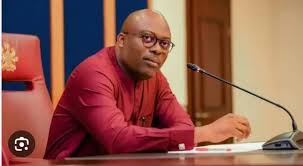
Compact with meekness. Compassionate. Empathetic. Never of him to trample under foot, humans and their concerns. He listens; attentively. He shows genuine understanding; with humbling humility. So, he is endeared, not just to a few but to many.
And truly so, Governor Siminalayi Fubara is a political liberator. In him, Rivers State has a championing, new order, albeit, movement of renaissance: Berthing the people at a new coast of fresh breathe; freed from political manipulations, strangulation and enslavement. This is why ‘Rivers First’; call it a mantra, is not a mere catchy phrase, but a propelling commitment, and indeed, a reflection of the embodied resolve to work the better for Rivers State.
Here, the nationwide #EndBadGovernance street protest also took place, peacefully.
Nigerian youths planned and staged it to last 10 days, from August 1 to 10, 2024. And it was so, even if it fizzled out so quickly, lost steam so early in the State – did not last beyond four days. The intervention of Governor Fubara through his strategic crisis management approach anchored on more inclusive engagements, obviously assuaged frayed nerves.
The organisers tagged it #EndBadGovernance protest. It was their chosen channel. With it, they voiced their pains amidst economic challenges: Of heightened hunger, soaring cost of commodities and unbearable living conditions. They looked to President Bola Tinubu-led Federal Government to be more strategic. And he is doing so, nonetheless. More and more time is but solicited to see his policies being implemented, come through, under the Renewed Hope Agenda, in driving the national economy out of the woods.
Much more in that regard is known of Rivers State, several cushioning measures are being implemented to address the burden of excruciating economic realities on the people. Which is why Governor Fubara spoke up against the protest early enough. His position was firm. It was without a mincing of words, to the youths and to any other segment of the society. He made it clear that though, it is their fundamental right, the time they chose to stage the protest, is not right. This remained his counsel. The backdrop was to forestall a truncating of the prevailing but cherished sanity, peace and safety of lives and property that thrive here.
Street protests, unguarded, and when allowed to be hijacked, could bring tales of woes, such as the destruction of public facilities and personal property that took many years to bring to fruition. He insisted that if it must be staged, then ensure, nothing hampered the safety of lives and property. Just keep it peaceful: Give no room to political detractors. That reflected the message of Governor Fubara.
But political detractors always lurk around. If they are unable to hijack a thing, they become dramatis personae of what they conjecture. In fact, the hue and cry, baseless and meaningless hypes made by the then embattled Caretaker Committee Chairman of the All Progressives Congress (APC), Tony Okocha in Rivers State, is a characteristic decoy. Mischief is central in his chosen political macabre dance. Otherwise, why dramatise a staged attack on APC billboard in front of its factional secretariat along the Port Harcourt-Aba Expressway in order to put himself in a position to curry public pity, by playing the victim. So cheap. Sorely despicable. What was he thinking? That people around will not notice the drama play out? Even security details who monitored the protesters from Artillery to Pleasure Park never raised any red flag on their conduct around any property within that circumference!
You see, his kind, at such opportunity, raise false alarm without solid evidence to substantiate the veracity of the claimed attack at the weakest police interview. At best, what the public knows is calculated acts, wherein his hired folks, at his instruction, torn down the flex section of the billboard, which was performed before sponsored camera lenses. Even the Police authorities had disowned the incident, insisting that no office of any political party was attacked in Rivers State during the days of the protest. Come to think of it, even the protesters who marched from Artillery Junction to Pleasure Park never took notice of his antics and playbook. In fact, credible reports abound that nobody’s property, not even a politician’s residence in the State was attacked by the protesters. It is on record!
Thus, largely so, the protest was not destructive in nature in the State. Why? Governor Fubara had stepped in proactively. He doused the tension and anger. He identified those strategic groups, maybe not all but those possible contacts, and affiliates to the organisers who were tipped, maybe to coordinate the street demonstration in Rivers State. Governor Fubara engaged with them as individuals and collective. The security reports were of leading nature. So, eventually, representatives of those groups of the Civil Society Organisations (CSOs), stakeholders of National Association of Nigerian Students (NANS), Rivers State ethnic and youth groups, Community Based Organisations (CBOs), Non-Governmental Organisations (NGOs), Women Groups, Artisans and Traders, and the Ikoku Branch of Port Harcourt Motor Spare Parts Dealers Union, were brought together into one venue for dialogue; for mutual understanding of why the protest should not hold.
Heads of the security agencies in the State were also in attendance. At that meeting, held on July 31, 2024, Governor Fubara told them: “You are already aware of the political situation of our State, where people are looking for every avenue to destabilise this State. We don’t need to give them that opportunity to carry out that act. And that is the reason why, I, representing the Government, and the service commanders here, have always been in touch with you all, pleading that we should shelve this protest. And even if you have to do it, we should do it in a way and manner that it will not get out of control. I have information that you don’t have. I am aware of the people that are being hired to come into this State to cause mayhem. If anything happens here, we are going to be the greatest losers. Our property will be destroyed. Our economy will be destroyed. And when they finish, they will go back to their states.”
Those words were passionate. They resonated with the various groups amidst robust discussions. So, arising from that meeting at Government House in Port Harcourt, reason prevailed, positions aligned, and it was agreed that as groups, they will not participate in the protest.
In any case, some protesters still stormed the streets on August 1, in Rivers State. Not deterred, Governor Fubara went out and met with the group of protesters who stopped by at the gates of Government House. Standing amongst them unscathed, he addressed them, showing a glaring example of leadership: Courage. Acceptance. Endearment. Goodwill. He was the first so to do! Other elected representatives and political leaders had been overwhelmed by apprehension, and they unwittingly ran into hiding. But Governor Fubara showed his stuck as a leader when he made himself available to engage with the protesters, not done in a hurry, desperate impulse.
Because the moment was critical, he said: “I am one of you. I feel your pains, and in our Government here, we are doing everything to make life easy for our people. Our youths, I agree with you that there is hunger, but because we preach good governance, we are committed to make hunger disappear very soon. I am not against your protest, but we will not support any violent protest. We will not support anything that will destroy our State. We will not join forces with the enemy of progress (to destabilise our State). But if it has to do with the (peaceful) protesters, I don’t have any fears. Their demands are germane. I can understand them: hardship, bad governance, high cost of living, rent, medical bills. But we are coming from somewhere very bad. And we must start from somewhere to make things right,” he appealed.
With those words, his mien and presence, he inspired hope in them. He raised their downtrodden spirit to high heavens. It was organic. Surely, hope is enlivening. It strengthens the mind to trust in a blissful tomorrow. The protesters saw him as truer as a leader because he leaned his heart into the crisis, goodly too, to fully engage, motivate, and inspire them to expect greater accomplishments in the immediate or in the near future. It is this imbuing hope that kept the protesters peaceful, largely in the State.
And when a patch of the protesters saw his convoy pulled past Rumuobiakani Roundabout on the third day of the protest, they showed more excitement, cheered and chanted the praises of their most deserving people-centric Governor. The crowd of #EndBadGovernance protesters at the intersection of Trans Amadi Industrial Layout in Obio/Akpor Local Government Area waved Nigerian flag and green leaves while chanting: “Our Governor, carry go. Our Governor, we are solidly behind you and your government,” “We’ll support Governor that empowers the Youths”. The Governor came out of his car, waved back at them, and they cheered, their joy knowing no bounds. Thereafter, the Governor had easy passage as he continued his journey to attend the funeral ceremonies of late mother to the Chairman, Caretaker Committee of Khana Local Government Area in Kono Community.
At Kono on August 3, he took opportunity of the ambience to re-echo the need for peace. He urged the protesters to give government time to implement policies and programmes already designed and being rolled out to address the challenges facing the people. He asked for patience, understanding!
At Eleme on August 6, for the commissioning of the Pressure Swing Adsorption (PSA) Oxygen Plant built and installed by UNICEF in partnership with Federal Government, Rivers State Government, Canadian Government and HIS Towers, the Governor re-emphasised the primacy of peace and stability of the State as veritable tool for sustainable development. As he spoke peace and patience, the people cheered and chanted songs of support and cooperation.
Come to think of it: the Governor’s consistent emphasis on peaceful conduct of every resident of the State, and patience to allow the policies of government deepen their positive impacts on the people did not just resonate with the protesters alone. It also resonated with other well-meaning Nigerians both here at home and in the Diaspora, who were not part of the protest. It resonated with anchors and discussants, including lawyers, politicians, professionals from all walks of life, on major television and radio channels in the country and elsewhere. And it resonated with lawmakers across the country, including National Assembly.
In fact, the House of Representatives Technical Sub-Committee on Tertiary Education Trust Fund (TETFUND) said so on August 15 during an audience with the Governor in Government House, Port Harcourt. The sub-committee was in Rivers State to perform its oversight functions as mandated by law.
Speaking during the visit, the Chairman, Hon Miriam Odinaka Onuoha, commended the Governor for his wisdom and leadership in the effective management of the protest, by ensuring that while not denying residents their fundamental rights to peaceful assembly, procession and freedom of expression, he made sure that they exercised their rights in very peaceful manner without infringing on the rights of other Nigerians.
What to appreciate was that Governor Fubara did not speak politics to the protesters. He spoke to what they knew and had seen implemented by his administration. In meeting the expectations and challenges of Rivers residents as a measure embedded in his policies, he also showed them that he supports what the Federal Government is already doing. He reminded them that his Government was the first to release palliative buses, operating up until now, to ease transportation costs on students and all residents of the State, effective just few days after President Tinubu announced the removal of the subsidy on petroleum products.
Governor Fubara also reminded them that his Government was cushioning the increasing cost of living with the N4billion single-digit interest loan he floated for traders and small businesses in the State. It is a facility that is helping traders: mothers, fathers, and youths in the business line to grow their business capital base. These are added to the ongoing implementation of deliberately crafted policies and programmes that are ensuring the delivery of quality infrastructure in the health and education sectors to eventually provide affordable services to all residents in the State while also laying the groundwork that will make agriculture attractive to more people than usual in order to achieve food sufficiency and meaningful employment for the youths.
In all, it is indisputable that Rivers State is in good hands, and those who plotted to use the protests to cause anarchy and chaos, destroying critical State assets that had taken years to put in place, failed, even more woefully, this time.
Like the wise men keep saying, “God does not make mistakes”. The God we serve didn’t make any mistake when He choose Sir Siminalayi Fubara to govern the State and liberate its people from the clutches of desperate, self-seeking buccaneers, at this time in the life of Rivers State. Thus, as long as Rivers people come first in his calculations and decisions, Governor Fubara has come to stay, because he has the people’s back, always!
Nelson Chukwudi
Chukwudi is the Chief Press Secretary to the Rivers State Governor.
Let us agree on this: prima facie, in many parts of the world, Nigeria and Rivers State inclusive, agriculture has not been maximally harnessed. This is so because, what we have seen happen in the sector has not contributed to fulfilling the vital function of feeding the people sufficiently. It has also not provided basic commodities as required, or helped desirably, in the generation of stable income too.
But this is not what it should be, neither should it be allowed to be so. This is why productive hands should not remain idle and germane efforts merely wished away when deliberate and consistently implemented policies can coordinate robust agricultural activities, necessarily so, to ensure support for human survival and promote enduring well-being. Perhaps, this is what sane leaders do in any society that plans to grow and also feed its people.
administration of Governor Siminalayi Fubara of Rivers State is in such ranking: forward-looking and mindful of those things to do, that can help real growth of all facets of the society, howbeit, agriculture. It has taken decisions on what must be done in order to increase attention for agriculture, and mobilising requisite resources that will support in refocusing the interest of majority of Rivers youths, and indeed, agro-actors, towards harnessing agriculture potentials in Rivers State.
Nigeria has, regrettably remained a consumption-dependent economy, and Rivers State is a part of this quagmire. The reason for this is clear: age-long, chronic and troubling lack of holistic attention to public policy implementation on a consistent basis to achieve sustained progress. But pulling off from such stance, the Governor Fubara-led administration is resolved to strengthen the comparative advantage of Rivers State in the agriculture value chain. It is a herculean task but not impossible because the potentials are glaring. So, there has been careful examination of what should be done, and how it should to be done to achieve an agricultural growth status that will make the State stand out.
To start, Governor Fubara has taken a critical look at the level of existing support previously offered by the State Government to promoting agriculture before he assumed office. Books may not lie, even when there could be disparities in what is recorded and what can be seen on ground. That, in itself, does offer a bearing. So, at least, what is clear is that such support was often driven by the quest to achieve economic development, promote key target interests, set out the prescriptions and requirements that would boost agricultural production.
With mind set on the mantra of “Consolidation and Continuity”, vital decisions are being taken, arising from those critical scrutinies, not necessarily to undermine what existed but to establish a path for continuity. With a policy direction that should stimulate commercial farming, and let it signpost the level of awareness that should be created in achieving food security in the State, there has been a determined posture secured without ineluctably falling to the trappings of incoherence and poor coordination most policy initiatives had suffered.
So, to have a holistic perspective for the required results that are expected, the decisions being taken took into cognizance: the need to identify support or collaborations where none existed, commence one, and gear up efforts in seeking requisite and workable collaborations to achieve success. In areas where such support did exist, but were incongruous, a review has been streamlined to give a new direction. Where there was abandonment of any process, a revitalization has been decided and production capacities of endeavours of agro-actors strengthened.
There is also a focus on small holder farmers because their concerns are in keen consideration of what the administration intends to do in the sector. These farmers belong to the brackets of small and medium enterprises that do need greater opportunities facilitated for their agribusinesses in other for them to access credit that would enable them expand their portfolio. More efforts are being harnessed with a search for an effective synergy within favourable environment to attract investors and financial institutions into funnelling credit to farming endeavours and the process of having an updated databank is being formalised. Regardless, the Rivers State Government has brokered partnership with the Bank of Industry (BOI) in the disbursement of N4billion to small scale entrepreneurs in the State. This is an initiative that should impact on the sector, nonetheless, if the beneficiaries were true to tact.
But of note is the review embarked upon by the government concerning its agricultural investment in the Songhai Integrated Farms. This farm is located in Bunu community, Tai Local Government Area of Rivers State. The Songhai Integrated Farms sits on a vast expanse of land measuring 314 hectares. Where it sits was, in 1985 established as part of the School-to-Land Farms project. But it was repurposed in 2011 to become Songhai Integrated Farms.
It had distinct production sections that included livestock production, crop cultivation, fisheries, forestry, engineering services, agro-industrialization, and the training of aspiring farmers. The farm started off with an environmentally-sustainable agricultural production system that harnessed a holistic value-chain approach to ensure higher incomes for farmers and processors, as well as other agro-actors to guarantee social and economic prosperity.
It was set up to operate a self-driven zero waste farming model designed to protect the natural environment by mitigating the impacts of climate change. So, each production section was made up of different units, overseen by specialists who work in synergy. Within the production line, nothing became discard-able waste since the finished products/byproducts were sent from one production unit to another in a sequential manner to further transform them into other useful products for human use. It was a continuous circle, and consistently so to promote sustainable economy.
Those features had been carefully enumerated to have a proper understanding of the venture that was to make Rivers economy bigger and more progressive. But either by commission or omission, it became lame because it was driven into despicable condition, or rather, because it was abandoned. Every facility became decrepit as a result. For almost a decade, it remained so, and nothing was operational there. The hope that once soared, about all the potentials and contributions it was to make towards food security, and to provide gainful employment for the teeming Rivers youths, died, albeit, for the time it was in limbo.
Also, laid in waste were all the structures, those that were constructed with concrete, metallic, or wooden, and others that were installed, over the ground and underground. Most office equipment were stolen too, and carted away by vandals. The entire premises of the Songhai Integrated Farms became overgrown with short and tall grasses. And it was dangerously bushy too.
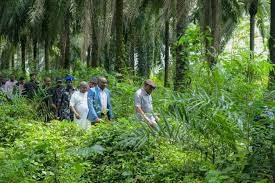
Those were the sorry sight that Governor Fubara beheld when he visited the farm on Saturday, October 7, 2023. The billions of naira in Rivers tax-payers’ money that was invested in the Songhai Integrated Farms project by the State Government went down the drains. So, the visit availed Governor Fubara the opportunity to do an on-the-spot assessment of the present condition of the farm, and ascertain what possible ways to bring it back to production stream again. On that visit, the Governor was conducted round the facility by the Manager of the Songhai Integrated Farms Project, Dr. Tammy Jaja. The revitalisation works to be done looked massive and very demanding but nothing is insoluble with political will, wisdom and courage.
In his explanation, Governor Fubara asserted the urgency that is required in restoring and repositioning the State for sustainable economic growth and development. With his visit, arising from the resolution reached when they last had the National Economic Council (NEC) meeting in Abuja, where they had considered the exigency of diversifying the nation’s economy and harped on the need to cushion current economic hardship experienced by the citizenry, he was determined to kickstart the version for the State. In his words, Governor Fubara said: “In our last National Economic Council meeting, because of the present situation of our economy, which you are aware; the issue of removal of fuel subsidy and other economic bites affecting everyone, everybody was advised to diversify. The other option is agriculture, and we were all advised to see what we can do to improve on food sufficiency.”
The Governor had assured that his Administration was determined to use the Songhai Integrated Farms as a launching pad to revolutionise agriculture in Rivers State. To achieve that, everything would be done to revamp the Songhai Farms. And when revitalized, the economy of the State could then be diversified, providing foundation for the people to be engaged meaningfully while also increasing the food sufficiency capacity of the State.
Governor Fubara assured: “As I leave here now, we are going to bring in all the stakeholders to discuss the way forward. What I am seeing here will require long-term planning and going back to the site to reinstate the installed facilities that have become desolate. The State Government will not just do that, we will bring in people who have the resources, expertise, strength and commitment to partner with us to bring back this place to life. The advantages to be derived when this place comes back to life include food sufficiency and employment generation. It will also address issues of youth restiveness.”
That process has begun. The people who had been identified to have the strength and commitment to partner the State Government were already in touch, and brought to the negotiation table. The talking has been extensive and intensive. The best among them with more enduring approach and sustainable model are at the verge of being engaged. Songhai Integrated Farms must be revitalized. That is the commitment and it remains unwavering.
While the discussions were ongoing, the farm has been repossessed by the Government. It would no longer be accessed freely as thorough fare to members of the public as it was in the days of abandonment. Gradually, the clearing of the short and tall grasses and trees are ongoing, and would be concluded, eventually. What shall be done with that project would be devoid of a lack of clarity and the adopted plan, nothing of abrupt disruption is anticipated. For this farm, the level of independence with which it would operate would be such that it could remain dogged, contest its place within the sector and drive food sufficiency process at a pace more sustaining and enviable for the State.
Another investment that is of critical concern to the Government is the 45,000-metric tonnes Rivers Cassava Processing Company, which is located in Afam Community, Oyigbo Local Government Area. This is a multi-billion-naira investment that was engineered as a public-private partnership (PPP) venture between the Rivers State Government, Shell, Vieux Manioc BV of the Netherlands, and the Netherlands Embassy. Understandably, the motivation for establishing this processing factory was to address the challenges of value addition of the cassava crop in the value chain sub-sector. So, the factory was inaugurated on May 28, 2021, as a company that will support the economy of Rivers State to earn more revenue from the cassava value chain. The company then had a board of directors in place, which helped in the preliminary stages of preparations leading to its inauguration. But barely within the first two months of start of production, the subsisting administration then dissolved the board, which left the company without adequate supervision to help it actualize its core mandate.
Things remained so until March 7, 2024, when Governor Fubara visited the factory. The visit, the Governor explained, was propelled by the desire to see the level of effectiveness and efficiency of the existing production line. He explained that the team managing the factory, led by the Managing Director of the Rivers Cassava Processing Plant, Ruben Giesen, had requested financial support, in a letter sent to him. This, the team said, would enable them complete two more production lines at the factory to increase capacity utilisation in order to churn out more products.
Governor Fubara said: “I got a request from the people who are managing the cassava processing plant that we need to extend our support for them to complete two production lines that will give them a standard that they can start to supply in earnest to a lot of distributors who need the products from this plant. And I felt it would be proper for me to see what we have already invested, the stage they are at, so that it will encourage us to give more support.”
Governor Fubara further said: “From what I have seen here today, it is really impressive. I can assure them that we are going to give the financial support to ensure that the production lines are all completed. This is to encourage them to go into full supply of the products with international standards to anywhere in the world.”
The promise given by Governor Fubara to inject more funds is with the aim of revitalising this mega cassava processing factory in order to ensure that the finished products meet internationally accepted standards. Of course, these are well intended responses, and the drive is to ensure an increase in quantum of food production capability and attain the level of sufficiency while also creating gainful employment for the growing youthful population of the State.
It is obvious that the Governor Fubara-led administration clearly understands that Nigeria is the largest cassava producer at the global level. It is on record, that Nigeria accounts for about one-fifth (20%) of total cassava production worldwide. Indeed, Rivers ranked among the Top Five Cassava Producing States in Nigeria. It is, therefore, of necessity and thoughtful of a Government that cares for its farmers, to keep keen interest on this factory, and ensure that it is supported to enhance value addition, and guarantee employment for the people.
In fact, Governor Fubara knows that this factory would also promote adoption and the use of 10 per cent high quality cassava flour (HQCF) in bread and confectionery businesses, so as to reduce wheat importation and conserve foreign exchange earnings to meet other needs. Indeed, cassava is one of the defining ingredients of our family lives in this region, and it is a valued crop in Niger Delta and in other parts of Nigeria. So, this factory, with the promised support from the Governor Fubara-led administration, will attain full operational status. This will further be propelled by feedstock from about 3,000 farmers within the farming communities and other far away farmers in neighbouring communities.
What the people need to understand is that, as long as this factory’s capacity is not fully strengthened, it will be difficult for it to receive uninterrupted supply of raw materials from the thousands of hectares that could be cultivated to service it. By extension, this means massive waste of hundreds of jobs its prospect assures, particularly the over 20,000 farm families that will earn income to enhance their livelihoods and improve their standard of living.
Even as the threat to food security continues to alarm watchers in Nigeria with food inflation rate rising from 33.93% in December, 2023 to 35.41% in January, 2024, and not yet abating, these efforts of the Rivers State Government are to ensure that people do not spend more money before they can afford enough food for themselves and their families. Instructively, if there is no change in focus and the required actions are taken, guided by well-thought-out policy and implemented with the right political will, the threat to acute food security will be reversed.
It is possible that at the end of the day, these measures geared towards building sustainable food systems will feed everyone, everywhere, and every day. The cry of hunger is loud and palpably so. And Governor Fubara understands that only a focused attention on finding enduring solutions through strategic investments in boosting agricultural yields and increasing its value chain would address the needs of the people. This is why the Government sees the initiatives as a task that must be done. The Governor’s eyes will remain on the ball, until desired results are achieved with maximum impact. That is a promise he made to the people, a SIMple promise he has vowed to fulfil without fear of intimidation or favour.
By: Nelson Chukwudi
-
Opinion3 days ago
Ozoro Festival: Tradition or Tyranny?
-

 News4 days ago
RSG Reiterates Commitment To Youth Dev
-
 Rivers17 hours ago
Court Rules Out Interim Administration In Jumbo House, Bonny
-

 Politics18 hours ago
APC Resumes Electronic Membership Registration Nationwide
-
News15 hours ago
Decentralizing Pipeline Surveillance Poses Greater Dangers To Niger Delta …. Group Warns
-
Politics3 days ago
RIVERS WOMEN RALLY SUPPORT, CONTINUOUS PRAYERS FOR TINUBU
-

 Oil & Energy4 days ago
Transcorp Energy, Renewvia Partner On Renewable Energy Gap
-
Politics3 days ago
AKPABIO, DIRI, OBOREVWORI, OTHERS VOW TO REELECT TINUBU …AS GIADOM RETAINS APC ZONAL CHAIR