
News
Admission: JAMB, Stakeholders Peg Varsity Cut Off Marks At 140 …As Board Remits N29bn To CRF …Reps Pass Bill To Extend Validity Of Results To Four Years

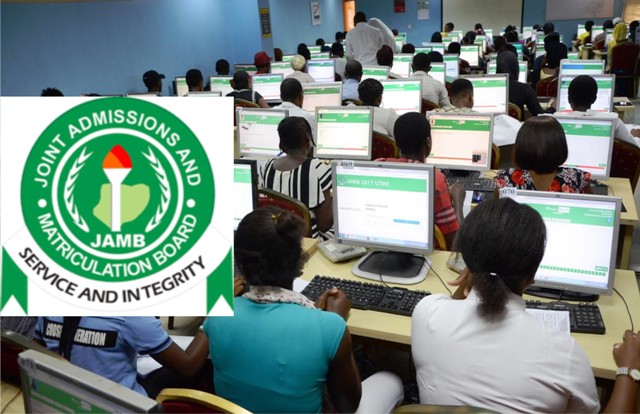
The Joint Admissions and Matriculation Board (JAMB), and heads of tertiary education institutions in the country have pegged the minimum cut-off mark for admissions in the 2022/2023 academic session.
The minimum cut-off mark for universities is 140 while that of polytechnics and colleges of education, respectively, were pegged at 100.
These were announced at the ongoing Policy Meeting on Admissionspresided by the Minister of Education, Adamu Adamu, at the International Conference Centre in Abuja,yesterday.
JAMB’s Registrar, Prof Ishaq Oloyede, who announced the cut-off after a thorough debates and votes by vice chancellors of universities, rectors of polytechnics and provosts of colleges of education, said the implication was that “every institution has the right to fix its own cut-off mark even up to 220 but no one would be allowed to go less than the agreed minimum marks of 100 for colleges of education, 100 for polytechnics and 140 for universities.”
The meeting also called for the review of admission criteria to give 10per cent discretional power of admission to heads of tertiary institutions.
JAM also said that only 378,639 of the 1,761,338 candidates of the 2022 Unified Tertiary Matriculation Examination (UTME) scored 200 and above.
Oloyede said 378,639 candidates scored above 200; while 520,596 scored 190 and above.
He added that 704,991 candidates scored 180 and above; 934,103 scored 170 and above; while 1,192,057 scored 160 and above.
The JAMB boss further revealed that an Ekiti indigene, Adebayo Eyimofe, scored the highest mark in the 2022 UTME.
Oloyede said Eyimofe, who wrote his examination in Abuja, scored 362 marks.
According to the JAMB registrar, Eyinmofe was followed by an indigene of Enugu State, UgwuChikelu, with 359 marks.
Other high scorers include Igbalaye Ebunoluwa 357; Emmanuel Oluwanifemi 357; Ozumba Samuel 357; Olumide-Attah Ayomide 355; Lawal Olaoluwa 355; Dokun Jubril 354; Amaku Anthony 354; and Aghulor Divine 353.
Oloyede added that JAMB allowed candidates with awaiting results to register for the 2022 UTME.
“These candidates can’t be considered for admission on awaiting result status. They must present their O’ Level results on the board’s portal before the commencement of admissions,” he said.
In his remarks, the Minister of Education, Mallam Adamu Adamu, said that the Joint Admission and Matriculation Board (JAMB) has so far remitted about N29billion directly to the Consolidated Revenue Fund (CRF).
Adamu said the board had also granted over N1billion to tertiary institutions, and expended more than N2billion on capital projects.
Adamu added that the board had reserved N6billion for its future expansion and as part of its Corporate Social Responsibility (CSR).
He said that the board also provided social services such as funding the freighting and delivery of donated critical hospital equipment to 12 teaching hospitals at the cost of $257,000 and ¦ 47million.
According to him,the board has continued to serve as a model for public agencies in vision, devotion, transparency and efficiency, yielding enormous goodwill to the government and people of Nigeria.
He pleaded with the Academic Staff Union of Universities (ASUU) and other trade unions in the tertiary education sub-sector to call off the on-going strike and embrace genuine dialogue as solution.
“I urge the leadership of tertiary institutions to partner with the Federal Government in its frantic efforts at restoring industrial harmony into tertiary institutions in Nigeria.
“It is clear that stable academic calendar is required for quality education and development in Nigeria.
“I also seize this opportunity to appeal to the trade unions in the tertiary education sub-sector to, in the interest of the future of Nigeria, call off the strike and embrace genuine dialogue as solution to our problems,” he said.
The minister further charged institutions to comply with the policy directives as decided at the meeting, saying that any infringement of any of the policy guidelines would be meted with appropriate sanctions.
Meanwhile, a Bill seeking to make Joint Admission and Matriculation Board (JAMB) result valid for four years has passed second reading in the House of Representatives.
The Amendment of the JAMB Act was sponsored by Rep. Tolulope Sadipe (APC-Oyo), at the plenary, yesterday.
Leading the debate, Sadipe said many students sit for JAMB examination, come up with good grades, but for one reason or the other, they ended up not being offered admission, for no fault of theirs.
She said these students and their parents were made to bear the financial burden to sit for the examination the next year.
According to her, the excuses that JAMB allegedly keeps bringing up, in that regard, was that it was revenue generation for them.
“When you look at the number of students that apply for university admissions every year and the number that eventually gets in, it is definitely not their fault, so, why should they be penalised?
“Everywhere in the world, there is no such exams that is valid for one year; Scholastic Aptitude Test (SAT) is valid forever.
“Most universities across the world value such exams for at least five years, but here in Nigeria, JAMB is valid for just one entry, and if you do not get it, you repeat it.
“I think this is totally unfair, there are a lot of children in this country, whose parents are struggling to put them through school.
However, while contributing to the debate, Rep. Nkem Abonta (PDP-Abia), argued that extending the validity of JAMB result would defeat the aim of the entry exams.
He said that JAMB Act, sought to regulate the mode of entry into Nigerians universities, saying that making the result valid for two to three years would cause more problems.
Abonta said the relevant committee should look at the proposed amendment critically, so as not to compound the problem, in an attempt to solve it.
Rep. Chinyere Igwe (PDP-Rivers), argued that there was a difference between an entry examination and a terminal examination.
He said, “JAMB is an entry examination, with the purpose of securing admission into a university, polytechnic or colleges of education, with a view to earning a terminal qualification”.
The lawmaker said the foreign exams mentioned by the sponsor of the bill, are terminal examinations, and not entry examination, like JAMB.
He said that when one sat for entry examination and did not make the cut off score, the exam was re-seated.
The rep said that making the result valid for two years would reduce the standard of education in the country.
Rep. Toby Okechukwu (PDP-Enugu) urged the house not to “throw the baby and bathwater away”.
According to him, students and their parents and sponsors had not only been suffering “double jeopardy, but several jeopardies”.
He said some students had continued to pass JAMB exams, and had not been able to go to school for over five years, which sometimes often results into dropping out of school.
In his remarks, the Deputy Speaker, Hon Ahmed Wase, referred the bill to the relevant committees of the house, for further legislative actions.


The Rivers State chapter of the All Progressives Congress Christian Leaders Forum has expressed strong confidence in the capacity of All Progressives Congress (All Progressives Congress) candidates in the state to deliver effective governance if elected into office in the coming elections.
The State Coordinator of the forum, Archbishop Lucky Aroh, made this known during a breakfast and thanksgiving meeting held in Port Harcourt, where leaders gathered to pray for the stability of the party and the safety of its candidates ahead of the 2027 general elections.According to him, the meeting was convened to seek divine intervention for peace, unity, and security among APC candidates across Rivers State.
“Today we are praying for APC stability in Rivers State and the security of our candidates that have been elected to contest the 2027 elections. It is a breakfast meeting,” Aroh said.
He further expressed optimism that the party’s candidates would not disappoint the people if entrusted with leadership responsibilities.
“They will not fail when elected into office. We are here as fathers of the land to let them know, and I must tell you the truth that these are the authentic people that will do well in Rivers State,” he added.
Speaking earlier, the National Chairman of the forum, Professor Olanrewaju Abraham, commended the Rivers State chapter for organizing the programme, noting that the national body of the forum believes strongly in the power of prayer.
He stated that political leadership provides an opportunity to influence society positively, including advancing moral and spiritual values, while expressing confidence that APC candidates at all levels would emerge victorious in the upcoming elections.
Also speaking, the Rivers State Women Leader of the APC, Hon. Darling Amadi, praised the forum for its commitment to prayers for peace, stability, and the protection of party candidates.
Represented by the Deputy Women Leader of the party in the state, she described the initiative as commendable and urged other political and support groups within the party to emulate the gesture in promoting unity and stability.
By: John Bibor, Menebe Emmanuel & Fortune Paibi
Prominent businessman and philanthropist, Elder Anthony Osagwe-Ogo, was celebrated in grand style as he marked his 70th birthday anniversary, with distinguished Nigerians, business leaders, and golf enthusiasts gathering to honour his remarkable contributions to society.
The colourful celebration took place at the Port Harcourt Golf Club, where friends, associates, and well-wishers converged to pay tribute to the revered elder statesman.
Chairman of the occasion, High Chief (Dr.) Ikenna Okafor, described the celebrant as a detribalised Nigerian whose generosity, humility, and commitment to humanity have earned him admiration across different communities and backgrounds.
According to Dr. Okafor, Pa Osagwe-Ogo’s impact on society and the development of his community remains unparalleled. He noted that members of the golfing community are proud to be associated with a father figure who consistently promotes the welfare and well-being of those around him.
He further stated that the history and growth of the Port Harcourt Golf Club cannot be told without acknowledging the significant role played by the celebrant, whose wisdom, encouragement, and leadership have helped sustain the club over the years.
“We are here to celebrate a man who has impacted humanity positively, a peace-loving individual and an epitome of hope for the younger generation. We pray to emulate his virtues. Today, we celebrate a bridge-builder, a trailblazer, and an iconic leader whose life continues to inspire many,” Dr. Okafor said.
He expressed delight at the large turnout of guests from various walks of life, describing it as a testament to the respect and affection Pa Osagwe-Ogo commands within and beyond Rivers State.
In his response, the celebrant, Pa Anthony Osagwe-Ogo, expressed profound gratitude to God for preserving his life and granting him the privilege of attaining the milestone age of 70.
He also thanked members of the Port Harcourt Golf Club, family members, friends, and associates for identifying with him during the celebration and for their unwavering support over the years.
The event featured the cutting of the birthday cake, presentation of awards to deserving members of the club, goodwill messages, and moments of celebration among guests.
The ceremony was attended by notable personalities from the business community, the golfing fraternity, and other sectors, all of whom joined in celebrating the life and legacy of the respected elder statesman.
Rivers State Governor, Sir Siminalayi Fubara, and the Permanent Secretary of the Rivers State Ministry of Information and Communications, Dr. Honour Kuru Sirawoo, have been honoured with awards of recognition in connection with the 2026 Democracy Day celebrations held in Port Harcourt.
The awards, which formed part of activities marking Nigeria’s Democracy Day on June 12, were formally presented on Tuesday at the Ministry of Information and Communications in Port Harcourt.
Presenting the awards was Hon. Abdul Hameed Oladipupo Alli, popularly known as “Mr. Nigeria,” Publisher of Asiwaju Trumpet Magazine and Achievers World International Magazine.
Governor Fubara was recognised for his efforts in sustaining peace, stability, and a conducive political atmospherJohn Bibor / Menebe Emmanuel / Fortune Paibie in Rivers State. The organisers noted that his administration has fostered harmony and strengthened civic participation across the state.
Dr. Sirawoo, on the other hand, was honoured for his exemplary administrative leadership and significant contributions to effective information management within the Ministry of Information and Communications.
Representing Dr. Sirawoo at the presentation ceremony, Dr. Christian Davies received the award on his behalf and expressed gratitude for the recognition. He described the honour as a reflection of Dr. Sirawoo’s unwavering commitment to professionalism, excellence, and dedicated public service.
Dr. Davies assured the organisers that the award would be formally conveyed to the Permanent Secretary.
The event also featured the presentation of commemorative publications highlighting major governance and civic milestones in Rivers State, including Easter celebrations, Workers’ Day activities, the Governor’s third anniversary in office, and Democracy Day programmes.
Organisers of the awards commended the Rivers State administration for what they described as sustained peace, political stability, and improved civic engagement, noting that these achievements have contributed significantly to the state’s continued development.
By: Jessica Sambol
-

 Niger Delta1 day ago
Warri Airport Manager Disputes Air Peace Bird Strike Claim
-

 News1 day ago
Nigeria Won’t Surrender Any Territory To Criminals -Tinubu
-

 News1 day ago
FG Begins Trial Of Over 600 Terrorism Suspects
-

 Rivers1 day ago
79th IAUE Inaugural Lecture: Prof Anero Advoctes Tuition-Free Education For Children
-

 Politics1 day ago
Parties’ Deregistration: How Justice Lifu Overruled Appeal Court Justices
-

 Politics1 day ago
ADC: Okonkwo Rejects Amaechi As Presidential Running Mate, Withdraws Support
-

 Politics1 day ago
2027: Tinubu’s Projects Give APC Edge In South East – Yilwatda
-
Politics1 day ago
2027: Rivers PFN To Mobilise 600,000 Votes