
Politics
Analysts Downplay Tinubu, Atiku Educational Certificates Controversy

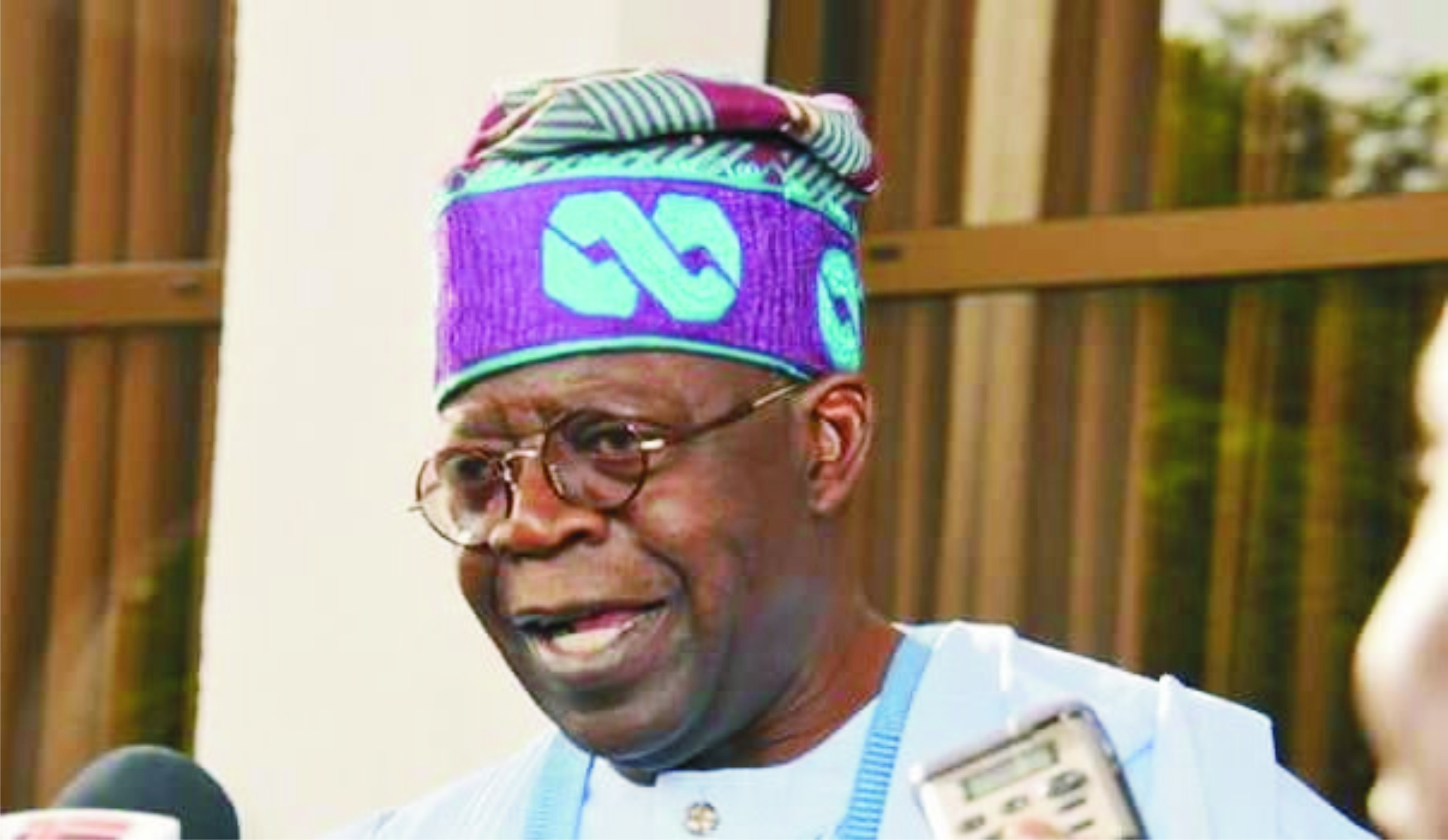
The controversies surrounding the educational certificates of some presidential candidates who will be contesting the 2023 presidential election, have been described as a non-issue by some lawmakers and activists.
Those who spoke with The Tide over the issue, noted that such controversy was not new to the political system of Nigeria.
The All Progressives Congress (APC) presidential candidate Asiwaju Bola Tinubu, had claimed in the forms he submitted to the Independent National Electoral Commission (INEC) that his primary and secondary school certificates were stolen by unknown persons, who invaded his home during the military junta of the ‘90s when he fled the country over his support for the revalidation of the June 12, 1993 presidential election.
For that, many Nigerians who had raised concerns over the development called for the disqualification and prosecution of the former Lagos State governor, whom they alleged lied under oath over academic qualifications.
A non-governmental organisation, Centre for Reform and Public Advocacy recently issued an ultimatum to President Muhammadu Buhari and the Inspector General of Police to arrest and prosecute Tinubu for allegedly supplying false information to INEC.
Legal Adviser of the group, Mr Kalu Agu, at a press briefing in Abuja, said that the alleged offence committed by the former Lagos State governor breached both the Constitution and the Electoral Act.
In the same vein, Tinubu’s running mate, Kabiru Masari told INEC that his original certificates are missing.
Reports had it that Masari in particulars submitted to INEC deposed to an affidavit on the loss of his primary and secondary schools certificates.
He, however, said that he attended Masari Primary school, Katsina State between 1972 and 1978 and obtained a Grade 2 Certificate from Katsina Teachers College in 1982 and a Higher Certificate in 1995.
Masari in the sworn affidavit for ‘Loss of Some Original Documents’, obtained from Divisional Police Headquarter, Wuse Zone 3, Abuja attached to the particulars he submitted to INEC, said, in January 2021, that, while on transit within Wuse, Area FCT, Abuja, he lost his Certificate of Grade 2 Certificate from Katsina Teachers College and First Leaving Primary School Certificate issued by Masari Primary School, Katsina State, (1972-78).
He also said that all efforts made to trace the items proved abortive.
On his part, the presidential candidate of the main opposition Peoples Democratic Party (PDP), Alhaji Atiku Abubakar, had a few questions raised about his academic credentials.
Atiku, who served as the country’s Vice President from 1999 to 2007, was said to have not provided information on his primary education.
The 1965 West Africa School Certificate (WASC) result presented by him, allegedly identified the student as Siddiq Abubakar.
While reacting to the issue, a member of the Lagos State House of Assembly, Olanrewaju Oshun said the issue of certificates as far as he was concerned, is a non-issue and unfounded.
Oshun, the member representing Lagos Mainland Constituency 2, said, “This is a man that worked with Mobil and he was recruited from his school. If he didn’t have that qualification, how was he recruited from the school? Are we saying Mobil didn’t check his qualification?
”He was a Senator and he was governor of Lagos State for eight years. All these shouts about him not having certificates are mere political gimmicks.
“If you say he doesn’t have primary and secondary school certificates, how was he able to attend a prestigious university abroad.
“You can’t be admitted into any university in Nigeria without a secondary school certificate not to talk of attending a university abroad. This is not new. They said the same thing in 2015 about Buhari.”
A United States based public affairs analyst, Prof. John Oshodi said, “At no point did Tinubu say he had no primary or secondary school education.
Even if he is not able to show the concrete certificates, whether due to being lost or accidentally damaged, how does that show he has no basic educational background?
“One thing is certain: He is a Nigerian-educated person who earned a Bachelor of Science Degree in Business and Administration with a major in accounting from Chicago State University in 1979.
“In past election seasons, through media hysteria, President Buhari, also an American trained military scientist with post-secondary education, was said not to have a WAEC certificate and, so, he is not eligible to vie for any elective position.
“Let’s say that Buhari’s basic educational certificates were with the military, like he said, or they could not be located, what cannot be denied by the American government is that Buhari holds a diploma from the United States Army War College.
“On the part of Atiku Abubakar, the media has it that he holds a secondary school education, although not of the highest level.
“He has post-secondary education in hygiene science and a diploma in law, and in recent times, he has worked hard and now has a master’s degree in International Relations from the United Kingdom.
“What is most stunning about the current uproar is that a basic education such as a primary or secondary school certificate is required to be president, as in the case of Tinubu.
”In 2019, it became a settled matter when the Supreme Court held that Buhari, per the constitution, is not required to possess a secondary school certificate to be qualified to run for the presidency and does not have to submit it to INEC to run for the presidency.
“Yet in a society where lawlessness and lack of respect for operating laws are rampant, you in the media and the people should be asking the presidential candidates about how they will handle monumental problems like crime and security, poverty, unemployment, poor electricity, infrastructure and road hassles, illegal substitution of candidates’ names, and human rights abuses,” Oshodi added.



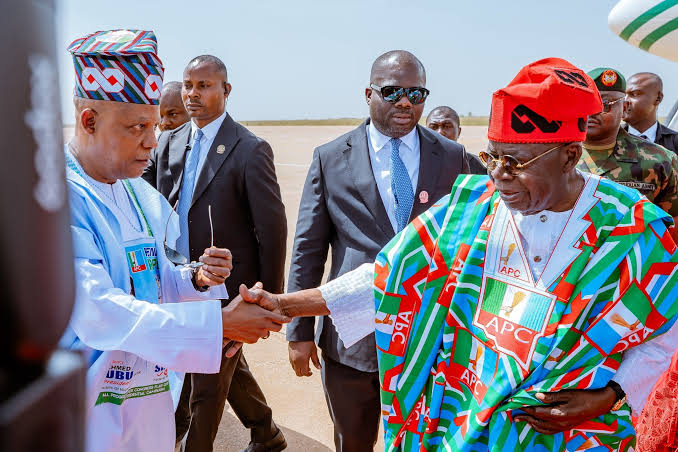
The campaign rally, held at the Kaduna Township Stadium, attracted Vice-President Kashim Shettima, APC governors, party leaders, federal and state lawmakers, political stakeholders and supporters from across the country.
The flag-off marks the beginning of the APC’s drive to secure a second presidential term for President Tinubu, with the party expected to promote its achievements, defend its economic reforms and outline its policy priorities under the proposed Renewed Hope 2.0 agenda.
Kaduna’s selection for the campaign launch underscores the strategic importance of the North-West, a region with a substantial voting population and considerable influence on presidential election outcomes.
The APC faces a significant challenge in Kaduna, where the Peoples Democratic Party’s presidential candidate, Alhaji Atiku Abubakar, defeated President Tinubu in the 2023 election. The rally therefore provides the ruling party an opportunity to strengthen its grassroots structures and regain electoral support in the state.
Addressing supporters, Vice-President Shettima appealed to Northern voters, highlighting President Tinubu’s political relationships with prominent Northern leaders, including Alhaji Abubakar, Mallam Nuhu Ribadu and the late President Muhammadu Buhari.
The Vice-President’s appeal reflects the APC’s determination to consolidate its support in the North as the party intensifies preparations for the presidential contest.
The Renewed Hope 2.0 agenda is expected to feature prominently in the campaign, providing a platform for President Tinubu to explain his administration’s economic policies and outline plans for another term.
However, the President’s record on economic reforms, rising living costs, petrol prices, employment, infrastructure and insecurity is expected to attract considerable scrutiny during the electioneering period.
-

 Education1 day ago
FCE Yola Graduates 3,555 Teachers , Seeks Upgrade to University
-

 Sports1 day ago
Nigerian Trio Target Titles At PFL Africa Finals
-

 Niger Delta1 day ago
Diri Restates Stance On Lagos-Calabar Coastal Highway
-

 Niger Delta1 day ago
C’River, NUJ Pay Tribute To Late Guardian Editor
-

 News1 day ago
NDLEA Recovers Tons Of Illicit Drug Consignments In Nine States
-

 Opinion1 day ago
Checking Voter Apathy In Nigeria’s Electoral Process
-

 Politics1 day ago
2027: DICKSON’S EX-ALLY VOWS TO WORK AGAINST NDC INTEREST IN BAYELSA
-

 Politics1 day ago
2027: GROUP PLEDGES 40,000 SUPPORTERS FOR COALITION CANDIDATES IN RIVERS