
News
2023 Polls Must Be Free, Fair In Abiola’s Honour, Buhari Commits

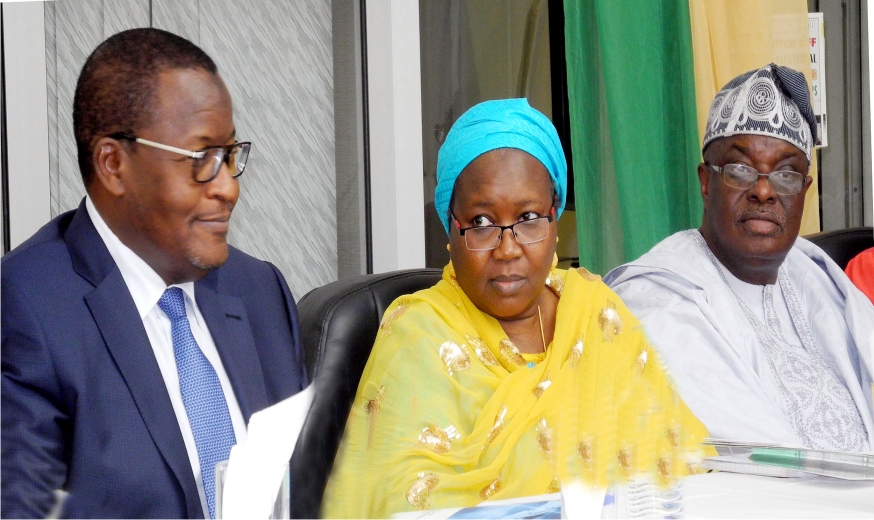
President Muhammadu Buhari, yesterday, in Abuja, promised to facilitate a “free, fair and transparent electoral process” in next year’s general election.
This, he said, would be a way to honour the memory of the acclaimed winner of the June 12, 1993 presidential election, the late MKO Abiola.
Buhari made the pledge, yesterday, in his 2022 Democracy Day speech.
The president called on political parties, candidates and the electorate not to regard the elections as a do-or-die affair, adding that democracy is about the will of the majority and therefore, “there must be winners and losers.”
Speaking in a televised broadcast, Buhari expressed his satisfaction with the primary elections conducted across various political parties ahead of next year’s general election, saying the primaries had set the tone for peaceful polls next year.
He said, “Fellow Nigerians, this is my last Democracy Day speech as your President. By June 12, 2023, exactly one year from today, you will already have a new president. I remain committed and determined to ensure that the new President is elected through a peaceful and transparent process.
“It is important for all of us to remember that June 12, 2023 will be exactly 30 years from the 1993 Presidential elections. In honour and memory of one of our national heroes of democracy, Chief M.K.O Abiola, we must all work together to ensure this transition is done in a peaceful manner. I am hopeful that we can achieve this.
“The signs so far are positive. Recently, all registered political parties conducted primaries to select their candidates for the 2023 general election. These primaries were peaceful and orderly. Those who won were magnanimous in their victories. Those who lost were gracious in defeat. And those aggrieved opted to seek judicial justice as opposed to jungle justice.
“I followed the party primaries closely from the state level to the presidential level. I was very impressed to see across all the political parties that most candidates ran issue-based campaigns. The language and tone throughout were on the whole measured and controlled.
“I am promising you a free, fair and transparent electoral process. And I am pleading with all citizens to come together and work with government to build a peaceful and prosperous nation.”
Buhari called on candidates in next year’s elections to imbibe issues-based approach and desist from character assassination as campaigns officially begin in September.
“As we move into the general election campaign season, we must sustain this mature attitude to campaigning and ultimately, voting. We must never see it as a do-or-die affair. We must all remember democracy is about the will of the majority. There must be winners and losers.
“I will, therefore, take this opportunity on this very special day to ask all candidates to continue running issue-focused campaigns and to treat opponents with dignity. As leaders, you must all showcase high character and never forget that the world is watching us and Africa looks up to Nigeria to provide example in governance. The tone you set at the top will surely be replicated in your followers,” Buhari said.
He said his government, in the last seven years, had made “significant investments to reform and enhance our electoral laws, systems, and processes to safeguard votes.”
While saying that his government was doing all within its power to safeguard the nation and protect citizens, Buhari urged Nigerians to play their part as security agencies could not shoulder the burden alone.
He added, “On this special day, I want us all to put all victims of terrorist activities in our thoughts and prayers. I am living daily with the grief and worry for all those victims and prisoners of terrorism and kidnapping. The security agencies and I are doing all we can to free those unfortunate countrymen and countrywomen safely.
“If we all unite, we will be victorious against these agents of terror and destruction. I will conclude this Democracy Day speech, my last as President, by assuring you of my commitment to protect Nigeria and Nigerians from all enemies from within and outside.”
Meanwhile, socio-political activist and President of Women Arise, Dr Joe Okei-Odumakin, said last Saturday, that electoral fraud might have become legalised and institutionalised in Nigeria, despite being the very thing that the June 12 struggle was against.
The activist, who this in a statement to commemorate the June 12, decried the widespread monetisation of the nation’s electoral process.
She said, “Today, the election space has been totally militarised and monetised as indeed the entire society. People speak about N100million like sachet water and thousands of dollars for delegates in the face of an impoverished populace.
“June 12 is asking us questions we must answer quickly. We don’t have much time left. It presents itself to us as a status mark on the global timeline where we have been left behind even by some African countries.”
Okei-Odumakin demanded that the history of Nigeria and the June 12 struggle should be taught in schools.
“June 12 must be taught. Approval should not be sought to teach kids their past. Conscientious authorities should find ways around attempts to keep generations of Nigerian youths ignorant,” she said.
The Governor of Edo State, Mr Godwin Obaseki, and his Kogi counter, Yahaya Bello, in their separate Democracy Day messages, urged citizens to recommit themselves to democratic ideals and work in unison to make the country live up to its promise as the greatest black nation on earth.
Obaseki, in his message, said, “Since our return to democratic rule in 1999, we have continued on a very crucial task of engendering development in Nigeria, even with the attendant daunting challenges.
“We are at a crossroads, as it appears we are yet to get the full dividend of democracy and feel unsure sometimes of the gains of democracy. It behoves us to keep faith and trust the process, as democracy is a self-renewing process and we are definitely sure to get it right if we stay the course.”
On his part, Bello, who was an aspirant in the just concluded presidential primary of the ruling All Progressives Congress (APC), recalled that “I was in secondary school in 1993, when the struggle began and almost 30 years after, we are here to bear the torchlight of that struggle.
“Today, we are commemorating and remembering June 12, championed by our father, our hero, our legend, our icon, Chief MKO Abiola, and Hajiya Kudirat Abiola.
“I appreciate God Almighty and all those who stood firm, saw a vision, sacrificed and are still sacrificing for the cause of democracy in Nigeria.
“Chief MKO Abiola represents hope for this country for the current and future generations and that is why I am happy that his prodigies, not only immediate family but all of us are carrying on with that struggle, and by the special grace of God, our struggles shall never be in vain.”
Also speaking, Abiola’s daughter, who was Director-General of Yahaya Bello Presidential Campaign Organisation, Hafsat Abiola-Costello, said she believed the APC presidential candidate, Bola Tinubu, would help to actualise MKO Abiola’s ideals.
She said, “Twenty-nine years after June 12, it is still a message of hope…There is hope for Nigerian women, there is hope for Nigerian young people, Nigerians with special needs.”
Similarly, the Speaker of the Lagos State House of Assembly, Mudashiru Obasa, said as current bearers of the baton of democracy, lawmakers remained steadfast in their resolve to make democracy work for all Nigerians.
Obasa said this in a statement signed by his Chief Press Secretary, Eromosele Ebhomele, last Saturday.
He said, “We thank Nigerian leaders, the civil society and citizens who joined in the struggle for the emancipation of the country from the military and remain steadfast in our resolve to make our democracy truly work for us all as Nigerians.
“History will forever be kind to those who made Nigeria’s democracy possible. They are our country’s real heroes. We are honoured to be the current bearers of the baton of democracy and we look forward to upholding the labour of these heroes.”


The Rivers State chapter of the All Progressives Congress Christian Leaders Forum has expressed strong confidence in the capacity of All Progressives Congress (All Progressives Congress) candidates in the state to deliver effective governance if elected into office in the coming elections.
The State Coordinator of the forum, Archbishop Lucky Aroh, made this known during a breakfast and thanksgiving meeting held in Port Harcourt, where leaders gathered to pray for the stability of the party and the safety of its candidates ahead of the 2027 general elections.According to him, the meeting was convened to seek divine intervention for peace, unity, and security among APC candidates across Rivers State.
“Today we are praying for APC stability in Rivers State and the security of our candidates that have been elected to contest the 2027 elections. It is a breakfast meeting,” Aroh said.
He further expressed optimism that the party’s candidates would not disappoint the people if entrusted with leadership responsibilities.
“They will not fail when elected into office. We are here as fathers of the land to let them know, and I must tell you the truth that these are the authentic people that will do well in Rivers State,” he added.
Speaking earlier, the National Chairman of the forum, Professor Olanrewaju Abraham, commended the Rivers State chapter for organizing the programme, noting that the national body of the forum believes strongly in the power of prayer.
He stated that political leadership provides an opportunity to influence society positively, including advancing moral and spiritual values, while expressing confidence that APC candidates at all levels would emerge victorious in the upcoming elections.
Also speaking, the Rivers State Women Leader of the APC, Hon. Darling Amadi, praised the forum for its commitment to prayers for peace, stability, and the protection of party candidates.
Represented by the Deputy Women Leader of the party in the state, she described the initiative as commendable and urged other political and support groups within the party to emulate the gesture in promoting unity and stability.
By: John Bibor, Menebe Emmanuel & Fortune Paibi
Prominent businessman and philanthropist, Elder Anthony Osagwe-Ogo, was celebrated in grand style as he marked his 70th birthday anniversary, with distinguished Nigerians, business leaders, and golf enthusiasts gathering to honour his remarkable contributions to society.
The colourful celebration took place at the Port Harcourt Golf Club, where friends, associates, and well-wishers converged to pay tribute to the revered elder statesman.
Chairman of the occasion, High Chief (Dr.) Ikenna Okafor, described the celebrant as a detribalised Nigerian whose generosity, humility, and commitment to humanity have earned him admiration across different communities and backgrounds.
According to Dr. Okafor, Pa Osagwe-Ogo’s impact on society and the development of his community remains unparalleled. He noted that members of the golfing community are proud to be associated with a father figure who consistently promotes the welfare and well-being of those around him.
He further stated that the history and growth of the Port Harcourt Golf Club cannot be told without acknowledging the significant role played by the celebrant, whose wisdom, encouragement, and leadership have helped sustain the club over the years.
“We are here to celebrate a man who has impacted humanity positively, a peace-loving individual and an epitome of hope for the younger generation. We pray to emulate his virtues. Today, we celebrate a bridge-builder, a trailblazer, and an iconic leader whose life continues to inspire many,” Dr. Okafor said.
He expressed delight at the large turnout of guests from various walks of life, describing it as a testament to the respect and affection Pa Osagwe-Ogo commands within and beyond Rivers State.
In his response, the celebrant, Pa Anthony Osagwe-Ogo, expressed profound gratitude to God for preserving his life and granting him the privilege of attaining the milestone age of 70.
He also thanked members of the Port Harcourt Golf Club, family members, friends, and associates for identifying with him during the celebration and for their unwavering support over the years.
The event featured the cutting of the birthday cake, presentation of awards to deserving members of the club, goodwill messages, and moments of celebration among guests.
The ceremony was attended by notable personalities from the business community, the golfing fraternity, and other sectors, all of whom joined in celebrating the life and legacy of the respected elder statesman.
Rivers State Governor, Sir Siminalayi Fubara, and the Permanent Secretary of the Rivers State Ministry of Information and Communications, Dr. Honour Kuru Sirawoo, have been honoured with awards of recognition in connection with the 2026 Democracy Day celebrations held in Port Harcourt.
The awards, which formed part of activities marking Nigeria’s Democracy Day on June 12, were formally presented on Tuesday at the Ministry of Information and Communications in Port Harcourt.
Presenting the awards was Hon. Abdul Hameed Oladipupo Alli, popularly known as “Mr. Nigeria,” Publisher of Asiwaju Trumpet Magazine and Achievers World International Magazine.
Governor Fubara was recognised for his efforts in sustaining peace, stability, and a conducive political atmospherJohn Bibor / Menebe Emmanuel / Fortune Paibie in Rivers State. The organisers noted that his administration has fostered harmony and strengthened civic participation across the state.
Dr. Sirawoo, on the other hand, was honoured for his exemplary administrative leadership and significant contributions to effective information management within the Ministry of Information and Communications.
Representing Dr. Sirawoo at the presentation ceremony, Dr. Christian Davies received the award on his behalf and expressed gratitude for the recognition. He described the honour as a reflection of Dr. Sirawoo’s unwavering commitment to professionalism, excellence, and dedicated public service.
Dr. Davies assured the organisers that the award would be formally conveyed to the Permanent Secretary.
The event also featured the presentation of commemorative publications highlighting major governance and civic milestones in Rivers State, including Easter celebrations, Workers’ Day activities, the Governor’s third anniversary in office, and Democracy Day programmes.
Organisers of the awards commended the Rivers State administration for what they described as sustained peace, political stability, and improved civic engagement, noting that these achievements have contributed significantly to the state’s continued development.
By: Jessica Sambol
-

 Niger Delta3 days ago
Warri Airport Manager Disputes Air Peace Bird Strike Claim
-

 News3 days ago
Nigeria Won’t Surrender Any Territory To Criminals -Tinubu
-

 News3 days ago
FG Begins Trial Of Over 600 Terrorism Suspects
-

 Rivers3 days ago
79th IAUE Inaugural Lecture: Prof Anero Advoctes Tuition-Free Education For Children
-

 Politics3 days ago
Parties’ Deregistration: How Justice Lifu Overruled Appeal Court Justices
-

 Politics3 days ago
ADC: Okonkwo Rejects Amaechi As Presidential Running Mate, Withdraws Support
-

 Politics3 days ago
2027: Tinubu’s Projects Give APC Edge In South East – Yilwatda
-

 News3 days ago
Rivers Judges Commence Annual Vacation, July 20