Connect with us

Business

Petrol Subsidy Hits N905.27bn, As Oil Rises To $79.71 

Published

on

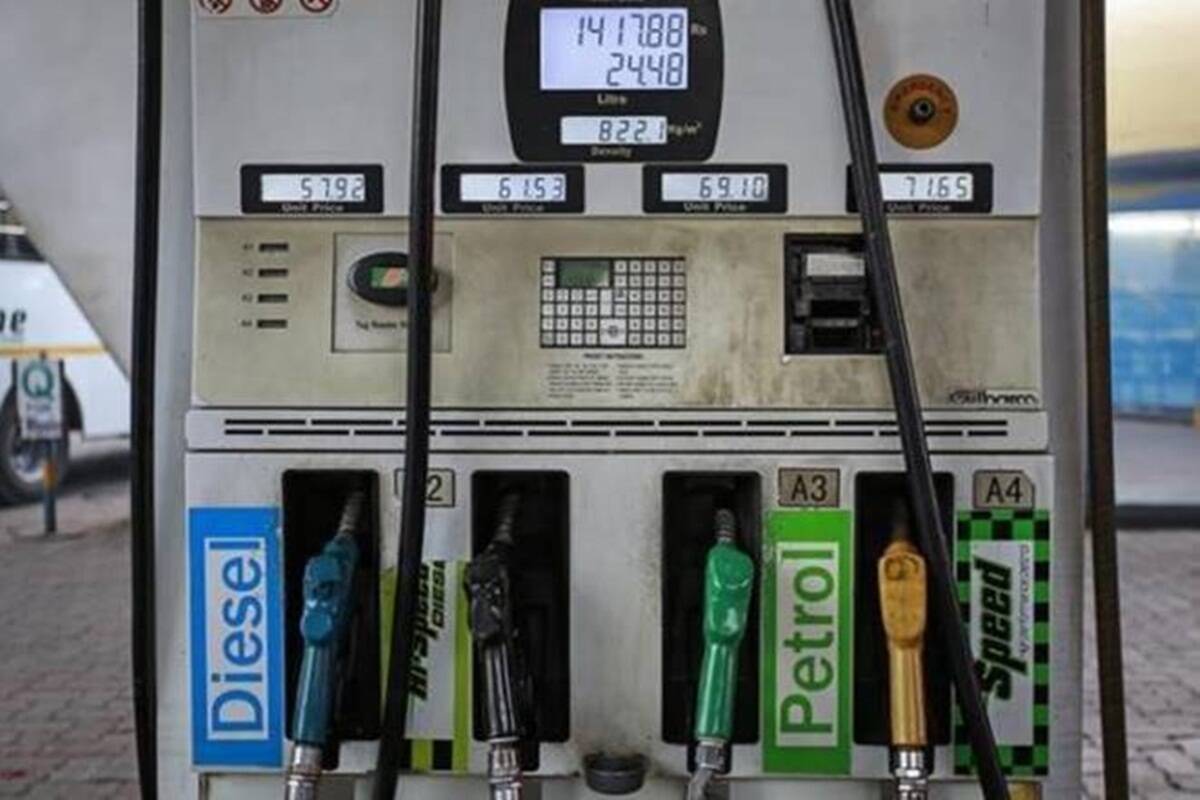
The Nigerian National Petroleum Corporation (NNPC) spent a total of N905.27 billion on petrol subsidy in eight months amid rising global oil prices, the latest data obtained from the corporation show.
With the international oil benchmark, Brent crude, nearing $80 per barrel on Monday (up 2.07 per cent at $79.71 per barrel as of 7:00pm Nigerian time), the landing cost of imported petrol and subsidy are expected to increase.
The subsidy, which the NNPC prefers to call ‘value shortfall’ or ‘under-recovery’, resurfaced in January this year as the government left the pump price of petrol unchanged at N162-N165 per litre despite the increase in global oil prices.
The Federal Government had in March 2020 removed petrol subsidy after reducing the pump price of the product to N125 per litre from N145 following the sharp drop in crude oil prices.
The NNPC, which has been the sole importer of petrol into the country in recent years, has been bearing the subsidy cost since it resurfaced.
Data from the corporation showed that it incurred N25.37 billion subsidy cost in January, N60.40 billion in February, N111.97 billion in March, and N126.30 billion in April and N114.34 billion in May. 
The subsidy cost rose from N143.29 billion in June to N175.32 billion in July but fell to N149.28 billion in August, according to the NNPC.
The August 2021 value shortfall of N149,283,084,869.20 is to be deducted from the September 2021 proceeds due for sharing at the October, 2021 FAAC meeting, the corporation said in a document on Monday.
While marketers have continued to stress the need to allow market forces to determine the pump price of petrol and do away with subsidy, it remains uncertain whether the discussions between the Federal Government and labour unions will lead to the deregulation of petrol prices.
Analysts at CSL Stockbrokers Limited noted that with no provision for petrol subsidy in the 2021 budget, the NNPC had resorted to direct deduction from FAAC remittance.
“These deductions affect the revenues accruable to the federation,” they said in a note on Friday.
According to them, a steep naira devaluation and an increase in global crude prices, which implies an increase in the landing cost of petrol on many occasions, have caused the continuation of the subsidy regime.
The analysts said, “The deregulation of the downstream oil sector remains a politically sensitive discourse. Deregulating the downstream sector, which would in most times involve raising the pump price of petrol with increasing oil price, is always a challenge in a country where the subsidy on petrol prices is seen as the only source of social security.
“We have always expressed concerns that the current timing by the government to get rid of the longstanding subsidies is inopportune.
“In effect, the government may be forced to retain the subsidy, given the impact of the pandemic, high food prices and hike in electricity tariffs on the already squeezed Nigerian consumers.”
In another development, analysts at Goldman Sachs have raised their year-end forecast on Brent crude to $90 per barrel from a previous forecast of $80, citing the aftereffects of Hurricane Ida in the United States and rising demand, particularly in Asia.
The analysts said Ida should prove to be the most bullish hurricane in US history, cancelling the ramp-up in output from the Organisation of the Petroleum Exporting Countries and its allies since July.
“While we have long held a bullish oil view, the current global supply-demand deficit is larger than we expected”  they said. 
They added that recovery in global demand from the Delta impact was faster than above-consensus forecast, with global supply remaining short of below consensus forecasts.

Continue Reading

Business

Niger Delta Investment Summit Targets $5bn Inflows, 500,000 Jobs

Published

on

The Niger Delta Chambers of Commerce, Industry, Trade, Mines and Agriculture (NDCCITMA) has unveiled the plans to host a major economic and investment summit aimed at attracting five billion dollars, ( N7 trillion) investments in addition to creating about 500,000 jobs over the next five years.
The Chairman of NDCCITMA Board, Ambassador Idaere Ogan, disclosed this in Port Harcourt, recently.
Ogan stated  that the initiative is designed to reposition the Niger Delta as a viable destination for sustainable economic growth and development.
He explained the summit would bring together investors, policymakers, manufacturers and business leaders from within and outside Nigeria to explore opportunities across key sectors of the regional economy.
According to him, the event is expected to attract high-profile participation, with President Bola Tinubu billed as Special Guest of Honour, while the Prime Minister of Barbados, Mia Amor Mottley, is expected to deliver the keynote address.
Ogan said the summit would focus on critical sectors including agriculture, manufacturing, logistics and the blue economy, which he described as areas with significant untapped potential.
He called on state governments, development partners and private sector stakeholders to support the initiative, stressing that collective efforts are required to unlock the region’s economic prospects.
 NDCCITMA chairman further stated that improving security conditions and increasing economic confidence in the Niger Delta have made the region more attractive to both local and foreign investors.
He emphasised that ongoing economic reforms at the national level have also contributed to creating a more favourable investment climate.
Also speaking, the Chairman of the Summit Organising Committee, Dr. Solomon Edebiri, said the event would prioritise the growth of small and medium-scale enterprises (SMEs) across the region.
He noted the summit would provide a strategic platform for networking, business partnership and policy dialogue aimed at strengthening the private sector.
Edebiri disclosed that findings from a recent business roundtable revealed significant untapped investment opportunities, which the summit seeks to harness through targeted collaborations.
He revealed that the event would feature exhibitions of viable projects, facilitate business-to-business and business-to-government engagements, and also promote innovations across multiple sectors.
According to him, the expected outcomes of the summit include job creation, increased industrial activity and improved livelihoods for people in the Niger Delta.
To build momentum ahead of the event, NDCCITMA said the body would embark on awareness roadshows across states in the Niger Delta, as well as in Lagos and Abuja, to attract broad participation.
King Onunwor
Continue Reading

Business

NPA Targets N1.489tn Revenue In 2026

Published

on

The Management  of Nigerian Ports Authority (NPA) has set N1.489 trillion as its Internally Generated Revenue (IGR) target for the 2026 fiscal year.
NPA says the figure represents an increase of N21 billion over the N1.468 trillion target for 2025, which the agency exceeded with an actual revenue of N1.97 trillion.
 The Managing Director NPA, Dr Abubakar Dantsoho, stated this  during the agency’s 2026 budget defence before the Senate Committee on Marine Transport.
Dantsoho said  the authority was set to begin groundbreaking projects for the modernisation of Apapa and Tin Can Island ports to enhance global competitiveness.
According to him, of the projected revenue: N945 billion is allocated for capital projects, N447.5 billion for operating expenses, and
N90.6 billion for remittance into the Consolidated Revenue Fund (CRF).
The MD explained that the budget was anchored on the mantra, “Consolidation, Renewed Resilience and Shared Prosperity.”
Dantsoho said that the modernisation of Apapa and Tin Can Island ports were flagship projects aimed at boosting revenue.
“Apapa and Tin Can Island ports are old and no longer adequate for modern global port operations.
“Apapa Port is about 100 years old, while Tin Can Island Port is over 50 years old, with limited capacity for handling modern vessels and cargo volumes.
“Groundbreaking for their modernisation will commence within the next two to three weeks,” he added.
On the Treasury Single Account (TSA), Dantsoho said all revenues generated by the NPA are paid directly into the account managed by the Central Bank of Nigeria (CBN).
“We do not retain any funds. The Central Bank is the signatory and we must apply for funds whenever needed,” he explained.
Earlier in his remarks,Chairman of the Senate Committee on Ports, Sen. Wasiu Eshinlokun (Lagos Central), said the committee’s oversight function was collaborative rather than adversarial.
“Our goal is to work with you to strengthen institutional capacity, eliminate inefficiencies and ensure that every naira appropriated serves the public interest,” he said.
Chinedu Wosu
Continue Reading

Business

NPF Disburses ?21.68m  To Fallen Heros’ Families …Reinforce Welfare Commitment 

Published

on

Nigeria Police Force has disbursed a total of ?21,678,120 to the deceased police officers families in Rivers State as part of ongoing welfare interventions by the force.
The gesture formed a major highlight of the activities marking  the 2026 National Police Day celebration in the state, underscoring renewed institutional focus on personnel welfare and post-service support systems.
The Commissioner of Police, Olugbenga Adepoju, who presided over the cheque presentation ceremony, said the initiative reflects the Force’s commitment to honouring officers who paid the ultimate price in their line of duty.
He explained that the financial support is designed to cushion the economic burden faced by bereaved families, while also reinforcing confidence among serving personnel about the Force’s long-term welfare structure.
Adepoju conveyed the sympathy of the leadership of the Nigeria Police Force to the beneficiaries, noting that the sacrifices of fallen officers remain invaluable to national security and public safety.
The police boss further stressed that sustained welfare interventions are critical to boosting morale, enhancing productivity, and strengthening institutional loyalty within the Force.
He reiterated that the welfare scheme aligns with broader reforms aimed at repositioning the Nigeria Police Force as a responsive and people-oriented institution.
Beneficiaries of the cheques commended the Inspector-General of Police, Olatunji Rilwan Disu, for prioritising the welfare of officers and their families through consistent and impactful interventions.
They described the initiative as timely and compassionate, noting that it would go a long way in alleviating financial pressures arising from the loss of their loved ones.
The families also acknowledged ongoing reforms under the current police leadership, which they said have strengthened trust, improved service delivery, and enhanced the overall image of the Force.
The Rivers State Police Command reaffirmed its commitment to sustaining similar initiatives as part of efforts to uphold the dignity, sacrifice, and legacy of officers who served the nation with distinction.
King Onunwor
Continue Reading

Trending