Connect with us

Education

Michael Okpara Varsity Demands N10bn Take-Off Grant From FG

Published

on

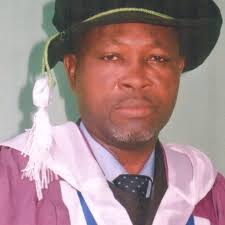
The Vice Chancellor of the University of Agriculture, Umudike, Prof. Maduebibisi Iwe, says the institution has applied for N10 billion take off grant from the Federal Government.
Iwe said this on Friday in Umuahia at a press conference organised to mark his 100 days in office.
He said the application was forwarded to the Federal Government through the Presidential Visitation Panel (PVP) during its recent visit to the institution.
He said the university had not received take-off grant since it was established in 1993.
He said, “We are still asking for take-off grant because we have not traced any document showing that the university got a take off-grant.
“The take-off grant shouldn’t have been less than N1 billion as at 1993/1994.”
He said the management,  in its presentation to the visitation panel jacked it up to N10 billion.
He also spoke on the fate of some staff members of the university, whose appointments were “suspended” in 2017 by the administration of late Prof. Francis Otunta.
He said that those whose appointment letters read “offer of appointment” were reinstated, while those on one-year temporary appointments were suspended, after they elapsed.
Iwe further said that the university did not demote any professor during the same period, as reported in a section of the media.
He said the university only did “proper placement” of some academic staff members, in line with a directive of the governing council of the university.
He said the council also investigated alleged irregularities in employment and promotions during the administration of Prof. Hilary Edeoga.
Speaking on some of his achievements, he said he realised his promise to ensure that the university senate conducted its businesses via online and soft copy processes.
Iwe also said the transcripts of graduates up to 2010 were now ready for use through online and that the remaining 2000 transcripts would soon be ready for upload on the platform.
He said his administration had also resolved some issues that impeded the completion of some building projects in the institution, through peaceful negotiations with the contractors.
He hoped that work would soon resume on the projects, which included the College of Agricultural Economics, Rural Sociology and Extension, College of Physical and Applied Sciences, amongst others.
The vice chancellor also said his administration had initiated an open door policy in its relations with students and that efforts were ongoing to provide the necessary infrastructure for effective teaching and learning.
He also said the issues of workers’ welfare were being addressed, adding that the management had started paying the two years arrears of responsibility allowances to deserving workers.
He said that his administration also resolved a five-year dispute with Aeon Consult Ltd, which impounded 45  vehicles purchased for shuttle services by the university.
He expressed joy that the vehicles had been handed over to the university and presently undergoing refurbishment.
The VC also said he made history on June 8, when the university signed a Memorandum of Understanding with the Nigerian Meteorological Agency (NiMet) after two years of “sustained impasse”.
He said “Today, the university’s state-of-the art weather station built and equipped by NiMet is fully functional.”
He said the agency also gave its commitment to equip the university’s laboratory, “possibly at no cost to the university”, in addition to staff training and donation of resource materials.
Iwe said that the university’s Agric Graduate Loan Scheme, which was recently inaugurated by his administration, had given between N120,000 and N400,000 to the first set of beneficiaries.
He said the initiative was in line with his commitment to produce self-sufficient farmers.
He said the loan was tied to fish production, poultry farming, cassava production, pig farming, egg sales, palm oil marketing and agric input sales.
He said his administration also purchased a N2 million state-of-the-art farm equipment as part of the process to commence largescale farming in the university.


Continue Reading

Education

FG, ASUU Set Date to Sign Agreement

Published

on

The Federal Government is set to formally sign an agreement with the Academic Staff Union of Universities following weeks of negotiations.
The development may be linked to the 40 per cent salary increase for academic staff proposed by the FG last month and accepted by the union.
A circular issued by the Ministry of Education invited Vice-Chancellors and Registrars of federal universities to witness the signing ceremony scheduled for Wednesday, January 14, 2026, at 11:00 a.m. at the Tertiary Education Trust Fund Conference Hall, Abuja.
The circular, dated January 5, 2026, and referenced FME/IS/UNI/ASUU/C.11/Vol.V/82, was signed by the Director of University Education, Rakiya Ilyasu, on behalf of the Minister of Education.
It was titled ‘Invitation to the Ceremony for the Signing of Agreement Between the Federal Government and the Academic Staff Union of Universities.’
The circular was sighted by our correspondent on Saturday and confirmed by the Ministry’s Director, Press and Public Relations, Boriowo Folasade.
 “This signing represents a critical milestone in promoting industrial harmony and improving teaching and learning in our universities.
“It also reaffirms the Federal Government’s commitment to the sustainable development of education in line with the Renewed
Attendance at the ceremony was declared mandatory for all invited university administrators, highlighting the importance attached to the agreement and its implementation.
Last month, the industrial crisis that had burdened Nigeria’s university system for 16 years following the 2009 Federal Government–ASUU Agreement saw the union accept the Federal Government’s proposed 40 per cent salary increase for academic staff.
It was reported that the deal, effective from January 1, 2026, would be reviewed after three years
  Why FG Shouldn’t Be Blamed for Non-Implementation of Council Autonomy
Under the new terms, professors will earn a pension equivalent to their final annual salary upon retirement at age 70. The agreement also provides for the establishment of a National Research Council to fund research with at least one per cent of Nigeria’s Gross Domestic Product.
Other provisions include improved funding for libraries, laboratories, equipment and staff development, greater university autonomy, and the election of academic leaders, with only professors eligible to serve as deans and provosts. The pact also guarantees that no staff member involved in past industrial actions will be victimised.
Continue Reading

Education

DSS, Rector Warn Kogi Poly Students Against Vices,Rumours

Published

on

The Kogi State Directorate of the Department of State Services (DSS) has warned fresh students of Kogi State Polytechnic, Lokoja, that security on campus is a shared responsibility, stressing that carelessness, poor judgment and rumour-mongering pose and ostentatious living pose greater dangers than most real threats.
The Director of the Department in the state, gave the warning in his speech, titled,”MANAGING SECURITY AND RUMORS ON CAMPUS at the 33rd Matriculation Ceremony for the students of 2025/2026 academic session of the Polytechnic on Thursday in Lokoja.
The director, represented by A. S. MUSA, emphasised that while Lokoja remains largely peaceful, no campus is immune from security challenges.
He identified theft of phones, laptops and wallets, infiltration of hostels by unauthorised persons, risky late-night movements and online scams targeting fresh students as recurring threats, most of which, he noted, are preventable through vigilance and discipline.
The security agency cautioned students against behaviours that weaken personal safety, including lack of security consciousness, predictable routines, drug abuse, drunkenness, sexual recklessness, ostentatious living and the lure of secret cults.
According to the DSS director,cultism, often disguised as “protection,” ultimately places students under violent control systems with devastating consequences, while flamboyant lifestyles and careless displays of wealth attract criminal attention.
Our correspondent reports that a major focus of the lecture was the danger of rumours, which the DSS described as “more destructive than real threats.”
According to him,false alerts about kidnappers, armed attacks, school closures or emergency evacuations,often spread through WhatsApp messages and voice notes,have previously triggered panic, stampedes and academic disruption on campuses, sometimes putting lives at risk without any verified danger.School supplies
He, therefore, advised to verify information strictly through official Polytechnic channels such as management announcements, Student Affairs notices and campus security units. The DSS boss warned that forwarding unconfirmed messages makes students unwitting accomplices in spreading fear and destabilising the academic environment.
On personal safety, he also urged students to always carry their identity cards, avoid lonely and poorly lit areas at night, secure their hostel rooms, challenge suspicious strangers and promptly report unusual activities.
He cautioned students to remain calm, obedient to lawful instructions and refuse to act on hearsay, adding that these virtues are critical responses during emergencies.
The DSS director reminded the matriculating students that security goes beyond physical safety to include protection of reputation, mental stability and future prospects.
By rejecting rumours, cultism and reckless living, and by embracing responsibility and alertness, students can be rest assured that Kogi State Polytechnic can remain a safe, peaceful and conducive centre of learning for all.
Declaring event open, the Rector of the Polytechnic, Prof.Salisu Ogba Usman, matriculated 4,591 students into seven schools and 57 academic programmes of the Polytechnic.
“Of this number,2460 students (54 percent) are admitted into National Diploma Progrmes, while 2,131 students (46 percent)are admitted into Higher National Diploma 1 programmes”,Usman said.
He further reviewed that 19 out of the 57 Programmes currently run by the polytechnic were introduced under the present administration in the state.
Prof.Usmam expressed the continued commitment of the Polytechnic to uphold discipline, transparency,and zero tolerance for all forms of social Vices ,while promoting peaceful coexistence,responsible leadership and mutual respect.
“Our emphasis on security, moral discipline and academic integrity is non-, negotiable and central to our institutional philosophy,” the Rector stressed.
He urged the new students to take full advantage of the opportunities available in the Polytechnic and to conduct themselves in ways that will bring honour to their families ,the Polytechnic and the nation at large.
Usman said the polytechnic has pursued inclusive leadership by institutionalizing transparency, strengthening staff welfare engagement,and integrating student leadership into governance processes.
According to him the gender distribution is equally encouraging, with 52 percent, male and 48 percent female, representing steady progress in the gender balance of the Polytechnic.
He promised that the “shall continue to uphold discipline, transparency and zero tolerance for all forms of social vices,while promoting peaceful coexistence,responsible leadership and mutual respect.
The Rector stressed that the emphasis of the Polytechnic on security, moral discipline and academic integrity is non-negotiable and central to its institutional philosophy.
He urged the new students to take full advantage of the opportunities available in the polytechnic and conduct themselves in ways that will bring honour to their families,the polytechnic and the nation at large.
“Together we shall continue to reposition Kogi State Polytechnic as a reference point for excellence in polytechnic education in Nigeria,” he promised.
Continue Reading

Education

FG Bans Disposable workbooks, introduces reusable textbooks in schools

Published

on

The Federal Government has rolled out a new education policy banning disposable workbooks and mandating the use of reusable, high-quality  textbooks in schools, in a move aimed at reducing the rising cost of education for parents, improving learning outcomes and promoting environmental sustainability.School supplies
The policy was unveiled by the Minister of Education, Tunji Alausa, alongside the Minister of State for Education, Prof. Suwaba Sai’d, as part of sweeping reforms targeted at repositioning Nigeria’s education sector and easing the financial burden on families.
Under the new framework, schools are required to adopt standardised and durable textbooks designed to last between four and six years.
The policy expressly prohibits the practice of bundling disposable workbooks with textbooks, a practice the government says has inflated school expenses and contributed to unnecessary waste.
According to the ministers, the reusable  textbook initiative will enable siblings to share learning materials across academic sessions, significantly reduce recurring education costs for parents and limit waste generation within the school system, thereby advancing national sustainability goals.
As part of the broader reforms, the Federal Government has also introduced a uniform academic calendar to ensure consistency in teaching, learning and school planning across the country.
Continue Reading

Trending