Connect with us

Oil & Energy

Ogoniland Still An Ecological Disaster – Stakeholders

Published

on

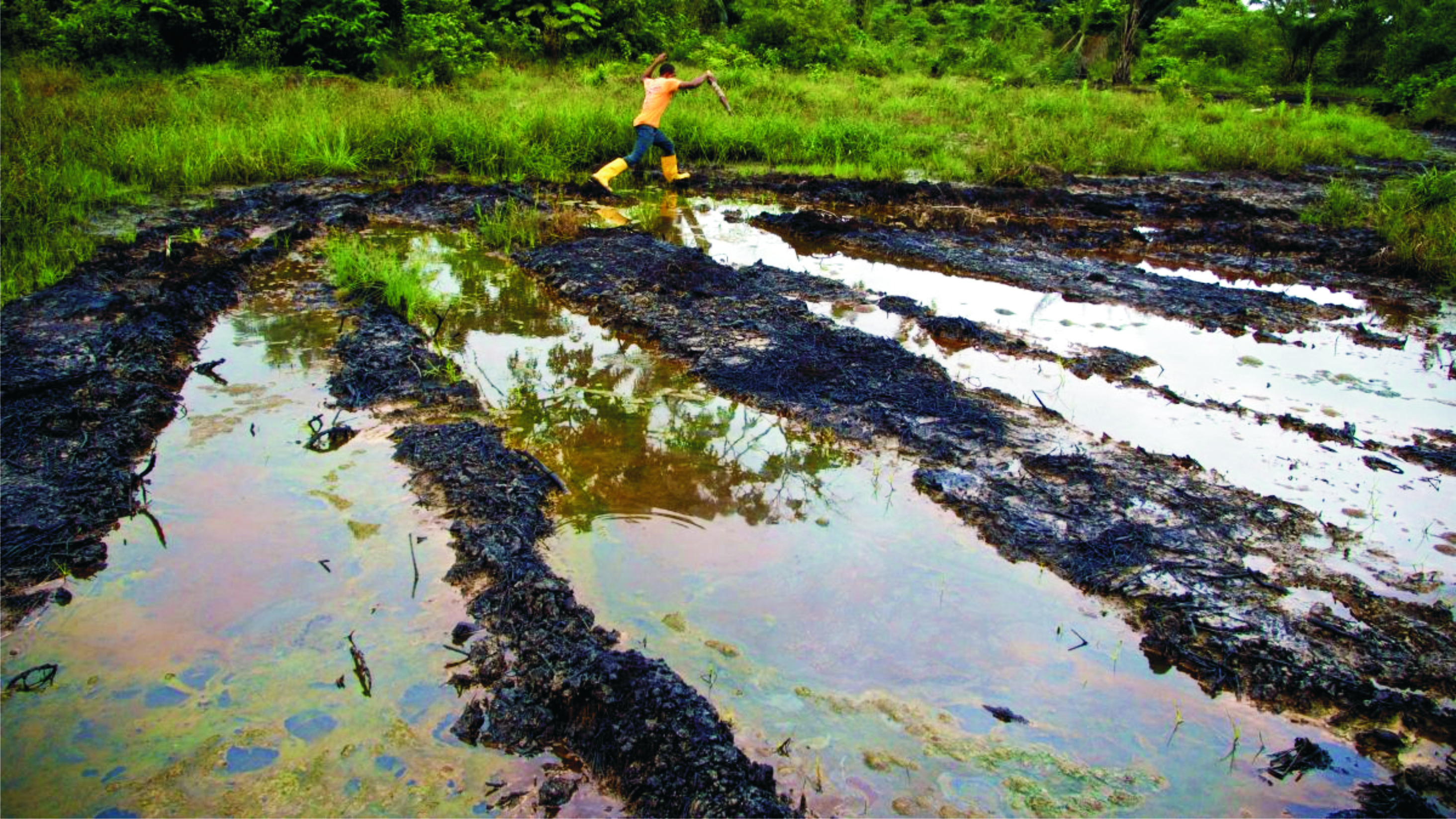
Stakeholders and environmental experts who attended the 79th posthumous birth day of late Ogoni activist, Ken Saro-Wiwa, in Port Harcourt, at the weekend, have lamented that Ogoniland is still an ecological disaster 25 years after the death of the activist.
Speaking at the event which was organised by the Ogoni Civil Society Stakeholders Forum (OSISOF) at the Atrium Event Centre in Port Harcourt, the guest speaker, Nnimoh Bassey, said it was regrettable that nothing substantial has been done to restore the battered environment of Ogoni despite the efforts of Saro Wiwa towards environmental justice in Nigeria.
The guest speaker, who was represented by an environmental activist, Comrade Celestine Akpobari, at the event said, the state of environmental pollution in Ogoni as a result of oil exploration had deteriorated beyond how it was before the UNEP investigation and recommendations.
He said, “before UNEP, the pollution level was five metres deep into the soil, but presently, it has worsened to 10 metres deep.”
The guest speaker, who described Ogoni as the metaphor of ecocide in Nigeria, called for environmental justice in Ogoni and by extension, the Niger Delta.
Also speaking, the special guest of honour, Engineer Olu Andah Wai-Ogosu, expressed deep concern about the increasing blight and destruction of the Ogoni environment which he said, is their  “ultimate heritage.”
He called on the Federal Government to address the issues of environmental and economic justice raised by the late Ogoni hero on the Ogoni Bill of Rights (OBR) presented to the Federal Government on November 1990.
Wai-Ogosu, who is the former National President of the Nigeria Environmental Society (NES), urged the Ogonis to be united against the tendencies of external infiltrations so as to achieve the objectives of the Ogoni struggle which Saro Wiwa and other Ogoni leaders lived and died for.
In her remark, another environmental rights activist, Dr Patience Osarojiji, called on the Federal Government to compel the Shell Petroleum Company to own up their ecological damage in Ogoni as a result of decades of oil exploratory activities in the area.
She said Ogonis had lost their means of livelihood to oil pollution and should be rehabilitated save them from denigrating poverty.
Earlier, the Chairman of the event, Prof Barineme Fakae, had commended the organisers for organising the memorial lecture to honour the late Ogoni activist.
Fakae called on the Federal Government to address the issues of minority and environmental rights in Nigeria in the interest of justice and equity.
In his remark, the organiser of the event and chairman of the Ogoni Civil Society Stakeholders Forum, Comrade Christian Lekia, said the event which was organised under the theme: ‘The Ken Saro Wiwa Leadership Legacies; What Lesson in Today’s Democratic Nigeria’ was to celebrate the legacies of Saro Wiwa.
He urged the Federal Government to exonerate Saro Wiwa and his slain colleagues of accusations levelled against them before their “ judicial murder.”


Taneh Beemene

Continue Reading

Oil & Energy

MIND Slams PENGASSAN, Urges Senate Probe Over Alleged Maltreatment Of Nigerians At TotalEnergies

Published

on

The Movement of Intellectuals for National Development (MIND) has  criticized the Petroleum and Natural Gas Senior Staff Association of Nigeria (PENGASSAN) over what it describes as an evasive response to allegations concerning the treatment of Nigerian employees at TotalEnergies.
In a statement issued by its Western Coordinator, Ebi Warekromo, MIND expressed disappointment at PENGASSAN’s attempt to distance itself from a petition submitted to the President of the Nigerian Senate, maintaining that its petition is grounded in verified evidence and first hand accounts from affected workers.
Warekromo noted that the submission draws extensively from documented correspondence originating from PENGASSAN’s local branch communications that previously raised concerns about unfair labour practices and managerial misconduct within TotalEnergies.
Among the critical issues highlighted are allegations of workplace bullying and intimidation allegedly perpetrated by certain expatriate staff.
The petition also cites serious security concerns and alleged violations of the Nigerian oil and gas industry content development (NOGICD) act, particularly claims that expatriate positions have been unlawfully extended beyond their approved tenures.
Warekromo who dismissed PENGASSAN’s characterization of the documents as merely ‘internal correspondence’ as weak and disingenuous, insisted that workers’ rights violations and systemic oppression cease to be internal matters once they begin to harm Nigerian employees.
The group argued that confidentiality must not be used as a shield for injustice, stressing that internal dispute resolution mechanisms must deliver measurable outcomes.
Where such mechanisms fail, MIND insists that public and legislative oversight becomes necessary
beyond the immediate allegations, questioning PENGASSAN’s independence and effectiveness in representing its members.
The group urged the union to welcome a Senate hearing, describing it as an opportunity to clarify its position, restore credibility, and rebuild trust among workers.
“We are not attacking PENGASSAN. We are responding to the absence of effective representation that has allowed these oppressive practices to persist unchecked”,
MIND emphasised its belief that when unions appear reluctant to act decisively, civil society organizations have a responsibility to intervene in pursuit of justice and equitable labour relations.
Calling for a collaborative response, the group urged workers, unions, regulatory authorities and industry stakeholders to work together toward fostering a healthier and more accountable environment within Nigeria’s oil and gas sector.
It further reiterated its unwavering commitment to defending the rights of Nigerian workers and urged PENGASSAN to take concrete and transparent steps to fulfill its mandate as a labour union.
Continue Reading

Oil & Energy

Elumelu Tasks FG On Power Sector Debt Payment 

Published

on

Chairman of Heirs Holdings, Transcorp and United Bank for Africa (UBA), Tony Elumelu, has urged the Federal Government to fast-track the settlement of debts owed to electricity generation companies (GenCos).
Elumelu said that the timely payment was imperative to boosting power supply and accelerating economic growth.
Speaking to State House correspondents, shortly after the meeting with President Bola Tinubu, at the Presidential Villa, Abuja, Weekend, Elumelu insisted that the debt payment would aid in revitalising the power sector and stabilising the economy while strengthening the Small and Medium-scale Enterprises (SMEs).
He said “All of us who are in the power sector are owed significantly, but in spite of that, we continue to generate electricity. We want to see the payments made so that there will be more provision of electricity to the country. Access to electricity is critical for the development of our economy.”
Elumelu, whose conglomerate has major investments in Nigeria’s power industry, stressed that improving electricity supply remains one of the most important enablers of economic expansion, job creation and industrial productivity.
According to him, President Tinubu recognised the urgency of resolving the liquidity challenges in the power sector and is committed to addressing legacy debts to ensure generation companies can scale operations.
“The President realises it, embraces it and is committed to doing more, especially helping to fast-track the payment of the power sector debt so that power generators can do more for the country. That is very, very critical,” he added.
In his assessment of the outlook for 2026, he said growing macroeconomic stability, improved foreign exchange management and sustained reforms in the power sector could position Nigeria for stronger growth — provided implementation remains consistent and structural bottlenecks are addressed.
Elumelu posited that one priority stands out, which is: resolving power sector liquidity challenges to unlock increased electricity generation and energise the Nigerian economy.
Continue Reading

Oil & Energy

‘Over 86 Million Nigerians Without Electricity’ 

Published

on

Nigeria has been said to have more than 86 million of its population still without access to electricity.
The Deputy Secretary-General of the United Nations, Amina J. Mohammed, stated this at the Award Ceremony of the Leadership Newspaper, in Abuja, last Thursday.
Mohammed noted that sixty per cent of the world’s best solar resources are on this continent adding that by 2040, Africa could generate ten times more electricity than it needs, and entirely from renewables.
Mohammad regretted that Africa now receives just two per cent of global clean energy investment saying, “And here in Nigeria, more than 86 million people still have no access to electricity at all.”
Expressing concerns over the large population of Nigerians living without access to electricity, the deputy scribe, said however, that Nigeria is responding to this challenge the right way insisting that under President Tinubu’s leadership, Nigeria has developed a best-in-class action plan for climate, one that treats climate not as a constraint but as an engine for growth.
According to her, by placing energy access, climate-smart agriculture, clean cooking, and water management at the heart of its development agenda, Nigeria is showing what serious climate leadership looks like but Nigeria cannot close the climate action gap alone.
 “Developed countries must the triple adaptation financing, we need for serious contributions to the Loss and Damage Fund, and mobilize 300 billion dollars per year by 2035 for developing countries to succeed. Early warning systems need to reach everyone, so that communities have the means to prepare for climate shocks before they hit.
“And as Africa drives the global renewables revolution, including through its critical minerals, Africans must be the first and primary beneficiaries of the wealth that they generate”, Mohammed stated.
Continue Reading

Trending