
Politics
Why FG Cannot Share Private Donations As Palliative – Minister

The Federal Government says funds donated by the private sector towards fighting Coronavirus are meant for development of healthcare infrastructure and cannot be used to provide palliatives during lockdown.
The Minister of Information and Culture, Alhaji Lai Mohammed, gave the explanation yesterday, when he featured on a Radio Nigeria programme, “Politics Nationwide.”
Mohammed was responding to comments from Nigerians requesting that part of the billions of naira being donated by public-spirited individuals and private institutions should be shared to the people to cushion the effect of the extended lockdown.
The minister said that the Presidential Task Force for the Control of Coronavirus was neither with the money nor in control of it, and could not share a penny from the fund to anyone.
”The private sector donors are not giving any cash to the federal government and they have made this clear to the people.
“They said they will support the fight against the pandemic by asking government where they want healthcare infrastructure to be provided.
“What government has done is to request them to build a 30-bed isolation ward and a 10-bed Intensive Care Unit in each state in the country.
“In addition, the federal government has given them a list of equipment and commodities that will also be needed
“Therefore, the issue of using their donations to provide palliative cannot arise,” he said.
Mohammed further said that in addressing the issue of palliative, every country adopted peculiar strategy that was workable and acceptable.
He said that Nigeria was leading and remains the best in the whole of Africa in the area of provision of palliative to citizens as the world battles the scourge.
The minister said that the federal government had taken a lot of measures to cushion the effects of Covid-19 on Nigerians, including food distribution, cash transfers and loans repayment waivers.
He recalled that on March 18, government reduced the price of petrol from N145 per litre to N125 per litre, with that reduction going further down to N123.50 per litre.
The minister added that President Muhammadu Buhari had directed a three-month repayment moratorium for all TraderMoni, MarketMoni and FarmerMoni loans as well as Federal Government-funded loans issued by the Bank of Industry, Bank of Agriculture and the Nigeria Export Import Bank.
He said that interest rates for intervention fund had been slashed from nine to five per cent, while the CBN put aside N50 billion fund to help SMEs.
Mohammed said that to cushion effect of the lockdown, satellite towns around Lagos and Abuja were being given relief materials while the vulnerable and those in IDP camps are being taken care of.
He said that besides the two months payment of Conditional Cash Transfer monthly stipend, the President ordered that the social register be expanded from 2.6 million households to 3.6 million households in the next two weeks.
The minister said that the President had set up a ministerial committee to ensure the economy adapted to the new reality and another body to minimise the impact of the pandemic on the 2020 farming season.
Recall that apart from the 30 million dollar (about ¦ 11.4 billion) recently donated by the NNPC and 33 of its partners, the Central Bank of Nigeria (CBN), had said that monetary contributions by the Private Sector Coalition Against COVID-19 (CACOVID), has totaled up to about N15 billion.
According to its spokesperson, Isaac Okorafor, the fund, domiciled in an account set up under CACOVID, has so far received donations from 37 donors including individuals, banks and other corporate organisations.
Details of the contributions showed that the CBN and Aliko Dangote Foundation contributed N2 billion each.
Abdul Samad Rabiu (BUA Sugar Refinery), Segun Agbaje (GTB), Tony Elumelu (UBA), Oba Otudeko (First Bank), Jim Ovia (Zenith Bank), Herbert Wigwe (Access Bank) and Femi Otedola of Amperion Power Distribution donated N1 billion each to the relief fund.

Politics
Alleged Coup: Protests Rock N’Assembly As Detained Officers’ Children, Wives Demand Justice

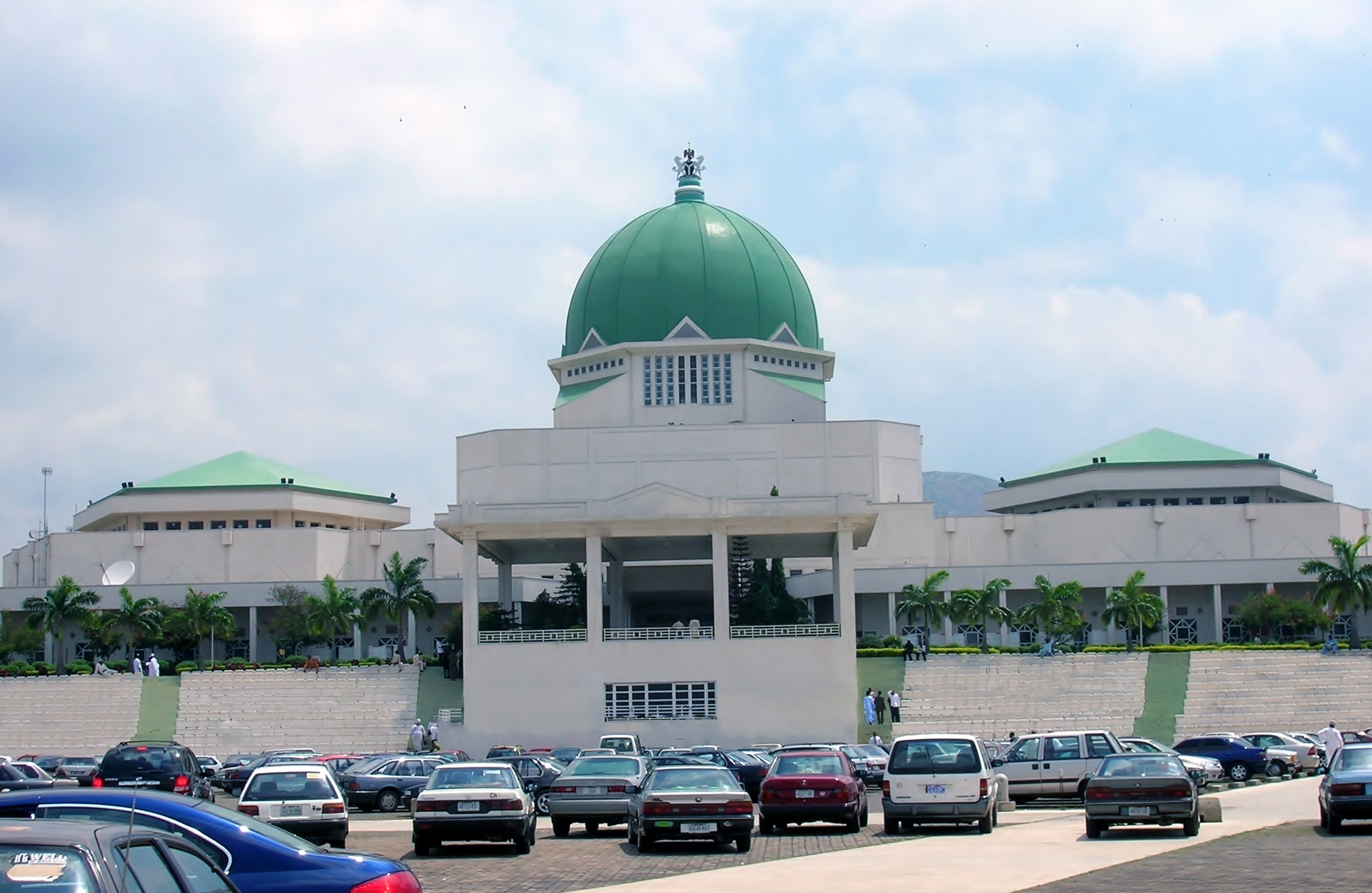
Scores of children and wives of military officers detained over an alleged coup plot yesterday staged a peaceful protest at the National Assembly, demanding a speedy trial and the release of the accused officials.
The protesters who gathered at the entrance of the National Assembly complex, moved in a slow procession while clutching placards with inscriptions such as “Don’t Kill Our Daddies,” “Detention Without Trial is Injustice,” and “Six Months of Torture: Enough Is Enough.”
Amid tears and trembling voices, the children appealed for justice and access to their detained fathers, many of whom they said they had not seen for months.
The appeal was made during a press briefing in Abuja attended by no fewer than 20 wives and several children of the detained officers, including a two-month-old baby.
The families were accompanied by human rights lawyer, Deji Adeyanju and activist Omoyele Sowore.
At the briefing, the families lamented that the officers had been held for over 160 days without trial or contact with their relatives, describing the situation as a violation of their fundamental rights.
Speaking on behalf of the families, Memuna Bashiru said the prolonged detention had thrown their households into uncertainty and emotional distress, noting that while allegations had been widely publicised, families remained in the dark about the fate of their loved ones.
The arrest of the indicted officers was first announced on October 4, 2025, by the then Director of Defense Information, Brigadier General Tukur Gusau, who disclosed that 16 officers were taken into custody for alleged breaches of military regulations and acts of indiscipline.
However, an interim investigation later suggested the existence of a clandestine network of officers, allegedly coordinated by a senior Army officer, which had begun preliminary planning for a coup.
According to the report, the alleged plot involved surveillance of key national assets, including the Presidential Villa, Armed Forces Complex, Niger Barracks in Abuja, and major international airports, with October 25, 2025, cited as the planned date for the operation.
Those reportedly in custody include Brig Gen M. A. Sadiq, Col M. A. Maaji, Lt Col S. Bappah, Lt Col A. A. Hayatu, Lt Col P. Dangnap, Lt Col M. Almakura, Maj A. J. Ibrahim, Maj M. M. Jiddah, Maj M. A. Usman, Maj D. Yusuf, Capt I. Bello, Capt A. A. Yusuf, Lt S. S. Felix, Lt Cdr D. B. Abdullahi, Sqn Ldr S. B. Adamu and Maj I. Dauda.
The alleged plot, according to findings, targeted senior government officials, including President Tinubu and Vice President Kashim Shettima.

In a statement issued yesterday, the party’s National Publicity Secretary, Mr Felix Morka, said the exercise would take place in all wards and designated centres nationwide.
He called on existing members to update their records, while encouraging new entrants to join the party through the digital platform.
“As the electronic membership registration exercise resumes in all wards and designated locations nationwide, we urge existing members to validate their membership while new members are encouraged to register and join the progressive family,” Mr Morka said.
According to him, eligibility for registration is limited to individuals aged 18 and above who possess a valid National Identification Number (NIN).
The party said the initiative is part of efforts to modernise its operations by transitioning to a digital database that would enhance record accuracy and accessibility.
Mr Morka noted that the e-registration would “digitise the party’s membership register, ensure the integrity of records, and enhance efficient access to membership data for planning and management decisions.”
He added that the move is also aimed at promoting internal democracy within the party and strengthening its commitment to democratic innovation.
The APC had previously introduced electronic registration as part of broader reforms to streamline its membership system and improve organisational efficiency.
-
Opinion5 days ago
Ozoro Festival: Tradition or Tyranny?
-
News2 days ago
Decentralizing Pipeline Surveillance Poses Greater Dangers To Niger Delta …. Group Warns
-
 Politics2 days ago
APC Resumes Electronic Membership Registration Nationwide
-

 Rivers2 days ago
Court Rules Out Interim Administration In Jumbo House, Bonny
-
Politics5 days ago
RIVERS WOMEN RALLY SUPPORT, CONTINUOUS PRAYERS FOR TINUBU
-
Politics5 days ago
AKPABIO, DIRI, OBOREVWORI, OTHERS VOW TO REELECT TINUBU …AS GIADOM RETAINS APC ZONAL CHAIR
-
 Business2 days ago
33 Banks Raise N4.65tn As Recapitalisation Ends
-
Politics5 days ago
Viral 2027 Nomination Forms Price List Fake, Misleading – APC