Connect with us

Aviation

US, Iran Crisis: Airlines Reroute, Avoid Iran, Iraq Airspace

Published

on

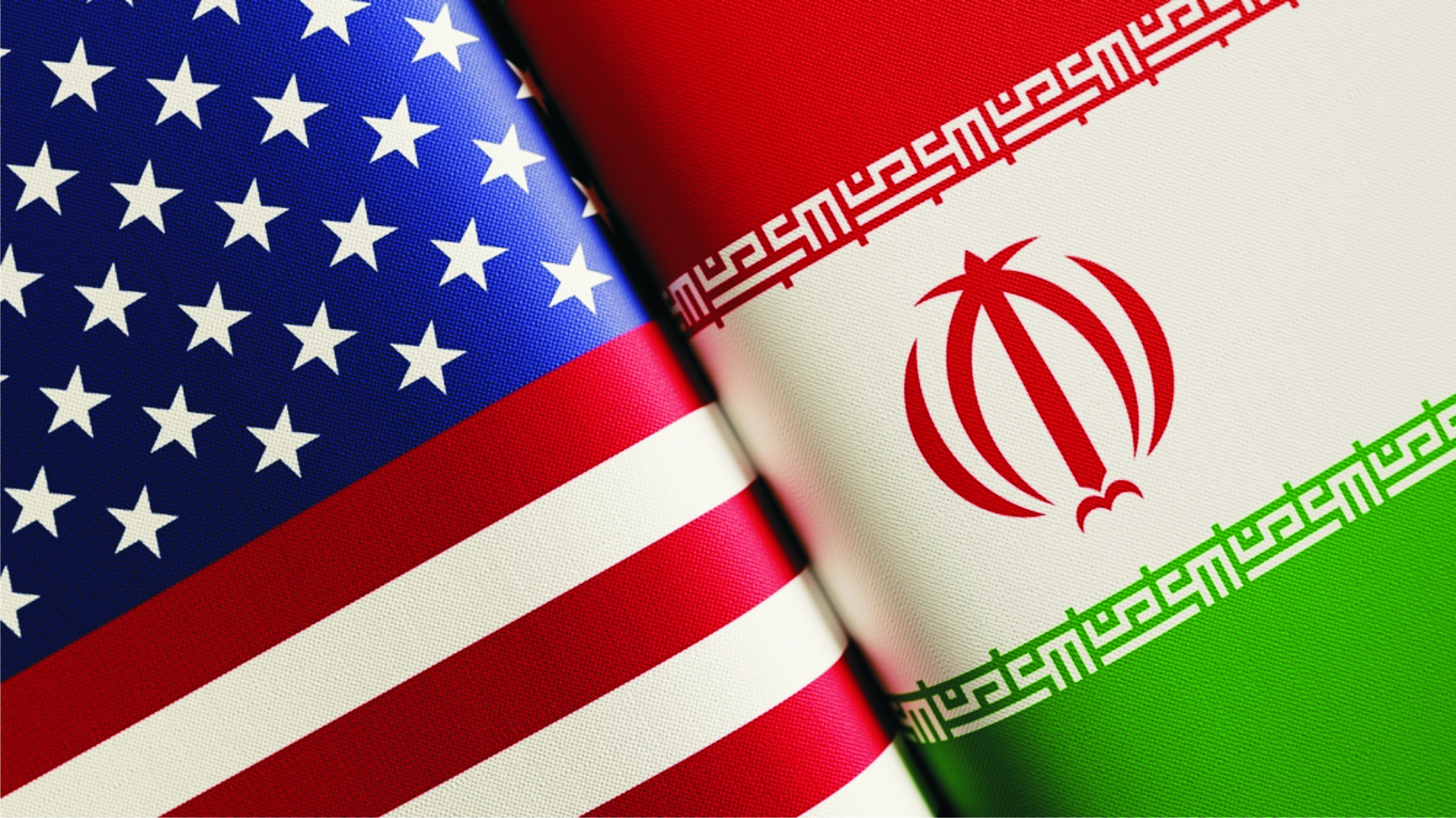
Commercial airlines are rerouting flights throughout the Middle East to avoid potential danger during heightened tensions between the United States and Iran.
Jumbled schedules could affect as many as 15,000 passengers per day, lengthen flight times by an average of 30 to 90 minutes, and severely bruise the bottom line for airlines, industry analysts said.
There is anxiety that the conflict between the longtime foes could intensify following Iranian ballistic missile strikes on Wednesday on two Iraqi bases that house U.S. troops. The attacks were retaliation for the U.S. killing of Iranian Revolutionary Guard Gen. Qassem Soleimani in a drone strike near Baghdad, last week.
“In a war situation, the first casualty is always air transport,” said Dubai-based aviation consult Mark Martin, pointing to airline bankruptcies during the Persian Gulf and Yugoslav wars.
“At least, 500 commercial flights travel through Iranian and Iraqi airspace daily,” Martin said.
A Ukrainian passenger jet crashed shortly after taking off from Iran’s capital, Wednesday, killing 167 passengers and nine crew members just hours after Iran’s ballistic missile attack, but Iranian officials said they suspected a mechanical issue brought down the 3½-year-old Boeing 737-800 aircraft.
Ukrainian officials initially agreed, but later backed away and declined to offer a cause while the investigation is ongoing.
Still, at least two Kazakh airlines, Air Astana and SCAT, were considering rerouting or canceling their flights over Iran following the crash, which killed all 176 passengers.
Poland’s national carrier, PLL LOT, said Saturday that it was changing routes to bypass Iran’s airspace.
A suite of other European carriers followed last Wednesday, and the restrictions were expected to “further depress” air travel between Iran and Western Europe, which saw strong growth after the Iran nuclear deal but a sharp dive when President Donald Trump pulled the U.S. out of the agreement and reimposed sanctions, according to the Sydney-based Center for Aviation consultancy.
Air France and Dutch carrier KLM both said Wednesday that they had suspended all flights over Iranian and Iraqi airspace indefinitely.
German airline Lufthansa and two of its subsidiaries also canceled flights to Iraq.
The Russian aviation agency, Rosaviatsia, issued an official recommendation for all Russian airlines to avoid flying over Iran, Iraq, the Persian Gulf and the Gulf of Oman “due to existing risks for the safety of international civil flights.”
Russia’s biggest private airline, S7, said it would reroute its twice-a-week flight from the Siberian city of Novosibirsk to Dubai.
Asia-Pacific carriers, which operate many of the world’s long-haul flights, were also expected to be hit hard by the ad hoc no-fly zone over Iran, Martin said.
Australian carrier Qantas said it was altering its London to Perth, Australia, route to avoid Iranian and Iraqi airspace until further notice. The longer route meant that Qantas would have to carry fewer passengers and more fuel to remain in the air for an extra 40 to 50 minutes.
Malaysia Airlines said that “due to recent events,” its planes would avoid Iranian airspace.
Singapore Airlines also said that its flights to Europe would be re-routed to avoid Iran.
Taiwanese carriers China Airlines and EVA Airways said they rerouted flights to Europe on Wednesday to skirt Iraqi and Iranian airspace. They said future route decisions would depend on regional developments.
India’s Directorate General of Civil Aviation advised Indian commercial carriers to avoid Iranian, Iraqi and Persian Gulf airspace.
“In light of the tensions within the Iranian airspace a decision to temporarily reroute flights of Air India and Air India Express overflying Iran has been taken,” said Air India spokesman Dhananjay Kumar.
Travel times will increase by as much as 40 minutes for flights in the region, the airline said.
Buta Airways, an Azerbaijani low-cost carrier, said Wednesday that it was not planning to suspend or reroute daily flights between Baku, the country’s capital, and Tehran.
In North America, Air Canada rerouted its flight from Toronto to Dubai through Egypt and Saudi Arabia to avoid traveling over Iraq.
The U.S. Federal Aviation Administration said it was barring American pilots and carriers from flying in areas of Iraqi, Iranian and some Persian Gulf airspace. The agency warned of the “potential for miscalculation or mis-identification” for civilian aircraft amid heightened tensions between the U.S. and Iran.
Such restrictions are often precautionary in nature to prevent civilian aircraft from being confused for ones engaged in armed conflict. The FAA said the restrictions were being issued due to “heightened military activities and increased political tensions in the Middle East, which present an inadvertent risk to U.S. civil aviation operations.”
In the Middle East, United Arab Emirates-owned budget airline flydubai said it had canceled a scheduled flight Wednesday from Dubai to Baghdad but was continuing flights to Basra and Najaf. Etihad Airways, the second-largest airline in the UAE, continued to operate on a regular schedule.
Emirates airline flights between Dubai and Baghdad were canceled. “The safety of our passengers, crew and aircraft is our number one priority and will not be compromised,” Emirates said in a statement.
Qatar Airways said its flights to Iraq were operating normally. “The safety of our passengers and employees is of the highest importance, and we continue to closely monitor developments in Iraq,” the airline said in a statement.
A handful of ship owners are curtailing operations in the Persian Gulf by restricting trips or only operating during daylight, said Richard Matthews, head of research at Gibson Shipbrokers. The handful of companies represents a small fraction of the 339 ship owners his company tracks that have loaded cargoes in the Persian Gulf, he said.
“People are obviously a bit more cautious, but no one’s panicking yet,” Matthews said Wednesday. “It’s very much a day-by-day assessment.”

Continue Reading

Aviation

Togo Govt Scraps It’s Visa Requirements For All African Countries

Published

on

The Togolese government has scrapped visa requirements for nationals of all African countries, effective May 18, 2026, meaning Nigerians with  valid passports can now enter the country without applying for  visa in advance.
African travellers can now stay in Togo visa-free for up to 30 days counting from May 18, 2026.
Visitors must still complete an online pre-arrival registration before entering the country.
The announcement came via the official X handle of Togo’s Ministry of Security, signed by the ministry’s head, Colonel Calixte Batossie Madjoulba.
Under the new policy, eligible African travellers can stay in Togo for up to 30 days without a visa, with the government describing the move as a commitment to Pan-African ideals and regional integration.
Government based the decision within a wider Pan-African agenda, stating that it reaffirms Togo’s attachment to “Pan-African ideals, continental solidarity, and community and African commitments, relating to mobility and regional integration.”
Togo also positioned the move as part of an agenda of “openness, modernisation, and attractiveness” aimed at making the country “a regional hub for services, business, culture, and human exchanges at the heart of Africa.”
There is, however, one step travellers cannot skip. Before arrival, visitors must register on the Togolese government’s official travel portal at voyage.gouv.tg at least 24 hours before reaching the border.
Nigerians can now travel to Togo without applying for a visa in advance.
The registration generates a travel slip that must be presented at entry points across land, air, and sea. The government has been clear that this pre-arrival formality remains mandatory regardless of the visa exemption.
Beyond the registration requirement, standard entry conditions still apply. Security checks, immigration screening, and public health requirements remain in place, and the waiver does not protect travellers who overstay or enter irregularly.
All border agencies have been directed to implement the new policy immediately.
Togo’s decision is part of a broader continental shift. Across Africa, more governments are moving to ease intra-African travel in alignment with the African Continental Free Trade Area’s vision of freer movement of people and goods.
Togo is now among the more accessible West African destinations for Nigerian travellers, a short trip that previously required advance visa processing and now requires nothing more than a passport and a quick online registration the day before you fly.
Continue Reading

Aviation

Egypt Flight Moves To Prevent Explosion —- Diverts London Flight To Rome 

Published

on

An EasyJet flight from Egypt to London was diverted to Rome after a passenger was found with a power bank in checked luggage.
The airline said the diversion was made as a safety precaution due to regulations surrounding lithium-ion batteries.
Passengers landed safely in Rome and were provided accommodation and refreshments after the delay.
The aircraft, operating flight EZY2618 from Hurghada to London Luton, made an unscheduled landing at Rome Fiumicino Airport last Tuesday evening as a precautionary safety measure.
According to the airline, the decision to divert was taken after a passenger informed cabin crew that the portable charger was inside luggage stored in the aircraft’s hold.
Although no fire or malfunction was reported, lithium-ion batteries found in power banks are considered a significant safety risk on aircraft due to the possibility of overheating or catching fire.
Flight tracking data showed the plane cruising at approximately 36,000 feet over the Adriatic Sea before suddenly changing course and heading towards Rome, where it landed safely about 20 minutes later.
Passengers reportedly disembarked without incident, while the flight was rescheduled for the following day.
In a statement, EasyJet apologised for the disruption and said the diversion was carried out in accordance with aviation safety regulations.
“The safety of passengers and crew is our highest priority,” the airline said, adding that hotel accommodation, meals, and refreshments were provided for affected travellers.
“EasyJet’s policies state that power banks are only permitted in cabin baggage and must not be stored in checked luggage.
The airline also prohibits passengers from using power banks to charge devices during flights.
The incident comes as airlines around the world continue tightening restrictions on portable chargers and lithium battery devices amid growing concerns over onboard fire hazards linked to overheating batteries.
Continue Reading

Aviation

Delta At 20: Delta Airline Expands Travel Access Ahead 2026 World Cup

Published

on

Delta Air Lines has announced a range of travel solutions aimed at easing the journey for Ghanaian football fans planning to attend the 2026 FIFA World Cup across the United States and North America.
The announcement was made during an event in Accra marking the airline’s 20th anniversary in Ghana, as company officials highlighted plans to work closely with local travel agencies to ensure that fans can access tickets and travel packages well in advance for the global tournament.
According to Delta’s Managing Director for International and Specialty Sales, Rob LeBel, the airline is introducing flexible options tailored to different travel needs.
These include individual ticket purchases, discounted group packages for parties of ten or more, and charter services for larger groups.
He explained that the collaboration with travel agencies would also focus on educating customers about the best ways to secure flights during the expected surge in demand.
To expand travel routes, Delta is leveraging its partnership with European carrier KLM, offering passengers alternative connections through Europe when direct routes are fully booked.
The airline believes the upcoming tournament presents a major opportunity to strengthen travel ties between Ghana and North America, particularly as interest among football fans continues to grow.
Continue Reading

Trending