
News
Under Buhari, Nigeria Records Worst Attacks On Journalists -Report

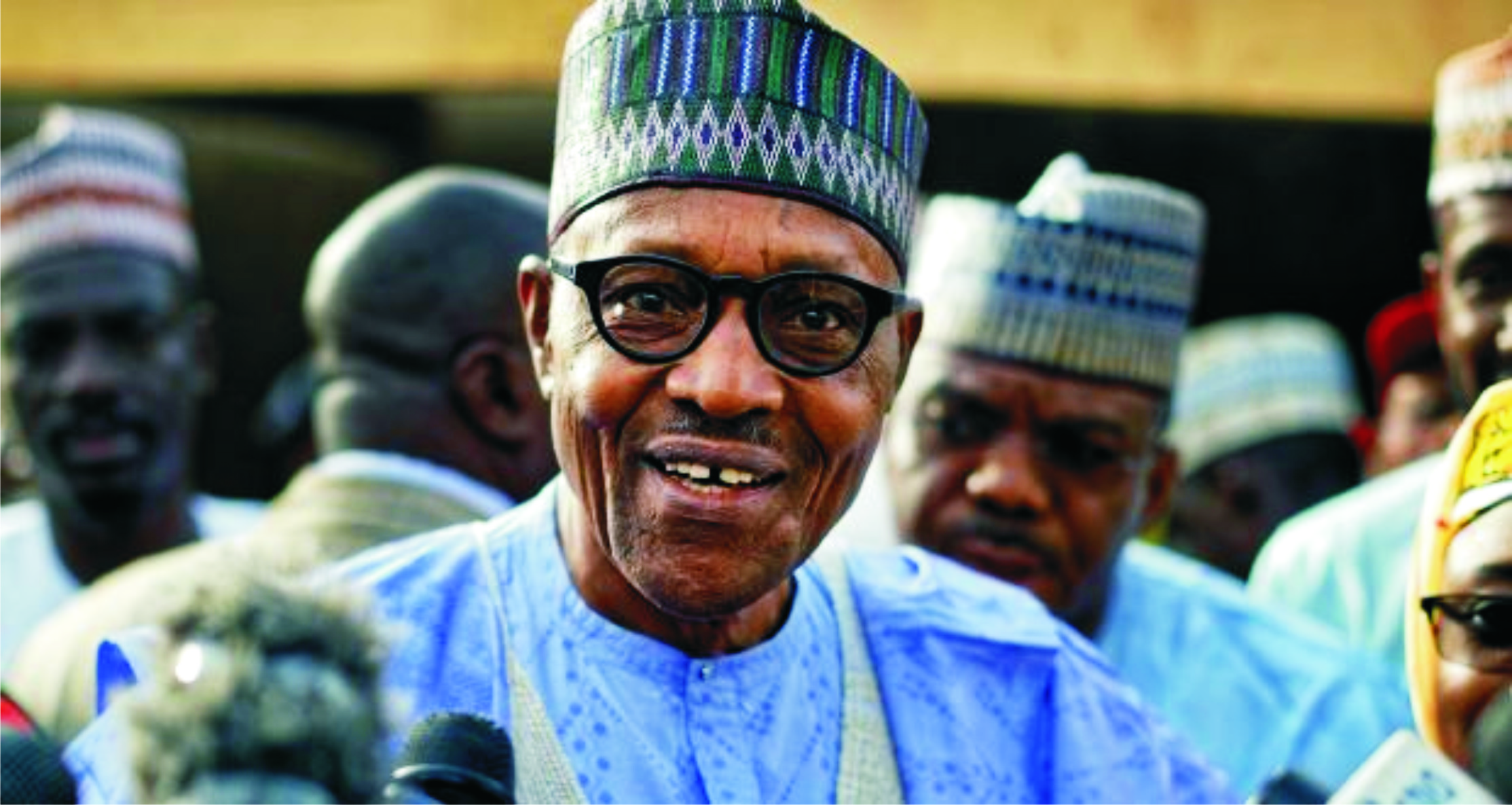
Nigeria was one of the focal points for discussion when over 200 journalists across Africa gathered in Ouagadougou, Burkina Faso, for a conference on free speech and freedom of expression in September.
The reporters met to discuss the renewed onslaught on journalists and activists across the continent, and at the end of the conference, the reporters sent a clear message to African governments to end attacks on journalists and free speech in their respective domains.
In a communique signed at the end of the International Festival of Freedom of Expression and Press (FILEP) organised by the Norbert Zongo Press Centre (CNP-NZ), the journalists also urged some governments to release of journalists who have been detained for carrying out their legitimate duties.
They also urged the government to put in place deliberate policies aimed at protecting journalists.
“We condemn the incarceration and killing of journalists in nations like Nigeria, Burkina Faso, the Gambia, Ghana and Sierra Leone, Conakry and other African nations,” part of the communique read.
“We condemn the arrest and murder of several African journalists. Governments should guarantee the safety and welfare of journalists who are the defenders of democracy.”
They equally condemned the “tightening of policies aimed at crippling press freedom and freedom of expression”, and urged the countries to expunge laws that oppose the freedom of expression.
It urged such nations to also “do more to curb terrorism and insecurity” rather than deploy state resources to oppress reporters.
The reporters had gathered in honour of Norbert Zongo, a journalist who was killed while investigating the unresolved death of David Ouédraogo.
Ouédraogo was the driver of François Compaoré, the younger brother of the former leader of Burkina Faso, Blaise Compaoré.
Despite death threats, the Zongo continued his investigation until he was murdered.
In Nigeria, it is perhaps not the best of times to be a journalist or civil rights activist going by the spate of attacks on freedom of the press and speech.
While attacks on Nigerian journalists are no longer a new phenomenon, they appear to have taken a turn for concern in recent months.
According to a report published by the Coalition for Whistleblowers Protection and Press Freedom, a total of 352 cases of attacks and harassments on journalists have been recorded from 1985 till date.
The year 2018 was initially recorded by the analysis to have witnessed the highest number of attacks at 58. But the group’s latest release shows that 2019 has already surpassed that record with 61 attacks so far, and still counting.
According to the research, as at May this year, the total number of physical attacks on reporters was 189; equipment searches and seizures, 9; equipment or property damage, 17; arrests, 60; denial of access, 21; threats, 44 and ‘harassments’, 12.
Of these attacks, 322 were on media houses, while the remaining 30 were meted on individuals. Also, 95 per cent of journalists affected were males while the rest were females.
About 114 of such attacks were carried out by uniformed personnel (military, police, SSS, SARS, NSCDC, prison officials, EFCC etc).
Other aggressors were union members (3), criminals, thugs etc (56), private security outfits (18), terrorists (9), unknown (33) and others (68).
The country recently got an inglorious mention when a Nigerian journalist, Agba Jalingo, was listed among 10 “most urgent” cases of threats to press freedom around the world.
The list was released One Free Press Coalition, a coalition of about 34 media organisations “standing up for journalists under attack for pursuing the truth”, globally.
Members of this coalition include Al Jazeera, the Associated Press, The Financial Times, Deutsche Welle, Reuters, The Washington Post, and Voice of America.
Jalingo, whose ordeal in the hands of the authorities has attracted local and foreign condemnation, is ninth on the list.
The publisher of CrossRiverWatch is standing trial for “treason” over a report alleging that the Governor of Cross River State, Prof Ben Ayade, diverted N500million belonging to the state government.
He was arrested on August 22 and has been remanded in the Calabar prison, after a Federal High Court judge denied him bail.
Jalingo, whose appearance in cuffs during prosecution, sparked outrage, insists he is being hounded for carrying out his legitimate duties as a journalist.
Other reporters that have faced the rough end of the authorities in recent past include Luka Biniyat, the Vanguard newspaper Kaduna correspondent, who was accused of falsely claiming that five students of the state College of Education were killed by Fulani herdsmen.
There was also Midat Joseph who was reportedly detained over a WhatsApp comment.
Dipo Awojobi of entertainment tabloid, First Weekly Magazine was arrested on Friday over an alleged defamatory article about a Nigerian politician.
Also, a photojournalist with the Vanguard Newspapers, attached to the Aso Rock Villa, Abayomi Adeshida, was on Thursday morning reportedly manhandled by security details of Vice-President Yemi Osinbajo.
The Coalition for Whistleblowers Protection and Press Freedom in November condemned “the growing attacks on Nigerian journalists and the alarming trend of media censorship by state authorities’’.
Members of the coalition include African Centre for Media & Information Literacy, Civic Media Lab, Civil, Society Network Against Corruption (CSNAC), Daily Trust Newspaper, International Centre for Investigative Reporting (ICIR), International Press Centre (IPC), HEDA Resource Centre and Media Rights Agenda (MRA).
Others are Nigeria Union of Journalist (NUJ), OrderPaper, Paradigm Initiative (P.I), Premium Times (PT), Premium Times Centre for Investigative Journalism (PTCIJ), Sahara Reporters (SR), Socio-Economic Rights and Accountability Project (SERAP), The Cable and Wole Soyinka Centre for Investigative Journalism (WSCIJ).
The coalition observed that ‘’public officers and influential individuals are increasingly becoming intolerant of critical reporting and fair comments by journalists.’’
It said such officers now resort to the use of instruments of state criminal justice system to suppress freedom of expression and free press.
“From January, 2019 till date, we have recorded 61 attacks on the media, including arrests, intimidation, detention and killings. We, as a coalition, totally condemn this abuse of power by state actors and security agencies,” the coalition noted.
It also flayed the judiciary for standing idle while the executive trampled on free speech and the media.
“Some sections of the Judiciary, as a consequence of its lack of independence, have become willing tools in the hands of state and federal governments by granting judicial approvals that stifle free speech,” the coalition added.
It listed some journalists, who are presently being prosecuted by the state as Jones Abiri, Jalingo and Nasir Ahmad.
Efforts to get presidential spokespersons, Garba Shehu and Femi Adesina, to comment on the report were unsuccessful. The two officials did not respond to text messages requesting comments.
Also, Shehu did not pick his call on Friday, 4 p.m., while Adesina’s line did not connect after numerous attempts.
A senator, Mohammed Sani Musa, had last Tuesday, introduced a bill he said ‘’will help regulate posts on social media as well as curb fake news on the internet’’.
Some analysts already see the move as a further attempt to curb free speech.
The bill, ‘Protection from Internet Falsehood and Manipulations Bill, 2019’ comes years after a similar social media bill introduced in the eighth Senate, sparked outrage across the country.
The former bill titled “A Bill for an Act to Prohibit Frivolous Petitions and other Matters Connected therewith”, sponsored by Bala Ibn Na’Allah sought to compel critics to accompany their petitions with sworn court affidavit, or face six months imprisonment upon conviction.
The bill had scaled through second reading when President Buhari distanced himself from the bill.
The president had said then he will not assent to any anti-social media bill as he “is committed to free speech”.


The Rivers State chapter of the All Progressives Congress Christian Leaders Forum has expressed strong confidence in the capacity of All Progressives Congress (All Progressives Congress) candidates in the state to deliver effective governance if elected into office in the coming elections.
The State Coordinator of the forum, Archbishop Lucky Aroh, made this known during a breakfast and thanksgiving meeting held in Port Harcourt, where leaders gathered to pray for the stability of the party and the safety of its candidates ahead of the 2027 general elections.According to him, the meeting was convened to seek divine intervention for peace, unity, and security among APC candidates across Rivers State.
“Today we are praying for APC stability in Rivers State and the security of our candidates that have been elected to contest the 2027 elections. It is a breakfast meeting,” Aroh said.
He further expressed optimism that the party’s candidates would not disappoint the people if entrusted with leadership responsibilities.
“They will not fail when elected into office. We are here as fathers of the land to let them know, and I must tell you the truth that these are the authentic people that will do well in Rivers State,” he added.
Speaking earlier, the National Chairman of the forum, Professor Olanrewaju Abraham, commended the Rivers State chapter for organizing the programme, noting that the national body of the forum believes strongly in the power of prayer.
He stated that political leadership provides an opportunity to influence society positively, including advancing moral and spiritual values, while expressing confidence that APC candidates at all levels would emerge victorious in the upcoming elections.
Also speaking, the Rivers State Women Leader of the APC, Hon. Darling Amadi, praised the forum for its commitment to prayers for peace, stability, and the protection of party candidates.
Represented by the Deputy Women Leader of the party in the state, she described the initiative as commendable and urged other political and support groups within the party to emulate the gesture in promoting unity and stability.
By: John Bibor, Menebe Emmanuel & Fortune Paibi
Prominent businessman and philanthropist, Elder Anthony Osagwe-Ogo, was celebrated in grand style as he marked his 70th birthday anniversary, with distinguished Nigerians, business leaders, and golf enthusiasts gathering to honour his remarkable contributions to society.
The colourful celebration took place at the Port Harcourt Golf Club, where friends, associates, and well-wishers converged to pay tribute to the revered elder statesman.
Chairman of the occasion, High Chief (Dr.) Ikenna Okafor, described the celebrant as a detribalised Nigerian whose generosity, humility, and commitment to humanity have earned him admiration across different communities and backgrounds.
According to Dr. Okafor, Pa Osagwe-Ogo’s impact on society and the development of his community remains unparalleled. He noted that members of the golfing community are proud to be associated with a father figure who consistently promotes the welfare and well-being of those around him.
He further stated that the history and growth of the Port Harcourt Golf Club cannot be told without acknowledging the significant role played by the celebrant, whose wisdom, encouragement, and leadership have helped sustain the club over the years.
“We are here to celebrate a man who has impacted humanity positively, a peace-loving individual and an epitome of hope for the younger generation. We pray to emulate his virtues. Today, we celebrate a bridge-builder, a trailblazer, and an iconic leader whose life continues to inspire many,” Dr. Okafor said.
He expressed delight at the large turnout of guests from various walks of life, describing it as a testament to the respect and affection Pa Osagwe-Ogo commands within and beyond Rivers State.
In his response, the celebrant, Pa Anthony Osagwe-Ogo, expressed profound gratitude to God for preserving his life and granting him the privilege of attaining the milestone age of 70.
He also thanked members of the Port Harcourt Golf Club, family members, friends, and associates for identifying with him during the celebration and for their unwavering support over the years.
The event featured the cutting of the birthday cake, presentation of awards to deserving members of the club, goodwill messages, and moments of celebration among guests.
The ceremony was attended by notable personalities from the business community, the golfing fraternity, and other sectors, all of whom joined in celebrating the life and legacy of the respected elder statesman.
Rivers State Governor, Sir Siminalayi Fubara, and the Permanent Secretary of the Rivers State Ministry of Information and Communications, Dr. Honour Kuru Sirawoo, have been honoured with awards of recognition in connection with the 2026 Democracy Day celebrations held in Port Harcourt.
The awards, which formed part of activities marking Nigeria’s Democracy Day on June 12, were formally presented on Tuesday at the Ministry of Information and Communications in Port Harcourt.
Presenting the awards was Hon. Abdul Hameed Oladipupo Alli, popularly known as “Mr. Nigeria,” Publisher of Asiwaju Trumpet Magazine and Achievers World International Magazine.
Governor Fubara was recognised for his efforts in sustaining peace, stability, and a conducive political atmospherJohn Bibor / Menebe Emmanuel / Fortune Paibie in Rivers State. The organisers noted that his administration has fostered harmony and strengthened civic participation across the state.
Dr. Sirawoo, on the other hand, was honoured for his exemplary administrative leadership and significant contributions to effective information management within the Ministry of Information and Communications.
Representing Dr. Sirawoo at the presentation ceremony, Dr. Christian Davies received the award on his behalf and expressed gratitude for the recognition. He described the honour as a reflection of Dr. Sirawoo’s unwavering commitment to professionalism, excellence, and dedicated public service.
Dr. Davies assured the organisers that the award would be formally conveyed to the Permanent Secretary.
The event also featured the presentation of commemorative publications highlighting major governance and civic milestones in Rivers State, including Easter celebrations, Workers’ Day activities, the Governor’s third anniversary in office, and Democracy Day programmes.
Organisers of the awards commended the Rivers State administration for what they described as sustained peace, political stability, and improved civic engagement, noting that these achievements have contributed significantly to the state’s continued development.
By: Jessica Sambol
-

 Niger Delta19 hours ago
Warri Airport Manager Disputes Air Peace Bird Strike Claim
-

 News22 hours ago
Nigeria Won’t Surrender Any Territory To Criminals -Tinubu
-

 News22 hours ago
FG Begins Trial Of Over 600 Terrorism Suspects
-

 Rivers19 hours ago
79th IAUE Inaugural Lecture: Prof Anero Advoctes Tuition-Free Education For Children
-

 Politics19 hours ago
Parties’ Deregistration: How Justice Lifu Overruled Appeal Court Justices
-

 Politics19 hours ago
ADC: Okonkwo Rejects Amaechi As Presidential Running Mate, Withdraws Support
-
Politics20 hours ago
2027: Rivers PFN To Mobilise 600,000 Votes
-

 Politics19 hours ago
2027: Tinubu’s Projects Give APC Edge In South East – Yilwatda