
Oil & Energy
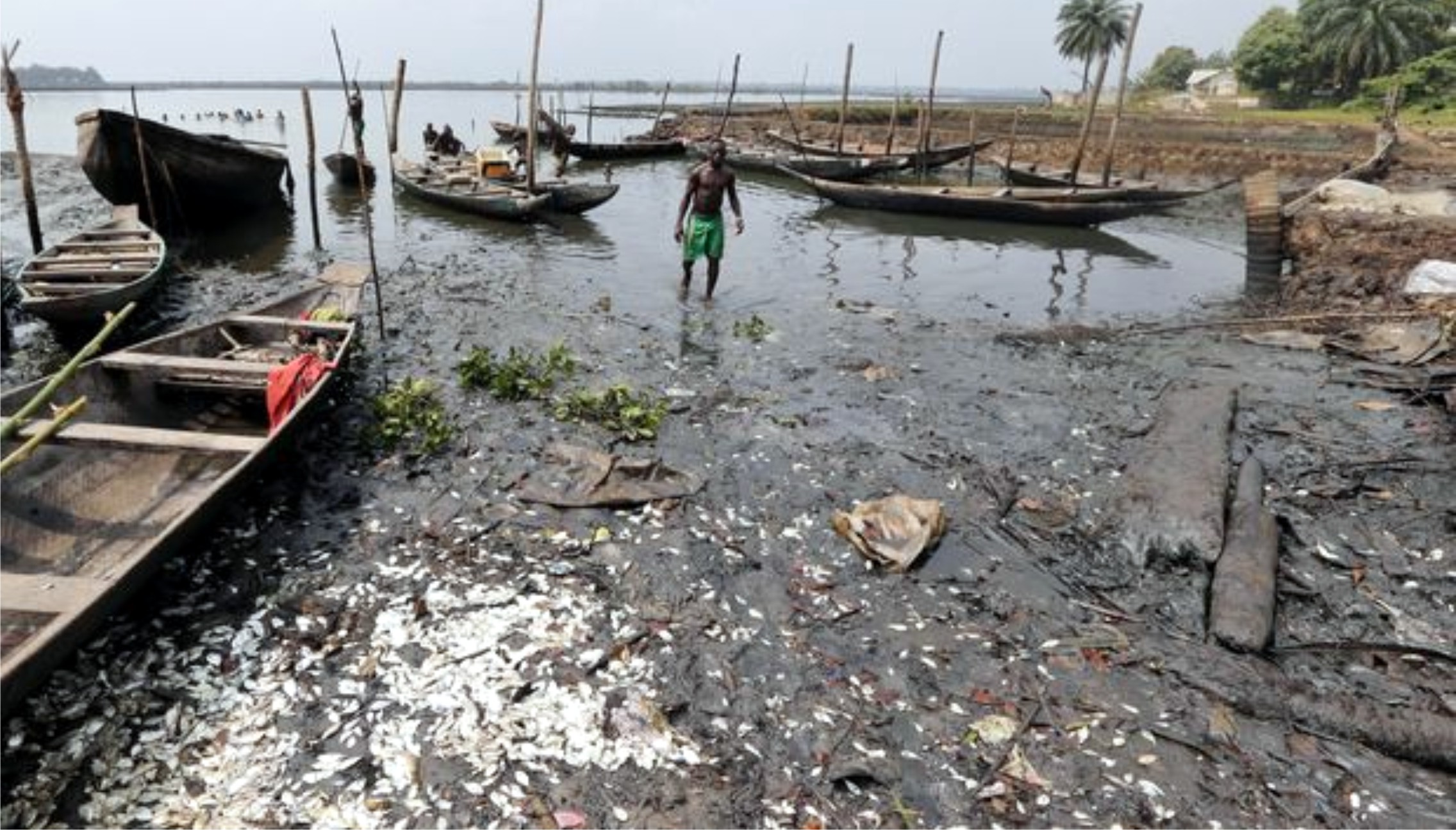
Oil Pollution: ‘IOCs Not Practising Remediation In N’ Delta’

“We travel together as passengers on a little spaceship, dependent on its vulnerable reserves of air and soil, all committed for our safety to its security and peace, preserved from annihilation only by care, the work and the life we give our fragile craft”.
When Adlai
Stevenson made the above remarks shortly before his death, he was drawing attention to the need for global environmental protection.
Unfortunately, environmental pollution has today remained one of the most contentious issues of global concern.
Contrary to Stevenson’s postulation, the story of the Niger Delta region in Nigeria seems to be one of the most ominous globally in terms of environmental pollution and gas flaring. In spite of its huge natural deposit of oil reserves, the Niger Delta is predominantly associated with a diminishing and blighted environment, with its teeming natives and inhabitants, displaced of sustainable livelihood.
The ugly trend has continued to draw the attention of stakeholders and pundits, with a view to addressing the development challenges in the oil rich region.
Engr Olu Anda Wai-Ogosu is one of such concerned patriots and key stakeholders who have lent his views on how to address the issues of oil pollution and environmental devastation in the Niger Delta.
The environmentalist and lecturer in the Institute of Geo Sciences, at the Rivers State University, spoke with The Tide in an exclusive interview in Port Harcourt at the weekend, and indentified some tactical flaws in Nigeria oil politics as being responsible for infrastructural deficit in the Niger Delta region.
He picked holes in the Joint Venture Operation, between the Federal Government and the International Oil Companies (IOCs)and said that the effrontery demonstrated by IOCs in slighting oil bearing and host communities, had the tacit connivance of the Federal Government.
He noted that the IOCs, were not operating in the country on their own volition, but at the instance of the Federal Government who was supposed to protect the interest of the host communities. “The actions of the IOCs are supposed to be subjected to international scrutiny of best practices, but they operate on double standards, and hide under the cover of the Federal Government. The joint venture is an international agreement, and in Nigeria, the Federal Government controls 60 percent while the IOCs control 40 percent.
“The stake of the oil bearing or host communities is subsumed under the agreement, but the Federal Government mostly fails to comply in due terms and depends on bail out by the IOCs. The Federal government, therefore, lacks the moral justifications to whip the IOCs to line in the process of institutional default,” he said.
Commenting on the controversial Petroleum Industry Bill (PIB), the environmentalist, said the bill had suffered some defects as a result of vested interests and the intrigues of oil politics which is skewed to the detriment of the oil bearing communities. “The PIB, which was expected to address the burning issues in Nigeria oil sector has also met a brick wall. There are emphasies on financial benefits to the Federal Government and the IOCs, while the stakes of the host communities are not given due consideration. These communities have suffered the brunts of environmental pollution and they want assurance of sustainable livelihood. We are not sincere about the way we handle the environment,” he said. Wai-Ogosu who is the immediate past president of the Nigeria Environmental Society, also barred his mind on remediation activities by IOCs at polluted sites in the Niger Delta.
He pointed out that the IOCs were not practicing remediation in the Niger Delta, but adopted temporary palliatives to contain the spread of pollution.
“What the IOCs do is not remediation, they only try to cut the spread of the spills by scooping the top soil from where the spill has covered and deceive the larger public that they have remediated.
“Remediation is when you apply reasonable scientific and biological methods to ensure the depth of the spread of the hydrocarbon material is adequately removed from the soil,” he explained .
Explaining the effects of oil spillage on the natural environment, he said the effects depended on the size of the spill, the terrain and the natural resources. He explained further that oil spills extended to 200 kilometres away from where it took place, and in severe cases, its devastation can last for over 50 years, as was the case of Ebubu in Eleme Local Government Area of Rivers State.
The university don also attributed lack of active participation of the Niger Delta region in the oil and gas sector to the “self discriminatory politics” played by the Niger Delta leaders which robbed them of their pride of place and justifiable entitlements in Niger oil politics.
“The oil and gas industry in Nigeria started in the Niger Delta in the late 50s when oil was struck on commercial quantity at Oloibiri in present day Bayelsa State and later in Ogoni, but the region was not able to play key role in the sector because the leaders were not futuristic in their thinking.
“Self discrimination and the minority mentality affected their political alignment. The region was factionalised and operated in splinters; this is responsible for the total disconnect between capacity development and exploitation of resources in the region,” he said.
He noted that in the early 50s, the Ogoni area had become very vibrant in oil wealth but Ogonis were not involved in the acquisition of land for the Shell Petroleum Development Company (SPDC).
He decried the fact that, “No purposeful attempt have been made in Ogoni and the entire Niger Delta to improve on capacity in both upstream and downstream sector of the oil and gas economy”.
The academic who teaches for free at the Rivers State University as his contribution to the development of the state, regretted that the few Niger Delta indigenes that owned oil blocks had it on political affiliation. He called for the liberalisation of oil blocks allocation to favour the oil bearing and host communities. “The minority mentality is still hunting the Niger Delta, we still do not realise that we need to position ourselves to take legitimate advantage of the oil resources at our domain; we have allowed the dominance of the Federal Government to over shadow us.
“We should be patriotic and stop fighting ourselves, our political leaders should know the limit between patriotic will and political will. Our representatives in the state and the National Assembly (NASS) should rise above self will and exert a high sense of service and social responsibility,” he stated.
Like Theodore Roosevelt, who was one of the earliest conservationist, Wai-Ogosu recognises the right to develop and use our natural resources, but detests the wastages and indiscriminate burning of the natural reserve which according to him, is the very foundation of life.
Taneh Beemene


Researchers in Hong Kong and China have developed a new form of battery that is more eco-friendly and longer lasting than lithium ion batteries – and it runs on tofu brine. The new water battery is still in research phases, but if the technology proves to be scalable enough to hit commercial markets, it could be a game-changer for the energy and tech sectors.
“Compared with current aqueous battery systems … our system delivers exceptional long-term cycling stability and environmental friendliness under neutral conditions,” the research team, composed of scientists from the City University of Hong Kong and Southern University of Science and Technology in Shenzhen, Guangdong, said in a paper published this month in Nature Communications.
The researchers found that their battery model can be recharged over 120,000 times. “At over a hundred thousand cycles, this could mean a single water-based battery could last at least a decade or so,” states a recent report on the breakthrough from Interesting Engineering. “For applications like grid storage (solar farms, wind balancing), that’s extremely valuable,” the article went on to say.
This kind of lifespan would represent a drastic improvement over the battery technologies that dominate today’s market. Lithium-ion batteries degrade after between 1,000 and 3,000 charge cycles. This could prove revolutionary, as finding an alternative to lithium-ion batteries to power rechargeable devices is a major priority for Big Tech and the global energy sector.
Moreover, these tofu-brine batteries could prove safer and more environmentally friendly than lithium-ion batteries. According to the study authors, the full cells are environmentally benign and nontoxic and can be directly discarded to environments according to various standards.” Water based (also called aqueous) batteries can also potentially be cheap to produce as they rely on ingredients that are less rare in addition to being less hazardous.
Lithium is environmentally harmful to extract, prone to fires, and its supply chains are geopolitically fraught. Currently, China alone controls half of the global lithium market, and is rapidly increasing its stake. In 2024, more than eight in ten battery cells on the planet were made in China. This means that finding a battery model that can compete with lithium-ion batteries in applications like grid-scale energy storage and electric vehicles would have revolutionary implications for global markets.
Researchers around the world have been racing to develop battery models that could diversify the market and make it more competitive and resilient. These models range widely in size, components, and application, with models currently under development for next-gen sodium-ion batteries, quantum batteries, nuclear batteries, and even sand and dirt batteries.
Of course, the irony is that the leading alternatives to lithium-ion batteries are also being developed in Chinese labs. If this new tofu-brine battery proves scalable and applicable outside of a laboratory environment, it could just be another step toward Beijing’s goal of near-total domination of clean energy technology value chains and status as the world’s first and premiere ‘electro-state.’
China’s extreme advantage in global battery making gives it a major point of leverage in global economies as the world continues to electrify at a rapid pace. It is estimated that European demand for lithium in batteries will reach kilo tonnes (thousands of tonnes) of Lithium Carbonate Equivalent by next year, and North American demand will reach 250 kit LCE. it’s all but certain that the vast majority of that demand will be supplied by China.
Other nations are aware of the risk of this dependency, and are taking pains to protect and promote domestic battery manufacturing, but these efforts may be too little, too late. “For globally competitive battery manufacturing industries to emerge outside of Asia over the next ten years, companies will need to do far more than ensure regulatory compliance,” summarizes a McKinsey & Company report released in January. “Challenges will need to be overcome on multiple fronts spanning supply chains, talent management, operations and technology.”
By: Haley Zaremba

The Rural Electrification Agency (REA) says it will spend N100 billion in 2026 to deploy hybrid mini-grids for government agencies within and outside Abuja.
The Managing Directors, REA, Abba Aliyu, disclosed this while addressing newsmen on the sidelines of the 2026 budget defence session
The approved funds form part of the National Public Sector Solarisation programme, a component of the agency’s broader N170 billion budget proposal for 2026.
The initiative is designed to improve electricity reliability for public institutions while reducing operational costs and easing pressure on the national grid.
Aliyu explained that the agency’s total proposed budget for 2026 stands at N170 billion, with N100 billion of the amount dedicated specifically to the solarisation initiative targeting government agencies.
He said the hybrid mini-grid systems combine solar power with complementary energy sources to ensure an uninterrupted electricity supply.
“The total budget size for 2026 operations is N170 billion, out of which N100 billion had been approved for National Public Sector Solarisation.
Aliyu cited the National Hospital in Abuja as an example where similar infrastructure had been deployed to ensure stable power and cut operational expenses.He added that beyond the Solarisation
Recall that earlier in February 2026, REA signed a Memorandum of Understanding with the Economic Community of West African States (ECOWAS) to deploy solar power systems to 15 public institutions across Nigeria.
The project will be implemented under the Regional Off-Grid Electricity Access Project (ROGEAP), a World Bank-supported initiative aimed at expanding off-grid electricity access across West Africa and the Sahel.
ECOWAS will provide a $700,000 grant to fund the installation of solar photovoltaic systems in selected rural health centres and schools in the Federal Capital Territory, Niger, and Nasarawa States.
Oil & Energy
PIA: TotalEnergies Transfers OLO Oilfield HCDT Obligation To Aradel ……Says HCDT Enabled Completion of 100 Projects In 2 years


In his remarks, the Community Affairs Manager, Aradel Holdings Plc, Blessyn Okpowo, affirmed the company’s commitment to honouring all PIA obligations and continuing Total Energies’ community engagement approach.“We want to say that in line with the PIA, we will honour commitments and duties required of the settlor and we want to work very smoothly with the way TotalEnergies has worked with them,” he stated.
He recognised the Commission’s role in approving the Community Development Plan (CDP) before project start, underscoring regulatory excellence.The parties noted that between 2023 and 2025, the trust has enabled the completion of more than 100 community projects, spanning water supply, electricity, road infrastructure, education, and healthcare with a further 40 projects currently ongoing.
-

 Business4 days ago
NERC Amends Order on Meter Tampering, Power Bypass For Discos
-

 Business4 days ago
NCDMB Signs Mgt Deal With Radisson, Edison…As Board’s 204 Rooms Hotel Open December 2026
-

 Rivers4 days ago
KENPOLY Rector Promises To Prioritise Students’ Welfare
-

 Business4 days ago
Nigeria, AFC sign $1.3 billion deal to build alumina refinery
-

 News4 days ago
Police Arrest Nigerian, Two Others For Kidnapping In Edo
-

 Rivers4 days ago
Don, Stakeholders Urge Environmental Laws In N’Delta
-

 Rivers4 days ago
ADIAFRICA Flags-off Free Eye Screening Outreach In PH
-

 Business4 days ago
FG engages foreign investors at PEBEC Roundtable on business environment reforms