
Features
Lest We Forget Dim Ojukwu

Dim Chukwuemeka Odumegwu Ojukwu, a man of reputation and influence, warlord, people’s general and leader died in a London hospital on November 26, 2011 after he was struck with a complicated stroke. He was given a state-cum-military burial on March 2, 2012 by Dr. Goodluck Jonathan, former President of Nigeria. It is now eight years since he took a bow, bade us goodbye and departed this mortal world after he had played his parts in the affairs of the Igbo nation and Nigeria.
Ojukwu was an exceptionally intelligent, dauntless and courageous leader. He was the first Nigerian to be enlisted in the Nigerian military with a Master’s degree, the first African to pass the Joint Services Course at Latimer, England. He was the first military instructor of the Nigerian Army, the first Nigerian Quartermaster-General of the Nigerian Army, the first Military Governor of the Eastern Region and the first regional leader in Nigeria to confront, challenge the Federal Government of Nigeria and prosecuted a war that held Nigeria captive for 30 months over the perceived injustice meted on Ndigbo and the massacre of people of Eastern Nigerian extraction nationwide.
He was a defender, a crusader and advocate of justice, people’s rights and good governance in Nigeria. So, his absence for the past eight years is seriously felt by all who admired his doughty spirit, especially now that the issue of Biafra, a country he attempted to create out of Nigeria, is fully resurrected and is making wave in the world. Who knows what would have been his contribution and moral support to Biafra and its agitators. What would have been his stand on controversial issues such as rural grazing areas (RUGA), restructuring, Ibo presidency in 2023, Python dance which is reported to have claimed many innocent lives of Ndigbo in Umuahia. We missed all that. Infact, we are short-changed by his death.
Chief Ralph Uwazuruike, Ojukwu’s bosom friend and a man who kept the spirit of Biafra alive, said few days after the death of Ojukwu that when he heard that he was stricken with the dreaded stroke, he and some members of the Movement for the Actualization of the Sovereign State of Biafra (MASSOB) went to his Casabianca residence in Enugu to see him, to commiserate and wish him speed recovery. He said when they got there and saw Ojukwu, he was really in a bad state. He said he hailed him (Ojukwu) as usual with all his intimidating chieftaincy titles, such as Ikemba Nnewi, Dike Dioranma Ndigbo, Eze Igbo Gburugburu and other titles, he did not respond to any. He said he was alarmed. He then joked and told him that he was a handsome man. It was then he responded by asking whether he would be handsome in the coffin. Uwazuruike said that he was shocked and devastated by such a response. Thereafter, he asked Ojukwu what he meant by being handsome in the coffin, there was no response. The MASSOB leader said it was then he knew that Ojukwu would not survive. Ojukwu eventually died in the United Kingdom where he had gone for a medical treatment on November 26, 2011.
Truly, Ojukwu became handsome in the coffin. As a historian, what was paramount in Ojukwu’s mind in his sick bed was how people and history would place or perceive him as regards his involvement in the civil war that claimed millions of lives and destroyed properties worth billions of naira. That was why he asked his friend Uwazuruike whether he would be handsome in the coffin. However, people and history proved kind to him. He was eulogized, idolized, honoured and dramatized while in the coffin. Ojukwu was, indeed, handsome in the coffin.
There was an unprecedented outpouring of affection and admiration for him. There were celebrations everywhere in Nigeria and beyond. Even the truth about the Nigeria-Biafra Civil War and the patriotic roles he played to avert it was told for the first time in 42 years after the end of the war. Everyone who spoke unanimously agreed that he was a man of peace, vision and foresight. They consented that his postulations as enunciated in the Aburi Accord was the finest and the greatest for the unity and development of Nigeria.
They averred that if the then Federal Government had abided by the accord, there wouldn’t have been a civil war and that Nigeria would have been a better place to live in today. The restructuring of the country which Nigerians are clamouring today was a major menu in the Aburi Accord. So, what Ojukwu saw many years back is what Nigerians are seeing and agitating today. What a visionary and foresighted leader? Again, they agreed that he was an enigma, the people’s general and a leader whose exemplary leadership virtues should be emulated by all Nigerians.
He was exonerated from being among the coup plotters nor supported the January 1966 coup that shutdown the corrupt First Republic and led to civil war. He was the commander of the Fifth Battalion of the Nigerian Army stationed in Kano where he succeeded in ensuring that the coup plotters and their cohorts did not infiltrate the. That remarkable achievement earned him the respect and admiration of the then Emir of Kano, Alhaji Ado Bayero, and his subjects. It also earned him an enduring friendship with the Emir and people of Kano.
Ojukwu was honoured by the Nigerian military during his burial. They carried his lifeless body from Abuja to Owerri, Aba, Enugu, Awka and kept vigil throughout the burial. Ojukwu, no doubt, deserved the honour. He brought dignity, honour and prestige to the Nigerian military. Apart from being one of the few Nigerian military officers that built the Nigerian military, Ojukwu brought respect to the force when as a Master’s degree holder (obtained from the prestigious Oxford University in England) and son of a millionaire he joined the military as a lowly ranked soldier.
Before then, the military was largely seen as an institution for school dropouts and wayward children. But Ojukwu’s enlistment erased that erroneous notion and encouraged many educated Nigerians to join the military. So, he deserved whatever honour and respect the Nigerian military accorded him during the burial. He was a great man in all ramifications.
Ojukwu, a charismatic leader, was born in Zungeru, now in Niger State in 1933 to Sir and Lady Louis Philip Odumegwu Ojukwu, the first African millionaire. In 1944, at the tender age of 11, Ojukwu was admitted into the prestigious Kings’ College, Lagos after completing his primary education at St. Patrick’s Primary School, Lagos. And in 1946, two years after, and at the age of 13, the brilliant boy was sent to England where he enrolled in Epsom College, Surrey, to continue and complete his secondary education.
On completion of his secondary education, he was admitted into an elitist Oxford University, United Kingdom. Strong and determined, little Ojukwu shunned the comfort of his millionaire father’s home, ignored the devastating British cold weather, strange environment and ubiquitious white faces, persevered and graduated with a Master’s degree in Modern History.
He returned to Nigeria in 1956 and joined the civil service of the colonial government of the then Eastern Region as a district officer. A year after, precisely in 1957, the restless Ojukwu left the civil service and joined the Nigerian Army; thus becoming one of the first university graduates to be enlisted in the Nigerian military. There, he made a super and brilliant military career and left a unique imprint on the sands of time.
Ojukwu was an elder statesman and politician. He was the founder, political leader and presidential candidate of the All Progressives Grand Alliance (APGA) in 2003. His party came third among the 30 political parties that participated in the elections. Former President Goodluck Jonathan honoured him with a state-cum-military burial. By that, he partially ended the civil war and equally endorsed General Yakubu Gowon’s famous declaration of No victor, no vanquished. The final fulfillment of all this will, indeed, be when an Igbo man is elected as president of Nigeria, 50 years after the end of the civil war.
Former Nigerian leader, General Ibrahim Babangida, in his tribute to Ojukwu, said that the election of an Ibo man as president of Nigeria would gladden Ojukwu’s spirit. No doubt, Ojukwu’s death marked the end of an era in Nigeria.
Ogbuehi, a freelance journalist, wrote in from Eagle Island, Port Harcourt.




It has been 25 years of impactful development of the Niger Delta region, facilitated by theNiger Delta Development Commission. NDDC. Without doubt, it has been a remarkable journey, marked by significant milestones and daunting challenges.
For the past week, the NDDC has been celebrating its achievements, beginning with a thanksgiving service in Akure, Ondo State, on July 6, drawing stakeholders and Niger Deltans to express gratitude to God for the Commission’s journey so far.
Taking off on the wings of the Oil Minerals Development Commission, OMPADEC, in 2000, the NDDC has grown into a symbol of federal presence in the oil-rich Niger Delta region.
The celebration moved from spiritual reflection and thanksgiving to strategic communication, with a World Press Conference held in Asaba, Delta State, on Monday, the 7th of July. There, members of the Fourth Estate across all media gathered in what was perhaps the most extensive media engagement of its kind. The NDDC Managing Director and Chief Executive Officer, Dr. Samuel Ogbuku, reaffirmed the Commission’s commitment to its motto of “making a difference.”
Dr. Ogbuku stated, “The President gave us a matching order during our inauguration to positively turn things around in the Niger Delta region.” That presidential directive, he noted, continues to guide the Board and Management as they pursue legacy projects across the region.
From electricity restoration in Ondo to road linkages in Bayelsa and Akwa Ibom, the NDDC’s impact was showcased in clear, tangible terms. “We commissioned the 45-km double-circuit 33KV feeder line from Omotosho Power Station to Okitipupa in Ondo State,” Dr. Ogbuku recalled, “bringing electricity back to 25 local governments after 15 years in darkness.” This was just one of several landmark interventions highlighted during the press briefing, underscoring the Commission’s renewed vigour under the current leadership.
The Managing Director spoke candidly about the setbacks caused by years of instability in leadership. “Frequent changes in management and boards have slowed our progress,” he admitted. “But today, we are targeting legacy projects. Our mandate is to complete those critical projects.” He emphasised that the Commission had transitioned from a transactional mindset to one of transformation, including the digitisation of procurement processes to ensure transparency and accountability.
Other top executives echoed similar sentiments. The Chairman of the Governing Board, Mr. Chiedu Ebie, stressed the importance of collaboration, particularly with the media, whom he described as “critical stakeholders” in advancing development. Alabo Boma Iyaye, the Executive Director of Finance and Administration, noted that the celebrations would run until Saturday, July 12, culminating in a gala night and plenary session in Port Harcourt.
Perhaps, the most significant message from the silver jubilee celebration is the renewed hope that the Niger Delta can finally experience holistic and sustainable development.
According to Ogbuku, “Through the initiative of the Board and Management, we have restructured the administrative architecture of the Commission to its 13 statutory Directorates, introduced robust Corporate Governance protocols… This formalised a value- driven institutional culture anchored on ethics and performance.”
As the weeklong celebrations continue across different states in the region, the NDDC appears determined not just to celebrate its past but to chart a bold course for the future.
The people of the Niger Delta are watching, hopeful that the next 25 years will be defined not by promises, but by lasting progress that transforms lives and communities, truly making a difference.
The celebration also featured a movie premiere titled “Making a Difference”, which traced the Commission’s journey and told stories of transformation in communities once plagued by underdevelopment. For many observers, the film served as both an emotional tribute and a powerful reminder of the NDDC’s role in shaping the destiny of the region.
The Governing Board and management of the NDDC have again proven to Nigerians, particularly the people of the oil-bearing Niger Delta region, that history does matter. They have also shown clearly that extraordinary personalities can upturn calculations and permutations. The above assertion was evidenced by the torrents of praises, accolades, and commendations poured on the Commission and its management and board by critical stakeholders during its week-long 25th anniversary celebration.
Beginning with Ondo State, one of the NDDC mandate states, Ondo Governor, Lucky Aiyedatiwa, hailed the management of the NDDC for the peace and development currently prevailing in the Niger Delta region. He said the Commission, under the current management and board, has succeeded in bridging developmental gaps in the region, noting that NDDC’s emphasis on partnerships and collaboration aimed at driving sustainable development across the Niger Delta has ushered in unprecedented progress.
Aiyedatiwa, who spoke at the Thanksgiving Service of the NDDC held at St Thomas’s Anglican Church, Akure, the Ondo State capital, stressed that the commission has undoubtedly lived up to its established mandate, commending the Board and Management for their exemplary leadership and commitment.
The Governor hailed the commission’s commitment and dedication to project conception, implementation, and completion, noting that the NDDC has established a culture of delivery and the region would no longer witness abandonment of projects as was the case in the past.
He said, “As we celebrate the Silver Jubilee of the NDDC, we must acknowledge the progress we have made and also recognise that there is still much work to be done as the Niger Delta region continues to face significant development challenges and we must work together to address these issues. “I urge the NDDC to continue to improve on its activities, ensuring that projects are tailored to the needs of the communities we serve. Let us work together to unlock the potential of our region, promote economic growth and enhance the lives of our people. We are partners in progress, unity and development.”
From Ondo State to Asaba, the Delta State capital, it was the same rain of praises. The Asaba monarch, the Asagba of Asaba, Obi Epiphany Azinge, on his part, was full of praises for the NDDC for its achievements in the past 25 years.
Obi Azinge spoke when Ebie led a delegation of the Commission’s Board and Management to pay a courtesy visit to him in his palace in Asaba, the Delta State capital. The Royal Father commended the NDDC for its intervention in several sectors across the Niger Delta region.
He expressed delight with the foreign postgraduate scholarship programme, which had helped many youths from the Niger Delta upgrade their knowledge.
He also acknowledged the contributions of the NDDC Chairman, whom he said had served the Delta State Government in different capacities. He noted that Ebie served meritoriously as Delta State Commissioner for Basic and Secondary Education and later, Secretary to the State Government. The monarch thanked the NDDC for selecting Asaba as the venue for some of the activities marking its 25th anniversary, such as a press conference and the movie premiere.
Earlier, the NDDC Board Chairman congratulated Asagba on his ascension to the throne of his forefathers, saying he was eminently qualified for the position. Ebie expressed optimism that the Asagba’s reign would bring good tidings to Asaba, which serves as both a Kingdom and the capital of Delta State.
He stated that the NDDC had come of age and was now a big brother to the new development agencies in Nigeria’s geo-political zones. Ebie disclosed that as part of the silver jubilee celebration, the Commission was going around the nine States of the Niger Delta.
The NDDC Chief Executive Officer pledged that the NDDC’s commitment to adhering strictly to the President’s directive to the Commission to complete all ongoing projects in the region, including roads, bridges, schools, and healthcare facilities. He disclosed that the Commission was engaging all stakeholders to ensure harmony and cooperation in the task of developing the hitherto neglected Niger Delta region.
He noted that, ”It is not only by our efforts; it is the collaborative efforts from all the stakeholders who believe the time has come when there should be stability in the NDDC and that stability is a challenge to us to ensure that we deliver development to the people of the Niger Delta region.”
Ifeatu Agbu
Agbu wrote in from Port Harcourt.
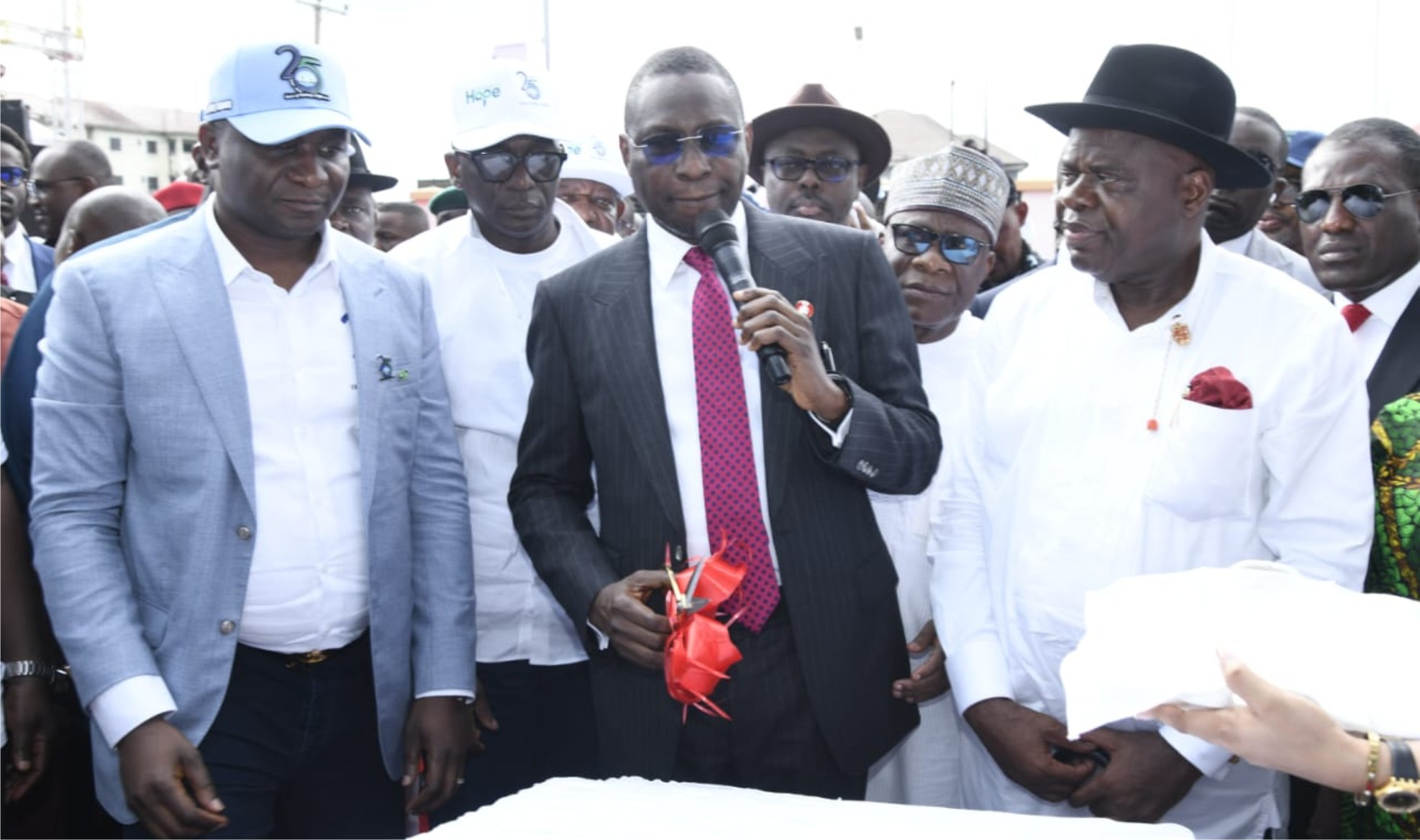
The mandate of the Niger Delta Development Commission, NDDC, is to facilitate the rapid and sustainable development of the Niger Delta region, while that of the Economic and Financial Crimes Commission, EFCC, is to investigates financial crimes and put corrupt practices in check.
Given their different roles, the idea of an alliance between the two organisations may seem far-fetched. However, with the NDDC Managing Director, Dr Samuel Ogbuku, and the EFCC Executive Chairman, Mr. Olanikpekun Olukoyede, it is not just an idea; it is a reality.
The unique collaboration between the NDDC and the EFCC has given rise to the Renewed Hope Multi-Purpose Training Centre, unveiled on Tuesday at Otuokpoti Community in Ogbia Local Government Area, Bayelsa State.
According to the NDDC Managing Director, the vast training complex was executed with funds recovered on behalf of the Commission by the EFCC.
Ogbuku explained that the Bayelsa training centre was funded through the money recovered by the EFCC and executed under a signed performance bond, ensuring transparency and impact. He noted that the facility represented one of several such centres being constructed in Delta and Rivers States. He said: “We have similar facilities currently under construction in Odi, Bayelsa State, while the ones in Delta State are being built in Patani and Ozorro and another two in Rivers State.”
He observed that the Multi-Purpose Training Centre, which was completed in record time, was a partnership between the EFCC and the NDDC, as the anti-crime agency had recovered the funds that facilitated the project’s execution.
Ogbuku observed that the facility, which could accommodate 1,000 persons, represented a significant step toward empowering local communities through skills development and inclusive growth.
The training centre’s components, which include a school, hospital, cafeteria, police post, and recreational centre, are all designed to support training, healthcare, and emergency accommodation within a single integrated complex.
Speaking at the inauguration ceremony, the EFCC Chairman assured the NDDC of the release of more recovered funds in the coming weeks.
Olukoyede described the NDDC as a “renewed and transformed government agency.” He assured that the EFCC would do everything to recover all outstanding statutory contributions due to the NDDC from oil companies.
He noted: “We have made several recoveries on behalf of the NDDC, and we will not relent in this direction. We are encouraged by the fact that the NDDC is making the Renewed Hope Agenda of the Federal Government a reality in the Niger Delta region.”
Olukoyede commended the NDDC for its institutional and policy reforms, declaring that the people of the Niger Delta will have every reason to celebrate the current leadership of the Commission. He described the NDDC as a beacon of good governance under President Bola Ahmed Tinubu.
He noted: “The Niger Delta is the goose that lays the golden egg and should not be denied the benefits of that golden egg. On our part at the EFCC, we must do everything within our power to ensure that the three per cent statutory contribution due to the NDDC is recovered and handed over to the Commission. We are going to continue supporting you.”
He said further: “Under this President, NDDC is working; good governance is being delivered. It is my delight to be part of this transformational agenda. The Renewed Hope Agenda is no longer a slogan—it is a reality. For the first time, people are identifying with what NDDC is doing.”
Olukoyede commended the NDDC, saying the Commission has refined its processes to uphold the principles of probity. This aligns with the agency’s head’s emphasis on upholding transparency and accountability in the country’s affairs.
The Chairman of the anti-crime agency confessed that his perspective on the NDDC was turned around in 2024, when the NDDC management, led by Ogbuku, paid him a courtesy visit at the EFCC’s headquarters in Abuja.
Olukoyede stated that he was impressed by the Commission’s “Rewind to Rebirth” initiative.
He declared: “The five minutes of interaction with the MD left me with a different perception of NDDC. Maybe, we will begin to see an NDDC that is a symbol of pride, accountability, transparency and able to deliver on its mandate.
“From his presentation, you can see that he is ready to bring a change, and that is the exact thing that we stand for in EFCC.”
Assuring that the EFCC would continue to assist the NDDC to achieve its mandate, he said: “We have been working with you to make recoveries; we will continue to do more.
“The collaboration is something we need to take to the next level, and with what you have put on the table I think we are ready to work with you to strengthen your systems and processes and to take the NDDC to the next level.”
In his remarks, the Minister of Niger Delta Development, Engr. Abubakar Momoh, praised the NDDC Board and Management for their unity of purpose and commitment to service delivery, stating that the level of harmony and stability within the Commission is unprecedented.
He declared: “What we are witnessing here today has never happened in the history of the NDDC. Since I assumed office as Minister, I have not been called upon to settle any crisis within the Commission. This is a testament to the teamwork between the Board and Management.”
Also speaking, the Chairman of the NDDC Governing Board, Mr. Chiedu Ebie, emphasised the human capital development focus of the two projects commissioned, noting that reforming the NDDC is an ongoing but rewarding process.
He stated: “We are moving from transaction to transformation. We are doing our best to improve not just the reputation of the NDDC, but everything that concerns the Commission. Today is about promoting and celebrating human capacity.”
Without a doubt, the Niger Delta region is confronted with ecological and environmental challenges that should, perforce, attract significant funds from the Federal Government and the oil companies operating in the region.
Sadly, this has not been so, thus limiting the capacity of the NDDC to fulfill its mandate of driving the development process and transforming the Niger Delta region into one that is “economically prosperous, socially stable, ecologically regenerative and politically peaceful.”
It is rather unfortunate that, despite the spirited efforts by successive boards and managements of the NDDC to meet the expectations of the people, their efforts have not been matched with commensurate funding.
The issue of inadequate funding is resurfacing again. Indeed, it is an inconvenient truth that will remain on the front burner until it is fully addressed.
That explains why the NDDC Managing Director highlighted the issue during interactive sessions that the Commission’s Board and Management held with the relevant Committees of the National Assembly in Abuja last year.
Ogbuku told the House of Representatives Committee on NDDC, chaired by Hon. Ibori-Suenu Erhiatake, that the Commission is owed over N2 trillion, arising from withheld funds and underpayments by both the government and the oil companies. He blamed this on non-compliance with the Act establishing the Commission.
Given the enormous impact of their activities on the environment, the oil companies are expected to be at the forefront in the critical task of urgently developing the oil basin that has suffered so much neglect in the past. It is, in fact, in their interest to develop the communities where they operate to guarantee peace, which is very necessary for them to continue with their work.
Thankfully, both the Senate and the House of Representatives promised to assist the NDDC in recovering its outstanding funds. In their various interactions with the NDDC leadership, the lawmakers expressed concern about the disregard for existing laws governing the Commission’s funding.
The Chairman of the Senate Committee on NDDC, Senator Asuquo Ekpenyong, expressed displeasure over the disregard for the law by the International Oil Companies (IOCs) and promised to call them to order.
The Senate Committee Chairman stated that proper funding would help NDDC to adequately address the sustainable development of the Niger Delta region, noting that the challenge of developing the region was enormous and that all relevant contributors to the NDDC must play their roles diligently.
Senator Ekpenyong said that in discharging its oversight functions, his committee will ensure that every contributor to NDDC pays what they owe the Commission, “because we cannot afford to toy with the development of that very important region. We owe it to the country to make sure that we improve the living conditions of the people of the region.”
It is reassuring to note that both chambers of the National Assembly are concerned about the pressing funding challenges facing the NDDC and are taking steps to address the situation.
The lawmakers understand that we have a responsibility to adequately fuel the vehicle chosen to drive the development process in the Niger Delta region.
In 2023, the House of Representatives unveiled plans to investigate the activities of International Oil Companies (IOCs) operating in the Niger Delta region, as well as the recovery of over $4 billion allegedly owed to the NDDC.
The resolution was passed sequel to the adoption of a motion sponsored by Hon. Donald Kimikanboh Ojogo, who frowned at the flagrant breach of the NDDC Act, 2000, which was established in response to heightened agitations and violent yearnings for special intervention in the oil-producing states.
He said: “The House is aware that the indebtedness of the IOCs to the NDDC had culminated in the drive by the Economic and Financial Crimes Commission (EFCC) to commence the debt recovery process.
By Ifeatu Agbu
-

 News1 day ago
RSG Targets Nine Million Residents in Mosquito Net Distribution Campaign
-

 Oil & Energy1 day ago
Aiyedatiwa Signs New Electricity Bill
-

 Oil & Energy1 day ago
NLNG Commissions Research And Innovation Centre In RSU
-

 Maritime1 day ago
Marine Minister Commends President Tinubu On NPERA Bill Assent
-

 News1 day ago
KenPoly Holds Eight Convocations, August 29
-

 News1 day ago
RSG Begins Another Phase of Projects Commissioning Today
-

 News1 day ago
RMAFC Completes Revenue Sharing Review, Proposes New Pay
-

 Maritime1 day ago
NAGAFF Petitions IGP Over Alleged Maritime Police Harassment