Opinion
Governors And Senatorial Ambitions
The personal ambition of some state governors to retire to the Senate at the cessation of their respective tenures may be stirring some political unease in the country. As at the last count, the Senate is fully occupied by numerous former governors and deputy governors among the 109 senior lawmakers and the number is likely to surge in the next Senate.
Surprisingly, some former governors now serving as senators, who aspired to be president, purchased senatorial forms for the 2019 election to ensure that if they failed to get the presidential tickets of their parties, they wouldn’t be ousted from their seats in the Senate. This development pitched the present occupants against some other aspirants who had sworn to frustrate such moves hence building up nervous political tension in their domains.
Senators who once served as governors include Bukola Saraki of Kwara, Rabiu Musa Kwankwaso of Kano, Godswill Akpabio of Akwa Ibom, Theodore Orji of Abia, Abdullahi Adamu of Nasarawa, Sam Egwu of Ebonyi, Shaaba Lafiagi of Kwara and Joshua Dariye of Plateau, who is currently serving jail term for corruptly enriching himself while holding the office of governor.
Others are Jonah Jang of Plateau, Aliyu Magatakarda Wamakko of Sokoto, Ahmed Sani Yarima of Zamfara, Danjuma Goje of Gombe, Bukar Abba Ibrahim of Yobe, Adamu Aliero of Kebbi, George Akume of Benue and Isiaka Adeleke of Osun, who later died in office and was replaced by his brother, Ademola Adeleke, who himself contested for the last Osun State gubernatorial polls and in fact, won the inconclusive election.
The question is why has the Senate become the radiant bride of state governors? Why have second term governors chosen the Senate to carefully preserve their political careers and keep them alive? This is a poser yet unresolved. Since 1999, the upper chamber of the National Assembly has carved a niche for attracting respectable Nigerians like retired military administrators, ministers, ex-governors and veteran politicians.
Wherever parliamentary democracy is practised, the Senate is held in high esteem. Therefore, it is not a convenient place for mediocrities or those who lack dignity or ambience. Unfortunately, in Nigeria, it is a safe haven for all manner of politicians whose records are tainted with untoward practices and those who have questions to answer before anti-graft agencies.
For instance, Joshua Dariye, a former Plateau State governor, was arrested in London in 2004 for money laundering. He allegedly jumped bail and returned to the country to continue his gubernatorial duties. Today, he is a senator. There are many other ex-governors-turned senators who have cases to clear with the Economic and Financial Crimes Commission, (EFCC). Many such cases are either presumed extinct or are still in court.
Indeed, it is all sad and pathetic that retired governors who lack excellent credentials of performance have invaded the upper chamber. Some, out of increasing despondency, go dangerously low to dump their political parties upon which platforms they were elected governors and traverse elsewhere to clinch their senatorial tickets. Because of the influence governors wield, they are given the ticket unopposed.
The large influx of these governors to the Red Chamber indicates that they seek the position not for the development they will attract to their people or the effective representation they will make on their behalf, but for personal aggrandisement. One feels certain that exiting governors that do not vie for the senatorial position either have strong opposition back home or are not in the good books of the higher powers that be.
Some distinguished lawmakers are in the upper house thinking that they can wield their despotic powers on the house and influence the affairs of things. The interesting aspect is many of them remain as onlookers and bench warmers in the Senate while just an amazing few understand the reason they are elected.
Sadly, the upper chamber has become an all-comers affair and this calls for seemingly genuine interest. While it is not wrong for governors to seek out for other positions after their tenures, especially if they performed creditably in their service, they have to subject themselves to the extant process of nomination devoid of undue influence and intimidation. Such ambition must be borne out of a palpable desire to serve the people.
After all, it is not guaranteed that a governor, who successfully served their tenure, will perform well as a senator. Some are almost imperceptible and consigned to oblivion when they realise that they no longer call the shots, but are part of a wider body whose members are equal. Soon it becomes clear that their visible presence in the National Assembly is for selfish reasons.
If ex-governors who controlled huge resources in their states could not make any substantial impact while they were governors, how will miracle happen when they become senators?
It is to end this consistent trend that the leadership of the People’s Democratic Party, PDP, once attempted to scuttle the ambition of second term governors elected on its platform from picking senatorial tickets. Though the move failed, it was a definite indication that the development had entirely assumed an unacceptable proportion.
If the National Assembly, especially the Senate, must be considered hallowed and a symbol of democracy in the country, this frightening scenario must be halted immediately. If a good number of retired governors keep migrating into the Senate, won’t they seek to establish an ex-governors forum in the upper chamber and rob the institution of its vibrancy and the needed bite to check the excesses of the executive?
Arnold Alalibo

Opinion
Wike VS Soldier’s Altercation: Matters Arising
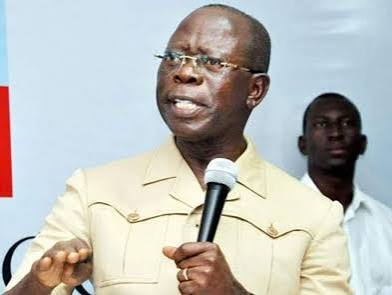
The events that unfolded in Abuja on Tuesday November 11, 2025 between the Minister of the Federal Capital Territory, Chief Nyesom Wike and a detachment of soldiers guarding a disputed property, led by Adams Yerima, a commissioned Naval Officer, may go down as one of the defining images of Nigeria’s democratic contradictions. It was not merely a quarrel over land. It was a confrontation between civil authority and the military legacy that still hovers over our national life.
Nyesom Wike, fiery and fearless as always, was seen on video exchanging words with a uniformed officer who refused to grant him passage to inspect a parcel of land alleged to have been illegally acquired. The minister’s voice rose, his temper flared, and the soldier, too, stood his ground, insisting on his own authority. Around them, aides, security men, and bystanders watched, stunned, as two embodiments of the Nigerian state clashed in the open.
The images spread fast, igniting debates across drawing rooms, beer parlours, and social media platforms. Some hailed Wike for standing up to military arrogance; others scolded him for perceived disrespect to the armed forces. Yet beneath the noise lies a deeper question about what sort of society we are building and whether power in Nigeria truly understands the limits of its own reach.
It is tragic that, more than two decades into civil rule, the relationship between the civilian arm of government and the military remains fragile and poorly understood. The presence of soldiers in a land dispute between private individuals and the city administration is, by all civic standards, an aberration. It recalls a dark era when might was right, and uniforms conferred immunity against accountability.
Wike’s anger, even if fiery, was rooted in a legitimate concern: that no individual, however connected or retired, should deploy the military to protect personal interests. That sentiment echoes the fundamental democratic creed that the law is supreme, not personalities. If his passion overshot decorum, it was perhaps a reflection of a nation weary of impunity.
On the other hand, the soldier in question is a symbol of another truth: that discipline, respect for order, and duty to hierarchy are ingrained in our armed forces. He may have been caught between conflicting instructions one from his superiors, another from a civilian minister exercising his lawful authority. The confusion points not to personal failure but to institutional dysfunction.
It is, therefore, simplistic to turn the incident into a morality play of good versus evil.
*********”**** What happened was an institutional embarrassment. Both men represented facets of the same failing system a polity still learning how to reconcile authority with civility, law with loyalty, and service with restraint.
In fairness, Wike has shown himself as a man of uncommon courage. Whether in Rivers State or at the FCTA, he does not shy away from confrontation. Yet courage without composure often feeds misunderstanding. A public officer must always be the cooler head, even when provoked, because the power of example outweighs the satisfaction of winning an argument.
Conversely, soldiers, too, must be reminded that their uniforms do not place them above civilian oversight. The military exists to defend the nation, not to enforce property claims or intimidate lawful authorities. Their participation in purely civil matters corrodes the image of the institution and erodes public trust.
One cannot overlook the irony: in a country where kidnappers roam highways and bandits sack villages, armed men are posted to guard contested land in the capital. It reflects misplaced priorities and distorted values. The Nigerian soldier, trained to defend sovereignty, should not be drawn into private or bureaucratic tussles.
Sycophancy remains the greatest ailment of our political culture. Many of those who now cheer one side or the other do so not out of conviction but out of convenience. Tomorrow they will switch allegiance. True patriotism lies not in defending personalities but in defending principles. A people enslaved by flattery cannot nurture a culture of justice.
The Nigerian elite must learn to submit to the same laws that govern the poor. When big men fence off public land and use connections to shield their interests, they mock the very constitution they swore to uphold. The FCT, as the mirror of national order, must not become a jungle where only the powerful can build.
The lesson for Wike himself is also clear: power is best exercised with calmness. The weight of his office demands more than bravery; it demands statesmanship. To lead is not merely to command, but to persuade — even those who resist your authority.
Equally, the lesson for the armed forces is that professionalism shines brightest in restraint. Obedience to illegal orders is not loyalty; it is complicity. The soldier who stands on the side of justice protects both his honour and the dignity of his uniform.
The Presidency, too, must see this episode as a wake-up call to clarify institutional boundaries. If soldiers can be drawn into civil enforcement without authorization, then our democracy remains at risk of subtle militarization. The constitution must speak louder than confusion.
The Nigerian public deserves better than spectacles of ego. We crave leaders who rise above emotion and officers who respect civilian supremacy. Our children must not inherit a nation where authority means shouting matches and intimidation in public glare.
Every democracy matures through such tests. What matters is whether we learn the right lessons. The British once had generals who defied parliament; the Americans once fought over states’ rights; Nigeria, too, must pass through her own growing pains but with humility, not hubris.
If the confrontation has stirred discomfort, then perhaps it has done the nation some good. It forces a conversation long overdue: Who truly owns the state — the citizen or the powerful? Can we build a Nigeria where institutions, not individuals, define our destiny?
As the dust settles, both the FCTA and the military hierarchy must conduct impartial investigations. The truth must be established — not to shame anyone, but to restore order. Where laws were broken, consequences must follow. Where misunderstandings occurred, apologies must be offered.
Let the rule of law triumph over the rule of impulse. Let civility triumph over confrontation. Let governance return to the path of dialogue and procedure.
Nigeria cannot continue to oscillate between civilian bravado and military arrogance. Both impulses spring from the same insecurity — the fear of losing control. True leadership lies in the ability to trust institutions to do their work without coercion.
Those who witnessed the clash saw a drama of two gladiators. One in starched khaki, one in well-cut suit. Both proud, both unyielding. But a nation cannot be built on stubbornness; it must be built on understanding. Power, when it meets power, should produce order, not chaos.
We must resist the temptation to glorify temper. Governance is not warfare; it is stewardship. The citizen watches, the world observes, and history records. How we handle moments like this will define our collective maturity.
The confrontation may have ended without violence, but it left deep questions in the national conscience. When men of authority quarrel in the open, institutions tremble. The people, once again, become spectators in a theatre of misplaced pride.
It is time for all who hold office — civilian or military — to remember that they serve under the same flag. That flag is neither khaki nor political colour; it is green-white-green, and it demands humility.
No victor, no vanquish only a lesson for a nation still learning to govern itself with dignity.
By; King Onunwor
Opinion
Ndifon’s Verdict and University Power Reform
Opinion
As Nigeria’s Insecurity Rings Alarm
-
Politics5 days agoTinubu Increases Ambassador-nominees to 65, Seeks Senate’s Confirmation
-
Sports5 days ago
Obagi Emerges OML 58 Football Cup Champions
-
Sports5 days agoFOOTBALL FANS FIESTA IN PH IS TO PROMOTE PEACE, UNITY – Oputa
-
News5 days agoFubara Assures Greater Collaboration With Navy
-
News5 days agoRHI: First Lady Gives N50m Business Grants To Rivers PWDS, Disabled Veterans …As RGS Unveils Free Medical Services For Vulnerable Persons
-
News5 days agoFubara Tasks Traditional Rulers On Peace, Security …Says Education, Job Creation ‘ll Receive Boost In 2026 Budget
-
Politics3 days agoWhy Reno Omokri Should Be Dropped From Ambassadorial List – Arabambi
-
Oil & Energy2 days agoNCDMB Unveils $100m Equity Investment Scheme, Says Nigerian Content Hits 61% In 2025 ………As Board Plans Technology Challenge, Research and Development Fair In 2026