
Oil & Energy
Egina, Pushing Nigerian Content Frontier

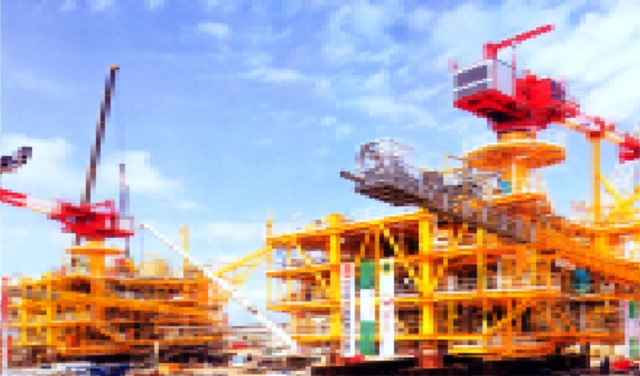
This is the concluding part of a keynote address by the Deputy Managing Director, Deep Water, Total Upstream Companies in Nigeria, Mr. Ahmadu-Kida Musa, at the Nigeria Oil And Gas Conference and Exhibition (NOG) 2018, held at ICC, Abuja, July 2, 2018
Egina Project It was against the back drop of this new approach to Nigerian Content that Total took the Final Investment Decision to develop Egina in 2013, three years after the Nigerian Oil & Gas Industry Content Development Act became law. The result is that Egina became a test case for the NOGICD Act.
Egina is the latest of Total’s deep-water developments and the third project of its kind developed by Total in Nigeria, after Akpo and Usan. These projects have brought progressive increase in levels of Nigerian Content and this is well illustrated by the percentage of total project workload performed in Nigeria: from 44% for Usan, Total recorded 60% for Akpo and now 77% will be achieved for Egina just before the FPSO sails away from the SHI-MCI Yard in LADOL Island, Lagos where it is currently moored for topsides integration works.
In the coming weeks, the FPSO will sail away to Egina field, which is located in OML130, approximately 150 kilometres offshore Port Harcourt. It is the deepest offshore development carried out so far in Nigeria, in water depths of over 1,500 meters and the project is designed to produce 200,000 barrels per day of oil at plateau. In addition to the oil, the Egina field will produce gas.
Associated gas will be partly re-injected into the reservoir to maintain reservoir pressure and partly channelled to supply the domestic gas market.
Nigeria is proud that Egina has advanced Nigerian Content to new levels in many domains and I’ll mention a few of them.
Firstly, Project management: For Egina, all the Project Management teams, for both Total and the main EPC Contractors, have been based in Lagos – a first for a Nigerian FPSO project. The location of these teams in Nigeria to carry out engineering and procurement activities has generated significant employment opportunities at various skill levels ranging from office administrative staff to top level engineers and managers.
The Detailed Engineering of the Egina FPSO Topsides was executed in-country by Samsung with a consortium of Nigerian engineering companies (NETCO, DeltaAfrik and IESL), employing about 250 Nigerian engineers. Similarly, the Detailed Engineering for all the other work packages was executed in Nigeria, in association with local engineering companies like DeltaTek and Crestech.
Egina also created employment in Nigeria during the construction phase. It generated 24 direct million man-hours (77% of total project workload), which is over 3,000 persons on average during five years.
Significant training hours were also recorded on the project. The objective set with NCDMB was to train 200 engineers and technicians and Egina surpassed these targets recording over 560, 000 man-hours of human capacity development training across Egina contracts.
The project led the development of Infrastructure. A new fabrication and Integration yard has been built and it is Africa’s first FPSO integration quay. It was constructed under the FPSO package contract by SHI-MCI, within Lagos Deep Offshore Logistics Base on LADOL Island.
Today, the Egina project is proudly the first to record the fabrication and integration of FPSO topsides in Nigeria. Six of the 18 topside modules were fabricated and integrated at the SHI-MCI facility at LADOL. The Egina FPSO arrived from Korea in the last week of January for the integration of the locally fabricated modules and this integration was successfully completed in May without incident.
In addition to the new SHI-MCI integration quay,several existing yards and manufacturing sites in other parts of Nigeria were upgraded for the fabrication of various components of the Egina project in Port-Harcourt, Onne and Lagos.
Subsea Production Manifold Fabrication in Nigeria. Six numbers complex 263 metric tonnes production manifolds having six slots were done in AVEON yard.
Xmas Trees Assembly and Testing at TFMCOnne yard. For the first time, all Xmas trees were fully assembled and tested in Nigeria for a deep offshore project of this magnitude.
Buoy Fabrication and Launching. The Egina Loading buoy was fabricated in Port-Harcourt in the same yard as the Manifolds.
Overall, an impressive 60,000 tons of equipment were fabricated in Nigeria and this represents 35% of fabrication for the entire project.
This leads me to the last and final part of my address.
The Next Frontier
On Tuesday, February 13, 2018, the Minister of State for Petroleum Resources, Dr. Emmanuel Ibe Kachikwu and the Executive Secretary, Nigerian Content Monitoring & Development Board, Engr. SimbiWabote visited the Egina FPSO on LADOL Island.
After a tour of the unit, Engr. Wabote threw a challenge at the Industry by announcing that Total with Egina Project has set the bar for others and the next target “is to stretch the limit to get more for Nigeria. Our aspiration is that come the next seven to eight years, full integration of an FPSO must happen in Nigeria.”
This remark offers a very clear ‘hint’ as to which direction the Nigerian Oil & Gas Industry should be looking as we move past Egina. On Egina, six out of the 18 topside modules of the FPSO were fabricated in Nigeria, lifted in Nigeria and fully integrated in Nigeria.
Assembly of the Integrated Control and Safety System of the FPSO will be fully performed in-country. If this pace is sustained for the next eight years and with the right policies and investor-friendly legislation, I don’t see why the prophecy of the Executive Secretary wouldn’t come true!
With several large deep-water discoveries still to be developed, such as Bonga South West or Owowo, we know that the resources are there. All the yards that have been involved in the development of the Egina project need activity to maintain their infrastructure and the improved competency levels of their human capital.
Both government and the Industry have a critical role to play here. In the past three years, to keep the industry alive, all the operators have been focusing on reducing the cost of new deep-water projects in order to make sure that they can sanction projects and bring value at $50 per barrel.
While the operators are all trying to tighten their belt in line with the realities of the times, it is important that we put in place sustainable PSC and Gas terms as this is a fundamental requirement for continued investment in Nigeria’s deep offshore. And the development of new projects is critical to maintaining industry capacities.
As the industry moves even further offshore, the need for this know-how cannot be over-emphasised. Nigeria must move up to a level where it is able to meet the competency needs of other new entrants within the Africa sub-region and be considered as a technological hub for the region.
Nigerian Content in the Nigerian Oil & Gas Industry, through careful legislation and government policies could also have great impact in other sectors of the economy, including: information & communication technology/telecommunication agriculture, engineering and construction, manufacturing, transport and storage, power and finance, etc.
The next frontier is very broad and filled with opportunities. But it is also lined with a lot of challenges that Total believe are surmountable. Let’s take the bold steps and decisions that we all require to move into the next phase.
Again, a slogan we have always used, “Its always impossible until it is made possible”. Nigerian Content (NC) is possible.


Researchers in Hong Kong and China have developed a new form of battery that is more eco-friendly and longer lasting than lithium ion batteries – and it runs on tofu brine. The new water battery is still in research phases, but if the technology proves to be scalable enough to hit commercial markets, it could be a game-changer for the energy and tech sectors.
“Compared with current aqueous battery systems … our system delivers exceptional long-term cycling stability and environmental friendliness under neutral conditions,” the research team, composed of scientists from the City University of Hong Kong and Southern University of Science and Technology in Shenzhen, Guangdong, said in a paper published this month in Nature Communications.
The researchers found that their battery model can be recharged over 120,000 times. “At over a hundred thousand cycles, this could mean a single water-based battery could last at least a decade or so,” states a recent report on the breakthrough from Interesting Engineering. “For applications like grid storage (solar farms, wind balancing), that’s extremely valuable,” the article went on to say.
This kind of lifespan would represent a drastic improvement over the battery technologies that dominate today’s market. Lithium-ion batteries degrade after between 1,000 and 3,000 charge cycles. This could prove revolutionary, as finding an alternative to lithium-ion batteries to power rechargeable devices is a major priority for Big Tech and the global energy sector.
Moreover, these tofu-brine batteries could prove safer and more environmentally friendly than lithium-ion batteries. According to the study authors, the full cells are environmentally benign and nontoxic and can be directly discarded to environments according to various standards.” Water based (also called aqueous) batteries can also potentially be cheap to produce as they rely on ingredients that are less rare in addition to being less hazardous.
Lithium is environmentally harmful to extract, prone to fires, and its supply chains are geopolitically fraught. Currently, China alone controls half of the global lithium market, and is rapidly increasing its stake. In 2024, more than eight in ten battery cells on the planet were made in China. This means that finding a battery model that can compete with lithium-ion batteries in applications like grid-scale energy storage and electric vehicles would have revolutionary implications for global markets.
Researchers around the world have been racing to develop battery models that could diversify the market and make it more competitive and resilient. These models range widely in size, components, and application, with models currently under development for next-gen sodium-ion batteries, quantum batteries, nuclear batteries, and even sand and dirt batteries.
Of course, the irony is that the leading alternatives to lithium-ion batteries are also being developed in Chinese labs. If this new tofu-brine battery proves scalable and applicable outside of a laboratory environment, it could just be another step toward Beijing’s goal of near-total domination of clean energy technology value chains and status as the world’s first and premiere ‘electro-state.’
China’s extreme advantage in global battery making gives it a major point of leverage in global economies as the world continues to electrify at a rapid pace. It is estimated that European demand for lithium in batteries will reach kilo tonnes (thousands of tonnes) of Lithium Carbonate Equivalent by next year, and North American demand will reach 250 kit LCE. it’s all but certain that the vast majority of that demand will be supplied by China.
Other nations are aware of the risk of this dependency, and are taking pains to protect and promote domestic battery manufacturing, but these efforts may be too little, too late. “For globally competitive battery manufacturing industries to emerge outside of Asia over the next ten years, companies will need to do far more than ensure regulatory compliance,” summarizes a McKinsey & Company report released in January. “Challenges will need to be overcome on multiple fronts spanning supply chains, talent management, operations and technology.”
By: Haley Zaremba

The Rural Electrification Agency (REA) says it will spend N100 billion in 2026 to deploy hybrid mini-grids for government agencies within and outside Abuja.
The Managing Directors, REA, Abba Aliyu, disclosed this while addressing newsmen on the sidelines of the 2026 budget defence session
The approved funds form part of the National Public Sector Solarisation programme, a component of the agency’s broader N170 billion budget proposal for 2026.
The initiative is designed to improve electricity reliability for public institutions while reducing operational costs and easing pressure on the national grid.
Aliyu explained that the agency’s total proposed budget for 2026 stands at N170 billion, with N100 billion of the amount dedicated specifically to the solarisation initiative targeting government agencies.
He said the hybrid mini-grid systems combine solar power with complementary energy sources to ensure an uninterrupted electricity supply.
“The total budget size for 2026 operations is N170 billion, out of which N100 billion had been approved for National Public Sector Solarisation.
Aliyu cited the National Hospital in Abuja as an example where similar infrastructure had been deployed to ensure stable power and cut operational expenses.He added that beyond the Solarisation
Recall that earlier in February 2026, REA signed a Memorandum of Understanding with the Economic Community of West African States (ECOWAS) to deploy solar power systems to 15 public institutions across Nigeria.
The project will be implemented under the Regional Off-Grid Electricity Access Project (ROGEAP), a World Bank-supported initiative aimed at expanding off-grid electricity access across West Africa and the Sahel.
ECOWAS will provide a $700,000 grant to fund the installation of solar photovoltaic systems in selected rural health centres and schools in the Federal Capital Territory, Niger, and Nasarawa States.
Oil & Energy
PIA: TotalEnergies Transfers OLO Oilfield HCDT Obligation To Aradel ……Says HCDT Enabled Completion of 100 Projects In 2 years


In his remarks, the Community Affairs Manager, Aradel Holdings Plc, Blessyn Okpowo, affirmed the company’s commitment to honouring all PIA obligations and continuing Total Energies’ community engagement approach.“We want to say that in line with the PIA, we will honour commitments and duties required of the settlor and we want to work very smoothly with the way TotalEnergies has worked with them,” he stated.
He recognised the Commission’s role in approving the Community Development Plan (CDP) before project start, underscoring regulatory excellence.The parties noted that between 2023 and 2025, the trust has enabled the completion of more than 100 community projects, spanning water supply, electricity, road infrastructure, education, and healthcare with a further 40 projects currently ongoing.
-

 Business4 days ago
NERC Amends Order on Meter Tampering, Power Bypass For Discos
-

 Business4 days ago
NCDMB Signs Mgt Deal With Radisson, Edison…As Board’s 204 Rooms Hotel Open December 2026
-

 Rivers4 days ago
KENPOLY Rector Promises To Prioritise Students’ Welfare
-

 Business4 days ago
Nigeria, AFC sign $1.3 billion deal to build alumina refinery
-

 News4 days ago
Police Arrest Nigerian, Two Others For Kidnapping In Edo
-

 Business4 days ago
FG engages foreign investors at PEBEC Roundtable on business environment reforms
-

 Rivers4 days ago
Don, Stakeholders Urge Environmental Laws In N’Delta
-

 Sports4 days ago
Yenagoa City Set For Maiden 10km Marathon