
Featured
President Has Failed Nigeria -Ozekhome …Ambition Dead On Arrival -Fayose

Condemnation has continued to trail Monday’s declaration by President Muhammadu Buhari to contest the 2019 presidential election.
In a chat with The Tide, yesterday, a member of the National Assembly representing Degema/ Bonny Federal Constituency, Hon Randolph Brown said Buhari’s performance so far was abysmal, and as such, he should shelve his ambition.
“Nobody can deny him the right to contest, but his performance is below average,” Brown said, adding, “security is getting worse, rule of law is nothing to write home about”.
Brown said he was sure Nigerians would definitely not vote Buhari again, since he has not added value to their lives in the past three years.
The House of Representatives member called on the opposition Peoples Democratic Party (PDP) to re-strategise on how to take over power at the centre in 2019, reasoning that the party has bright chances if it puts its house in order.
On his part, Head of Department of Political Science in the state-owned Ignatius Ajuru University of Education, Prof. Alafuro Epelle opined that Buhari’s chances in 2019 elections were slim, considering his performance so far.
“If you ask me my objective view, he has scored very low in terms of performance,” Epelle stated, stressing “he has not added value to our lives”.
The professor of Political Science further said, “If you ask me to advise him, I would say he should not contest.”
Epelle also pointed out that contrary to public opinion, Buhari may not enjoy the huge support he had in 2015, noting that “there is likely to be a division among the Hausa-Fulani in the upcoming elections”.
He advised the PDP to exploit the shortcomings at the federal level by fielding a candidate that has the pedigree and popularity to balkanise the North and defeat APC in 2019.
Meanwhile, barely 24 hours after President Muhammadu Buhari made his intention to seek re-election in 2019 known, a constitutional lawyer, Chief Mike Ozekhome, has said that President Buhari has failed Nigeria having performed abysmally and disastrously between 2015 and 2018.
Ozekhome, also a human rights activist, thus asked Nigerians to reject him at the polls, saying Buhari had failed to deliver his electoral promises to restore economy, fight corruption and ensure security.
He made the call yesterday in a statement he issued in response to Buhari’s declaration to seek re-election in 2019, noting that the speculation that the ruling APC “is banking on massive rigging of the 2019 election to win is merely illusory”.
According to him, “The plan to rig cannot work. Nigerians are more enlightened today than ever before. They will use their PVCs to vote wisely, notwithstanding any acts of intimidation or coercion. 2019 is just 10 months away. I will keep my fingers crossed to see how it all plays out.”
Ozekhome lamented that the economy “is in an all time low,” noting that from an over $500 billion rebased economy he inherited, Buhari led Nigeria into recession and now claimed to have taken it out.
Sadly enough, Ozekhome wondered that the president could call for celebration “to take Nigeria back from recession. But the figures do not tally, nor does the story jell. Nigerians are hungrier today than they were three years ago. They have been rendered destitute and impecunious”.
Citing the impact of the economic recession, Ozekhome said many resorted “to going to Libya and attempting to cross the seas to European countries to escape from hunger and squalor, thereby dying in the process. More Nigerians have taken to prostitution across European nations more than ever before”.
In their quest for greener pasture in Europe, the constitutional lawyer lamented that many of them “are gang-raped, sodomised, enslaved and bestialised. The youths have taken up arms, committing more heinous crimes, such as robberies and kidnap, more than ever in the history of this country”.
He pointed out that Buhari promised three million new jobs per annum. However, according to him, Buhari and the APC have caused Nigerians to, paradoxically, lose about 3.5 million jobs annually, according to the National Bureau of Statistics (NBS).
He said the price of fuel alternates between N145 per litre and N400, whenever available, whereas the APC-led federal government met it at N87 per litre.
Ozekhome explained that a bag of rice “now sells for between N15,000 and N20,000. He met it at N7,500. Prices of goods and consumables have gone out of the reach of the common man, with Nigerians literally feeding from dust bins. So, on the economic front, one of his tripodal promises, he has failed Nigeria and Nigerians. Is this why they will vote for him again? I want to see”.
Under Buhari, Ozekhome said Boko Haram “is stronger today, more potent and more deadly than it ever was. We are regaled daily (check online, print and electronic media), with tales of Boko Haram’s blood-letting exploits, maiming, killing and burning houses across the North-east.
“With apparent government collusion, the military in Dapchi were hurriedly posted out. Chibok was re-enacted in Dapchi, where over 110 secondary school girls were viciously abducted. They were later released in a Hollywood style, in broad daylight, by the same Boko Haram after mind bungling sums were said to have been paid to them as ransom”.
Ozekhome said: “If Boko Haram regarded as one of the four leading terrorist groups in the world were considered deadly enough, the rampaging herdsmen has become more murderous.
“Day-in-day-out, they kill innocent Nigerians in their homes, their farms, burn others, lay siege to whole communities, rape their wives and daughters, and kidnap their males. Never has Nigeria witnessed more insecurity than it is today.”
He said although Boko Haram was limited to the North-east, Fulani herdsmen menace “spread across all the nooks and crannies of Nigeria. Federal government does not even pretend to want to curb the insurgency. Not a single herdsman has been arrested or prosecuted by the government.
“Kidnappings, murders, suicides and rape cases have since increased geometrically, rather than arithmetically. Consequently on the insecurity front, Buhari has scored below average. Is this why Nigerians will vote for him?”
He noted that Buhari’s greatest failing “is perhaps in this anti-corruption context. He had promised to fight corruption. Three years down the line, he has not secured a single conviction of any high profile, politically exposed person. Rather, Nigerians have been treated to ludicrous media trial”.
In desperation, the constitutional lawyer added that the government “has now released names of opposition members whom they have charged to court, but cannot prove their cases against as ‘looters’, without any court conviction or judicial pronouncement to that effect”.
“This is in sync with the government’s now infamous disregard for due process, rule of law, independence of the judiciary and disobedience to court orders. Impunity reigns supreme. In appointments, cronyism, nepotism, tribalism, clannishness and favouritism triumph over merit and competence.
“Transparency International, in its recent corruption perception index, has rated Nigeria as one of the most corrupt countries in Africa, beaten to the second position in West African by only one country. Nigeria placed 148th globally, out of 180 countries freedom of speech, press freedom, NGO’s freedom, and sundry liberties are seriously curbed, leading to a reign of fear and terror,” he said.
According to him, “Where the government fights ‘corruption’ amongst opposition and critics with pesticides, herbicides and insecticides, it caresses and deodorises its own corrupt officials, ministers, serving military generals and kitchen cabinet members with sweet smelling sasarabia cologne.
“Corruption reeks everywhere in the government, with many Pandora boxes of oozing gates: Mainagate, Babachirgate, health sectorgate and NNPC gate. The Minister of State, Petroleum Resources, Dr. Ibe Kachikwu, revealed to a shocked nation how $23 billion contracts, were irregularly awarded and signed by Buhari on his sick bed abroad, at a time Osibanjo was already the acting president.”
He, therefore, noted that the $2.1 billion Dasukigate, which the federal government “has pegged its anti–corruption fight is less than 10 per cent of the NNPCgate. Corruption now struts around and about proudly, unrestrained, walking on its fours, head and even buttocks”.
Also reacting, Ekiti State Governor, Mr Ayodele Fayose, has dismissed President Muhammadu Buhari’s chances of securing a second term in 2019, insisting that the President’s re-election bid was dead on arrival.
Fayose said this in Ado-Ekiti, the Ekiti State capital in reaction to the declaration by the President earlier, last Monday that he would run for re-election.
The President had declared his intention during the All Progressives Congress National Executive Council meeting in Abuja before departing the country for London, where he is also expected to meet UK Prime Minister, Theresa May.
While several members of the APC and the President’s close allies have welcomed the news, Fayose told journalists that Nigeria would not need him as President in 2019.
The governor said not only would President Buhari be too old to lead the country then, he had failed to utilise the opportunity given to him in 2015.
“That ambition is dead on arrival. We don’t need grandpa as President anymore; Nigeria does not deserve a Buhari as President in 2019. Buhari is too old and tired. When people don’t know when to take their leave and say bye, Nigerians will show them the exit door,” the governor was quoted as saying in a statement by his Chief Press Secretary, Mr Idowu Adelusi.
The governor further accused the President of failing “on all fronts” including the fight against corruption.
He added, “He has failed in the economic front and he has not done well in terms of security.”



The Rivers State Government has called on stakeholders, community leaders, parents and relevant education authorities to intensify efforts to identify and enrol out-of-school children across Nigeria, stressing that every child deserves access to quality and inclusive education.
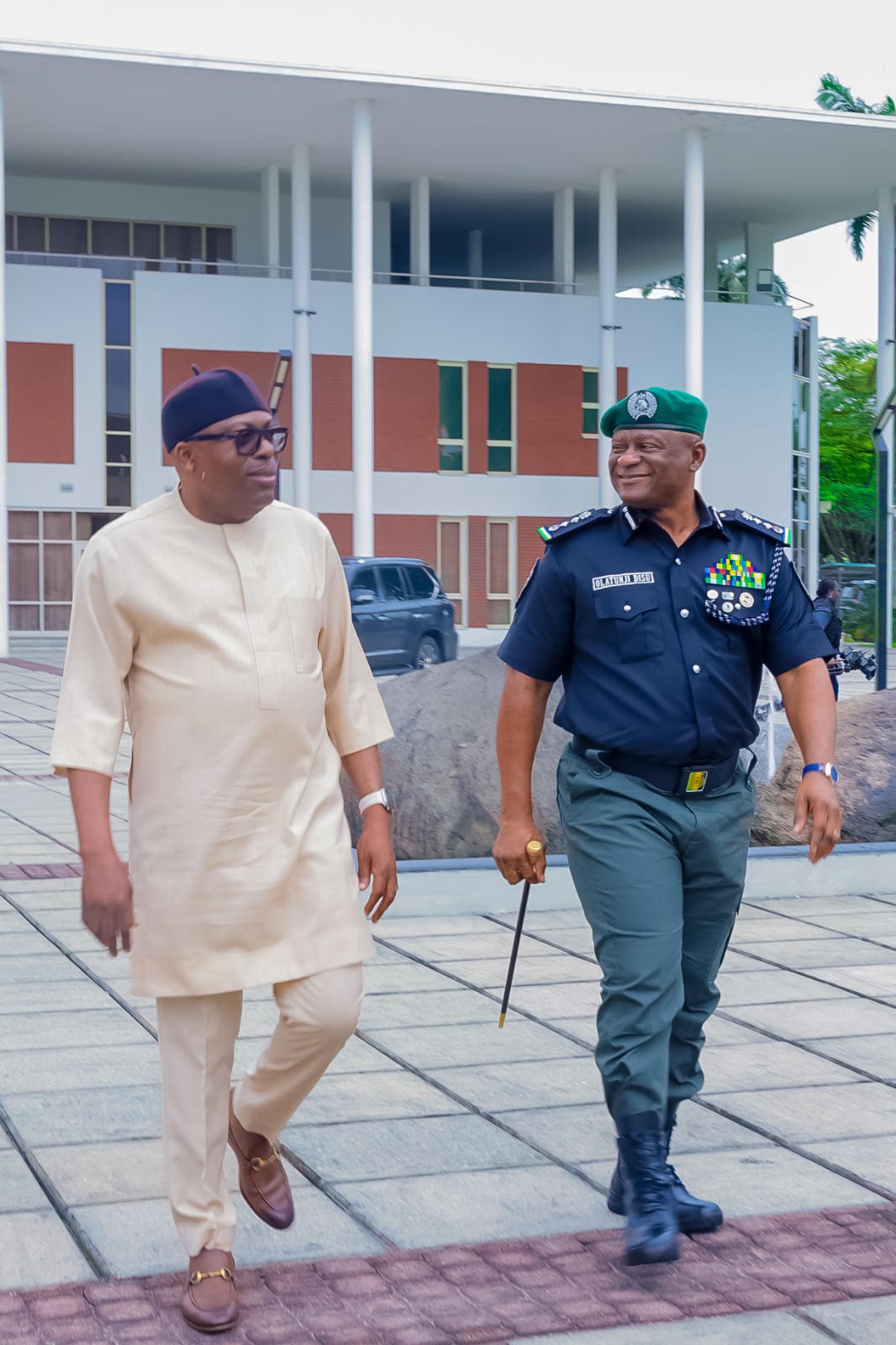
Governor Siminalayi Fubara made the call, yesterday, during the regional campaign on engaging community structures to promote the enrolment of out-of-school children and the regional flag-off of the 2026/2027 enrolment drive for southern states, held in Port Harcourt.
Represented by the Secretary to the State Government, Dr Dagogo Wokoma, Governor Fubara reaffirmed that education remains a fundamental pillar of sustainable development and emphasised the need to ensure that no child is left behind because of economic hardship, social background or other barriers to schooling.
He noted that expanding access to education was essential to promoting sustainable development, social inclusion and equal opportunities, enabling children to reach their full potential and contribute meaningfully to society.
The governor urged participating states and communities to translate their commitments into concrete and measurable actions by reaching vulnerable children, strengthening community engagement and encouraging parents and guardians to make their children’s education a priority.
He reiterated the state government’s commitment to initiatives aimed at expanding access to education, particularly for children excluded from formal schooling.
“Rivers State remains committed to supporting initiatives that expand access to inclusive and quality education, particularly for vulnerable children who may have missed the opportunity to attend formal schools,” Fubara stressed.
Also speaking, the Executive Secretary of the Universal Basic Education Commission (UBEC), Aisha Garba, described the growing number of out-of-school children as one of the major challenges confronting the education sector.
She called for a collective and collaborative approach among governments, communities, parents and other stakeholders to address the problem, stressing the need to ensure that no Nigerian child is denied the fundamental right to education.
The programme was organised by the Universal Basic Education Commission in collaboration with the Rivers State Government, as part of efforts to strengthen community participation and promote school enrolment across the southern states for the 2026/2027 academic session.

The Federation Account Allocation Committee (FAAC) has shared the sum of N2.428 trillion among the Federal Government, 36 states government and the 774 Local Government Councils (LGCs) as revenue for the month of September.
The Director, Press and Public Relations, Office of the Accountant-General of the Federation (OAGF), Mr Bawa Mokwa, said this in a statement in Abuja, yesterday.
Mokwa said the allocation was approved by FAAC at its October meeting held in Abuja.
He said the N2.428 trillion distributable revenue comprised of statutory revenue of N1.672 trillion, distributable Value Added Tax (VAT) revenue of N756.587 billion.
Mokwa quoted the FAAC communiqué as saying that total gross revenue of N3.913 trillion was available in the month of September 2026.
He said a total deduction for cost of collection was N131.758 billion while total transfers, refunds and savings of N1.352 trillion.
According to him, a gross statutory revenue of N3.096 trillion was received for the month of September 2026.
“This was higher than the sum of N2.850 trillion received in the preceeding month by N246.384 billion.
“Gross revenue of N816.872 billion was available from the Value Added Tax (VAT) in September 2026.
“This was lower than the N834.843 billion available in the month of August 2026 by N17.972 billion,” he said.
Mokwa explained that the Federal Government received N832.242 billion and the state governments received the sum of N799.872 billion.
He said the LGCs received N560.660 billion, while the sum of N236.049 billion (13% of mineral revenue) was shared to the benefiting state as derivation revenue.
Mokwa said in the N1.672 billion distributable statutory revenue, the Federal Government received N756.583 billion and the State Governments received N383.749 billion.
He said the LGCs received N295.855 billion and the sum of N236.049 billion (13% of mineral revenue) was shared to the benefiting States as derivation revenue.
The director said from the N756.587 billion distributable Value Added Tax (VAT) revenue, the Federal Government received N75.659 billion, the State Governments received N416.123 billion and the LGCs received N264.805 billion.
“In September 2026, Petroleum Profit Tax (PPT), Hydrocarbon Tax (HT), Petroleum Royalties, Import Duty, CET Levies and Excise Duty increased significantly.
“Also, Companies Income Tax (CIT), CGT & SDT, Value Added Tax (VTA), Mineral Royalties, and Gas Flared Penalty, Rental Gas Flared Fee and Misc. Oil Revenue decreased considerably,” he said.
The Nigeria Labour Congress (NLC) has given the Federal Government a two-week ultimatum to reduce the price of petrol, commence renegotiation of the national minimum wage and implement outstanding agreements with workers.
The ultimatum followed a joint meeting of the National Executive Council and Central Working Committee of the NLC held at the Olaitan Oyerinde Hall, Labour House, Abuja.
In a communiqué signed by the NLC President, Joe Ajaero, and made available to newsmen, yesterday, the union said the two-week ultimatum would commence on Friday, October 9, 2026.
It warned that failure by the government to meet its demands would compel the Congress to take further action.
The NLC specifically demanded that the government reduce the price of Premium Motor Spirit to the level it was when the current national minimum wage was signed into law in 2024.
It also demanded the immediate commencement of negotiations for a new minimum wage, implementation of the February 5, 2026, Terms of Settlement reached with the Joint Health Sector Unions and Assembly of Healthcare Professionals, and action on the demands of the Joint Public Sector Negotiating Council.
The Congress further demanded tax relief and immediate wage awards for workers, arguing that the measures were necessary to cushion the impact of rising living costs.
The NLC said, “The current national minimum wage has been rendered worthless by the relentless depreciation of the naira and the astronomical rise in the cost of living.”
It added that workers could no longer meet basic needs, including food, shelter, healthcare, transportation and education, on their current earnings.
The labour body, therefore, demanded that the Federal Government commence renegotiation of the national minimum wage before the end of October.
“NEC-in-session demands that the Federal Government commence the renegotiation of the national minimum wage before the end of this month,” the communiqué stated.
The Congress also linked the erosion of workers’ purchasing power to the high cost of petrol, saying the price of the commodity had continued to drive up transportation costs and the prices of other essential goods.
“The exorbitant pump price of petrol has had a cascading effect on the cost of transportation, food, and other essential goods, further deepening the hardship of workers and the masses,” it said.
The NLC further demanded that the government grant tax relief to workers and immediately introduce wage awards, describing the measures as “the bare minimum required to alleviate the suffering of Nigerian workers and restore a measure of dignity to their lives.”
The latest ultimatum escalates the labour movement’s pressure on the Federal Government after public-sector workers under the Joint National Public Service Negotiating Council embarked on a three-day warning strike earlier in October over rising living costs, petrol prices, wage awards and minimum wage negotiations.
The workers had demanded, among other measures, a reduction in petrol prices and the commencement of negotiations for a new minimum wage.
The NLC had also raised concerns in September over the declining purchasing power of workers, with Ajaero arguing that the N70,000 minimum wage had been overtaken by increases in the cost of food, transportation, housing, education and other essential expenses.
The current minimum wage was approved by President Bola Tinubu in July 2024 after negotiations involving the government, organised labour and the private sector.
Tinubu increased the Federal Government’s offer from N62,000 to N70,000 and agreed that the wage should be reviewed after three years rather than five years.
The NLC’s latest demand comes as the Federal Government announced fresh measures aimed at containing petrol-price pressures.
Yesterday, the Minister of Finance and Coordinating Minister of the Economy, Taiwo Oyedele, said the government was negotiating a ceiling of N1,350 per litre on the ex-gantry or landing cost of petrol, with monthly reviews, as part of measures to reduce price volatility.
The proposed ceiling does not mean petrol would necessarily sell at N1,350 per litre at filling stations.
The government also announced a 30-day discount on petrol dispensed by the Nigerian National Petroleum Company Limited (NNPCL), with priority given to public transporters.
Oyedele said the arrangement was not a return to subsidy but an effort to sell the product at cost.
However, the NLC is seeking a more substantial reduction, insisting that petrol should return to the price level that prevailed when the N70,000 minimum wage was enacted in 2024.
The Congress also called for the implementation of the agreement reached with JOHESU in February, as well as the demands presented by the Joint Public Sector Negotiating Council.
It warned that failure to respond within the two-week period would have consequences.
“Failure of which the NLC will be compelled to take remedial steps as would be directed by the relevant organs,” the communiqué said.
The union consequently directed its affiliates and allies to remain prepared for further action.
“NEC-in-session reaffirms the historical responsibility of the NLC to resist all forms of exploitation and oppression,” it stated, urging its affiliates to remain “on high alert and fully prepared to engage in decisive efforts against all anti-people policies.”
The development also comes amid fresh labour tensions in Abuja, where the FCT Council of the NLC commenced an indefinite strike on Wednesday over disputes with the FCT Administration concerning teachers’ promotion policies.
The council directed workers across public and private establishments to withdraw their services after the expiration of a seven-day ultimatum.
The latest NLC ultimatum puts renewed pressure on the Federal Government to address wage and fuel-price concerns as both sides grapple with disagreements over the implementation of previous labour agreements and measures to cushion the impact of economic reforms.
The NLC said its demands were aimed at protecting workers and the wider population from further deterioration in their standard of living, insisting that Nigerian workers must remain “resolute, organised, and uncompromising” in the struggle for improved living conditions.
-

 Niger Delta6 hours ago
C’River, NUJ Pay Tribute To Late Guardian Editor
-

 Niger Delta6 hours ago
Diri Restates Stance On Lagos-Calabar Coastal Highway
-

 News7 hours ago
NDLEA Recovers Tons Of Illicit Drug Consignments In Nine States
-

 Opinion5 hours ago
Checking Voter Apathy In Nigeria’s Electoral Process
-
 Oil & Energy6 hours ago
S&P Global Warns Hormuz Energy Shock Could Become A Global Food Crisis
-

 Oil & Energy6 hours ago
Gas Reserves Hit 215 Trillion Cubic Feet
-

 Maritime4 hours ago
Association Debunks Alleged Extortion Report Against Lagos Commissioners, Others
-

 Politics3 hours ago
2027: DICKSON’S EX-ALLY VOWS TO WORK AGAINST NDC INTEREST IN BAYELSA