
Sports
Rivers At 50: Entertainment, Arts And Culture

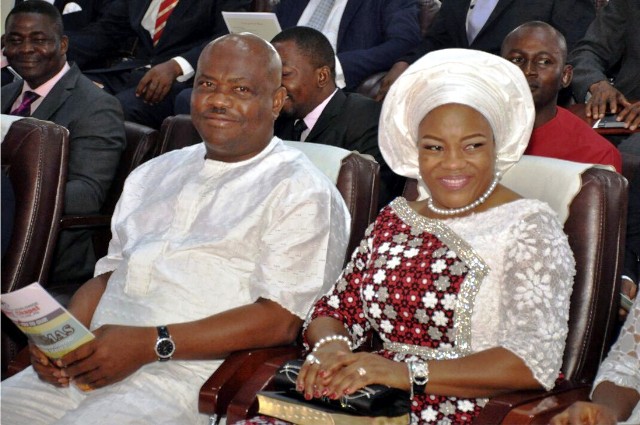
Located in the South-South geo-political zone of Nigeria, Rivers State, the Treasure Base of the country was created on May 27, 1967 by the General Yakubu Gowon’s administration. The state is presently divided into 23 local government areas with diverse ethnic nationalities, distinct languages and age-long cultural heritage.
Today, the state is known across the country and beyond as the hub of oil and gas activities and home for the second busiest seaport in Nigeria; her unique culture, peaceful co-existence and legendary hospitality stand her out among the rest of the states.
As the State celebrates her Golden Jubilee of success, peace, unity and even development under the people-oriented administration of the amiable golden governor, Chief (Barr) Nyesom Ezenwo Wike, it is important to reflect on the past laudable achievements of the state in the last 50 solid years of eventful existence. This will be incomplete without the contributions of our indigenous entertainers whose exploits have turned them into stars and celebrities of international repute viz-a viz movies, music, comedy, tourism, arts and culture.
Movies
In Nigeria’s movie industry popularly known as Nollywood, Rivers State indigenes are not playing second fiddle, rather the state boasts of leading stars in the make believe industry. Since the emergence of Nollywood in 1992, Rivers State has contributed immensely towards its development and global recognition. It is on record that most of the leading stars in the industry passed through the state on their way to stardom, graduating from the Theatre Arts Department of the University of Port Harcourt (UNIPORT). Apart from that, indigenes of the state also hold sway in the industry which today comes just behind Hollywood of America and Bollywood of India.
Some of these indigenous stars who have made the state proud include: Ibinabo Fiberesima, President, Actors Guild of Nigeria (AGN), former Glo Ambassador, Monalisa Chinda-Coker, Nollywood screen goddess, Tonto Dike, celebrated Nollywood costumier and AMAA Award Winner, Amb. Milliscent Jack, Maureen Ihua, etc. Also on parade are veteran actors and producers such as Dr Sam Dede, Columbus Irosoanga, Prince Tonye Princewill, Gentle Jack, Walter Anga, Alaso Wariboko and former state chairman of Association of Movie Producers, Engr Reginald Orlu, among others. The State has a good number of cinema houses where most of their movies are premiered such as Silverbird Cinemas, Genesis De Luxe, The Film House, etc.
Music
The development of modern music and dance in the state has its foundation in the culture and traditions of the various communities. These communities have their unique music and dance patterns which they use in entertaining themselves and important guests or to celebrate important cultural events. Rivers State remains a state to be reckoned with in the Nigerian Music Industry as she has produced some of the veteran highlife musicians who have distinguished themelves locally and interenationally such as cardinal Rex Lawson, King Sunny Brown, Prince David Bull and Jackwest Omodu of the defunct Garden City Band, all of blessed memories and the Great Sinya among others.
It is obvious that today, the number of stakeholders in the music industry in the state is ever increasing. Most of the present day artistes are enjoying corporate sponsorships and endorsement deals for their unique talents. Some have recorded unprecedented album sales sometimes running into hundreds of thousands of copies, others have won prizes and prestigious awards in international contests and other events, hence attracting more investments from many sources.
Some of these modern indigenous artistes are Daniel Wilson, Duncan Mighty, Muma Gee, Lexy M, Lady IB, Peter Stone Cold, Kikis, Oba Omega, Sotty Horsefall and Robin Maja, current state chairman of the Performing Musicians Employers Association of Nigeria (PMAN) among others. These stars have left indelible footprints in the Nigerian Music Clan and the international community.
Comedy
In the comedy clan, the state has produced the best of the humour merchants the country could boast of, who have paid their dues in the industry. Gone are the days when comedy was regarded as a pastime of the unserious, the uneducated and jesters who were paid pittance for their folly. Today, comedy has transformed into a big business, turning its practitioners into millionaires and throwing up a huge industry with several direct investment opportunities and support services.
Among the wave-making indigenous comedians are Julius Agwu, Prince Hezekiah, Dan D’ Humerous, Angel D’ Laugh, Rugged Pastor, Yibo Koko, Micheal Ogolo, Iyowuna Obomanu, Basorge Tariah, late Boma Erekosima and several others. These rib crackers have metamorphosed from mere clowns who were paid peanuts into millionaires.
It is also on record that within the past years, the state has distinguished herself as a centre of arts, culture and tourism in the country as showcased in the various achievements recorded so far.
Arts
Arts generally refers to the use of imagination to express ideas or feelings particularly in paintings, drawings, sculpture and literary works.
The high quality works of Arts in the State represent the evidence of early civilisation and ancestral cultural heritage of the people, patronised by tourists, royal fathers and wealthy personalities in society.
Some of these works include swords, scepters, royal drums, various royal regalia, carvings, iron and marble objects etc. The Rivers State landscape appears to be incomplete without works of art. Most public places and museums are adorned with artistic works that tell tourists about the dominant cultural heritage, values and activities of the people of Rivers State. Art exhibitions are held regularly to promote these works. There are also art galleries that showcase the various art works. This sector is also a source of tourist attractions and revenue to the state.
Culture
The Nigerian government in September 1988 launched the national cultural policy. The policy defines culture as “the totality of the way of life evolved by people in their attempt to meet the challenges in their environment which gives order, meaning to their environment, social, political and economic aesthetics and religious norms and mode of organisation, thus distinguishing a people from their neighbours”.
The Rivers State Ministry of Culture and Tourism has the mandate to put in place programmes and events that will attract international, national and local tourists to savour the rich cultural activities and tourist sites for relaxation and education as well as promote the diverse cultural heritage of Rivers people and identify and develop the tourism potentials of the state as a means of job creation and wealth generation, as well as inculcate pride and dignity in our local artwork and cultural values. This is to establish and brand Rivers State a choice destination for cultural tourism beside oil and gas.
Some of the age-long cultural activities of the state include the annual Opobo International Boat Regatta, the Nwaotam Festival celebrated every 25th of December to welcome the new year and to eliminate the bad spirits of the previous year, celebrated by Opobo, Bonny and other communities of the state. There is also the Oki Festival, a ceremonial dance festival of the Kalabari Clan of the State, the “owu aru sun alali” of Kalabari was celebrated on 30th and 31s January 2009, performed by the Ekine Sekiapu Society.
It is a series of masquerades, it was celebrated in Buguma City previously in 1908, 1927, 1973 and 1991 by the Ekine Sikiapu under the leadership of the OPU Edi. Tradition has it that various masquerades are owned by both the community and the group of compounds which usually last between 15 to 20 years. Another important festival of the people of the State is yam festival. In most communities of the State, yam festivals are celebrated to mark the harvest period after which the people are free to eat the new yams complemented by delicious delicacies amidst the legendary hospitality and goodwill of the people. Musical instruments are usually rolled out in such occasions as well as wrestling contests to entertain the people and visitors alike.
Rivers State is also blessed with literary icons. Writers all over the world are regarded as cultural engineers of society because they help to create and lubricate the fabrics of society through their creativity. Rivers State has enjoyed greater patronage since the creation of the state, a leading example of the indigenous literary gurus is late Captain Elechi Amadi who wrote several novels and plays including The Concubine, The Great Ponds, Isiburu etc. These are best sellers that have succeeded in highlighting the culture and tradition of the state. The annual Garden City literary festival holds in the month of September to celebrate literature and arts in the state and many literary gurus attend the event.
Jacob Obinna


Pics 1: Fencing in action.
President of the Nigeria Fencing Federation, Adeyinka Samuel, has said the country will host a unique 2026 Commonwealth Fencing Championships as the first sub-Saharan nation to stage the tournament, Tidesports source reports.
The championship will be held in Lagos from August 9 to 14, with the federation announcing that Rugby School Nigeria will host the event.
The Commonwealth Fencing Federation formally awarded the hosting rights for the 2026 championships to Nigeria in March 2025.
“It is the third international tournament the country will host, having also become the first to stage a junior épée World Cup, which was held in Lagos in December 2024. Nigeria also hosted the 23rd African Fencing Championships last year.
Nigeria’s hosting will be unique in several ways. First, it will be the inaugural edition on African soil, giving it historic significance. Second, we are integrating development initiatives such as an international training camp to foster technical exchange. Finally, the event will showcase African hospitality, culture, and energy, offering athletes a rich experience beyond the competition,” Samuel said on Wednesday.
“Preparations have advanced steadily across competition planning, venue readiness, logistics, athlete services, and partnerships.”
He also noted that over 24 Commonwealth nations have already registered.
“We are organising a pre-championship international training camp in Lagos to unite athletes ahead of the competition. Everything is moving in the right direction, and our focus is on delivering a world-class event that reflects Nigeria’s ability to host major international tournaments.”
The last two tournaments hosted by Nigeria were held at Charterhouse Lagos, and Samuel explained the choice of Rugby School Nigeria for this championship.
“The venue was selected for its modern, state-of-the-art facilities and its proximity to hospitality, tourism, and entertainment hubs. This ensures athletes and officials will enjoy excellent accommodation, transport, and leisure options during their stay.”
While thanking the private sector for its support in organising the championship, the president also called for greater government intervention in the fast-growing sport.
“The private sector has shown encouraging support, with institutions like Rugby School Nigeria and companies such as Flour Mills of Nigeria backing the championships. However, stronger government involvement is needed. Hosting the 2026 Commonwealth Fencing Championships is a milestone achievement, and we believe institutional support will help Nigeria maximise the opportunity and deliver a truly memorable event.”
The final draw was concluded at CAF Headquarters in Cairo, Egypt, on Wednesday and posted on the body’s website.
Notably, hosts Morocco will face a North African showdown in Group A, drawn alongside Tunisia, Egypt, and Ethiopia.
Only the top two teams from each group will advance to the quarter-finals, making Group A particularly competitive.
Group B features former champions Côte d’Ivoire and Cameroon, alongside Uganda and debutants DR Congo.
In Group C, 2015 and 2017 champions and last year’s runners-up, Mali, will meet Angola, Mozambique, and Tanzania.
Group D is led by 2023 champions Senegal, who will face South Africa (2015 runners-up),
The eight quarter-finalists from the tournament will automatically qualify for the 2026 FIFA U-17 World Cup in Qatar.
The teams finishing third in each group will contest two play-off matches to determine the final two qualifiers, bringing the total number of African representatives at the global finals to ten nations.
2026 CAF U-17 Africa Cup of Nations – Groups:
- Group A: Morocco, Tunisia, Egypt, Ethiopia
- Group B: Côte d’Ivoire, Cameroon, Uganda, DR Congo
- Group C: Mali, Angola, Tanzania, Mozambique
- Group D: Senegal, South Africa, Algeria, Ghana
Tidesports source reports that Nigeria will not feature at the tournament for the second consecutive edition.
The Golden Eaglets suffered a 2-0 defeat to rivals Ghana in the semi-finals of the WAFU Zone B qualifiers in September 2025, dashing their hopes of advancing to the finals.
The Super Eagles of Nigeria will begin their title defence at the 2026 Unity Cup with a semi-final clash against Zimbabwe on May 26 at The Valley in South London, Tidesports source reports.
The four-nation tournament, which also features Jamaica and India, returns to its historic venue after the success of the 2025 edition in Brentford, where Nigeria emerged champions.
The competition, scheduled to run from May 26 to 30, blends elite football with cultural celebration, bringing together Afrocentric and global diaspora communities.
Nigeria’s opening fixture against Zimbabwe serves as a rematch of their recent encounters in the 2026 FIFA World Cup qualifiers, setting the stage for a highly competitive contest.
The winner will progress to the final on May 30, while the second semi-final between Jamaica and India will be played a day later.
President of the Nigeria Football Federation, Ibrahim Gusau, expressed confidence in the Super Eagles’ chances while acknowledging the quality of the opposition.
“The Nigeria Football Federation is pleased with another opportunity to see the Super Eagles compete at the highly exciting and entertaining Unity Cup Tournament,” Gusau said.
“As perennial champions, the Super Eagles will look to retain their title again this summer, even as they will not underrate the other participating teams viz India, Jamaica and Zimbabwe. The tournament promises to be explosive and that is the setting in which the Super Eagles thrive best.”
The Unity Cup will culminate in a finals day featuring both the third-place play-off and the final, alongside a festival atmosphere that includes cultural showcases, food exhibitions, and live performances.
Zimbabwe Football Association president Nqobile Magwizi described his nation’s participation as a landmark moment, highlighting the opportunity to compete on an international stage in England for the first time.
“The Unity Cup represents far more than a celebration of football and culture, it is a powerful platform that reflects Zimbabwe football’s growing ambition to compete, perform, and excel on the global stage,” Magwizi said.
With Nigeria seeking to retain their crown and rivals eager to make their mark, the opening clash against Zimbabwe is expected to set the tone for what promises to be a fiercely contested and culturally vibrant tournament.
-
 Editorial3 days ago
Domesticate FG’s Exit Benefit Scheme
-

 News2 days ago
RSU Unveils Five-Year Strategic Dev Plan …Calls For Collective Commitment To Institutional Excellence
-
 News3 days ago
DHQ Confirms Deaths Of Terrorists, Soldiers In Borno Attack
-

 News3 days ago
Tinubu Commissions Bayelsa Gas Turbine, Other Projects Today
-
Business3 days ago
Niger Delta Investment Summit Targets $5bn Inflows, 500,000 Jobs
-
Rivers3 days ago
Dep Gov Seeks Collaboration, Transparency Between RIVCHPP, PHCMB
-
Nation2 days ago
Rumuji Youth Leader Condemns Protest, Disowns Alleged Government Empowerment Claim
-
Sports3 days ago
Full Draw For 2026 U-17 AFCON