
Politics
INEC Needs Education – Amb George

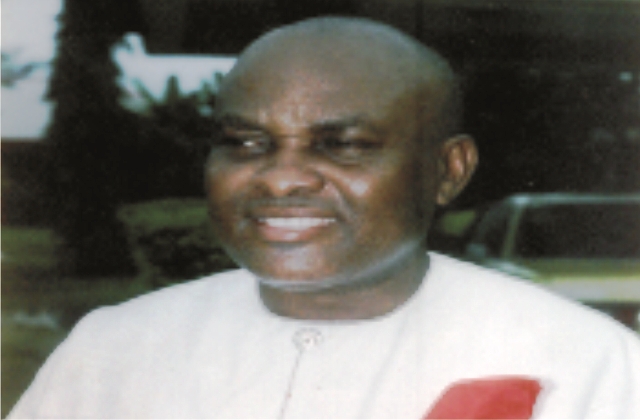
As Rivers State elector
ate prepare to go to the polls to conclude the legislative re-run elections on July 30, 2016, the National Secretary General of the Universal Peace Builders Association, the body that runs the Ambassadors of Peace Corps, Ambassador Isaac George, gives tips for a peaceful exercise and related matters in this interview. He spoke with Opaka Dokubo in Port Harcourt.
Excerpts:
What has your association been doing in Rivers State?
Unfortunately, we have not been supported by government but, here and there, well-meaning, peace loving people have been supporting our progammes. We have programmes for the youths, we have programmes for couples, we have programmes for singles as well. Every Saturday, we organise workshops on family values to educate the entire populace on the need for peace. Our education is centred on conflict prevention because prevention is far cheaper than resolution. But whereby we could not control it and conflict erupts, then we go into resolution.
Give and assessment of the environment in Rivers State from your background.
The environment is tensed and the federal government has not made matters any better. Mr president should take everyone, whether you voted for him or not, as his son and daughter because he his now the leader of this nations. God has put him there to be the leader, so he must see everybody from God’s perspective and not see wayward children and try to condemn them and say”, I will deal with you, we will exterminate them,” or we will do all kinds of things to you. But he should be able to call them and say “my children, what’s your problem? Let’s talk.” Then he’ll get to understand where they’re coming from and they will also understand his own position.
There’s no time in human history where violence has solved any problem. No matter how prolonged the violence may be, they ultimately go to a round table to resolve conflicts.
What have you found as the causes of conflict situation?
People have been deprived for so long of their basic means of living and when you disposes anybody of what his fundamental rights are, … By right we are supposed to control the resources we find here but government will be involved in the control of the resources in the sense that government knows that we are not going to cheat government and we pay appropriate tax. But whereby somebody comes and gets the oil blocks, gets all the allocation and walks away, the people are improvised. Definitely, they will stand up one day because they will get to a point where they cannot return anymore and they will want to fight they way they’re fighting.
Do you see politics playing any role in this situation?
The founder of my NGO said that there’s no legislation that can bring about peace. Peace, as Kofi Anan said, will come one day at a time, one person at a time. Our founder also said that we must be educated in order to be able to take responsibility for peace. If I own peace and you own peace, them we will never fight over anything because everybody will be contented, everybody will be happy with the environment and with one another.
Right now, the environment is so polluted. In some communities, I saw on television the other day, people can’t even have water to drink, their children can’t even go to school, they’re displaced because of crisis and all of that. So government should be able to support NGOs, like us so that we can put out messages that touch the heart. And then, if government makes a deliberate policy whereby peace, character education, family values will be taught from the primary school so that children who are five years old today, by the time they get to thirty years and they keep hearing such words of peace and they are living for the sake of one another, they will not digress from that.
The Bible clearly says that “teach the child the way to go and when he is old, he will not digress from that. But right now, it is when we become politicians or when we become public figures that we talk about peace and all of that. We ourselves that are talking about the peace don’t have the ingredients of peace.
We are going into another round of rerun elections in Rivers State and we need peace. What have we been doing wrong and how do we get it right?
Some of the things we’ve done wrong is that basically, we’ve not had proper education – education on how to live with one another, education on how to be peaceful yourself because you cannot give what you don’t have. Peace has to come from the heart. Once there’s love in the heart, peace will naturally follow.
UNESCO says that since the construction of wars begins in the heart, the defence of peace should also start in the heart. So the heart is the problem. If we take the responsibility to educate every heart from age four, age five, by the time that generation grows up to be 30,40,50 years, peace must have come to this environment because everybody will be living for t he sake of the state and the state will be living for everybody.
The governor gets there and he knows that he cannot enrich himself, he has gotten there to be able to live for the sake of the people and in return, the people will live for his sake. That’s how peace can quickly come.
What do we do about the situation that we have to remedy now?
It still boils down to education. We need to create a culture of peace. A culture of peace simply means that we’re educated even before we go to hold political positions even if it’s a two-moths or three-months education. Once you pick up your form that you want to contest any public office, you should go through a two-months or three-months governance training, leadership training, peace training, inter-faith training so that when you get there, something in your subconscious will be telling you “No you cannot do this, this is wrong , this is right.”
What has happened over the years is that some people have decided to ignore their conscience because the conscience is always telling us what is right and what is wrong and some of us have decided to totally ignore the conscience. We only start regretting after we’ve done so many evil things. So, education is the key thing – education of the heart.
Even within this short period to the elections, a one-week educational programme will go a long way. It may not totally eradicate whatever ugly incidents that may happen in the elections but it will reduce it considerably. The target should be the youths. If we give the youths character education now, their conscience will be pricked. They will not want to go the direction of the politicians and so on. They will say where are your own children or we don’t want to destroy the state or we don’t want to kill innocent souls. So, even a one-week education to the youths from age 17 to 35 will go a long way.
Are you by any chance asking for support for your organisation to embark on this campaign?
No, not only my organisation. There are so many organsiations, there are so many peace NGOs and if government can reach out to us and we all come together and put heads together, it will do a lot of good particularly for this election and then if it’s a continuous thing whereby in the school curriculum, in the primary school, in the secondary school and even in the university we have this kind of education.
In fact, I was so happy when I heard that in some universities, they’ve started taking peace studies. In a nation like Costa Rica they have a whole university called the United Nations Peace University. What do they do there? They brainstorm on how peace can come to that particular nation and then how it can also be exported to other parts of the world. So, if government buys into this sensitization programme, we can organize a one week education and sensitisation programme on the need for peace during the election, on the need to live for the nation.
What message do you have for stakeholders in this election?
INEC also needs this kind of education we’re talking about because we have to be conscientised, everyone of us, whether you’re INEC, whether you’re police. In the election, INEC is like a father and umpire, they’re the ones guiding us. They have more critical role to play in terms of educating their staff on leadership, on good governance, on peace and all of that.
The police should also see themselves as fathers and mediators. As mediators, you have to be fair to every party and you don’t have to get your emotions involved. So they also need the kind of education that will position them to truly mediate. Essentially, education on family values will help everyone.
Anything else society in general stands to benefit if you get desired support and encouragement?
One of our flagship programmes is the Ambassadors for Peace Corps. Our founder said most of the problems in the world are actually created by educated people, so if we reach educated people with peace education, with character education and family values, even though they’re above 35 years old, it will go a long way. Each family should take responsibility for their family in the sense that the family should own peace.
Our founder says that every family should become a peaceful family. So if the father, mother take responsibility for peace, their children will naturally follow. That’s why the government and other corporate bodies need to empower NGOs to be able to educate families and we need to introduce family education in our educational institutions.
In this regard, do you think the church is not doing enough?
The truth is that the church needs to do more, the church is not doing enough. So we’re also calling on the spiritual fathers of the state, of the nation, of the community to do more because they are supposed to give spiritual guidance. Peace is a spiritual thing. It is not a political thing. It is not a physical thing whereby you can pass a legislation… No legislation can bring peace. So, peace must be blended into spiritual matters and that way, we will be able to get the right leadership.



Accordingg to the statement, the Board and National Executive Committee of PANDEF, noted with very grave concern the recent spate of political developments in Rivers State.
“Regrettably, these developments have now degenerated into the decision of the Rivers State House of Assembly to commence impeachment proceedings against the governor and deputy governor.
“This is a deeply disturbing situation that demands urgent attention in order to forestall further escalation and breakdown of law and order.
“This concern is heightened by the critical importance and strategic centrality of Rivers to the Niger Delta region and to the broader socio-political stability and economic wellbeing of Nigeria as a whole”, the statement said.
The Forum called on all parties involved in the resurgent political imbroglio to sheathe their swords and embrace peace.
“This should be guided by the principles of give-and-take, dialogue, tolerance, and political equanimity.
“All stakeholders must place paramount importance on peace, development and the welfare of the people of Rivers.
“We must now focus squarely on good governance and development of the state,” the Forum said.
PANDEF commended President Bola Tinubu, the leadership of the All Progressives Congress (APC), respected elders of Rivers State, and other well-meaning Nigerians for their previous and ongoing efforts aimed at restoring peace and stability in the state.

Speaking in an interview on Saturday, January 10, Chief Sara-Igbe alleged that the minister had flouted regulations governing the commencement of electioneering campaigns by moving from one local government area to another to galvanise political support.
According to him, the action amounted to a clear breach of electoral guidelines being carried out with a troubling sense of impunity that could undermine the rule of law.
“Wike has violated the electoral laws of campaigning by going from local government to local government to talk to the people. He travelled from one local government to another. As a result of his visits to local government areas, he has broken election regulations and continues to do all these things without fear of repercussions”, Chief Sara-Igbe said.
The remarks came as Chief Wike was set to round off a state-wide “thank-you” tour that covered all 23 local government areas of Rivers State.
Although the minister had described the tour as an appreciation visit following support for President Bola Tinubu in the 2023 general elections, critics say the engagements have assumed an overtly political character.
Observers note that during several stops, including recent visits to Andoni and Bonny local government areas, the minister rallied supporters across party lines under what he termed a “Rainbow Coalition,” a move widely interpreted as part of a broader political strategy.
During these engagements, Chief Wike was also reported to have made remarks perceived as a veiled challenge to the authority of Governor Siminalayi Fubara, while repeatedly referencing the 2027 elections and urging supporters to prepare to “correct the mistake” of 2023.
Chief Sara-Igbe warned that allowing such activities to continue unchecked could erode public confidence in Nigeria’s electoral process and called on relevant authorities to enforce existing laws without fear or favour.
The Commission, in a statement on Wednesday, claimed that there were plans by the same group to escalate a smear campaign against its Chairman, Ola Olukoyede, to frustrate ongoing investigations and prosecutions involving prominent individuals.
The statement endorsed by the agency’s spokesman, Mr Dele Oyewale, claimed that the action was intended to distract the Commission through unfounded allegations of political bias in the discharge of its duties.
The EFCC warned that it would not stand by and watch “those recruited into this ignoble enterprise” or allow any attempt to derail it from “the patriotic task of improving public accountability in Nigeria.”
The Commission made it clear that those recruited into this venture were under close watch, adding that it would not tolerate any attempt to distract it from the patriotic task of improving public accountability in Nigeria.
“The EFCC reiterates its non-political stance in all its activities. Facts on the ground clearly show that any political actor belonging to the ruling party or opposition party, with corruption baggage, has no hiding place from the operational radar and dynamics of the Commission.
“As a matter of fact, several strong members of the ruling and opposition parties are either facing trial before the courts or being investigated by the Commission.
“It is needful that Nigerians appreciate the fact that the Commission is keeping faith with its Establishment Act in all its operations.
“Therefore, the Commission reiterates its commitment to justice, without fear or favour, in the fulfilment of its mandate,” the statement pointed out.
-
 Politics4 days ago
EFCC Alleges Blackmail Plot By Opposition Politicians
-
Business4 days ago
AFAN Unveils Plans To Boost Food Production In 2026
-

 Sports4 days ago
J And T Dynasty Set To Move Players To Europe
-
Business4 days ago
Industrialism, Agriculture To End Food Imports, ex-AfDB Adviser Tells FG
-
Politics4 days ago
Datti Baba-Ahmed Reaffirms Loyalty To LP, Forecloses Joining ADC
-
Politics4 days ago
Bayelsa APC Endorses Tinubu For Second Term
-
Business4 days ago
Cashew Industry Can Generate $10bn Annually- Association
-

 Entertainment4 days ago
Adekunle Gold, Simi Welcome Twin Babies