
Business
Need For Efficient Privatisation In Nigeria

In Nigeria there have been
many years of exhaustive deliberations by governments and stakeholders on how to put the country’s economy on the path of sustainable growth and development. This informed the inauguration of the National Council on Privatisation (NCP) on July 20, 1999 in Abuja by the Federal Government under former President Olusegun Obasanjo. The inauguration was a critical step in the nation’s socio-economic agenda and a demonstration of its commitment to institutional reforms.
In the past, it was considered sound economic policy for government to establish and invest in statutory corporations and state-owned companies since socialism existed side by side with capitalism. At that time, it was argued that public-owned companies were better for stimulating and accelerating national economic development than private firms. This brought about the proliferation of state-owned enterprises covering a broad spectrum of economic activities.
These enterprises include steel plants, petro-chemicals, NEPA, NITEL, Banks, Airways, Petroleum refineries, telecommunication, among others. Previous Nigerian governments had invested huge amount of naira in public-owned enterprises which yielded less returns. In many cases, the huge losses are charged against the public treasury. With declining revenue and escalating demand for effective and affordable social services, the citizens and the general public are yearning for state-owned companies to be more efficient and viable, thereby called for the privatization of the enterprises.
Government enterprises suffer from fundamental problems of defective capital structure, excessive bureaucratic control or intervention, inappropriate technology, gross incompetence and mismanagement, blatant corruption and crippling complacency which monopoly engenders. Inevitably, these shortcomings take a heavy toll on the national economy.
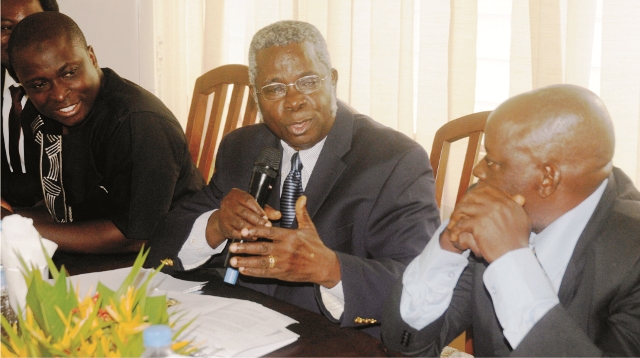
It is on this basis that an economist, Professor Vincent Momoh called for total privatization of all sectors of the economy to pave way for free market economy and competition.
Speaking on a radio interview programme recently, Momoh said that government was not a good businessman and had never fared well in business, and as such ought to hands-off from running businesses, which can be better managed by private persons. According to him, even the Nigerian National Petroleum Corporation (NNPC) has nothing to do with importation and marketing of petroleum products in the country.
He said that duty should be handed over to private corporate groups that can do it better. Citing example with the telecommunication industry, which government had not fared well, Momoh noted that the M-Tel Mobile Communication firm that was floated by Federal Government could not survive or compete among other companies. This is simply because as he put it, government can’t do well in businesses, adding that the present economic challenges in the country, including employment would greatly be tackled through privatization of all sectors. “Government should only create conducive environment and security, and provide social infrastructure”, he said.
However, the problems associated with state-owned enterprises and monopolies are not peculiar to Nigeria. For example, with the establishment of communist governments in sixteen countries during the 20th century, those in Europe spent the 1900s in a massive move privatizing firms that had been owned and run by the state. British Prime Minister Margaret Thatcher privatized two dozen firms over a period of twelve years.
Many developing countries have overcome the problems through a well-designed and single-minded pursuit of privatisation programme with the rationale that privatization permits governments to concentrate resources on their core functions and responsibilities, while enforcing the rules of the game so that the markets can work efficiently. With the provision of adequate security and basic infrastructure, as well as ensuring access to key services like education, health and environmental protection, a new synergy between a leaner and more efficient government and a revitalised, efficient and service-oriented private sector will be affected.
In the case of Nigeria, there are overwhelming facts and figures in support of the absolute necessity to realign with global trends. There were over 1,000 state-owned enterprises in Nigeria many of which gulped billions of naira without yielding much positive results in terms of customers satisfaction. It is conservatively estimated that the nation may have lost more than N800 US dollars due to unreliable power supply by the power sector and more than 440 million dollars through inadequate and inefficient fuel distribution. These figures are not even adequate to tell the whole story of the government’s inability to run public companies. In some cases, lives of people working in state-owned firms were lost without commensurate compensation.
For the benefit of our economic recovery and social life, more government –owned firms need to be privatised. With the privatisation of the telecommunication industry that ushered in MTN, GLO, and other service providers, at least Nigerians are enjoying the benefit of the policy. No matter the seemingly epileptic electricity supply, Nigerians are experiencing after the privatization of the power sector, it is believed that with time, the situation will improve. The privatization was not intended to please any particular sector, World Bank nor the IMF or was it to share our national assets to a few rich people. It is not also to replace public monopoly with private monopoly rather it is a determination to be uncompromising in the pursuit of the best interest of this country.
That was why former President Obasanjo during the inauguration of National Council on Privatisation said, “we want to remove the financial burden which these enterprises constitute on the public and release resources for the essential functions of government. We want to ensure that many more service providers are brought into compete and thereby regulate the market for fairer pricing. We want to ensure that these utilities work and deliver quality services”.
According to him, the privatisation process will avoid any possibility of further hardship to the public, pointing out that a vigorous public enlightenment would ensure that as many Nigerians as possible do participate in the programme. Privatisation, Obasanjo noted, was also one of the reforms we have to undertake to integrate our economy in to the mainstream of world economic order. For any privatisation exercise to succeed, Nigeria needs the technology, the managerial competence and the capital from the developed world to enhance the performance of our utilities linkages between the efficient functioning of our utilities and our ability to attract foreign investments.
We cannot be talking about creating a conducive environment for foreign investments if the performance of our transport, telecommunication, road network and energy sectors remain dismal and epileptic. So, the critical issue is how we can carry out a privatization programme that is efficient, well designed, properly coordinated and sequenced, credible and widely acceptable. This is where the NCP has a pivoted role to play as the apex body on privatisation and choice of strategic investors.
Others are to approve public enterprises to be privatized or commercialized, approve the prices for shares or assets of the public enterprise to be offered for sale and approve the appointment of privatization advisers and consultants. Any privatization process done now will be a continuation since some work had been done by previous administrations. And to do this, we should re-examine the previous ones, our pool of knowledge and experience as well as draw from other countries that have successfully privatized their state-owned enterprises.
We must have an overview of previous exercises to know if they promote the integrity and transparency of our privatization exercise before they will be adopted and built upon. As a first step, we should dispose of government equities quoted on Stock Exchange in the relevant enterprises or companies, which are relatively easy to evaluate. In doing so, the absorptive capacity of the market must be closely watched and efforts made to encourage core investors to take preferential allocation. A lot of work need to be done in any process of privatising more state-owned companies or agencies such as the petroleum/oil sector, fertiliser companies, machine tools, steel and aluminum, mining and solid minerals sector, insurance companies, transport and aviation companies, paper companies, and so on.
In view of the importance of privatization in any given economy, nation or international community, it is pertinent to ensure the efficacy and sincerity of all the major public sector reforms we have so far undertaken. We must make sure that the design and implementation of our privatization programme gives practical meaning and illustration to the redefined role of government as an enabler, as well as our commitment to transparency and accountability.
Shedie Okpara



The Nigeria Inter-Bank Settlement System (NIBSS) has said that Bank Verification Number (BVN) enrolments rose by 6.8 per cent year-on-year to 67.8 million as at December 2025, up from 63.5 million recorded in the corresponding period of 2024.
In a statement published on its website, NIBSS attributed the growth to stronger policy enforcement by the Central Bank of Nigeria (CBN) and the expansion of diaspora enrolment initiatives.
NIBSS noted that the expansion reinforces the BVN system’s central role in Nigeria’s financial inclusion drive and digital identity framework.
Another major driver, the statement said, was the rollout of the Non-Resident Bank Verification Number (NRBVN) initiative, which allows Nigerians in the diaspora to obtain a BVN remotely without physical presence in the country.
A five-year analysis by NIBSS showed consistent growth in BVN enrolments, rising from 51.9 million in 2021 to 56.0 million in 2022, 60.1 million in 2023, 63.5 million in 2024 and 67.8 million by December 2025. The steady increase reflects stronger compliance with biometric identity requirements and improved coverage of the national banking identity system.
However, NIBSS noted that BVN enrolments still lag the total number of active bank accounts, which exceeded 320 million as of March 2025.
The gap, it explained, is largely due to multiple bank accounts linked to single BVNs, as well as customers yet to complete enrolment, despite the progress recorded.
-

 News3 days ago
2026 Budget: FG Allocates N12.78bn For Census, NPC Vehicles
-

 Sports3 days ago
AFCON: Osimhen, Lookman Threaten Algeria’s Record
-

 Politics3 days ago
Wike’s LGAs Tour Violates Electoral Laws — Sara-Igbe
-

 Politics3 days ago
Rivers Political Crisis: PANDEF Urges Restraint, Mutual Forbearance
-

 Sports3 days ago
NPFL To Settle Feud between Remo Stars, Ikorodu City
-

 Sports3 days ago
Palace ready To Sell Guehi For Right Price
-

 Sports3 days ago
Arsenal must win trophies to leave legacy – Arteta
-

 Sports3 days ago
Tottenham Captain Criticises Club’s Hierarchy