
Health
Malaria Control: Need For Motoring And Evaluation

Damiete Oruwari is a fish
erman from Ido, a community in Asari-Toru Local Government Area of Rivers State.
As much as he could remember, fishing had been the key profession of his family. Unfortunately, as unfavourable as the days of his fathers were, the economic hardship made it impossible for them to get the least net to catch fishes, according to the 45 year old primary four drop out.
Narrating his sordid background which was further worsened by the biting economic downturn that affected every segment of the Nigerian economy, Mr Oruwari said what looked like succour came to him when in 2007 the government commenced the distribution of free Long-Lasting Insecticide Nets (LLINs).
According to him, a couple of years before then, he could hardly feed his family of seven, made up of five children, a wife and himself. The major reason was that he could not afford to purchase and maintain a good fishing net from his subsistence fishing.
With the commencement of the distribution of the LLINs, however, his story changed: rather than use the nets for what they were meant for, he adapted them as various forms of fishing nets, sometimes combining two or more, as the case may be.
“What I do is to get as many of the nets, even if I have to beg others or pay them small money. I then sew them into various shapes, depending on what type of net I want. When the ones I used get torn, I get new ones.
They are easier and cheaper to get than the real nets. The only difference is that the real nets last longer because they are meant for fishing.
But it does not matter to me because it helps me to feed my family.
“At least I know that if my family feed well, our, body can withstand some level of malaria. But if we don’t have food, malaria will affect us more. So, I prefer to feed my family than use the net to cover them at night,” he said.
To a large extent, Oruwari’s story is pathetic and there seems to be some sense in his reasoning. But one thing is certain: if he uses the LLINs for the prevention of mosquito bites, which is the sole reason it was made, it will reduce malaria infection on his family.
This scenario including several others, constitute the numerous gaps in malaria control, which had made it difficult to attain the Millemium Development Goals (MDGs) 6, which aims to reduce HIV/AIDs, Malaria and others infections .
One key lesson to be learnt in Oruwari’s scenario is that he is ignorant of the implications of malaria infection. Another one is that not enough measures have been put in place to monitor the extent to which the distributed LLINs are used to prevent mosquito bites.
There is no doubt that so much has been done to either check or eliminate malaria globally, particularly in Africa, which is the worst hit in malaria infection, with Nigeria worst off. Such measures include both preventive and curative. Inspite of this, however, the existence of various forms of gaps as shown in the Oruwari’s Scnerio, has in no small way hampered the achievement of the MDG’s 6.
The result is that the global malaria burden does not portray the level of investment aimed at eliminating the ailment. According to World Malaria Record (WMR) in 2013 and 2014, an estimated 3.3 billion people are at risk of contracting malaria with Nigeria accounting for a quarter of the global malaria burden with 97% of the country’s about 180 million population at risk.
In her presentation in a recent media round table discussion programme on malaria control held in Lagos, the Country Director of “Malaria No More,” Dayo Oluwole, said 25% of the world’s malaria burden is in Nigeria and that out of 1000 children, 128 die annually, while over 4000 maternal deaths occur within the same period.
She said that about 1 billion is lost to productivity every year in Nigeria due to malaria, a quarter of the global malaria burden is in Nigeria, and 32% of global deaths as a result of malaria occur in Nigeria.
Beyond these embarrassing figures, which is basically in the health sector, Oluwole further revealed that the malaria burden cuts across other sectors of human endeavour including sports, economy and education.
Giving an example of what impact malaria could have in sports, Oluwole recalled how Nigeria’s dependable central defender, Kenneth Omeruo, was ruled out of a major warm-up game against Scotland in 2014. The import of this is that malaria is capable of hitting an immeasurable blow on a team if it affects key members of the team in a major championship.
The Malaria Country Director said that malaria also takes its bite on the economy of affected countries: in Africa, for instance, she said annually malaria cost the continent about $ billion in productivity. Nigeria, on the other hand, loses N132 billion. This factor is factored in costs of health care, absenteeism, days lost in education decreases productivity due to brain damage from cerebral malaria and loss of investment and tourism.
“Malaria is bad for business: the disease is responsible for employee absenteeism, healthcare spending and decreased productivity, all of which can negatively impact a company’s reputation. Malaria can strain national economies, impacting some nation’s Gross Domestic Product (GDP) by as much as an estimated 5-6%,” she said.
As regards education, Oluwole said children miss up to 10 million school days per year due to malaria. Also, malaria leads to anemia, a side-effect of frequent malaria, which interferes with children’s ability to concentrate and learn and causes chronic fatigue .
In order to control malaria, therefore, so much has not only been invested by countries, governments organizations and various stakeholders in terms of funding, but also in strategies, some of which had taken relatively longer time and planning to put the ailment under control thus far.
One of such organizations is malaria no more (MNM), an international organization with a focus on creating a world where no one dies from mosquito bites which has taken up the initiative to involve the media in malaria response and control.
To address the issue of ignorance, MNA, in collaboration with Exxon Mobile and other key stakeholders incorporated the media on effective dissemination of information on malaria. With support from media partners, MNA also bought and distributed 4.9 million LLINs in 16 countries.
In Rivers State, as part of responses aimed at achieving the targets set to control malaria, the state government has also distributed anti-malaria drugs/commodities and carried out anti-malaria measure such as provision of 7.4 doses of ACT for malaria case management; provided 1.8 million RDT kits for malaria diagnoses as well as 1.6 doses of SPs for malaria prevention pregnancy.
By The Tide’s investigation, the state also provided 7.6 million LLINs for prevention of malaria transmission through mosquito bites, made available 20,990 doses of injectable Artesunate, confirmed malaria by laboratory diagnosis using Rapid Diagnostic Test (RDT) Kits and microscopy before treatment, training and use of Community Directed Distributors (CDDs) in communities to diagnose and treat malaria in six local government areas (LGAs).
Also, the Clinton Health Access Initiative (CHAI) was into supporting 10 states in Nigeria through a UNITAID funded project to facilitate adoption of infectable antesunate.
The implication of these attention on malaria only goes to re-emphasis the focus on all stratagies but that of Monitoring and Evaluation (M&E). At best, this area had always been given lip service by most stakeholders involved in malaria control. At given points, provision has been made by stakeholders but there had not been strict monitoring and evaluation mechanism to ascertain the efficacy of such provisions.
This, obviously, gives the likes of Mr Oruwari some of who either sell malaria commodities or allow same to rot away to have a filled day fustrating the efforts to malaria control. It should also amount to an unequivocal declaration on the need to make M & E in malaria control a key strategy like others.
One way to achieve this is for countries, states, local government areas and stakeholders to come up with legislation aimed at checking the rightful use of malaria commodities for the purposes they are meant for. In the case of Mr Oruwari, for instance, if there was such a legislation, and an effective monitoring mechanism put in place, he would have been apprehended and made to face the law.
Beyond legislation, however, there is also the need to involve the media more in a two-pronged awareness creation: the first, to create adequate in the use and benefits of malaria commodities while also making people aware of the consequences that await defaulters.
Sogbeba Dokubo
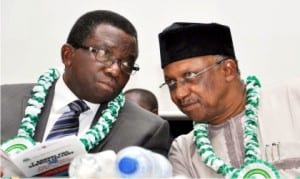
Minister of Health, Dr. Isaac Adewole (left), with the Minister of State, Dr. Osagie Ehanire, at a public event in Abuja, recently.


To address the increasing number of rape and defilement cases in Lagos communities, the State Ministry of Health has trained healthcare workers on the prevention and management of sexual assault cases.
The Director, Public Affairs in the ministry, Tunbosun Ogunbanwo, in a statement on Monday said the training equipped health workers with the knowledge and skills to provide professional, compassionate, and timely care to survivors.
Dr Folasade Oludara, Director, Family Health and Nutrition, State Ministry of Health, said the growing number of rape and defilement cases in Lagos communities necessitated the upskilling of healthcare workers who are often the first responders to survivors.
Oludara, represented by Dr Oluwatosin Onasanya, Deputy Director, Child Health, said the government recognised the critical role of health professionals in both clinical management and legal documentation of sexual assault cases.
She explained that the training was designed to ensure healthcare workers are adequately equipped to identify, document, and manage sexual assault cases effectively.
According to her, the training will strengthen Lagos’ coordinated health system response to gender-based violence.
She disclosed that the state government had already provided equipment and specimen collection tools to health facilities, noting that the training complemented this investment by building the competence of personnel handling such sensitive cases.
Oludara explained that doctors and nurses at the primary, secondary, and tertiary levels who serve as first contact points for survivors were carefully selected from all 57 LGAs and LCDAs, particularly from areas with higher incident rates.
The SGBV Programme Manager, Lagos State Ministry of Health, Dr Juradat Aofiyebi, emphasised that the capacity-building initiative was a strategic step toward improving survivor-centred healthcare delivery and prosecution outcomes.
Aofiyebi added that the training underscored the government’s commitment to reducing the prevalence of sexual assault through a robust, multi-sectoral approach.
“The training provides healthcare workers with the knowledge to properly identify survivors, document findings accurately, and provide comprehensive care, all of which contribute to justice delivery and prevention of repeat offences.
She said the ministry would sustain such training to ensure that every survivor who presented at a Lagos health facility received quality, non-judgmental care.
Mrs Adebanke Ogunde, Deputy Director, Directorate of Public Prosecutions (DPP), Lagos State Ministry of Justice, highlighted the importance of medical documentation in sexual assault trials.
She explained that most convictions hinge on the quality of medical reports and forensic evidence provided by healthcare professionals, noting that medical reports served as vital corroborative evidence in court, particularly in cases involving children.
“Your medical reports are crucial; they can determine whether justice is served or denied,” she said.
Ogunde reminded health workers of their legal duty to report suspected sexual assault cases to the police or the Lagos State Domestic and Sexual Violence Agency (DSVA).
Similarly, Dr Oluwajimi Sodipo, Consultant Family Physician, Lagos State University Teaching Hospital (LASUTH), underscored the importance of timely medical attention, psychosocial support, and non-stigmatising care for survivors.
Sodipo explained that immediate presentation within 72 hours of assault improved chances of preventing infections and collecting viable forensic evidence.
He commended Lagos State for sustaining its inter-agency collaboration and continuous professional training on SGBV.
Sodipo, however, called for the strengthening of DNA and forensic capacities, improved insurance coverage, and better remuneration for healthcare workers.
“We must sustain motivation and continuous retraining if we want to retain skilled professionals and enhance justice outcomes,” he added.
Also, Mrs Margret Anyebe, Claims Officer, Lagos State Health Management Agency (LASHMA), said domestic and sexual violence response had been integrated into the ILERA EKO Health Insurance Scheme.
Anyebe explained that survivors of sexual and domestic violence are covered for medical treatment, investigations, and follow-up care under the state’s Equity Fund for vulnerable groups.
“Hospitals are to provide first-line care, document, and refer survivors appropriately, while LASHMA ensures prompt reimbursement and oversight,” she said.
The technical session of the ongoing National Council on Health (NCH) meeting on Monday reviewed 35 out of the 82 policy memos submitted ahead of full Council deliberations scheduled for later in the week.
Dr Kamil Shoretire, Director of Health Planning, Research and Statistics, disclosed this on Tuesday during the Technical Session of the 66th Regular meeting of the NCH ongoing in Calabar, Cross River.
He said that 10 of the memos considered were recommended for Council’s approval, eight were noted, and 18 stepped down for further work.
According him, two additional memos were deferred and will be re-presented after revisions are made.
At the reconvening of the session, Ms Kachallom Daju, Permanent Secretary, Ministry of Health and Social Welfare, said that there were five memos from the Coordinating Minister of Health, adding that they were all related to the Department of Food and Drugs.
Daju said that the memos were stepped down on Monday and scheduled for re-presentation.
She also provided clarification on the previously contentious healthcare waste-management memo, explaining that the N3.5 million requests tied to the proposal had already been repurposed by the Global Fund.
“I have followed up, and I am informed that the funds have been reprogrammed. Just so we put it to rest, we will not be discussing that memo anymore,” she said.
She also said that the final memo considered on Monday was the proposal for the inclusion of telemedicine services under the National Health Insurance Authority (NHIA).
“The next memo scheduled for presentation is the proposal for the establishment of Medipool as a Group Purchasing Organisation (GPO) for medicines and health commodities in Nigeria.
Meanwhile, Dr Oritseweyimi Ogbe, Secretary of the Ministerial Oversight Committee (MOC), formally notified the Council of the establishment of Medipool, a new public-private GPO created to strengthen the procurement of medicines and health commodities nationwide.
Presenting an information memorandum at the technical session, Ogbe explained that Medipool was the first nationally approved GPO designed to leverage economies of scale, negotiate better prices, and ensure quality-assured medicines.
He said this was beginning with primary healthcare facilities funded through the Basic Health Care Provision Fund (BHCPF).
According to him, Medipool was established after a proposal to the Ministry of Health, followed by appraisals and endorsements by the Project Implementation and Verification Committee (PIVAC) and the Ministry of Finance Incorporated (MOFI).
“It subsequently received Federal Executive Council approval, with MOFI now owning 10 per cent of the company’s shares. The Infrastructure Concession Regulatory Commission has also approved its operations.
“Under the model, Medipool will work with Drug Management Agencies (DMAs) in all states to aggregate national demand and negotiate directly with reputable manufacturers to obtain competitive prices and guaranteed-quality supplies.
“The platform will function as a one-stop shop for DMAs, who will then distribute medicines to health facilities through existing state structures.”
Ogbe added that while Medipool will initially focus on BHCPF-supported primary healthcare centres, it was expected to expand to other levels of care nationwide.
“The organisation will provide regular reports to the ministry of health and participate in national logistics working groups to ensure transparency, oversight, and technical guidance,” he said.
The News Agency of Nigeria (NAN) reports that Day One of the 66th NCH technical session opened with a call reaffirming the Ministry’s commitment to advancing Universal Health Coverage under the theme “My Health, My Right”.
“The delegates also adopted the amended report of the 65th NCH, setting the stage for informed deliberations.
The implementation status of the 19 resolutions from the previous Council was also reviewed, highlighting progress and gaps.
The authorities of Police Clinic in Port Harcourt have reported high cases of Malaria in its facility.
The revelation was made by Mrs Udoh Mba Robert, a Chief Superintendent of Police and senior medical personnel in the Clinic.
She told The Tide that,”the Hospital admits sixty (60) to seventy (70) patients in a month”.
On how the facility runs, she stated that the hospital is under the National Health Insurance Scheme as most patients are treated almost free.
She maintained that staff of the hospital have been trained professionally to manage health issues that come under the purview of the National Health Insurance Scheme.
Mrs. Robert explained that malaria treatment also falls under NHIA, as patients are expected to pay only 10 per cent for their treatment while the government takes care of the outstanding bills.
NHIA, she further stated covers treatment and care for uniform personnel like the police force, military men, civil servants and all others working for the government.
Urging the public to seek professional medical attention, Mrs. Robert said the facility is open to workers in the federal services, especially police staff.
Favour Umunnakwe, Victory Awaji, Excel Nnodim
-

 News2 days ago
Nigeria Recorded Two World’s Deadliest Terror Attacks In 2025 –Report
-

 Politics2 days ago
Eid-el-fitr: INEC Urges Staff Discipline Ahead Ekiti, Osun Guber Polls
-

 Editorial2 days ago
Thumbs Up For Sit-At-Home Reversal
-

 News2 days ago
Perm. Sec Pats Rivers NUJ On The Back
-

 News2 days ago
Explosions Rock Lagos, C’River, Kill One, Injure 40
-

 News2 days ago
Fubara Hails Umah Ukpai’s Contributions To Global Christian Evangelism
-

 Education2 days ago
Opobo Kingdom moves to incorporate Ibani Language Into School Curriculum, Takes Off April
-
News2 days ago
Etche Monarch Alleges Death Threats, Assault