
Business
Expert Harps On Harnessing Tourism For Revenue

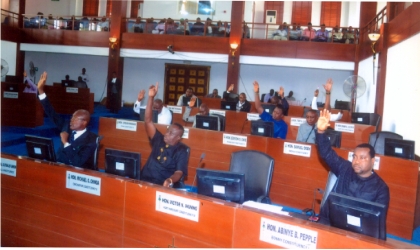
Rivers State lawmakers voting to pass the N104.2 billion Supplementary Budget in Port Harcourt, yesterday.
A tourism expert, Mr
Johnpaul Ezeani has said that proper harnessing of community-based tourism (CBT) would help to generate income that can lead to economic development in the communities.
Ezeani who is a tourism consultant told newsmen in Abuja said that such moves would also alleviate poverty, as well as create employment that would increase tax paid by workers.
He noted that harnessing both the natural and cultural tourism potential would bring about sustainable tourism development in the communities.
He also said that the high level of poverty which remains a major problem in achieving millennium development goals could be tackled by the additional income generated by the sector.
“ The decisions about tourism activities and development must be driven by the host community.’’
He said that no country of the world today could afford to reject the significance of tourism to its economic, social, political and cultural development.
“Countries of the world have become aware of the numerous benefits accruing from tourism and are working more than ever before to develop the industry.
“Tourism accounts for the largest volume of migration of people all year round and unlike in other industries, tourism industry takes the customer to the product, rather than the product to the customer.’’
Ezeani said that CBT had a unique potential to carry investment directly to the local level and make significant contribution to rural development.
“ CBT can help to boost agricultural and social development and ensure community enrichment. “It is a type of tourism in which local communities invite tourists to their communities, having provided overnight accommodation and other facilities for the expected visitors.
“Tourists come in contact with the local habitat and wildlife, participate in different cultural festivals and enjoy the traditions and cultures of host communities.
“This type of tourism aims to upgrade the living standard of the local residents as well as generate revenue through community initiatives and/or self development projects.
“Such projects like construction of bridges, roads and town halls and rural electrification, sign posts/road signs, among others,’’ he said.
Ezeani said that it was natural that income generated from tourism was used to conserve the resources of nature as well as renovate and build new facilities to consistently encourage increased tourist influx.
“Part of the income generated should be set aside for projects which will provide benefits to the community, maintain and upgrade cultural assets like archaeological ruins, historical sites and traditional craft production.’’
He stressed the need for tourism to become community based and for members of the community to have some development initiatives through self-help projects.
“Such community development initiatives include building of schools, town halls, construction of feeder roads and drainpipe systems, electricity, water projects, establishment and maintenance of local markets.
“Generally, community based tourism avails tourists the opportunity to know the social, cultural and religious practices of the host.


Nkpemenyie Mcdominic
Reports say that the training is designed to equip youths with practical technical skills for employment in the oil and gas and construction sectors, with emphasis on employability, safety, competence and self reliance.
In attendance at the flag-off ceremony this week, at the Petroleum Training Institute (PTI) Conference Hall, Effurun, were stakeholders, dignitaries, and political representatives, among others.
Dafinone, represented by his Chief of Staff, Adelabu Bodjor, said the initiative reflects a deliberate political investment in human capital development across Delta Central.
He explained that the training focuses on rigging and scaffolding, noting that “both are essential technical competencies required in industrial operations, construction projects, and oil and gas installations”.
Bodjor added, “The programme is intended to reduce dependency among youths by providing job-ready skills capable of supporting long-term economic opportunities and self-sufficiency. The initiative aligns with Senator Dafinone’s broader development agenda, which prioritises practical skill acquisition as a pathway to sustainable empowerment.”
Also addressing the participants, the NCDMB, Felix Omatsola Ogbe, represented by Mr. Teddy Bai, commended Dafinone for sponsoring the programme, describing it as “a timely response to critical manpower gaps in the industry”.
Bai explained that rigging and scaffolding remain safety-sensitive skills required across fabrication yards, offshore platforms, and construction sites, stressing that the programme bridges the gap between certification and practical competence.
He also charged the training consultant, OROH Contractors Limited, to maintain strict standards of professionalism, safety, and discipline, while urging participants to remain committed, focused, and disciplined throughout the exercise.
The Senate Liaison Officer for Sapele Local Government Area, Chief Patrick Akamuvba, , described the programme as a major step in strengthening human capital development in Delta Central.
Akamuvba said scaffolding and rigging skills are in high demand across residential, commercial, and industrial construction projects, noting that the training offers real employment opportunities for beneficiaries
He urged participants to prioritise knowledge and certification over short-term material expectations, stressing that discipline and seriousness would determine their long-term success.
He also cautioned youths against social vices and distractions, advising them to remain focused to maximise the opportunities provided by the programme.
-
News2 days ago
Obuah’s Victory Excites Former Lawmaker as APC Primaries Conclude in Rivers West
-

 Politics4 days ago
APC PRIMARIES: FUBARA’S WITHDRAWAL, HISTORIC SACRIFICE FOR NATIONAL STABILITY ……. GROUP
-

 News4 days ago
Court Sentences Seven To Death Over Murder Of Cleric In Rivers
-
News2 days ago
105 Nigerians Killed In S/Africa In Seven Years
-

 Sports4 days ago
PH Arsenal Community Set For Streets Procession, Saturday
-

 Niger Delta2 days ago
Royal Father Endorses PH Arsenal Community, Pledges To Support
-

 Politics4 days ago
IPAC Flays INEC Over Election Guidelines Judgement
-

 Politics4 days ago
NDC To Adopt Electronic Voting For Future Primaries