
Business
Africa’s Inclusive Growth: Aganga Urges Focus On Housing, Agric, SMEs

The Minister of Trade and Investment, Dr Olusegun Aganga, has called for more focus on Agriculture and Small and Medium Enterprises (SMEs) to achieve inclusive growth in Africa.
Aganga made this call in an interview with The Tide source yesterday in Abuja.
He said that Small and Medium Scale businesses today accounted for 45 per cent of the country’s Gross Domestic Product (GDP) and it was necessary that they should be encouraged to do more.
“There are some sectors we need to focus on, we are already focusing on them but we need to do more.
“The first is agriculture, a lot of our people are employed today in subsistent farming across the globe. There is value addition, which is about industrialisation and we need to add value to it.
“SMEs today account for 45 per cent of that new GDP you are talking about, so we have to make sure that we remove barriers to the development of that sector.
“We also have to focus on housing because housing has a multiplier effect on other areas. We are already focusing on them but we need to intensify our efforts, that is how jobs will be created, that is how you will have inclusive growth,” he said.
Aganga said most farmers in the country were subsistent farmers and to make agriculture more sustainable and inclusive in Nigeria, we should commercialise the sector.
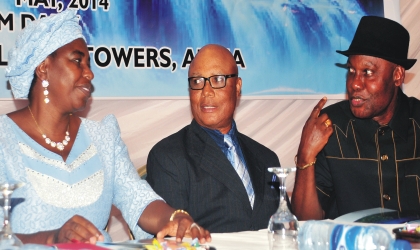
L-R: Minister of Water Resources, Mrs Sarah Ochekpe, member, Benin/Owena River Basin Development Authority, Mr Victor Emuakhagbon and Chairman, Upper Benue River Basin Development Authority, Mr Clifford Ordia, at the retreat for boards and managements of River Basin Development Authorities in Abuja last Monday.



