
Nation
THE STATES

FCT
Nigeria polio population immunity has increased from 50 per cent to 80 per cent. The Executive Secretary of the National Primary Health care Development Agency (NPHCDA), Dr Ado Mohammed, said in an interview at the Presidential Villa, Abuja, that the latest analysis by the World Health Organisation (WHO) showed the increase in the country’s polio population immunity.
“We shared with the President, the global goal analysis done by WHO which showed that population immunity has increased in Nigeria from about 50 per cent to 80 per cent.
“What this means is that even if the polio virus finds itself in any particular location in the country, it may not be able to paralyse the affected child.
“Even when it paralyzes the child, other children in that particular area will be secured; this is because population immunity has improved,’’ Mohammed said.
He noted that the country had not recorded any case of polio virus in the last two months.
Mohammed said that another survey carried out by WHO adjudged Nigeria to be the next country after India “that will exit as a polio endemic nation’’.
He gave assurance that Jonathan’s promise to eradicate polio from the country by 2015 would be kept, and said that any child below age five coming into Nigeria must be stopped and immunised before being allowed entry.
Katsina
A 60-year-old man, Muhammadu Sani, has been arrested by the NDLEA in Katsina with 167 kilograms of cannabis sativa.
Parading the suspect on Thursday in Katsina, the NDLEA Commandant, Hajiya Maryam Gambo lamented the rate at which aged persons, children and women were being involved in drug abuse and trafficking in the state.
When interviewed by newsmen, the suspect said he had been in the illegal business for four years.
Sani said that he transported the items from the southern parts of the country to Katsina, where he was arrested by the operatives of NDLEA.
The command also arrested one Tasiu Salisu, 35, with 40 kilograms of cannabis sativa tucked inside a Television set.
Salisu confessed that he wanted to deceive NDLEA and other security agents by hiding the substance in the TV set.
Kebbi
The Suru Local Government Area of Kebbi State bought 3,500 water pumping machines for distribution to dry season farmers to boost food production.
The council Chairman, Alhaji Sahabi Danbaba said in Suru on Thursday that the machines would be distributed free of charge to deserving farmers, noting that the council’s Department of Agriculture had been mandated to ensure equitable distribution of the machines.
The chairman said that the council had also prepared 2,000 hectares of cultivable land for dry season farming, and declared that the council had cleared the land to promote agriculture beyond subsistence level as well as generate employment and improve the economic well-being of farmers.
The chairman said the council would work out the modalities for farmers to benefit from the Central Bank of Nigeria (CBN) agriculture loan.
“Most of our farmers are not conversant with the loan procedure and we will encourage improvement in agricultural production,’’ he said
Kogi
The Kogi Deputy Governor, Mr Yomi Awoniyi, says agriculture is the major fulcrum that will drive the industrial development of the state.
Awoniyi stated this at the presentation and commissioning of 10 tractors purchased by the government for rice farmers as part of its flood recovery programme.
He said that the government was resolute to tap into the Federal Government’s agenda for rice farming, adding that 10,000 hectares of land had been cleared for rice farming while another for cassava.
He stated that the Korean Government had helped the state in establishing rice mills, while an approval for the purchase and erection of four cassava mills was in progress.
Earlier, the Commissioner for Agriculture, Dr. Femi Abolarin commended the administration for its determination to reposition the sector.
Kwara
The Etsu Patigi in Kwara, Alhaji Ibrahim Umar, on Thursday rejected the call for constitutional roles for traditional rulers in the country.
He said if the leaders were given roles under the constitution, it would deny them of their primary responsibilities.
Speaking when members of the state House of Assembly, led by the Speaker, Razaq Atunwa, paid him a courtesy visit during their oversight function to Patigi Local Government Area, the monarch said people might use the opportunity of such recognition to challenge traditional institutions in the courts while trying to perform their primary roles.
“I am not in support of clamour for constitutional responsibilities for traditional rulers because it would only tie them down. “Also it will impinge on their primary responsibility which is to advise people in government and tell them the truth all the times. “We should only be recognised constitutionally but not given constitutional roles. “We are neither looking for executive nor legislative powers but we should be recognised in the constitution. “The kingmakers cannot be the king to avoid a collapsed system”, the royal father said.
Lagos
The Nigerian Police Force (NPF) has alleged that the suspected vandals that destroyed NNPC pipelines at Arepo village, Ogun, were recruited from Ondo State riverine areas.
Assistant Commissioner of Police (ACP) in charge of the Inspector-General of Police Special Task Force on Anti-Pipeline Vandalism, Mr Friday Ibadin, disclosed this to the newsmen in Lagos.
He said that preliminary investigations into the last pipeline explosion revealed that some young men were brought to Lagos from riverine areas of Ondo State, to replace the dead members of the group.
“One of the suspects arrested after the last explosion in Arepo, who identified himself as Computer, claimed that himself and two others were invited to Lagos on January10, to work,by one Igbekorowa, (suspected ring leader of pipeline vandals).
Ibadin said that the suspect claimed that the first place their leader took them to was the creeks in Ikorodu area, where he (leader) requested them to stay on the road.
Nasarawa
The Nasarawa State deputy governor, Mr Damishi Luka-Barau, has pledged the government’s commitment to ensure adequate medical services to enhance the wellbeing of the people in the state.
Luka-Barau made the declaration recently at a one-day free medical care at Ningo in the Akwanga Local Government Area of the state.
He commended members of the Nasarawa State Association of Pharmacy Students (NASAPS) at the University of Jos for their foresight in offering free medical care in conjunction with his office, and said that the CPC-led administration in the state had placed high premium on the health sector.
Niger
The Officer- in-Charge of Minna Orphanage, Hajiya Ladidi Mohammed, on Wednesday said the home had produced two undergraduates in two institutions of higher learning.
Mohammed told newsmen in Minna that, the orphans were currently studying in the state’s College of Administrative and Business Studies, Bida and College of Education, Minna.
She said that the students, Haruna Abdullahi, 30 and Useni Abdullahi, 28, who were in their second and first year respectively, were being sponsored by the Niger State Government.
Mohammed said the home catered for a total of 21 orphans including the two students adding that 15 of them are males while six are females.
She said that the orphans were mainly from broken homes, mentally-deranged women or lunatics, adding that the mode of adoption was based on legal procedure.
Ondo
Ondo State Commissioner for Youth and Sports Development, Alhaji Yekini Olanipekun, has directed contractors refurbishing the Akure Township Stadium to get the facility ready for the 2012/2013 football season.
The ministry’s Media Officer, Anota Adebayo, said on Thursday in Akure that the commissioner gave the directive at a stakeholders meeting with the contractors of the project.
It said the stadium project had caused a lot of embarrassment to the government, noting that the contractors had been fully paid for the job.
“The project was supposed to have been completed before the end of 2012, but suffered some setback because of the lackadaisical attitude of the contractors,” the statement said.
It said the commissioner urged the stakeholders involved in renovating the stadium to quickly complete the project ahead of the coming Nigeria Premier League, beginning on February 16.
Sokoto
Governor Aliyu Wamakko of Sokoto State on Wednesday ordered the redeployment of the Director of Agriculture; all the six deputy directors as well as the cashier of Kware Local Government Council of the state for absenteeism.
Wamakko gave the directive when he paid an unscheduled visit to the local government secretariat at about 8.35 a.m. Apparently enraged by their absence, the governor ordered the state Local Government Service Commission to effect the redeployment with immediate effect.
During the visit, the governor met the council staff officer and other directors in their offices while the chairman and secretary were said to be away on official assignment.
Similarly, the governor visited Government Day Secondary School, Dundaye at about 7.50 a.m where he met only seven teachers present out of the 23.
Other schools visited by the governor included Gidan Sarkin Dinki, and Tangwale Primary Schools, among others.
Plateau
The Commissioner for Health in Plateau, Dr Fom Dakwak, has confirmed the death of two persons from Lassa fever in Plateau.
Dakwak said on Wednesday in Jos that the first victim, a woman, died at the Jos University Teaching Hospital, while the other, a man, died at the Vom Christian Hospital.
According to him, the ministry has sent out epidemiologists to sensitise people at COCIN Pastoral School, Kanke, where a student died of the disease sometime ago, stating that two other victims of the disease in the Kanke area were currently on admission.
According to the commissioner, the epidemiologists conducting a sensitisation workshop at the school are focusing on the steps that must be taken to contain the spread of the disease.
He stated that the Lassa virus was usually transmitted to human when the saliva, urine and excreta of the multi-mammalian rats come in contact with humans through either their food or water.



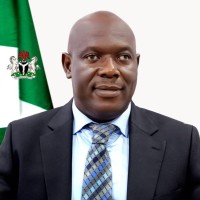
The Hydrocarbon Pollution Remediation Project (HYPREP) has commemorated the 15th anniversary of the release of the United Nations Environment Programme (UNEP) Environmental Assessment Report on Ogoniland, reaffirming its commitment to restoring the environment and improving the livelihoods of affected communities.
In a statement signed by the Project Coordinator, Prof Nenibarini Zabbey, to commemorate the anniversary, HYPREP described the anniversary as a significant milestone in Nigeria’s environmental restoration efforts, noting that the project has made remarkable progress in implementing the recommendations of the landmark UNEP report released on August 4, 2011.
The UNEP report had revealed extensive oil pollution across Ogoniland, severe environmental degradation, and serious public health risks resulting from decades of petroleum operations. It also recommended an initial $1 billion fund to commence the cleanup of the affected communities.
According to HYPREP, the Federal Government formally launched the Ogoni clean-up in 2016, while the Project Coordination Office was established in 2017 to drive the implementation of UNEP’s recommendations.
Zabbey said the current administration has continued to prioritise the project under the Renewed Hope Agenda.
Providing an update on the cleanup, the Project Coordinator disclosed that 30 of the 65 contaminated sites identified by UNEP have been fully remediated, while work is ongoing at several medium- and high-risk locations. It also stated that more than 1.5 million mangrove seedlings have been planted as part of what it described as the world’s largest restoration of oil-degraded mangroves, with over 1,000 hectares of shoreline already rehabilitated.
Zabbey further revealed that 49 Ogoni communities have been connected to potable water schemes through multiple water projects and booster stations aimed at providing safe drinking water across the region.
In the health sector, he said the 100-bed Ogoni Specialist Hospital in Kpite and the 43-bed Cottage Hospital in Buan are nearing completion, adding that several existing health facilities have been upgraded with modern medical equipment, while five ambulances have been donated to improve emergency healthcare services. The Project Coordinator also disclosed that a three-year human health biomonitoring study is being conducted in collaboration with the World Health Organization’s International Agency for Research on Cancer (IARC).
On economic empowerment, Zabbey stated that the Project has created more than 8,000 direct jobs and trained thousands of Ogoni youths and women in various vocational and technical skills, including software development, cybersecurity, aviation, commercial diving, seafaring, mechatronics, and creative arts. The project also reported awarding scholarships to more than 1,000 students, providing grants to small businesses, and supporting persons living with special needs through skills acquisition programmes.
The statement further highlighted ongoing legacy projects, including the Ogoni Power Project and the Centre of Excellence for Environmental Restoration, which it said is about 96 per cent complete. HYPREP also welcomed the recent designation of the Ogoni Wetland as a Ramsar Site of International Importance and pledged to continue promoting biodiversity conservation and sustainable management of the ecosystem.
Marking the anniversary, Zabbey said the progress achieved over the past 15 years demonstrates the collective commitment of government, development partners, stakeholders, and local communities to restoring Ogoniland. He called for renewed collaboration to sustain the cleanup effort, promote environmental sustainability, and support the long-term development of the region. 3
-

 News2 days ago
RSG Targets Nine Million Residents in Mosquito Net Distribution Campaign
-

 Oil & Energy2 days ago
Aiyedatiwa Signs New Electricity Bill
-

 Maritime2 days ago
Marine Minister Commends President Tinubu On NPERA Bill Assent
-

 Oil & Energy2 days ago
NLNG Commissions Research And Innovation Centre In RSU
-

 News2 days ago
KenPoly Holds Eight Convocations, August 29
-

 News2 days ago
RSG Begins Another Phase of Projects Commissioning Today
-

 News2 days ago
RMAFC Completes Revenue Sharing Review, Proposes New Pay
-

 Maritime2 days ago
NAGAFF Petitions IGP Over Alleged Maritime Police Harassment