
Nation
THE STATES

Adamawa
The Mubi Emirate Council of Adamawa at the weekend honoured some of its illustrious sons for their contributions to the socio-economic development of the area.
The PDP National Vice-Chairman (North East), Sen. Paul Wampana bagged the traditional title of “Zannan Mubi’’, while the Permanent Secretary, Federal Ministry of Power, Alhaji Sali Bello, was honoured with the title of “Dan Masanin Mubi’’.
Similarly, Alhaji Gidado Sajoh, a member representing Mubi South Constituency in the State House of Assembly, bagged the title of “Katukan Mubi’’, while Alhaji Gambo Abba, a retired custom officer, was honoured with the title of “Jakadan Mubi’’.
In a speech at the occasion, the Emir of Mubi, Alhaji Abubakar Isa, tasked the title holders to be good ambassadors of the Emirate. Isa, who lauded the peaceful coexistence among “the diverse people’’ of the Emirate, condemned the recent sectarian violence in Jos and said that those found to be responsible should be dealt with accordingly.
Responding on behalf of his colleagues, Wampana lauded the leadership quality of the Emir, who, he said had been able to unite the diverse people of the Emirate.
Borno
Mr Asishana Okauru, Director-General, Nigeria Governors‘ Forum (NGF), has urged the federal government to urgently address the poor state of federal roads across the country.
Okauru made the call in an interview with The Tide’s source in Ngala, Borno State.
He said that the poor state of the roads was impacting negatively on the nation’s economy. He spoke to the source after the visit of the NGF peer review team to the International College and the mini stadium being built by the Borno State Government.
He noted that the deplorable state of federal roads made nonesense of the efforts of state governments across the country to achieve economic development.
According to him, the deplorable state of the highways is a major hinderance to the realisation of the vision of states in regards to the empowerment of the people and economic growth. “Unless the federal government resolves to deliberately invest in the immediate rehabilitation of these federal roads, the investments of state governments would not yield the desired results.
“And this will not be in the interest of the less privileged, most of whom look up to states to have their poverty alleviated,” Okauru said. He said that the poor condition of federal roads particularly in the north east zone, made it difficult for the states in the area to achieve their economic potentials.
FCT
A water expert, Mr Hope Ogbeide, has called on Civil Society Organisations (CSOs) to advocate for increased access to water and sanitation in the country.
Ogbeide, the Coordinator of the Society for Water and Sanitation in the south-south, made the call while speaking with The Tide’s source in Abuja. He said the CSOs should remind the federal government of its commitment in the endorsement of various water and sanitation declarations at regional and global levels.
The coordinator recalled that Nigeria had in 2008 ratified various protocols on water and sanitation at meetings in Egypt, South Africa and Tunisia, to fast track its water and sanitation goals.
“Usually, when there is a law in place, it becomes easier for a group of people to take advantage of it to pursue their goals.
“In this case, CSOs have an opportunity in the fact that we have signed those conventions, to begin to mobilise to ensure that the National Assembly domesticates such conventions.
“Once that is done, the next step and next thing to be done is to advocate for its implementation because it is one thing to have those things in place and another for them to be implemented,’’ the expert said.
He advised the CSOs not to stop at advocacy, but to also monitor the impact of the particular activity they were advocating for.
Kaduna
The Kaduna command of the National Drug Law Enforcement Agency (NDLEA), says it arrested 92 suspects in the past three months.
A statement sign by NDLEA State Commander, Epeso Ngale, in Kaduna, said the command also intercepted 591.1 kilograms of various drugs from the suspects. The statement said the arrests were made during raids at seven hideout of the suspect traffickers in Kaduna and Zaria.
It stated that seven persons had been convicted, while 11 addicted persons were admitted for counselling and rehabilitation. The commander appealed to the public for useful information that would lead to the arrest of traffickers in the state.
Kano
Sheikh Muhammad Tudunwada, a Kano-based Islamic scholar, on Saturday in Kano called on Muslims and Christians to live in peace with one another.
Tundunwada, who made the call in an interview with The Tide’s source, said that Easter, Christmas, Sallah and Maulud celebrations were the best periods to advocate for peace.
“During those periods, people are relaxed and they worship their God whole heartedly and are always attentive to what their leaders say,” he said.
Tundunwada noted that both Christians and Muslims worshipped one God, and said that they should avoid unnecessary sentiments that could lead to blood shed.
He condemned the recent crisis in Jos, adding that it was created by unnecessary sentiments that had no basis in either the Christian or Islamic religion.
Tudunwada advised the federal government to ensure that all those behind the crisis were brought to book.
Katsina
The Katsina State Government says it has donated N25.5 million to 17 registered community colleges of Arabic and Islamic studies to enhance their operations.
The state Commissioner for Education, Alhaji Abdullahi Garba, disclosed this in an interview with The Tide’s source in Katsina. Garba said that each community college received a donation of N1.5 million from the state government.
The gesture, he said, was to assist the colleges to address their pressing problems with a view to complementing the government’s efforts at improving education in the state.
“The state government is giving the desired attention to Arabic and Islamic education.
“That is why it established an additional college of Arabic and Islamic studies in Fago, apart from the exisiting ones in Katsina, Dutsin-ma and Kabomo towns of the state,” he said. The commissioner also disclosed that the state government had sponsored many students to study Arabic Language, Arabic Caligraphy and Computer studies at the University of Sudan. According to him, more than 60 of such students have graduated, while 175 of them are currently pursuing their various courses in Sudan.
On the dearth of Arabic and Islamic teachers in the state, Garba said the government was making efforts to address the problem.
Lagos
The Surulere Local Council in Lagos State says it has begun an enlightenment campaign at motor parks to check drug abuse and sale of alcohol. The Chairman, Dr Razak Folami, told The Tide’s source in Lagos that the campaign was aimed at re-orientating youths and commercial bus drivers. He expressed concern over the problem of drug abuse and alcoholism which, he said, had reached an alarming dimension. Folami said the council decided to take the campaigns to motor parks because they had become a haven for hard drugs and alcohol. “We have commenced a campaign to enlighten drivers and commercial motorcyclists on the harmful effects of such drugs.
“The local concoctions mixed with gin are part of the hard drugs which they consume; they are injurious to health and also affects safe driving,’’ he said.
Folami stressed the need to prevent accidents at parks by discouraging the consumption of drugs and alcohol by the drivers and commercial motorcyclists.
He threatened that after the campaigns, the council would clamp down on erring drivers and sellers of local gin and alcohol at parks. “Consumption of such drugs causes abnormal behaviour which leads to accidents.
“Council officials have been deployed to parks to enforce the law banning sale and consumption of alcohol at parks,’’ Folami said.
He said the council was also collaborating with Federal Road Safety Corps in enforcing traffic rules and regulations to reduce accidents in the area.
Niger
Governor Babangida Aliyu of Niger has ordered the release of N160 million to the state eight emirate education foundations as part of government support for their activities.
Aliyu gave the order during the combined annual general meeting of the Minna Emirate Education Foundation (MEEFO) held at the emir’s palace, Minna.
According to the governor, the Minna Emirate Education Found will get N30 million, the Bida Emirate Education Foundation, N25 million; while the Kontagora, Borgu and Suleja emirate foundations will each receive N20 million.
Similarly, Aliyu also directed that N15 million each should be released to Lapai, Agaie and Kagara emirate foundations for their activities. He directed the emirate foundations to ensure that part of the money was used for the construction of toilets and locally dug wells, in order to make public schools more conducive for pupils and students.
Aliyu, however, ordered that the funds for Kagara Emirate Education Foundation be withheld, until it accounted for the funds already given to it.
“We heard that some people in the area have misused the foundation’s funds and as such their share should be withheld until the previous allocation is properly accounted for,’’ he said. The governor urged officials of MEEFO to re-vamp the foundations so that they could live up to the goals of their founding fathers, among which “are the construction or rehabilitation of schools structures and award of scholarship to indigent students.
In his speech, the Emir of Minna, Alhaji Umar Faruk, expressed his concern about the mass failure recorded in the November-December 2009 NECO examination and called on the officials of the foundations to work toward improving the standard of learning.
MEEFO spent N54 million on the renovation and construction of classrooms and award of scholarship to indigent students in the emirate in the last three years.



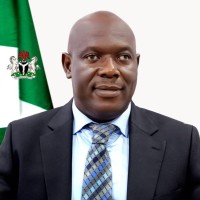
The Hydrocarbon Pollution Remediation Project (HYPREP) has commemorated the 15th anniversary of the release of the United Nations Environment Programme (UNEP) Environmental Assessment Report on Ogoniland, reaffirming its commitment to restoring the environment and improving the livelihoods of affected communities.
In a statement signed by the Project Coordinator, Prof Nenibarini Zabbey, to commemorate the anniversary, HYPREP described the anniversary as a significant milestone in Nigeria’s environmental restoration efforts, noting that the project has made remarkable progress in implementing the recommendations of the landmark UNEP report released on August 4, 2011.
The UNEP report had revealed extensive oil pollution across Ogoniland, severe environmental degradation, and serious public health risks resulting from decades of petroleum operations. It also recommended an initial $1 billion fund to commence the cleanup of the affected communities.
According to HYPREP, the Federal Government formally launched the Ogoni clean-up in 2016, while the Project Coordination Office was established in 2017 to drive the implementation of UNEP’s recommendations.
Zabbey said the current administration has continued to prioritise the project under the Renewed Hope Agenda.
Providing an update on the cleanup, the Project Coordinator disclosed that 30 of the 65 contaminated sites identified by UNEP have been fully remediated, while work is ongoing at several medium- and high-risk locations. It also stated that more than 1.5 million mangrove seedlings have been planted as part of what it described as the world’s largest restoration of oil-degraded mangroves, with over 1,000 hectares of shoreline already rehabilitated.
Zabbey further revealed that 49 Ogoni communities have been connected to potable water schemes through multiple water projects and booster stations aimed at providing safe drinking water across the region.
In the health sector, he said the 100-bed Ogoni Specialist Hospital in Kpite and the 43-bed Cottage Hospital in Buan are nearing completion, adding that several existing health facilities have been upgraded with modern medical equipment, while five ambulances have been donated to improve emergency healthcare services. The Project Coordinator also disclosed that a three-year human health biomonitoring study is being conducted in collaboration with the World Health Organization’s International Agency for Research on Cancer (IARC).
On economic empowerment, Zabbey stated that the Project has created more than 8,000 direct jobs and trained thousands of Ogoni youths and women in various vocational and technical skills, including software development, cybersecurity, aviation, commercial diving, seafaring, mechatronics, and creative arts. The project also reported awarding scholarships to more than 1,000 students, providing grants to small businesses, and supporting persons living with special needs through skills acquisition programmes.
The statement further highlighted ongoing legacy projects, including the Ogoni Power Project and the Centre of Excellence for Environmental Restoration, which it said is about 96 per cent complete. HYPREP also welcomed the recent designation of the Ogoni Wetland as a Ramsar Site of International Importance and pledged to continue promoting biodiversity conservation and sustainable management of the ecosystem.
Marking the anniversary, Zabbey said the progress achieved over the past 15 years demonstrates the collective commitment of government, development partners, stakeholders, and local communities to restoring Ogoniland. He called for renewed collaboration to sustain the cleanup effort, promote environmental sustainability, and support the long-term development of the region. 3
-

 News1 day ago
RSG Targets Nine Million Residents in Mosquito Net Distribution Campaign
-

 Oil & Energy1 day ago
Aiyedatiwa Signs New Electricity Bill
-

 Oil & Energy1 day ago
NLNG Commissions Research And Innovation Centre In RSU
-

 Maritime1 day ago
Marine Minister Commends President Tinubu On NPERA Bill Assent
-

 News1 day ago
KenPoly Holds Eight Convocations, August 29
-

 News1 day ago
RSG Begins Another Phase of Projects Commissioning Today
-

 News1 day ago
RMAFC Completes Revenue Sharing Review, Proposes New Pay
-

 Maritime1 day ago
NAGAFF Petitions IGP Over Alleged Maritime Police Harassment