
Nation
THE STATES

Bauchi
Governor Isa Yuguda of Bauchi State has reiterated the resolve of his administration to ensure security of lives and property of citizens in the state irrespective of religion, tribe or political differences.
He stated this in a goodwill Easter message to the people of the state, a copy of which was made available to The Tides source.
Yuguda said that the State Government would use all legitimate means to ensure that the state continued to remain peaceful, “where no one is molested or harassed’’.
“This administration will ensure prevalence of security, nurture our democracy to maturity and revamp our ailing economy,’’ the governor said.
He asked the people of the state to de-emphasise religion, ethnicity or political differences in their relationship with one another.
“God the Almighty has in His wisdom, created us and made us to live together in one place with all our differences. “We should learn to live together, tolerate and love one another.”
Benue
Governor Gabriel Suswam of Benue has filed a law suit against an Abuja-based business man, Mr Manasseh Joshua and three others for alleged conspiracy and libel against him.
The Tides’s source reports that the five count charge was filed at Makurdi High Court 1 by a Makurdi-based attorney, Jibrin Okutekpa, on behalf of the governor.
In the suit, the governor alleged criminal conspiracy and agreement which resulted in the printing and publication of defamatory materials against him in a magazine entitled, “Power Steering”.
The defendants, Manasseh Joshua, Tom Whia, Eddy Ochigbo and Dan Ekah, according to the writ of summons, caused to be published in November, 2009, injurious falsehood against the person of Governor Suswam.
It further averred that the libelous publication against the governor. contravened section 96 of the Penal code and was punishable under Section 97(1)and 2 of the document.
The applicant is therefore seeking a motion ex-parte application to prefer a charge pursuant to section185(b) of the Criminal procedure code rules 2 and 3.
The alleged offending document was allegedly circulated and sold in Benue.
FCT
The Federal Government has been urged to separate water sector from the Federal Ministry of Agriculture and Water Resources.
Participants at a 5-day advocacy workshop for civil society organisations (CSOs) operating in Water, Sanitation and Hygiene (WASH) sectors made the call in a communiqué issued on Friday in Abuja at the end of the workshop.
The communiqué, signed by Mr Muhammad Ibn-Ahmad of Centre for Peace Projects & Development and Mr Omoniyi Omojugbagbe of MEDIA NETWORK, also called on the government to appoint a technocrat as minister for the Ministry of Water Resources and provide more funding for the sector.
They called for the involvement of CSOs in budget planning and a mechanism to ensure adequate monitoring and implementation of budgets in the sector.
The statement also advised CSOs in the WASH sector to be strategic in their policy advocacy as well as budget analysis and tracking.
Kaduna
The Group Managing Director (GMD) of NNPC, Mr Mohammed Barkindo, has described as “very remarkable’’ the just completed turn around maintenance (TAM) of the Kaduna Refining and Petrochemical Company (KRPC).
Speaking shortly after a tour of the facility recently, Barkindo said the refinery, which produces about 1.5 million litres of petrol daily, though not at full capacity, would be able to supply the product to most of the states in the northern part of the country.
“I saw a remarkable TAM of this plant after a very extensive tour of the facility.
“The refinery has re-streamed and there is a flare up there indicating that the distilling processes are on.
“I have been receiving tremendous reports from this plant in spite of your challenges.
“The management and corporate headquarters are happy with what you are doing here,’’ Barkindo said.
The Tide’s source reports that the GMD, who had earlier met with the management of the KRPC, also met with staff of NNPC locations in the Kaduna zone as well as launched the corporation’s transformation agenda.
Kano
Property worth about N1.776 billion was destroyed in the recent fire outbreak in Kantin Kwari Textiles Market in Kano.
The Chairman of the committee set up to investigate the disaster, Dr.Ibrahim Garba, told newsmen in Kano on Thursday that about N122 million would be spent on the renovation of some buildings including a mosque.
Garba said the details were contained in the interim report of the committee submitted to the state government.
He said a total of 1,216 persons were affected by the disaster, out of which 861 lost their property to the fire while 355 retrieved their goods intact.
The Chairman said the figures were arrived at after a thorough screening of the traders’ claims by the committee assisisted by the traders’ union.
According to him, about N200 million has so far been collected as donations from some state governments and individuals with the highest donation of N100 million from a Kano businessman, Alhaji Aminu Dantata.
Katsina
In a bid to promote self reliance and reduce poverty in the rural areas, Musawa Local Government in Katsina State organised skill acquisition programme for 70 housewives.
Speaking at the opening of the training on Thursday, wife of the chairman, Hajia Binta Lawal, said that it was meant to empower housewives with skills to uplift their economic status.
Lawal said that participants were drawn from all the political wards in the area, adding that the beneficiaries were expected to train other women at their various localities.
She expressed the council’s commitment to assisting women and encouraging them to concentrate on the various businesses that would contribute to their families’ upkeep.
Speaking, the Facilitator, Hajia Jummai Garba, noted that the economic empowerment skills would reduce poverty and encouraged women to assist their families considering the economic condition of rural families.
Lagos
The Lagos Branch of the Nigerian Bar Association (NBA) on Thursday faulted a suit by a lawyer, Mr Jiti Ogunye, challenging the state’s 2009 Magistrate Law.
Ogunye in February filed the suit challenging the validity of the law which became operational on Jan. 16
Briefing newsmen at a news conference in Lagos, the Chairman of the branch, Mr Chijioke Okoli, said any grey areas in the law could be amended without litigation.
“Any law made by man can be subjected to amendment; if there are some grey areas in the law, I think that it can still be handled instead of going straight into litigation,
“What cannot be amended is only the Holy Bible; but a law by man can be amended at any stage,’’ he argued.
Okoli said the NBA also faulted a ruling of the Lagos High Court directing that the state’s Magistrate’s Courts should revert to the 2003 Magistrate Law pending the determination of the suit.
Ogun
The Ogun government has established early childhood education centres in 75 percent of public schools in the 20 local government areas.
Mr Sina Adejobi, the Chairman of Ogun State Universal Basic Education Board (SUBEB) made the disclosure to The Tide’s source recently in Abeokuta.
He said that the state government would focus more on early childhood education, under the Universal Basic Education Commission (UBEC).
“We have so far established early primary classes in 75 per- cent of public schools in all the 20 local government areas,” he said.
On the School Feeding Programme, the chairman, however, said that the state was not implementing that at the moment, but that plans were on to do so.
Osun
Osun State Youth Empowerment Board (OSYEB) has distributed equipment to 90 youths, with a view to empowering them to become self-employed.
Dr Adeniyi Ayeni, Chairman of the board, who presided over the distribution in Osogbo, said that gainful self-employment was a useful antidote to anti-social activities.
He said that the beneficiaries included those who recently underwent vocational training organised by the board and had attained competence in the trades they were trained for.
Ayeni congratulated the beneficiaries for enjoying the dividends of democracy and urged them to make judicious use of the equipment.
He also advised them to promptly establish their businesses in order to justify the state government’s investment in the project.
Sokoto
Governor Aliyu Wamakko of Sokoto State on Friday inaugurated a 30- member committee for the hosting of the 24th edition of the National Quránic Recitation competition.
The competition would hold in the state from May 15.
The committee has the Speaker of Sokoto State House of Assembly, Alhaji Abdullahi Salame, as its chairman.
A statement, signed by Abubakar Muhammad, Special Adviser on Press Affairs to the Governor, quoted Wamakko as expressing the government’s commitment to ensuring the success of the event.
The governor also promised to support the committee to succeed in its assignment and expressed confidence that members of the committee would handle the assignment well.
Wamakko appealed to wealthy individuals in the state to contribute to the successful hosting of the competition to avoid a situation where the committee would go “outside looking for donations”.



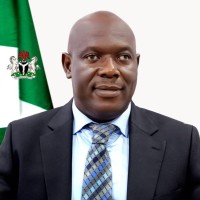
The Hydrocarbon Pollution Remediation Project (HYPREP) has commemorated the 15th anniversary of the release of the United Nations Environment Programme (UNEP) Environmental Assessment Report on Ogoniland, reaffirming its commitment to restoring the environment and improving the livelihoods of affected communities.
In a statement signed by the Project Coordinator, Prof Nenibarini Zabbey, to commemorate the anniversary, HYPREP described the anniversary as a significant milestone in Nigeria’s environmental restoration efforts, noting that the project has made remarkable progress in implementing the recommendations of the landmark UNEP report released on August 4, 2011.
The UNEP report had revealed extensive oil pollution across Ogoniland, severe environmental degradation, and serious public health risks resulting from decades of petroleum operations. It also recommended an initial $1 billion fund to commence the cleanup of the affected communities.
According to HYPREP, the Federal Government formally launched the Ogoni clean-up in 2016, while the Project Coordination Office was established in 2017 to drive the implementation of UNEP’s recommendations.
Zabbey said the current administration has continued to prioritise the project under the Renewed Hope Agenda.
Providing an update on the cleanup, the Project Coordinator disclosed that 30 of the 65 contaminated sites identified by UNEP have been fully remediated, while work is ongoing at several medium- and high-risk locations. It also stated that more than 1.5 million mangrove seedlings have been planted as part of what it described as the world’s largest restoration of oil-degraded mangroves, with over 1,000 hectares of shoreline already rehabilitated.
Zabbey further revealed that 49 Ogoni communities have been connected to potable water schemes through multiple water projects and booster stations aimed at providing safe drinking water across the region.
In the health sector, he said the 100-bed Ogoni Specialist Hospital in Kpite and the 43-bed Cottage Hospital in Buan are nearing completion, adding that several existing health facilities have been upgraded with modern medical equipment, while five ambulances have been donated to improve emergency healthcare services. The Project Coordinator also disclosed that a three-year human health biomonitoring study is being conducted in collaboration with the World Health Organization’s International Agency for Research on Cancer (IARC).
On economic empowerment, Zabbey stated that the Project has created more than 8,000 direct jobs and trained thousands of Ogoni youths and women in various vocational and technical skills, including software development, cybersecurity, aviation, commercial diving, seafaring, mechatronics, and creative arts. The project also reported awarding scholarships to more than 1,000 students, providing grants to small businesses, and supporting persons living with special needs through skills acquisition programmes.
The statement further highlighted ongoing legacy projects, including the Ogoni Power Project and the Centre of Excellence for Environmental Restoration, which it said is about 96 per cent complete. HYPREP also welcomed the recent designation of the Ogoni Wetland as a Ramsar Site of International Importance and pledged to continue promoting biodiversity conservation and sustainable management of the ecosystem.
Marking the anniversary, Zabbey said the progress achieved over the past 15 years demonstrates the collective commitment of government, development partners, stakeholders, and local communities to restoring Ogoniland. He called for renewed collaboration to sustain the cleanup effort, promote environmental sustainability, and support the long-term development of the region. 3
-

 News2 days ago
RSG Targets Nine Million Residents in Mosquito Net Distribution Campaign
-

 Oil & Energy2 days ago
Aiyedatiwa Signs New Electricity Bill
-

 Maritime2 days ago
Marine Minister Commends President Tinubu On NPERA Bill Assent
-

 Oil & Energy2 days ago
NLNG Commissions Research And Innovation Centre In RSU
-

 News2 days ago
KenPoly Holds Eight Convocations, August 29
-

 News2 days ago
RMAFC Completes Revenue Sharing Review, Proposes New Pay
-

 News2 days ago
RSG Begins Another Phase of Projects Commissioning Today
-

 Maritime2 days ago
NAGAFF Petitions IGP Over Alleged Maritime Police Harassment