
Nation
THE STATES

Kwara
Police in Kwara State have arrested five suspects in con
nection with severance of a human head allegedly for ritual purpose.
Among the suspects is a septuagenarian who is alleged to be a herbalist.
It was clamed that the planned ritual was meant to make one of the suspects (name with held) become a rich man.
The police said its team of detective acting on information, found the severed head with another of the suspects (name withheld also) in his residence at Igbonna in Oyun Local Government Area of the state.
They said confession of the suspect on interrogation led to the arrest of the others.
The suspect, during an interaction with newsmen at the police head quarters in Ilorin, however, claimed that he was innocent.
Edo
Edo State Governor, Adams Oshiomole, on Tuesday sent
three names of commissioners designate to the Edo State House of Assembly for approval to replace the three commissioners who resigned last year.
The nominees, who are expected to be in charge of the Ministry of Commerce and Industry, Ministry of Arts, Culture and Tourism, as well as that of Transport, are Anstem Ojezua, Dr. Cordelia Aiyowieren-Awize and Lucas Okojie respectively.
Three members of the Peoples Democratic Party (PDP), who were serving as commissioners in Oshiomole’s administration resigned their appointment in September last year over irreconciliable differences.
They are Vincent Akhere, who was in the Ministry of Arts, Culture and Tourism, Fedelis Oriafo, who was in the Ministry of Transport and Mrs. Sera Adetugboboh, who was in the Ministry of Commerce and Industry. they had cited personal reasons for their resignation.
Bayelsa
Embattled contractor, Joseph Ajuwa, who is handling the
installation of the floodlights and electronic scoreboard at the Yenegoa Sport Complex, said the decision of the Bayelsa State Government to invite the Economic and Financial Crimes Commission (EFCC) to arrest him over the uncompleted project is an act of victimisation aimed at discrediting him.
Ajuwa, who is the Managing Director of Yarbek & Company, denied claims that the project was abandoned as alleged by the state government.
In an interview with The Tide’s source on Tuesday in Yenagoa, the contractor said there was an agreement between him and the state government on November 4, last year, that the manufacturer of the floodlights would take 10 to 14 weeks in France before shipment, which takes a maximum of 30 days.
The state government had alleged that the contractor abandoned that N450 million project since 2006, despite several appeals that funds collected to complete the work.
Consequently, the governor directed the sports ministry to invite the EFCC to arrest the contractor for breach of contract agreement.
Niger
Niger State Governor, Dr. Mu’azu Babangida Aliyu, has
cautioned the ruling Peoples Democratic Party (PDP) of inherent danger of imposing candidates on Niger and during the fourthcoming 2011 general election.
He also advised the nation’s traditional rulers, as custodians of the peoples’ culture and tradition, on the need to be conscious of their actions and inactions in order not to send the wrong signals to their subjects of their roles in politics and the next years’ election.
Aliyu gave the warning at Agaie headquarters of Agaie Local Government Area of the state, during the distribution of vehicles and motorcycles to Peoples Democratic Party (PDP) official in council areas within the Niger South Senatorial Zone.
He told the traditional rulers not to do anything that would be detrimental to their position but to act in compliance with the country’s constitution, which provides that they remain non-partisan.
Aliyu was responding to a comment by the Emir of Lapai, Umaru Bago, who said that with the presence of traditional rulers at the Agaie event, they were at liberty to attend similar functions put together by any other political party.
Lagos
Nigerians have been urged to make sacrifices to move the
nation forward.
The call was made by Venerable Igeni Isemede during the solemnisation of holy matrimony between Nkem Oyindamola Dike, daughter of the Chief of Air Staff, Air Chief Marshall, Paul Dike and Ikechukwu Ebube Obianyor.
Ven. Isemede also said the nation could be improved if leaders eschewed corruption and other social vices, which he said, is “the bane of all developing countries”.
Rivers State Deputy Governor Engr. Tele Ikuru, represented Governor Chibike Rotimi Amaechi at the event, which took place at Our Saviour’s Church, Tafawa Balewa Square, Lagos.
Ven. Isemede said “he regretted the attitude of some citizens, noting that such were detrimental to the progress and development of the country, urging such people to have a rethink of God’s will in their lives”.
He also urged citizens to make their ways right before God. Isemede further enjoined the couples to provide succour from the vissitides of life to their spouses, saying “You are the umbrella your spouse has from the troubles of this world and prayed for the sustenance of the godly virtues in families.
Abuja
The Federal Government has assured members of the dip
lomatic corps of its readiness to combat crime and unrest.
Vice-President Goodluck Jonathan gave the assurance recently when he hosted head of diplomatic missions and international organisations at his Aguda residence, Abuja.
Governors and Ministers also attended the dinner.
Jonathan said peace and security formed a key area which would receive the government’s attention.
He spoke on the December 25 botched terror attack by Umar Farouk Abdumuttatalab on a US plane, urging the diplomats to see the incident in its proper perspective.
Jonathan said “Nigerians are peace loving people and responsible members of the international community.
“This incident must, therefore, not become an excuse to single out Nigerians for undeserved profiling and the application of restrictive measures which unduely impinge on our dignity, freedom and fundamental rights”.
Anambra
The state House of Assembly and Executive of the Peoples
Democratic Party (PDP) loyal to Prof. Chukwuma Soludo were at daggers drawn on Tuesday following indications that 12 of its members may be expelled for alleged anti-party activities.
Giving the indication, PDC Caretaker Committee Secretary, Tony Muobike, and its Publicity Secretary, Joseph Ofokansi, said the party is considering expelling the members who they claim are supporting Andy Uba, the Labour Party (LP) governorship candidate.
They had already written to the lawmakers mandating them to explain why disciplinary action should not be taken against them, adding that the de-registration of Uba, Mrs Uche Ekwunife and Nicholas Ukachukwu of the LP, Peoples Progressive Alliance (PPA) and HDP from PDP has commenced at their respective ward levels.
Delta
Delta State House of Assembly has warned on the delay
in competing the Asaba International Airport and the new Government House.
Its committee on Finance and Appropriation also ordered stabilini Visionmi, the contractor handling the Asaba Township Stadium and its chairman, Wale Babalaki, to appear before the committee next week Tuesday.
Chairman of the committee, Daniel Mayuku, gave the order last Tuesday at the commencement of inspection of some mega projects across the state.
According to him, most of the projects ought to have been completed last year, particularly that of the Asaba Township Stadium for which the contractor has collected over 90% of the contract sum.
Abia
Demolition of illegal structures is billed to commence in
Aba and Umuahia in February, according to the Abia State Commissioner for Lands, Survey and Urban Planning, Emeka Nwachukwu.
The Commissioner said this in Umuahia recently while briefing newsmen on the activities of his ministry.
According to The Tide source, Nwachukwu said some of the building blocked drainages, while others, which did not comply with the town planning laws would also be affected in the exercise.
The commissioner explained that the essence of the demolition is to accommodate the lapses noticed in the planning of the two towns when the digital mapping of the two towns begins.
He noted that many landlords have vacated the town planning laws by using their buildings for purposes other than what is contained in their certificate of occupancy.



As the world marked the 2026 International Day of the Girl Child on Sunday, October 11, 2026, a non-governmental organisation, Stand Up for Women Society (SWS) has intensified its campaign against child marriage, urging schoolgirls to prioritise education, protect their rights and develop skills for a better future.
The organisation joined the global observance of the day under the theme, “International Day of the Girl Child: End Child Marriage and Invest in Girls’ Rights,” with a sensitisation programme at Government Girls Secondary School, Oromenike, D-Line, Port Harcourt, Rivers State.
Led by its Vice Chairperson, Daba Benebo, the group engaged the students in discussions on the dangers of early marriage, teenage pregnancy, sexual abuse and other challenges that threaten the education, safety and development of the girl child.
Speaking during the programme, Benebo urged the students to reject early marriage and remain focused on their studies, stressing that education would empower them to make informed decisions about their lives and future.
She cautioned the girls against allowing anyone to deprive them of their right to education and dignity, advising them to report cases of harassment, abuse and other violations of their rights to the appropriate authorities.
Benebo assured the students that SWS remained available to support them whenever they encountered violations of their rights.
She also encouraged them to maintain discipline and responsible conduct while avoiding behaviours that could expose them to negative influences and jeopardise their future.
Beyond formal education, the SWS vice chairperson urged the students to acquire vocational skills that could provide additional opportunities for economic independence and help them navigate future challenges.
The sensitisation programme, enlivened by singing, dancing and to share their views and experiences on issues affecting the girl child interactive sessions, provided an opportunity for the students to share their views and experiences on issues affecting the girl child.
One of the major issues raised during the discussion was the appropriate age for marriage. While some participants maintained that 18 years was the constitutionally approved age, the discussion highlighted the need to consider not only age but also the maturity, preparedness and responsibilities associated with marriage.
The speaker stressed that marriage required adequate mental and emotional preparation, as well as the capacity to shoulder its responsibilities.
She therefore advised the students to concentrate on acquiring a sound education before considering marriage, noting that education would equip them with the knowledge and skills needed to make responsible decisions and manage family life.
The issue of teenage pregnancy also featured prominently during the question-and-answer session.
In addressing the subject, the speaker explained that pregnancy could occur even at the age of 12, using the example to underscore the vulnerability of young girls to the consequences of early sexual activity.
She advised the students to avoid sexual intercourse and prioritise their education, personal safety and future aspirations.
The discussion also examined the difficulties some girls encounter when living with hostile spouses, relatives or guardians.
Benebo encouraged the students to cultivate patience, humility and diligence, noting that these qualities could help them navigate difficult situations and build a brighter future.
However, she warned that patience and humility should never be interpreted as an obligation to endure violence, abuse or degrading treatment.
She urged girls experiencing hostile or abusive living conditions to seek help from their parents, trusted adults or appropriate support services rather than remain in environments that could expose them to physical or emotional trauma.
“When such happens, please return to your parents and engage in petty trade or learn a skill to support your education rather than stay in a hostile environment,” Benebo stressed.
The programme also underscored the importance of protecting girls from early marriage and other harmful practices that can disrupt their education, compromise their well-being and limit their opportunities in life.
It also reinforced the need for families, schools, communities and relevant organisations to work together to ensure that girls have access to education, vocational training, protection and the support they need to realise their potential.
For SWS, the message was clear: empowering the girl child begins with protecting her rights, investing in her education and equipping her with the confidence and skills to make informed choices about her future.
Stories by Kevin Nengia
The Egberipapa Foundation has unveiled a mass transit scheme aimed at easing transportation difficulties and improving connectivity among communities in the three Kalabari local government areas of Asari-Toru, Degema and Akuku-Toru in Rivers State.
The initiative, established by former Caretaker Committee Chairman of Akuku-Toru Local Government Council, High Chief Sobomabo Jackrich, popularly known as Egberipapa, is designed to make transportation more accessible and affordable for residents across the Kalabari area.
The scheme was launched on Monday, October 12, 2026, and is expected to address longstanding transportation challenges confronting residents, particularly those in riverine and hard-to-reach communities.
Communities expected to benefit from the initiative include Krakrama, Minama, Angulama, Sangama, Omekwe-Tariama and Omekwe-Ama.
The project is expected to ease movement within and beyond the Central Group area, while providing residents with a more convenient means of transportation for their daily activities.
For decades, transportation difficulties have posed significant challenges to several Kalabari communities, making movement between settlements both cumbersome and expensive. These challenges have also affected commercial activities, social interactions and access to essential services.
The introduction of the mass transit scheme is therefore expected to provide relief to residents, strengthen inter-community connections and stimulate economic activities across the benefiting communities.
Beyond improving mobility, the initiative could contribute to community development by facilitating the movement of people and goods, supporting local businesses and enhancing social and economic interactions within the Kalabari area.
As the scheme gets underway, attention will be focused on its implementation, accessibility and sustainability, as well as its capacity to deliver lasting transportation benefits to the target communities.
The initiative represents a potentially significant step towards addressing transportation challenges and promoting grassroots development across the Kalabari Kingdom.

The Amaewhule family of mbodo Aluu in Ikwerre Local Government Area of Rivers State has cautioned members of the public against entering into any land transaction involving a disputed property known as “Ada Oro Fam Land,” located behind the OPM Church along Airport Road.
The family, through its legal counsel, Barrister Ndubuisi Agumagu, issued the warning amid an ongoing legal dispute over the ownership and control of the property, which is said to comprise more than 900 plots of land.
The matter is currently before the Isiokpo High Court of Rivers State in a suit numbered IHC/246/CS/2026, presided over by Justice Sobere Biambo.
The claimants in the suit include Chief Green Amaewhule and others, while Fabulous Amaewhule and Odibola Properties are listed among the respondents.
Counsel to the Amaewhule family, Barr Ndubuisi Agumagu, advised prospective land buyers and members of the public to exercise caution and refrain from purchasing any portion of the disputed property pending the determination of the case by the court.
According to the legal counsel, the property is a family estate belonging collectively to the Amaewhule family, and no individual member of the family has the authority to unilaterally dispose of portions of the land.
The counsel specifically maintained that Fabulous Amaewhule, one of the respondents in the suit, does not have the legitimate authority, according to the family’s position before the court, to sell portions of the disputed property.
The family further warned that anyone who proceeds to purchase land from the respondents while the matter remains before the court would be doing so at their own risk.
It stressed that such buyers could potentially lose their investments should the court eventually deliver judgment against the validity of the transactions.
The legal team said the warning became necessary to prevent unsuspecting members of the public from committing their resources to a property whose ownership and right of disposition are currently the subject of judicial determination.
The family also urged prospective investors, developers and land buyers to conduct proper legal inquiries and obtain independent verification of the status of the property before committing funds to any transaction relating to it.
The Amaewhule family said its position was intended to protect members of the public from possible financial losses and further legal complications while the case remains sub judice, stressing that interested parties should await the final determination of the court.
Akujobi Amadi
-

 Oil & Energy1 hour ago
S&P Global Warns Hormuz Energy Shock Could Become A Global Food Crisis
-

 News2 hours ago
NDLEA Recovers Tons Of Illicit Drug Consignments In Nine States
-

 News2 hours ago
FG releases N38.93bn to upgrade 166 tertiary institutions
-

 News2 hours ago
Rivers Community Raises Alarm Over Alleged Security Invasion
-

 News2 hours ago
IGP Proposes 200% Gratuity, Pension For Retired Officers
-

 News2 hours ago
Ebola: NCDC Approves N100,000 Weekly Payment For Contacts
-
 News2 hours ago
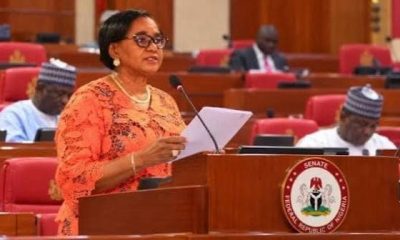
Senate Passes Bill For Establishment Of Federal University Of Agriculture In Rivers
-

 Oil & Energy1 hour ago
Gas Reserves Hit 215 Trillion Cubic Feet