
Nation
THE STATES

Abuja
A pastor of the Christ Embassy, Mr. Henry Idugboe, has sued an old generation bank in the country (name withheld) to court over allegations of negligence and breach of trust, seeking the sum of over N100 million compensation as damages he suffered owing to the financial institutions negligence.
He instituted the action before an Asaba High Court following the decision of the bank to honour cheques of Stephen Iduogbe and Sons Limited (second plaintiff), which did not carry his signature as required by the mandate card.
According to the mandate card issued to the bank, Idugboe, who is incharge of the Suleja branch of the Christ Embassy, is a compulsory signatory to all transactions made by Stephen Iduogbe and Sons Limited, a firm used to operate the Iduogbes family business.
Piqued by the bank’s alleged deposition to honour cheques of the family company, which did not contain his mandatory signature, the pastor has beseeched the court.
Benue
State chairman of the ruling Peoples Democratic Party (PDP) in Benue State, Dr Emmanuel Agbo, is under intense pressure from the Ohimini local government chapter of the party over the senatorial bid of General Lawson Onoja.
Agbo has been accused of anti-party activities, factionalisation of the party and illegal adoption of Onoja for the 2011 Benue South senatorial seat.
In a communiqué issued by some leaders of the party in the local government, led by Col. Idu Enonche (rtd), who addressed a press conference at the weekend in Otukpo, the stakeholders claimed that Agbo’s alleged endorsement of Onoja was illegality.
They also maintained that the so-called caucus meeting held at Onoja’s Otukpo residence during which he was allegedly endorsed was illegal and excluded key members of the party from the local government.
The communiqué, which was signed by 21 prominent PDP members from the area, accused Agbo of factionalising the party in Ohimini.
Ekiti
Ekiti State Government is to establish a School of Mid-wifery at Orun-Ekiti in Ise-Orun Local Council of the state, the state governor, Mr. Segun Oni has said.
A statement yesterday by his Chief Press Secretary (CPS), Mr Wale Ojo-Lanre, said Ono, who made this known at Ise-Ekiti while commissioning a hospital building donated by Hon. Titi Akindahunsi of the House of Representatives said students of the school would make use of facilities of the general hospitals at Ise and Emure for their practical work.
Oni, who explained that the School of Nursing and Midwifery, Ado-Ekiti could not presently meet the admission requirement of the people of the state, said government would totally transform general hospitals at Ise and Emune, preparatory for the take-off of the proposed School of Mid-wifery at Orun-Ekiti.
Gombe
Gombe State Governor, Danjuma Goje, has said that the outstanding sign-on fees for Gombe United Football Club would soon be paid.
Goje, who spoke at the grand finale of Sarkin Yakin Gombe Football tournament, said plans have been concluded to settle all the arrears owed the club.
To this end, he asked the club to consolidate on their past performances whereby they have recorded success at both national and continental fiesta adding that the government was poised to boost their morale.
The governor also promised to provide a bus for the team with a view to addressing their transport problems, adding that the gesture was to show the commitment of the state towards sports development.
He further expressed the determination of the government to identify hidden talents who could become future Okochas and Kanus in the international football encounters.‘
Kano
Parents in Kano State have decried the increasing deviant attitude among the youth, blaming the situation on their access to the internet and satelite television contents.
Salihu Ahmad, a resident of Gwangwazo quarters in Kano, told the newsmen that youths have unrestrained access to foreign values through the internet.
He noted that government in collaboration with parents, must check the trend and prevent young people from becoming radicals.
Umar Muhammed of far away area of the city said: “I face a lot of problems controlling my five male children because of peer influence.”
He said all his children are males and keeping them at home has been a very difficult task.
He added that they behave in ways that conform to the unwholesome attitudes of their friends.
Another resident, Habibu Ismail, described the situation as “very disturbing” saying youngsters, especially boys, prefer football and other naughty behavour to study.
He, however, advised parents to join hands and watch over their children for effective results instead of allowing them to be transformed by negative external influence.
Kaduna
Former Governor of Kaduna State and Chairman, Senate Committee on Finance, Senator Ahmed Mohammed Makarfi has tasked Nigerians to assess the performance of public office holders at various levels by the quantum of facilities they provide to Nigerians.
Makarfi was apparently disturbed by the self-assessment by public office holders who roll out dubious statistics of performance to deceive the electorate.
According to the former governor, who spoke in Kaduna in an interview at the weekend, the nation’s electorate should monitor how the allocation of funds to all governments at various levels are utilised, otherwise the problem of non-performance among public office holders will continue.
“This has really been the problem that has been confronting us… of course in terms of performance of government, it has been uniformly above average. The task of the last action of the National Assembly in extending expenditures on the 2009 appropriation to 31st March, which means the budget performance will be about 75 to 85 per cent can be realised.”
Lagos
A fire incident in Lagos at the weekend claimed the life of 85-year-old Alhaja Afusat Orisunmibare at Ikorodu on the outskirts of Lagos.
The inferno, which broke out at the victim’s family bungalow at No.14 Odugate street. Ikorodu, reportedly choked the aged woman to death.
Lagos police command’s spokesman, Frank Mba, who disclosed this, added that another elderly woman, Mrs. Abeni Kamson, sustained serious injuries in the incident and “was rushed to the general hospital where she is being treated.”
He added: “the aged woman has already been buried according to Islamic rites. The fire is suspected to have been caused by candle light.”
Ogun
All on-going road projects in Ogun State will be completed before the present administration quits office in 2011.
The Director of Information and Site Publicity Secretary of the Ogun State Road Management Agency (OGROMA), Abiodun Awere, gave this assurance in a recent press statement.
Awere quoted the Chief Executive Officer of the Agency, who is also the Special Adviser to the governor on Works and Infrastructure, Kehinde Osikoya as saying that efforts are on to complete on-going road projects in line with the year 2010 budget of the state government.
“The road projects completion include Ayetoro road in Abeokuta, dualisation of Ondo road in ijebu-Ode, dualisation of Obafemi Awolowo road, Ikenne, dualisation of Ilo-Awela road, Alisiba road in Sango Ota and some roads in the Ojodu Abiodun/Berge axis”, he said.
Osun
Action Congress (AC) in Osun State has called on the police and other security operatives investigating the gruesome murder of Jonathan Ogundere, one of the lawyers to Governor Olagunsoye Oyinlola in the on going trail of the April 14, 2007 governorship election to make their preliminary findings public.
The party in a statement signed by its Director of Research and Strategy, Sunday Akere, said the development would assist in clearing the air on the insinuation that the killing has political undertone.
The party said it is surprised that the ruling Peoples Democratic Party (PDP) is lacking political motives to the incident.
Akere said the party decided to break its earlier resolve not to join issues with the PDP on the incident which it described as unfortunate, adding that, the “PDP is seeking to win undeserved sympathy and distract the security operative from digging deep into the root of the matter to conceal facts and cover ups”.
Plateau
Ahead of the 2011 general elections in Nigeria, members of Plateau State Youth Vanguard have appealed to the electorate to turn their back on failed and fraudulent politicians.
The group said its advice was prompted by the unfolding ugly political drama in the state where past leaders who threw Plateau into avoidable crisis and looted the treasury were set for a comeback.
Meanwhile, Governor Jonah Jang of Plateau State has charged the people of the state to remain faithful to its cause in the New Year by being peaceful with all.
Jang, who spoke during the cross-over service of the EBOMI prayer city in Jos, Plateau State, said he had rededicated the state to God in the New year. He assured that God had taken control of security in the state and as such peace had returned to Plateau.
Zamfara
Over 100 patients with Vesico Vaginal Fistula (VVF) have been treated and empowered by Zamfara State government, wife of the state governor, Hajiya Saratu Mahmud Aliyu Shinkafi, has disclosed.
The governor’s wife made the disclosure at the weekend in Gusau, the state capital, while receiving delegates of a non-governmental organisation, Engender Health, a partner of the United States Agency for International Development (USAID)/AQUIRE FISTULA.
She also said the state in collaboration with USAID, had taken necessary measures to improve on maternal and child healthcare delivery.
According to her, in addition to free treatment given to the VVF patients, they were also empowered with new skills to make them self-reliant.
Hajiya Shinkafi further explained that each of the discharged VVF patients received a new sewing machine and N10,000 as start up capital for their sewing trade.



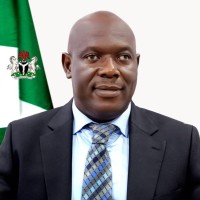
The Hydrocarbon Pollution Remediation Project (HYPREP) has commemorated the 15th anniversary of the release of the United Nations Environment Programme (UNEP) Environmental Assessment Report on Ogoniland, reaffirming its commitment to restoring the environment and improving the livelihoods of affected communities.
In a statement signed by the Project Coordinator, Prof Nenibarini Zabbey, to commemorate the anniversary, HYPREP described the anniversary as a significant milestone in Nigeria’s environmental restoration efforts, noting that the project has made remarkable progress in implementing the recommendations of the landmark UNEP report released on August 4, 2011.
The UNEP report had revealed extensive oil pollution across Ogoniland, severe environmental degradation, and serious public health risks resulting from decades of petroleum operations. It also recommended an initial $1 billion fund to commence the cleanup of the affected communities.
According to HYPREP, the Federal Government formally launched the Ogoni clean-up in 2016, while the Project Coordination Office was established in 2017 to drive the implementation of UNEP’s recommendations.
Zabbey said the current administration has continued to prioritise the project under the Renewed Hope Agenda.
Providing an update on the cleanup, the Project Coordinator disclosed that 30 of the 65 contaminated sites identified by UNEP have been fully remediated, while work is ongoing at several medium- and high-risk locations. It also stated that more than 1.5 million mangrove seedlings have been planted as part of what it described as the world’s largest restoration of oil-degraded mangroves, with over 1,000 hectares of shoreline already rehabilitated.
Zabbey further revealed that 49 Ogoni communities have been connected to potable water schemes through multiple water projects and booster stations aimed at providing safe drinking water across the region.
In the health sector, he said the 100-bed Ogoni Specialist Hospital in Kpite and the 43-bed Cottage Hospital in Buan are nearing completion, adding that several existing health facilities have been upgraded with modern medical equipment, while five ambulances have been donated to improve emergency healthcare services. The Project Coordinator also disclosed that a three-year human health biomonitoring study is being conducted in collaboration with the World Health Organization’s International Agency for Research on Cancer (IARC).
On economic empowerment, Zabbey stated that the Project has created more than 8,000 direct jobs and trained thousands of Ogoni youths and women in various vocational and technical skills, including software development, cybersecurity, aviation, commercial diving, seafaring, mechatronics, and creative arts. The project also reported awarding scholarships to more than 1,000 students, providing grants to small businesses, and supporting persons living with special needs through skills acquisition programmes.
The statement further highlighted ongoing legacy projects, including the Ogoni Power Project and the Centre of Excellence for Environmental Restoration, which it said is about 96 per cent complete. HYPREP also welcomed the recent designation of the Ogoni Wetland as a Ramsar Site of International Importance and pledged to continue promoting biodiversity conservation and sustainable management of the ecosystem.
Marking the anniversary, Zabbey said the progress achieved over the past 15 years demonstrates the collective commitment of government, development partners, stakeholders, and local communities to restoring Ogoniland. He called for renewed collaboration to sustain the cleanup effort, promote environmental sustainability, and support the long-term development of the region. 3
-

 News2 days ago
RSG Targets Nine Million Residents in Mosquito Net Distribution Campaign
-

 Oil & Energy2 days ago
Aiyedatiwa Signs New Electricity Bill
-

 Oil & Energy2 days ago
NLNG Commissions Research And Innovation Centre In RSU
-

 Maritime2 days ago
Marine Minister Commends President Tinubu On NPERA Bill Assent
-

 News2 days ago
KenPoly Holds Eight Convocations, August 29
-

 News2 days ago
RSG Begins Another Phase of Projects Commissioning Today
-

 News2 days ago
RMAFC Completes Revenue Sharing Review, Proposes New Pay
-

 Maritime2 days ago
NAGAFF Petitions IGP Over Alleged Maritime Police Harassment