
Oil & Energy
World’s Recoverable Oil Resources Shrinks By 9%

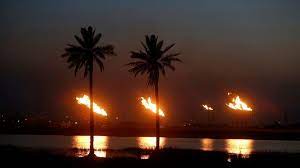
Every year and following the publication of the BP Statistical Review, Rystad Energy releases its own assessment to provide an independent, solid and clear comparison of how the world’s energy landscape changed last year. Our 2021 review deals a major blow for the size of the world’s remaining recoverable oil resources, but it also shows that oil production and consumption can align with climate goals.
Rystad Energy now estimates total recoverable oil resources at 1,725 billion barrels, a significant reduction of last year’s estimate of 1,903 billion barrels. Out of this total, which shows our estimate of how much oil is technically recoverable in the future, about 1,300 billion barrels are sufficiently profitable to be produced before the year 2100 at a Brent real oil price of $50 per barrel.
“In this scenario, global production of oil and natural gas liquids will fall below 50 million barrels per day by 2050. Exploring, developing, processing and consuming this amount of commercially extractable oil will lead to gross greenhouse gas emissions of less than 450 gigatonnes of CO2 from now until 2100. This is compliant with IPCC’s carbon budget for global warming limited to 1.8?C by 2100,” says Rystad Energy’s Head of Analysis, Per Magnus Nysveen.
This year’s review of global recoverable oil resources is based on resources modelled at well level rather than field level. This more detailed approach has removed 178 billion barrels from the expected accounts as the confidence level for decline rates has increased with the amount of new information gathered.
Our updated report also includes revisions for proved reserves. Here Rystad Energy applies a consistent set of conservative probabilities, as opposed to official reporting by authorities which is deemed less consistent. Among other findings, we see significant differences among OPEC members on the longevity of proved reserves, ranging from well below 10 years for some members to almost 20 years for Saudi Arabia and the UAE.
In terms of absolute volumes removed from non-OPEC producers, remaining recoverable resources in the US are now reduced to 214 billion barrels, losing 30 billion barrels from last year’s estimate. China suffers the second-largest loss with its remaining recoverable resources now limited to 50 billion barrels, a down wards revision of 26 billion barrels. Mexico’s recoverable resources are third on the loss list, downgraded by 12 billion barrels to 26 billion barrels. Most of this year’s revisions are driven by lower upside potential from shale oil drilling due to complex geology and the need for extensive exploration campaigns and improved fracking technologies.
The remaining recoverable resources of OPEC countries are reduced by 53 billion barrels to 741 billion barrels. Iran and Saudi Arabia have the largest revisions, losing 11 billion barrels each, with Saudi recoverable oil volumes now calculated at 288 billion barrels and Iranian volumes at 101 billion barrels. Iraq follows in third place, seeing its recoverable resources shrink by 8 billion barrels to 110 billion barrels.
In this revision, Saudi Arabia keeps the throne as the producer with the largest volumes of recoverable oil resources (288 billion barrels). The US follows second (214 billion barrels), Russia third (149 billion barrels) and Canada fourth (138 billion barrels).
In Central and South America, Brazil remains first in recoverable resources, sitting on 83 billion barrels (down 2 billion barrels from last year’s update). In Europe, with 19 billion barrels (down by 1 billion barrels in this update), Norway remains ahead of the UK, whose volumes have shrunk by 2 billion barrels to 10 billion. In Africa, resource leader Nigeria lost 6 billion barrels and its recoverable resources are now estimated at 20 billion barrels.
Unlike most countries in our analysis, Australia’s estimated recoverable oil resources are now seen higher by 2 billion barrels at 23 billion barrels.
The time stamp of Rystad Energy’s newest resource assessment is 1 January 2021. In other words, our analysis illustrates where the remaining recoverable resources of each country stood at the beginning of this year.
Culled from Rystad Energy






-

 News4 days ago
RSG Targets Nine Million Residents in Mosquito Net Distribution Campaign
-

 Oil & Energy3 days ago
Aiyedatiwa Signs New Electricity Bill
-

 Oil & Energy3 days ago
NLNG Commissions Research And Innovation Centre In RSU
-

 Maritime3 days ago
Marine Minister Commends President Tinubu On NPERA Bill Assent
-

 News4 days ago
KenPoly Holds Eight Convocations, August 29
-

 News4 days ago
RSG Begins Another Phase of Projects Commissioning Today
-

 News4 days ago
RMAFC Completes Revenue Sharing Review, Proposes New Pay
-

 Maritime3 days ago
NAGAFF Petitions IGP Over Alleged Maritime Police Harassment