
Business
Port Partners Shippers’ Council On Training, Consultancy

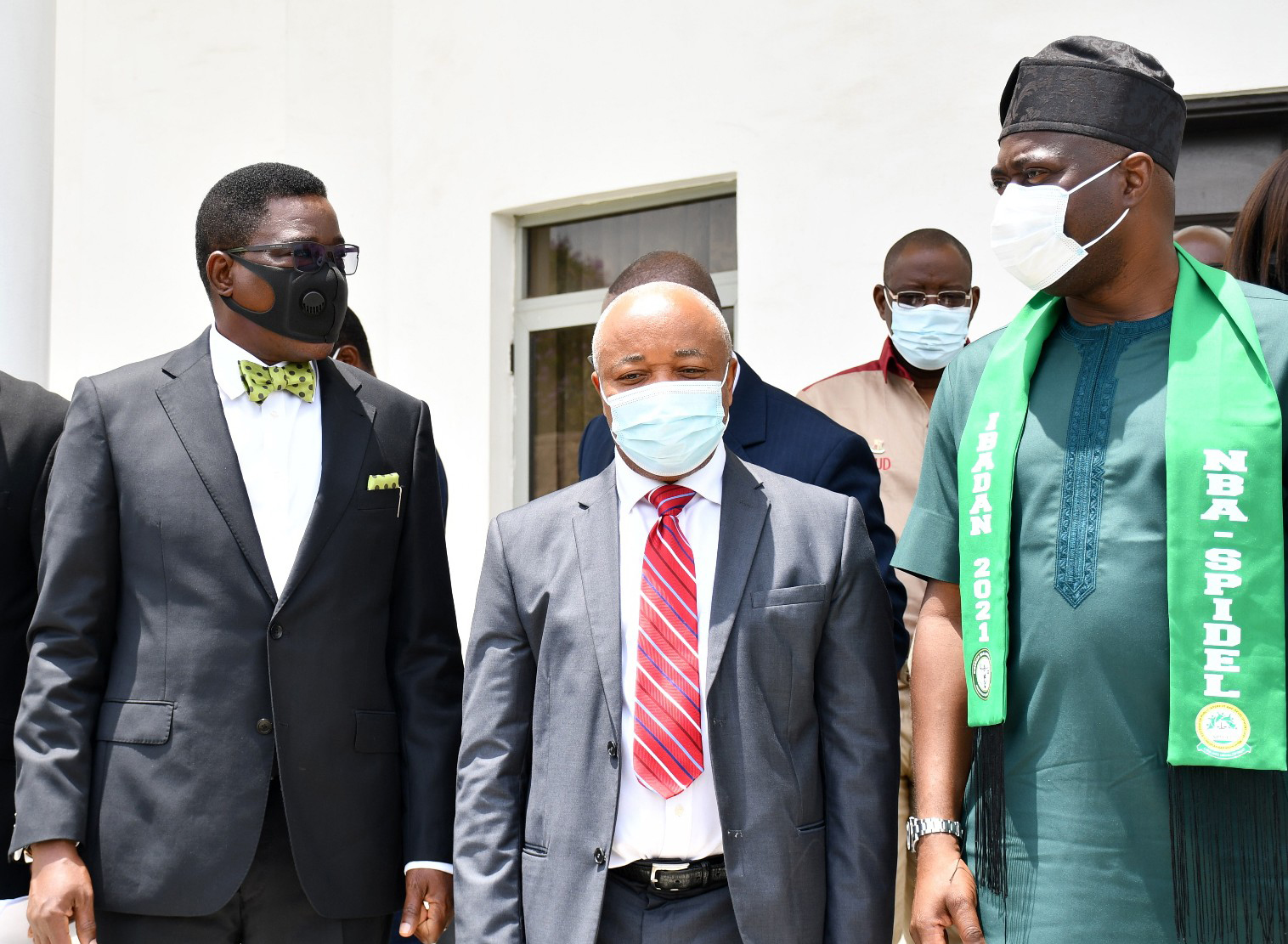
The management of the Port of Antwerp yesterday offered training and consultancy opportunity on port efficiency to the Nigerian Shippers’ Council (NSC).
Manager, Port Projects, Port of Antwerp International, Mr Philippe Droes-beke, made this offer during a courtesy visit to the council in Lagos, noting that the opportunity would ensure Nigerian ports were modernised.
The Port of Antwerp is the port of the City of Antwerp, located in Flanders (Belgium), mainly in the province of Antwerp but also partially in the province of East Flanders.
It is a seaport in the heart of Europe accessible to capesize ships, reputed as Europe’s second largest seaport after Rotterdam.
Droesbeke said the port’s management was offering its experience and partnership to Nigerian institutions, organisations and companies in the maritime sector.
“We have a long lasting history in the Port of Antwerp and we are here to offer our experience and partnership with Nigerian institutions, organisations and companies in the maritime sector.
“We have a very good reference for cold chain, especially with perishables that will be offered for export,” he said.
He noted that multi-modality was an approach Nigeria should adopt as solution to congestion at Nigerian ports, urging the country to shift from the road to other modalities such as barges.
Droesbeke said The Port of Antwerp had the capacity of 140 million tonnes of cargo in a year due to its multimodal approach.
He explained that trains had 50 per cent, barges 40 per cent and trucks 10 per cent.
He urged the country to invest in its port, adding that with the steady growth in cargo flow, there was need to acquire the right equipment to achieve efficiency.
Responding, Executive Secretary, (NSC), Mr Hassan Bello, pointed out that the council was always interested in interconnectivity and having the country’s dry ports meet international expectations.
“We need to know how the dry port will look like in Nigeria economy, especially for our exports, as we want to make them export centres and the infrastructure that is necessary to make them full port.
“If they are port of destination or origin, they have to be well equipped with rail. We have one operating in Kaduna but the rail capacity is not anything to be proud of.
“There are others things that must be incorporated like consolidation centres, stripping of containers, warehousing, companies that processes and add value to agricultural products and also packaging companies.
“These and so many other things are areas in which we may have interest and we will study the course and discuss on the concept that needs to be adopted,” Bello said.
He added that Nigeria wanted a modern port, and so needed to start right from the beginning to have the indices that would ensure the country would not face the same challenges with previous ports.
Also speaking during the courtesy visit, the Executive Secretary, Nigerian-Belgian Chamber of Commerce in Lagos, Paulette Van Trier, expressed delight at the meeting, saying that the chamber had been working assiduously to improve trade between both countries.
“We are trying to ensure produce to the ports is timely so that the goods can get to the international market and spread all around the world.”
“We hope that we can work together, have a positive partnership, and improve exports from Nigeria, thanks to Shippers’ Council.
“As a chamber, we are not asking for money. We just want farmers and other exporters to know how the process is done globally.
“We are providing Nigerians with examples via teachings and trainings to make people aware of global best standards and practices,” Van Trier said.



Business
NAFDAC Decries Circulation Of Prohibited Food Items In markets …….Orders Vendors’ Immediate Cessation Of Dealings With Products


Importers, market traders, and supermarket operators have therefore, been directed to immediately cease all dealings in these items and to notify their supply chain partners to halt transactions involving prohibited products.
The agency emphasized that failure to comply will attract strict enforcement measures, including seizure and destruction of goods, suspension or revocation of operational licences, and prosecution under relevant laws.
The statement said “The National Agency for Food and Drug Administration and Control (NAFDAC) has raised an alarm over the growing incidence of smuggling, sale, and distribution of regulated food products such as pasta, noodles, sugar, and tomato paste currently found in markets across the country.
“These products are expressly listed on the Federal Government’s Customs Prohibition List and are not permitted for importation”.
NAFDAC also called on other government bodies, including the Nigeria Customs Service, Nigeria Immigration Service(NIS) Standards Organisation of Nigeria (SON), Nigerian Ports Authority (NPA), Nigerian Maritime Administration and Safety Agency (NIMASA), Nigeria Shippers Council, and the Nigeria Agricultural Quarantine Service (NAQS), to collaborate in enforcing the ban on these unsafe products.
-

 News3 days ago
RSIPA Outlines Plans To Boost Investors’ Confidence …China Applauds Fubara As Listening Gov
-

 Maritime6 hours ago
MARINE/BLUE ECONOMY MINISTRY LAUNCHES DIGITAL PLATFORM TO DRIVE TRANSPARENCY, EFFICIENCY
-

 Maritime6 hours ago
Imo Category C Victory: NIMASA Staff Host Executive Management Party
-

 News7 hours ago
NAFDAC Allays Fears About Dangerous Indomie Noodles …Says Product Not In Nigerian Market
-

 News7 hours ago
Expedite Action On MBA Forex Operator’s Prosecution, Rivers NUJ Tells EFCC
-

 News7 hours ago
Fubara Commissions Permanent Secretaries’ Quarters, Today
-

 News7 hours ago
Rivers Support For Tinubu Is Consolidated -Fubara
-
Politics4 hours ago
Alleged Tax Law Changes Risk Eroding Public Trust — CISLAC


