
Business
Shippers Council Urges FG To Link Rails To Seaports

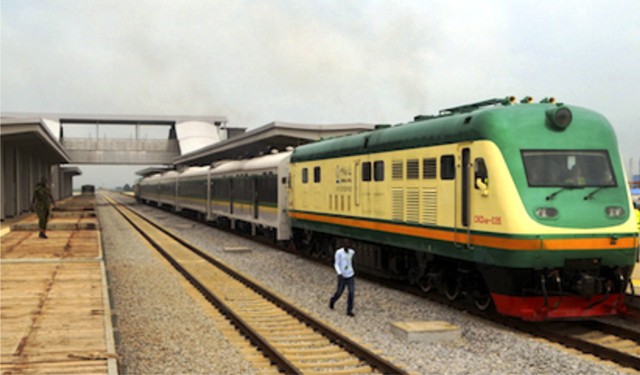
Following the errors made by the Federal Government, by failing to link the rails to the seaports, the Nigerian Shippers Council (NSC), has given a warning that such mistakes should not be repeated, but to rather link the rails to the Inland Dry Ports (IDPs).
The Executive Secretary, NSC, Barr Hassan Bello, gave this warning during a two-day workshop for validation of draft operational manual for Inland Dry Ports in Nigeria.
He noted that the dry ports must be of international standard, adding that if the dry ports were slow and manually driven, they would not serve the purpose of establishing them.
He said, “The Inland Dry Port projects were conceived as part of Federal Government’s reform programme in the transport sector to decongest the seaports and bring shipping and port services closer to importers and exporters in the hinterland.
“Consequently, the Federal Executive Council granted approval for the establishment of Inland Dry Ports in March 2006 at six locations across the country namely, Isiala-Ngwa in Abia State, Erunmu Ibadan in Oyo State, Heipang, Jos in Plateau”.
Others he said, included, Kano in Kano State, Funtua in Katsina State and Maiduguri in Borno State,
Bello stated that the projects were to be developed on Public Private Partnership, using the Build, Own, Operate and Transfer (BOOT) model”.
The Secretary pointed out that Messers CPCS Transcom Nigeria Ltd., was also engaged by the council to draft an Operational Manual to guide the implementation and operation of the IDPs in line with international best practice.
He added that the operational manual would provide detailed processes, general outlook and those that were involved in the operation of a dry port.
Earlier, Director, Maritime Services, Federal Ministry of Transportation (FM-OT), Mr Dauda Suleiman, said that the project would greatly provide stimulus to the economy of the State and country at large.
“The dry ports are part of the solution to alleviate the problems of hinterland shipper’s inadequate access to the seaports and to remove frequent congestion, which result in the loss of cargo in transit, carnage and accident on our roads.
“It is pertinent to state that, for these projects to succeed there must be support and collaboration with the stakeholders.
“I am happy to observe that the Ministry and Shippers’ Council is already collaborating with Nigerian Railway Corporation, Nigerian Ports Authority, Nigerian Customs Service and other stakeholders to ensure its implementation,” he said.
Suleiman urged the participants to take full advantage of the workshop to address all grey areas in the draft operational manual and to come up with workable policy that would drive the operations of the inland dry ports.
By: Chinedu Wosu


Continue Reading

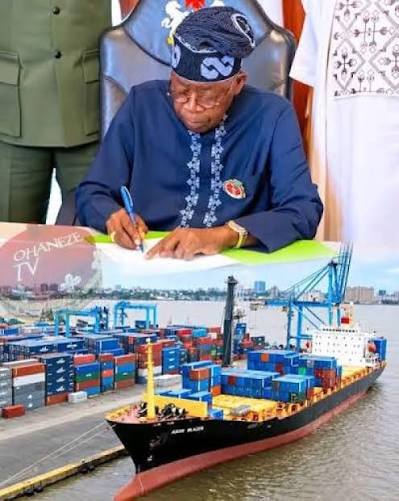
The Federal Executive Council (FEC) has approved four new channel management companies for seaports across the country in a move aimed at improving vessel navigation and port operations.
Speaking at the recently concluded Annual General Meeting of the Nigerian Association of Master Mariners (NAMM), former General Manager, Marine and Operations, Capt. Ebubeogu Ihenacho, disclosed that there would be changes in the ownership of the Lagos Channel Management Company Limited and the Bonny Channel Management Company.
According to Ihenacho, the four channels serving Nigeria’s major port clusters will have different channel management companies as approved by the FEC.
He said a new company had been approved to manage the Lagos port channel, with a change of name, while the Calabar Channel would be managed by the Calabar Channel Management Company.
He added that Bonny Channel Management Company had also undergone a change of ownership.
On the Warri Channel, Ihenacho said the Federal Government had approved China Harbour Engineering Company (CHEC) and two other companies to form a consortium to manage the Escravos Channel.
He said: “For Warri, it was approved for China Harbour Engineering Company, CHEC, and two other companies, who would now form a consortium.
That consortium will now form a Special Purpose Vehicle (SPV) with the Nigerian Ports Authority to manage the Escravos Channel.”
Recall that the management of the NPA had declined to renew the concessions of the Lagos Channel Management Company Limited and the Bonny Channel Management Company, opting instead for six-month extensions of the existing arrangements.
By; Enoch Epelle
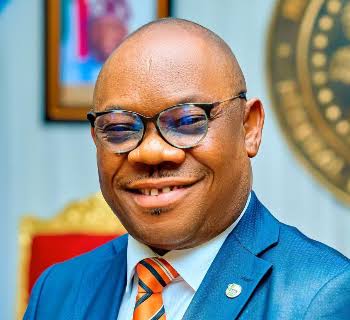
The Rivers State Internal Revenue Service (RIRS) has warned motorists, transport operators and business owners against paying taxes, levies or charges to Unauthorised persons and organisations, insisting that only the Service and its duly appointed agents are legally empowered to collect taxes on behalf of the state government.
The Service gave the warning in a public notice dated October 21, 2026, signed by its Executive Chairman, Sir Israel O. Egbunefu, FCTI, in which it clarified that the Rivers State Ministry of Transport was not authorised by the state government to collect road tax or any other tax, levy or charge from motorists and transport operators.
RIRS also specifically disowned Explore Strategic Alliance Ltd, located at No. 7 Rumuodaolu Market Road, Port Harcourt, declaring the company had not been appointed or authorised by either the state government or the Service to collect Motor Vehicle Transport (MOT) tickets or any other tax on its behalf.
The revenue agency consequently cautioned members of the public against making payments to the company or any of its staff, stressing that anyone who ignored the warning would do so at their own risk.
It reaffirmed that only the legally authorised agency responsible for tax collection in Rivers State and the appointed agents that would carry out such duties in accordance with the law.
The Service urged taxpayers to demand official identification from anyone claiming to be its tax agent and verify the person’s credentials directly with RIRS before making payments.
It further warned that individuals or groups found impersonating tax consultants, agents or their representatives to collect Unauthorised taxes would be arrested and prosecuted in accordance with the law.
RIRS also called on members of the public to report suspicious persons and activities relating to Unauthorised tax collection to the Service for appropriate action.
The agency advised taxpayers seeking clarification or assistance to visit any of its offices or contact it through its official email address, info@riversbirs.gov.ng.
The Service reiterated its commitment to protecting taxpayers, promoting voluntary compliance and safeguarding the integrity of tax administration in Rivers State.
By: King Onunwor
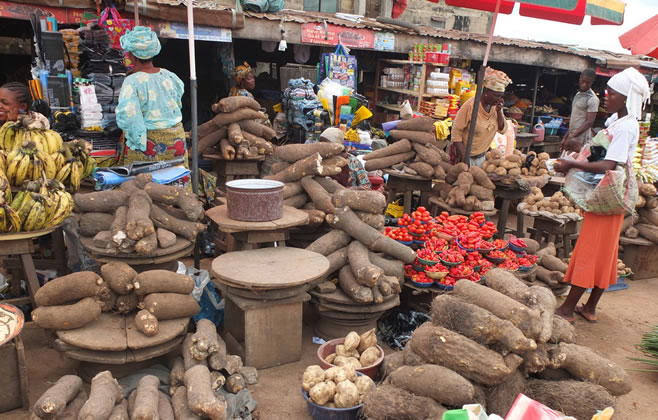
Consumers and traders at the Swali ultramodern market in Yenagoa, capital of Bayelsa State have continued to groan over high prices of commodities and poor Patronage due to cost-push inflation.
The Tide reports that in the past weeks prices of goods and services in Yenagoa metropolis has experienced increase.
Notable services like transportation have also increased lately due to increase in the pump price of fuel that has recently further exacerbated inflation in the prices of staple foods like rice, beans, garri and others.
Speaking with The Tide on a market survey, a trader, Mrs Tovie Barakabo said a bag of bean which sold between N120,000-N130, 000 now goes for N140,000-N145,000.
Mrs Barakabo also hinted that the only commodities whose price has not gone up was price of millet which sells N60,000, while big bag of garri now sells for N30,000.
The Tide further gathered from other inside Source that 25 litres of Kings cooking oil currently sells N75,000 as against the former price of N57,000.
Other commodities such as delicious vegetable oil now goes for N68,000, Pure vegetable oil currently goes for N66, 000, while spaghetti is now N18,800 per bag.
The market survey also discovered that Sonnia tomato mix sells N75,609, while a big and small basket of fresh tomatoes are sold for N30,000 and N6,500 respectively.
A disappointed custom, Mrs Juliet Domo who fielded questions from The Tide expressed her worries over the inflation, calling on government to take decisive stands against inflation.
By: Ariwera Ibibo-Howells, Yenagoa
-

 Niger Delta5 hours ago
Diri Restates Stance On Lagos-Calabar Coastal Highway
-

 Niger Delta5 hours ago
C’River, NUJ Pay Tribute To Late Guardian Editor
-

 News6 hours ago
NDLEA Recovers Tons Of Illicit Drug Consignments In Nine States
-

 Opinion4 hours ago
Checking Voter Apathy In Nigeria’s Electoral Process
-
 Oil & Energy5 hours ago
S&P Global Warns Hormuz Energy Shock Could Become A Global Food Crisis
-

 Oil & Energy5 hours ago
Gas Reserves Hit 215 Trillion Cubic Feet
-

 Rivers5 hours ago
Education Ministry Condemns Female Virginity Testing In CHS, Taabaa
-
 Oil & Energy5 hours ago
NCDMB, Manufacturers Commit To Scale Up Local Oil And Gas Production Components