
Featured
Mitigating Climate Change Effects Via Legislation

Undoubtedly climate change is one of the biggest threats facing humanity today. Environmental experts also say that Nigeria is vulnerable to the effects of climate change because of the country’s low response capability.
They cautioned that climate change and global warming, if left unchecked, would cause more adverse effects on livelihoods of most Nigerians who are already living in abject poverty.
According to an environmentalist, Oyeniyan Olagunju, Nigeria is highly vulnerable to the impacts of climate change and must, therefore, as a matter of urgency take steps to reduce vulnerability, build resilience and adaptive capacity.
Olagunju said that while climate change constitutes environmental threat of the 21st Century, the current experience, alongside its adversity, has left Nigeria with no better option than to seek immediate measures to adapt and mitigate impacts.
According to him, climate change has negatively affected Nigerian economy, with various observable impacts, ranging from significant reduction in agricultural productivity to increase the morbidity and mortality rates.
“The energy sector is not left out, because climate change has impacted the hydropower plants which are sources of electricity for the country.
“Others like the transportation, tourism and manufacturing sectors are affected which in turn pose threat to the overall economy,’’ Olagunju said.
He said that a study conducted by the Department for International Development (DFID), confirmed that climate change would cost Nigeria between six and 30 per cent of its GDP by 2050, with estimated loss of between 100 billion dollars and 460 billion dollars.
“Currently, the erosion of low-lying coastal and non-coastal regions of Nigeria results in persistent buildings collapse, with attendant loss of lives.
“Of important concern also are the drying lakes in Nigeria, especially the Lake Chad, which is at the junction of Chad, Cameroon, Nigeria and Niger, as a valid reference point,’’ Olagunju said.
A recent report by the Institute for Public Policy Analysis and Management revealed that by 2020, Nigeria stands to lose 11 per cent of its GDP to climate change in absence of an aggressive climate policy to sustain the social and economic development in the country.
Rep. Sam Onuigbo, the lawmaker representing Ikwuano /Umuahia North/Umuahia South Federal Constituency of Abia State, in the House of Representatives, said that there was need to domesticate global instruments, in order to combat the effects climate change in Nigeria.
Onuigbo expressed worry over the absence of a legal framework on climate change, which he identified as critical for the conservation of nature and protection of the country’s natural resources and environment.
He also expressed dismay that the Climate Change Bill, which he sponsored while he was the Chairman, House Committee on Climate Change, during the 8th National Assembly, did not receive presidential assent after its passage.
“I have not given up on the Climate Change Bill because I have been able to rework it and represent it, and I am happy that the bill has gone through first reading in the House of Representatives,’’ the legislator said.
He expressed optimism that the reintroduced bill would receive presidential assent with a view to aid in mitigating the effects of climate change in the country.
“With the awareness that we all have shown in matters concerning climate change, ecology, and how we can work towards sustainable development, I am optimistic that this time there will be good advisers around Mr President.
“It is important to tell him why it is absolutely important to sign the bill,’’ Onuigbo said.
He emphasised that the bill still focuses on mainstreaming government actions and responses into policy formulation and implementation and the need to establish the national council on climate change.
The lawmaker said that besides proposing for a council, the bill also proposes an agency to drive efforts to checkmate the devastating effects of climate change in the country.
Onuigbo, who is also the Vice-President of Globe International (Africa), promised to work with other legislators to initiate policies and bills that would ensure reduction of ecosystem degradation and Green House Gas emissions.
Globe, is legislators’ organisation that supports parliamentarians to develop legislative response to the challenges posed by development.
Onuigbo, however, pledged to use his position to draw international and national attention to the strengthening of Globe in Nigeria, in order to provide added urgency to the country’s drive to protect the environment.
He said that President Muhammadu Buhari had made a commitment to the cause by signing the Paris Agreement on Climate Change on September 22, 2016, “and committing severally in many international discussions that Nigeria must address climate change issues.
“It is hoped that by the end of my tenure, natural capital governance would have been worked into government policies and financial permutations and projections.
“It is also hoped that more attention will be paid to renewable energy sources,’’ Onuigbo said.
He called for increased awareness to sensitise people to understand the need to do away with activities that impact negatively on the environment.
While pointing out the need to do away with non-degradable materials, Onuigbo canvassed for the adoption of improved agricultural systems for both crops and livestock.
A lecturer in the Department of Demography and Social Statistics, Federal University, Birnin Kebbi,Mr Abbani Yakubu, stressed the need for government and relevant stakeholders to extensively fund researches in climate change.
According to him, it is very necessary because climate change affects all.
“It impacts on our daily lives and affects food security, which the government is trying to achieve in the country.
“Research is very integral to solving climate change problems.
“We need to understand the extent to which it is affecting human lives.
“Efficient database management system on climate change occurrence and related events should be developed, in order to ensure effective and timely response to climate change incidents in Nigeria,’’ Yakubu said.
It would be recalled that the United Nations Intergovernmental Panel on Climate Change, said that the world must cut its carbon dioxide emissions to net zero by 2050 in order to prevent global warming of 1.5°C, or likely more, above pre-industrial levels.
In its 2019 seasonal rainfall prediction, the Nigeria Meteorological Agency (NiMet), said that it would be another hot year.
The mean annual variability and trend of rainfall over Nigeria in the last six decades, depicts several inter-annual fluctuations that have been responsible for dry and wet years or extreme climate events, such as droughts and floods in many parts of the country.
NiMet also predicted that, as a result of these climatic conditions, incidences of malaria and other diseases will be higher in areas with temperatures ranging between 18 °C to 32 °C and with humidity above 60 per cent.
“More worrisome is the increasing knowledge that the country will be subject to consistent changes in rainfall and temperatures in the not-so-distant future.
“Hotter and drier conditions would likely exacerbate droughts and heat waves and hamper agricultural production, particularly rain-fed agriculture, which many Nigerians rely on for their livelihoods,’’ a farmer, Mr Ndifereke Akpan, said.
While identifying that agriculture accounts for around 23 per cent of the country’s Gross Domestic Product, Akpan said that progress could be hampered if the trend was not checked.
“Unless we take action, these trends are likely to jeopardize hard-won progress.
“Already, climate-induced conflicts are exacerbating fragile security situations, with flashpoints mainly in the middle belt of the country.
“Climate change, therefore, poses a significant threat to Nigeria’s development ambition of meeting the Sustainable Development Goals (SDGs) and could stunt and even reverse the progress that has already been made,’’ Akpan said.
With enforceable legislation in place, Nigeria will effectively mitigate the adverse effects of climate change and global warming.
Uwadileke writes for the News Agency of Nigeria.
By: Ikenna Umadieke



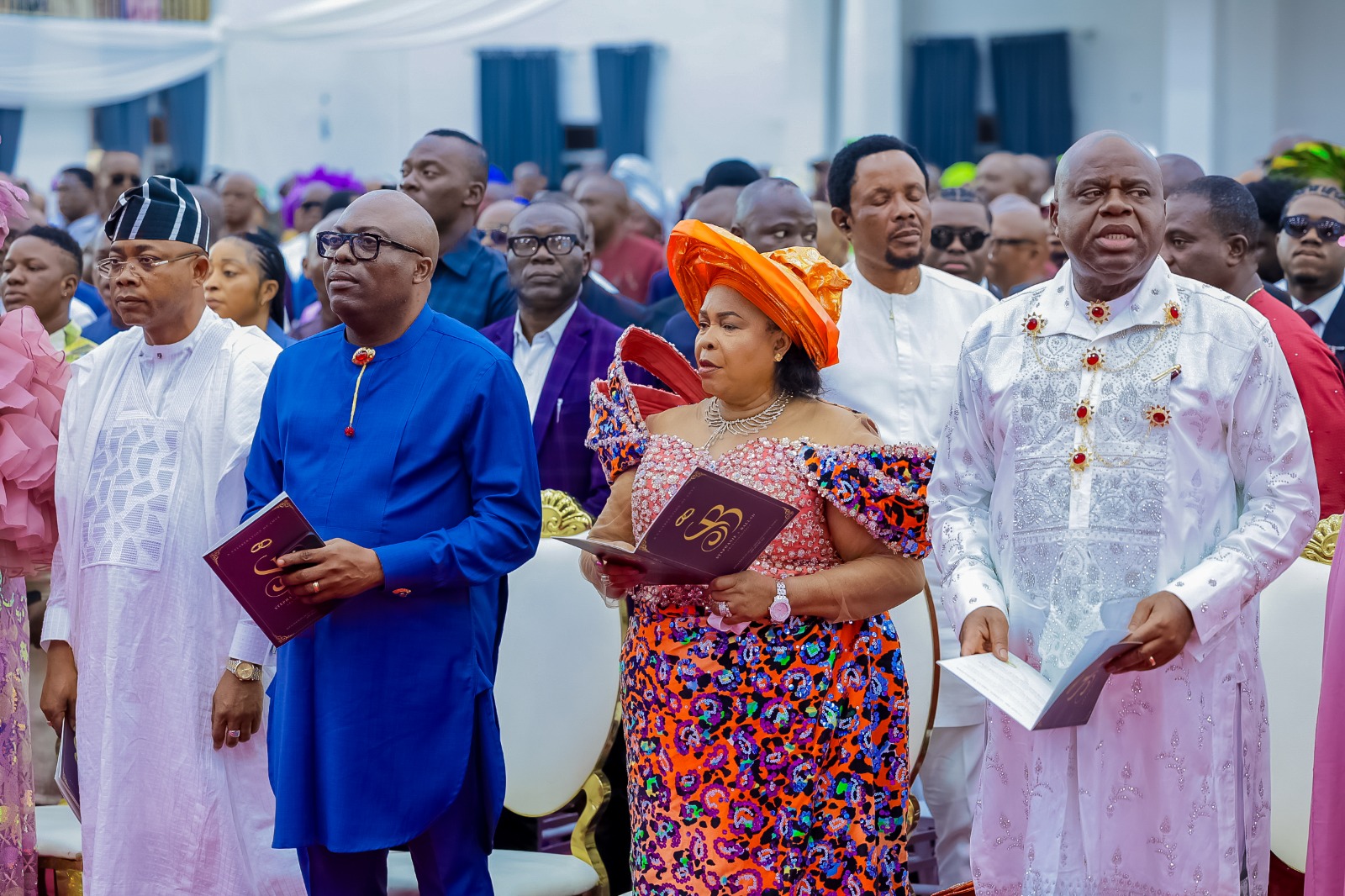
Rivers State, Sir Siminalayi Fubara, has assured members of the National Youth Service Corps (NYSC) of his administration’s commitment to supporting and strengthening the scheme in the State.
Fubara gave the assurance last Friday at the NYSC permanent orientation camp, Nonwa-Gbam, Tai Local Government Area in the State, during the swearing-in ceremony of 2026 Batch B Stream II orientation course.
Represented by the Permanent Secretary, Cabinet Bureau, Office of the Secretary to the State Government, Dr. Promise Oguzie, the governor said the State Government would remain intentional in providing the necessary support to improve the NYSC scheme and enhance the experiences of corps members deployed to the state.
He charged the corps members to be role models and quality nation-builders in their service to the good people of Rivers State in particular, and Nigeria at large.
“I charge you to be exemplary, dedicated and committed in all you do. Take full advantage of all the camp programmes and activities to enrich yourselves”, he said.
In his welcome address, the State Coordinator of NYSC in Rivers State, Mr. Moses Oleghe, urged corps members to see their deployment to Rivers State as a “veritable opportunity to make meaningful contribution to the growth of the State in particular and Nigeria at large.”
He further charged them to serve with all sense of “integrity, discipline, and the fear of God, especially when they will be engaged as INEC ad-hoc staff that will conduct the 2027 general elections.”
A total of 3,584 corps members composed of 1,421 males and 2,163 females were sworn in by the Chief Judge of Rivers State, who was represented by Justice Godspower Aguma.

Governor of Rivers State, Sir Siminalayi Fubara, says Nigeria needs God-fearing leaders for the nation to move in the right direction and make meaningful progress.
The Governor stated this yesterday when he received in audience, the World President of the Seventh Day Adventist Church, Pastor Erton Kohler; his wife, Andriene Marques Kohler; daughter Mariana Marques Kohler and a retinue of ministers of the church at Government House, Port Harcourt.
Fubara who hailed the Seventh Day Adventist Church for its contributions to education and the grooming of future leaders in Nigeria, expressed delight that the Church had over the years, been investing in education at various levels and currently runs two universities in the country.
He commended the church for not only using its institutions to spread the gospel of Christianity but to groom future leaders for the country.
According to him, religion should not be just about defending one’s faith, but also making meaningful impact on the lives of the people.
He said that by floating these educational institutions, the church has demonstrated capacity to support Nigeria in the task of producing not only educated people but a breed of God-fearing leaders.
“Our country is where it is today because we lack the fear of God. If you have the fear of God, there should be a limit to what you can do because you understand the supremacy of God. But when God is not in your equation, you’ll go beyond the line and that is what has brought us to where we are today.
“So, I feel very happy that you are contributing to the development of our future leaders in this country. We need the right people being in the right place; prepared properly with good minds; that is what we need, not just in Nigeria but round the whole world.,” he said.
Governor Fubara further observed that the absence of God-fearing people in high places to take the right decisions that could impact positively on the society, has also given rise to other problems such as social inequality, poverty, corruption and criminality. According to him, Nigeria needs a system where the average parent could afford quality education for their children and a guarantee that upon graduation, the average child will have the capacity to compete favourably with anybody, anywhere in the world.
“If we have a situation where the little money that you’re being paid as wage can also afford you quality healthcare and after working at least for 15-20 years, you have a roof over your head, tell me why you should be involved in any kind of crime? At that point, you’ll feel secured and this attitude of insecurity about the future that leads to all the social vices we have today won’t be there,” he said.
Governor Fubara expressed appreciation to the delegation for the visit and for their prayers for Rivers State, assuring them of his continued support for their programmes in the state.
Leader of the delegation and World President of the Seventh Day Adventist Church, Pastor Erton Kohler said he was in Nigeria for a special conference of the church during which thousands of the church’s ministers will be undergoing an empowerment programme to further equip them for the task of herding their flocks and serving the society.
He expressed gratitude to the Governor for the warm reception accorded his entourage, saying the memory of the visit will linger in his mind for a lifetime.
Kohler disclosed that the Church has over twenty -four million (24,000,000) members and more than 182,000 places of worship, spread across 212 countries of the world.

The Rivers State House of Assembly has approved the 2026–2028 Medium Term Expenditure Framework (MTEF) submitted by Governor Siminalayi Fubara.
This reaffirms the lawmakers’ commitment to enacting laws and taking legislative actions geared towards the overall development of the State.
The Assembly gave the approval during its Second Legislative Sitting of the Fourth Session held last Friday.
Speaking on the MTEF document during plenary, the House Speaker, Rt. Hon. Martin Amaewhule, noted that by the provision of Section 10(1)(b) of the Rivers State Fiscal Responsibility Law No. 8 of 2010, the MTEF ought to have been laid before the House in September 2025.
Amaewhule explained that traditionally, the document is expected to be presented four months before the commencement of the next financial year and immediately after the expiration of every three-year fiscal cycle.
He, however, stated that in the interest of the State and its people, the House considered it necessary to deliberate on the document, describing it as a precursor to the 2026 Budget Estimates.
The Speaker expressed concern that the year had already progressed significantly before the presentation of the framework.
During deliberations on the document, members examined the assumptions and projections contained in the MTEF and observed that strict adherence to the outlined fiscal parameters would ultimately serve the interest of Rivers people.
The lawmakers maintained that effective implementation of the framework would promote prudent financial management and enhance developmental planning across the State.
Following the debate and positive consideration by members, the Speaker put the question to the House and members voted overwhelmingly in support of the approval of the MTEF.
Meanwhile, during the same sitting last Friday, the House also received a petition from the Chairman of Obio/Akpor Local Government Council, Dr. Gift Worlu.
The petition was presented by the member representing Obio/Akpor Constituency II, Hon. Emilia Amadi.
According to the petition, concerns were raised over an imminent security breach, threats to lives, destruction of property and alleged forceful takeover of property by some lawless persons within parts of the Local Government Area.
Presenting the petition before the House, Hon. Amadi appealed to the lawmakers to revisit the matter and take necessary steps aimed at safeguarding lives and property in the affected communities.
The House is expected to further deliberate on the petition and consider measures to address the concerns raised in order to sustain peace and security in the area.
King Onunwor
-

 News4 days ago
RSG Targets Nine Million Residents in Mosquito Net Distribution Campaign
-

 Oil & Energy4 days ago
Aiyedatiwa Signs New Electricity Bill
-

 Maritime4 days ago
Marine Minister Commends President Tinubu On NPERA Bill Assent
-

 Oil & Energy4 days ago
NLNG Commissions Research And Innovation Centre In RSU
-

 News4 days ago
KenPoly Holds Eight Convocations, August 29
-

 News4 days ago
RSG Begins Another Phase of Projects Commissioning Today
-

 News4 days ago
RMAFC Completes Revenue Sharing Review, Proposes New Pay
-

 Maritime4 days ago
NAGAFF Petitions IGP Over Alleged Maritime Police Harassment