
Featured
Sowore: FG Has Attained Unprecedented Level Of Paranoia -Soyinka …Lawyers Demand Sowore’s Release

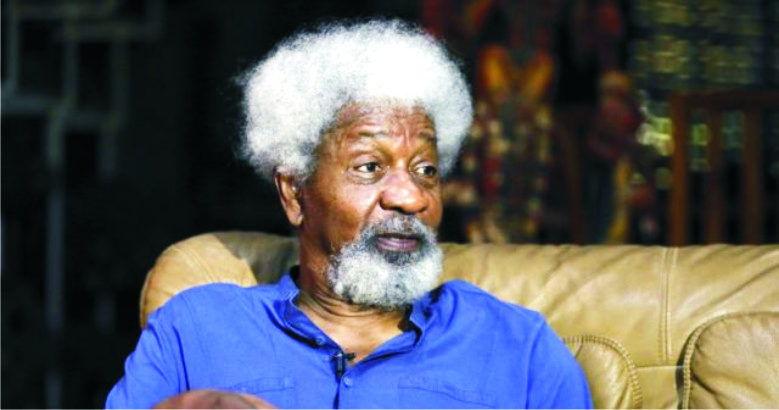
Professor Wole Soyinka has said that with the new move of the President Muhammadu Buhari’s administration on Omoyele Sowore, “Further checks have however confirmed that this government has indeed attained an unprecedented level of paranoia.”
Soyinka, reacting to the 7-count charge slammed against Sowore, who has been in detention following a court pronouncement, said the the new was “utterly depressing.”
The Nobel laureate winner added that on hearing the news, “I can testify that the immediate reaction around me was to dismiss this as yet another grotesque product of Fake News, of which Nigerians have become the greatest practitioners. I confess that I also joined in this school of thought – at the start.”
Soyinka said in a statement titled BACK TO THE TREASONABLY FELONIOUS FORMULA: This is utterly depressing news. So, the Sowore affair has moved beyond harassment and taken on a sinister direction.
Outside the country where I happened to be engaged at the moment, I can testify that the immediate reaction around me was to dismiss this as yet another grotesque product of Fake News, of which Nigerians have become the greatest practitioners. I confess that I also joined in this school of thought at the start.
Further checks have however confirmed that this government has indeed attained an unprecedented level of paranoia. I do not believe that the Justice department itself believes in these improbable charges, as formally publicised.
So, once again, we inscribe in our annals another season of treasonable felony, History still guards some lessons we have yet to digest, much less from which to learn. Welcome to the Club, Mr Omoyele Sowore.
Meanwhile, as yesterday marked day 45 that the convener of the RevolutionNow protest, Omoyele Sowore, has been in the Department of State Service (DSS) detention, Lagos State chapter of the Africa Action Congress (AAC) Legal Team, asked the Federal Government for his immediate release.
Reacting to the freshly 7-count charge suit on the Sahara Reporters’ publisher by the Federal Government, the league of lawyers said that, “We are not aware that Sowore was remanded to prison by any court order on 20th September, 2019.”
The AAC affirmed that “in the events preceding the charge, we have unequivocally maintained that unless a definite charge is brought against him, his continuous detention cannot be justified under the Nigerian Constitution.”
The full statement made available to newsmen, and signed by the Head of the AAC Legal Team, Tope Akinyode, titled, “Upon Completion Of 45 Days, Sowore Must Be Immediately Released From DSS Detention Today Without Any Further Ado”, reads: “Our attention has been drawn to the 7-count-charge of treasonable felony, among others, which the DSS preferred against Omoyele Sowore on 20th September, 2019.
“In the events preceding the charge, we have unequivocally maintained that unless a definite charge is brought against Omoyele Sowore, his continuous detention cannot be justified under the Nigerian Constitution.
“This is because the ex parte order upon which the DSS is granted permission to withhold Sowore for 45 days negates the fundamental principle of fair hearing and the ex parte order has since been challenged before the court.
“However, in the prevailing circumstances, need has arisen for the DSS to let go of Sowore before today runs to an end. We are not aware that Sowore was remanded to prison by any court order on 20th September, 2019.
“In criminal matters, pending when bail application is made on behalf of a Defendant, he may be temporarily remanded by court. The Defendant (Sowore) was not remanded by court order yesterday.
“However, the 45-day court order upon which the DSS has continuously held on to him Sowore expires today, 21st September, 2019. Based on the foregoing, we hereby call on the DSS to release Omoyele Sowore from their facilities with immediate effect.
“We submit that the DSS lacks the judicial, statutory or constitutional jurisdiction to further withhold Sowore any moment from today and it would amount to a rape on the Nigerian Constitution if the DSS refuses to release Sowore today.”
Similarly, the Socio-Economic Rights and Accountability Project (SERAP) has sent an open letter to the Attorney General of the Federation and Minister of Justice, Mr Abukabar Malami, SAN, urging him to use his position “to without delay enter a nolle prosequi and discontinue the prosecution of the Convener of ‘RevolutionNow’ protest and publisher of Sahara Reporters, Mr Omoyele Sowore, and Olawale Bakare, also known as mandate for apparently politically motivated charges of treason, fraud and ‘insulting President Muhammadu Buhari’.”
SERAP said: “We urge you to use your role as a trustee of the public interest under Section 174 of the Nigerian Constitution of 1999 (as amended) to end several of similar trumped-up cases going on in several states.”
In the letter dated 21 September, 2019 and signed by SERAP Deputy Director, Kolawole Oluwadare, the group said: “Sowore’s case and several similar cases instigated/brought by state governors make a hideous mockery of Nigeria’s criminal justice systems, rule of law, freedom of expression and media freedom. These cases are persecution and not prosecution. As guardian of the public interest, you have a role to end this travesty now, and to maintain the sanctity and integrity of Nigeria’s justice system.”
SERAP also said: “These cases set a dangerous precedent for the misuse and subversion of the justice system, which may lead to the politicization of judiciary. This will be bad for everyone—ordinary citizens, journalists and even the politicians in power, as they may themselves become targets of these repressive and abusive tactics when they are out of power/in opposition.”
The letter read in part: “While the Nigerian government has the responsibility to prevent and prosecute criminal offences, it ought to do so lawfully, and in full compliance with human rights and the rule of law. Exercising your constitutional independence and discretion to withdraw these kinds of charges would meet the text of reasonableness, demands of justice, and as noted, serve the public interest.
“Laws against terrorism and money laundering should be properly used, and not to undermine critical voices, activists, and the media. Invoking the charges of treasonable felony to unjustifiably or arbitrarily restrict the right to freedom of opinion and expression would minimise the seriousness with which our laws traditionally treat such offences, and undermine the essence of the criminal justice system and the rule of law.
“If not urgently addressed, the misuse of the criminal justice system and politicization of Nigeria’s judiciary would jeopardise the independence of the judiciary and the rule of law and lower the public estimation of the ability of our justice system to serve as the last hope of justice for desperate victims. Unless these bogus charges are immediately withdrawn, there is a danger that the public interest represented by the courts and that represented by your role, might part company.
“Attacks on journalism are fundamentally at odds with protection of freedom of expression and access to information, which in turn is key to promoting transparency and accountability, and the achievement of the government’s anti-corruption agenda.
“Withdrawing this case would send a strong message to many state governors that your office will not accept their persistent abuse of the criminal justice systems to jail journalists, bloggers and activists, just as it is, for example, the case in Cross River State, where journalists, Agba Jalingo and Ekanem Ekpo have been charged with treason and now being detained for 90 days simply for reporting about an alleged diversion of N500million by the Cross River Governor, Prof Ben Ayade.
“As Nigeria’s chief law officer, it is vital to our democracy, judicial independence and rule of law for you to stop the Federal Government and state governors from misrepresenting the country’s constitutional jurisprudence and international obligations in the matters of freedom of expression and media freedom.
“SERAP notes that, last Friday, the Federal Government filed a seven-count charge of cybercrimes of insulting Mr Buhari, money laundering and treasonable felony against Sowore and Bakare. The charges followed their detention by security operatives on 2nd August, 2019. Order was his detention was not made until the 8th of August.
“SERAP also notes that at a forum we organized in June, 2019 to discuss the legality of the Cybercrimes Act, your representative and the Head of Cybercrimes Prosecution Unit in the Ministry of Justice, Mr. Terlumun George Tyendezwa said the Justice Ministry was committed to pursuing the amendment of the Act, to remove its repressive provisions like insulting public officials, which is now being used in this case, and frequently to undermine freedom of expression, media freedom and provide special protection for public figures including president and state governors.
“Nigerian Constitution and international human rights treaties such as the International Covenant on Civil and Political Rights and the African Charter on Human and Peoples’ Rights to which Nigeria is a state party protect even shocking and offensive speech.
“Article 19 of the International Covenant on Civil and Political Rights guarantee everyone’s right to hold opinions without interference and to seek, receive and impart information and ideas of all kinds, regardless of frontiers and through any media, including in the form of art.
“The Human Rights Committee in fact underlines in General Comment 34 that laws should not provide for more severe penalties solely on the basis of the identity of the person and that the value placed by the Covenant upon uninhibited expression is particularly high in cases involving public or political figures. Thus, the mere fact that forms of expression are considered to be insulting to these figures is not sufficient to justify the imposition of penalties.
“These restrictions on freedom of expression and media freedom cannot meet the basic tests of legality, reasonableness and proportionality. It is normal for expression to provoke controversy, reaction and discourse, even anger but not punishment, fear and silence.
“We hope that the aspects highlighted will help guide your actions in acting to withdraw the charges against Sowore and Bakare, and several other similar charges instigated or brought by state governors across the county. We would be happy to provide further information or to discuss any of these issues in more detail with you”, SERAP added.














Rivers State, Sir Siminalayi Fubara, has assured members of the National Youth Service Corps (NYSC) of his administration’s commitment to supporting and strengthening the scheme in the State.
Fubara gave the assurance last Friday at the NYSC permanent orientation camp, Nonwa-Gbam, Tai Local Government Area in the State, during the swearing-in ceremony of 2026 Batch B Stream II orientation course.
Represented by the Permanent Secretary, Cabinet Bureau, Office of the Secretary to the State Government, Dr. Promise Oguzie, the governor said the State Government would remain intentional in providing the necessary support to improve the NYSC scheme and enhance the experiences of corps members deployed to the state.
He charged the corps members to be role models and quality nation-builders in their service to the good people of Rivers State in particular, and Nigeria at large.
“I charge you to be exemplary, dedicated and committed in all you do. Take full advantage of all the camp programmes and activities to enrich yourselves”, he said.
In his welcome address, the State Coordinator of NYSC in Rivers State, Mr. Moses Oleghe, urged corps members to see their deployment to Rivers State as a “veritable opportunity to make meaningful contribution to the growth of the State in particular and Nigeria at large.”
He further charged them to serve with all sense of “integrity, discipline, and the fear of God, especially when they will be engaged as INEC ad-hoc staff that will conduct the 2027 general elections.”
A total of 3,584 corps members composed of 1,421 males and 2,163 females were sworn in by the Chief Judge of Rivers State, who was represented by Justice Godspower Aguma.

Governor of Rivers State, Sir Siminalayi Fubara, says Nigeria needs God-fearing leaders for the nation to move in the right direction and make meaningful progress.
The Governor stated this yesterday when he received in audience, the World President of the Seventh Day Adventist Church, Pastor Erton Kohler; his wife, Andriene Marques Kohler; daughter Mariana Marques Kohler and a retinue of ministers of the church at Government House, Port Harcourt.
Fubara who hailed the Seventh Day Adventist Church for its contributions to education and the grooming of future leaders in Nigeria, expressed delight that the Church had over the years, been investing in education at various levels and currently runs two universities in the country.
He commended the church for not only using its institutions to spread the gospel of Christianity but to groom future leaders for the country.
According to him, religion should not be just about defending one’s faith, but also making meaningful impact on the lives of the people.
He said that by floating these educational institutions, the church has demonstrated capacity to support Nigeria in the task of producing not only educated people but a breed of God-fearing leaders.
“Our country is where it is today because we lack the fear of God. If you have the fear of God, there should be a limit to what you can do because you understand the supremacy of God. But when God is not in your equation, you’ll go beyond the line and that is what has brought us to where we are today.
“So, I feel very happy that you are contributing to the development of our future leaders in this country. We need the right people being in the right place; prepared properly with good minds; that is what we need, not just in Nigeria but round the whole world.,” he said.
Governor Fubara further observed that the absence of God-fearing people in high places to take the right decisions that could impact positively on the society, has also given rise to other problems such as social inequality, poverty, corruption and criminality. According to him, Nigeria needs a system where the average parent could afford quality education for their children and a guarantee that upon graduation, the average child will have the capacity to compete favourably with anybody, anywhere in the world.
“If we have a situation where the little money that you’re being paid as wage can also afford you quality healthcare and after working at least for 15-20 years, you have a roof over your head, tell me why you should be involved in any kind of crime? At that point, you’ll feel secured and this attitude of insecurity about the future that leads to all the social vices we have today won’t be there,” he said.
Governor Fubara expressed appreciation to the delegation for the visit and for their prayers for Rivers State, assuring them of his continued support for their programmes in the state.
Leader of the delegation and World President of the Seventh Day Adventist Church, Pastor Erton Kohler said he was in Nigeria for a special conference of the church during which thousands of the church’s ministers will be undergoing an empowerment programme to further equip them for the task of herding their flocks and serving the society.
He expressed gratitude to the Governor for the warm reception accorded his entourage, saying the memory of the visit will linger in his mind for a lifetime.
Kohler disclosed that the Church has over twenty -four million (24,000,000) members and more than 182,000 places of worship, spread across 212 countries of the world.

The Rivers State House of Assembly has approved the 2026–2028 Medium Term Expenditure Framework (MTEF) submitted by Governor Siminalayi Fubara.
This reaffirms the lawmakers’ commitment to enacting laws and taking legislative actions geared towards the overall development of the State.
The Assembly gave the approval during its Second Legislative Sitting of the Fourth Session held last Friday.
Speaking on the MTEF document during plenary, the House Speaker, Rt. Hon. Martin Amaewhule, noted that by the provision of Section 10(1)(b) of the Rivers State Fiscal Responsibility Law No. 8 of 2010, the MTEF ought to have been laid before the House in September 2025.
Amaewhule explained that traditionally, the document is expected to be presented four months before the commencement of the next financial year and immediately after the expiration of every three-year fiscal cycle.
He, however, stated that in the interest of the State and its people, the House considered it necessary to deliberate on the document, describing it as a precursor to the 2026 Budget Estimates.
The Speaker expressed concern that the year had already progressed significantly before the presentation of the framework.
During deliberations on the document, members examined the assumptions and projections contained in the MTEF and observed that strict adherence to the outlined fiscal parameters would ultimately serve the interest of Rivers people.
The lawmakers maintained that effective implementation of the framework would promote prudent financial management and enhance developmental planning across the State.
Following the debate and positive consideration by members, the Speaker put the question to the House and members voted overwhelmingly in support of the approval of the MTEF.
Meanwhile, during the same sitting last Friday, the House also received a petition from the Chairman of Obio/Akpor Local Government Council, Dr. Gift Worlu.
The petition was presented by the member representing Obio/Akpor Constituency II, Hon. Emilia Amadi.
According to the petition, concerns were raised over an imminent security breach, threats to lives, destruction of property and alleged forceful takeover of property by some lawless persons within parts of the Local Government Area.
Presenting the petition before the House, Hon. Amadi appealed to the lawmakers to revisit the matter and take necessary steps aimed at safeguarding lives and property in the affected communities.
The House is expected to further deliberate on the petition and consider measures to address the concerns raised in order to sustain peace and security in the area.
King Onunwor
-

 News2 days ago
RSG Targets Nine Million Residents in Mosquito Net Distribution Campaign
-

 Oil & Energy2 days ago
Aiyedatiwa Signs New Electricity Bill
-

 Oil & Energy2 days ago
NLNG Commissions Research And Innovation Centre In RSU
-

 Maritime2 days ago
Marine Minister Commends President Tinubu On NPERA Bill Assent
-

 News2 days ago
KenPoly Holds Eight Convocations, August 29
-

 News2 days ago
RSG Begins Another Phase of Projects Commissioning Today
-

 News2 days ago
RMAFC Completes Revenue Sharing Review, Proposes New Pay
-

 Maritime2 days ago
NAGAFF Petitions IGP Over Alleged Maritime Police Harassment