
Oil & Energy
Energy Experts Give Reasons For N’Delta Under-Development

Some experts in the oil and gas industry have identified style of governance, bad policies and lack of transparency, among the many challenges hindering development of Nigeria’s oil rich Niger Delta.
The experts spoke after a documentary screening on the “Impact of Corruption and Conflict on Investments, in Energy Rich Niger Delta Communities’’, in Abuja, on Friday.
The documentary screening was organised by an NGO, African Initiative for Transparency, Accountability and Responsible Leadership (AfriTAL).
The Tide source reports that the documentary focused on two communities of Ogidigben and Gelegele in Delta and Edo States respectively, where various government projects there failed and the people still live in abject poverty.
Rev. Fr Edward Obi, a catholic priest and an environment activist said the style of governance adopted in the country’s oil sector was unfortunately riddled with holes.
“We are in a country where people sit in their offices and make decisions that affect people without consulting them.
“It is a bad style of governance and it is seriously affecting the environmental regulation of the oil and gas industry,’’ Obi said.
According to him, government has never been transparent in running the oil and gas sector, adding that the communities are hardly involved or educated on government plans.
“Till now, I do not think that government is considering using other voices that the people listen to.
“If you go to these rural communities, you see many churches irrespective of how under developed they are.
“People in these communities go there, they listen and respect what they are taught there, these kind of leaders that teach these people can be used as agents to educate members of the communities on what government’s plans are.
“When the people understand all what government wants to do, the project they plan, the benefits to the community and the people, they will welcome it and the desired results will be achieved.
Dr Solomon Adeleye, another oil and gas expert said that corruption in Nigeria was often perceived as affecting government and governance, but it had never been considered to be adversely affecting communities.
He said that government must adopt a different style to manage the oil and gas sector to enable it drive growth and development.
“Nigeria is more of a gas nation than oil, it is very important that government does not use the same pattern it used in managing crude oil to run the gas sector.
“They must do away with things that made it impossible for government to achieve results and focus on current trends and opportunities to ensure growth and development,’’ Adeleye said.
He said currently, there were about 25 per cent of Nigerians that were unemployed and with three per cent population growth, so efforts must be made to create more jobs especially in the gas sector.
Also, Mrs Faith Nwadisi of Women in Extractive Industry said there was need to bring women on the table while discussing issues in the oil and gas sector.
Referring to the screened documentary, she said that the role of women was not reflected there, noting that women bore 90 per cent of the negative impact of oil on communities.




-

 News2 days ago
RSG Targets Nine Million Residents in Mosquito Net Distribution Campaign
-

 Oil & Energy2 days ago
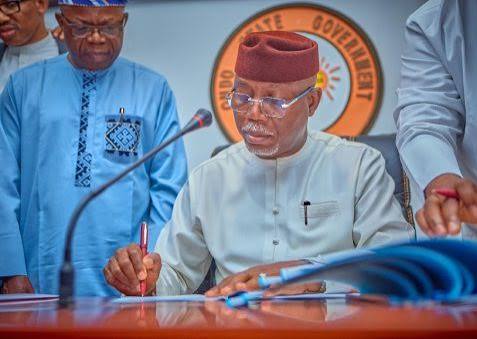
Aiyedatiwa Signs New Electricity Bill
-

 Oil & Energy2 days ago
NLNG Commissions Research And Innovation Centre In RSU
-

 Maritime2 days ago
Marine Minister Commends President Tinubu On NPERA Bill Assent
-

 News2 days ago
KenPoly Holds Eight Convocations, August 29
-

 News2 days ago
RSG Begins Another Phase of Projects Commissioning Today
-

 News2 days ago
RMAFC Completes Revenue Sharing Review, Proposes New Pay
-

 Maritime2 days ago
NAGAFF Petitions IGP Over Alleged Maritime Police Harassment