
Politics
Still On Senate Ministerial Nominees’ Screening

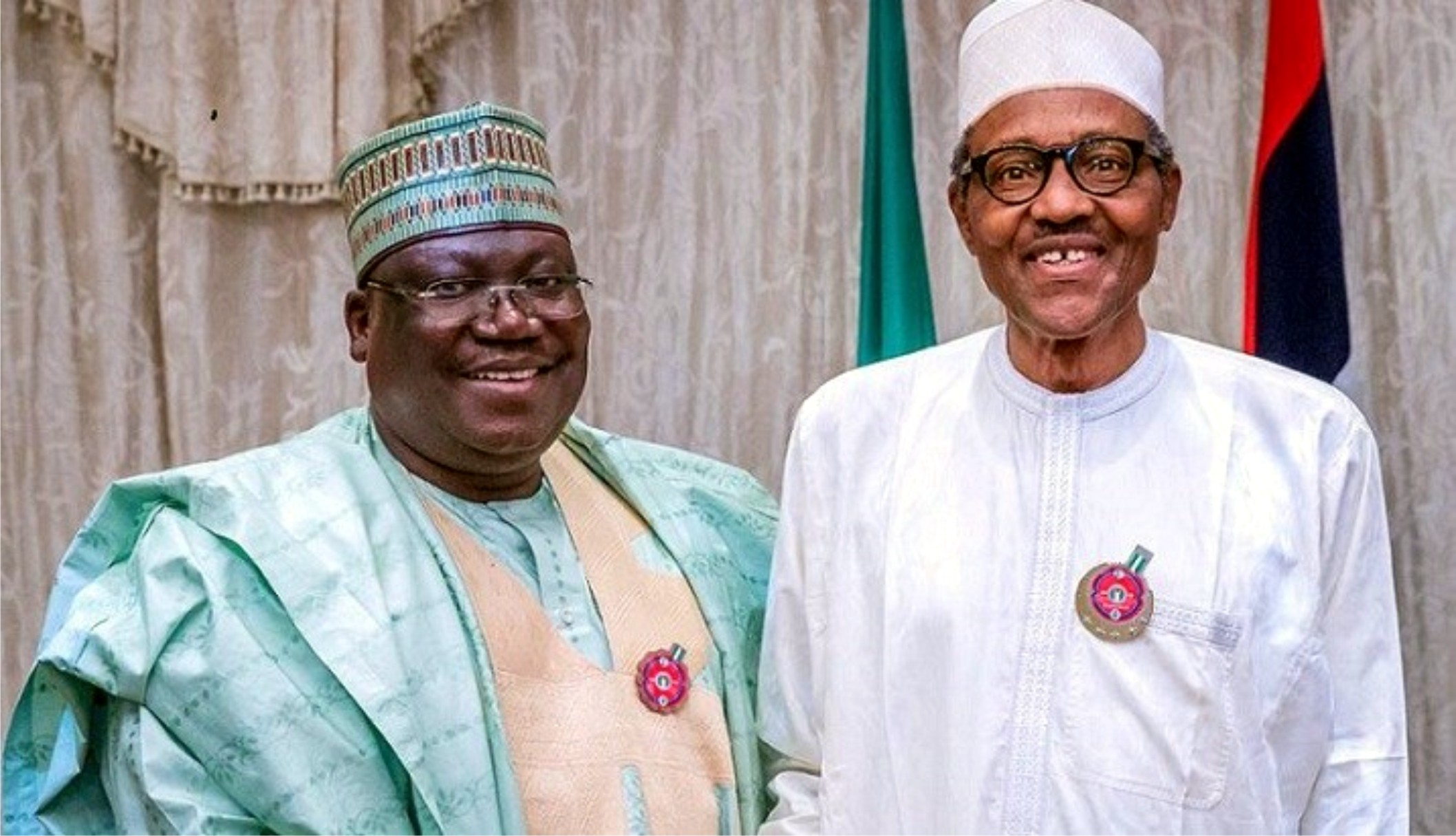
Revisiting the “Take a Bow and Go” approach
to the Senate screening of the 43 ministerial nominees on July 24 is sufficed for the purpose of more understanding of the roles of the Senate and political intrigues among the lawmakers.
It will as well give insights to the position of the law and clear the air on the critics’ arguments on whether or not the Senate has abused the privilege provided by Section 147 (2) of the 1999 Constitution on the screening of the nominees.
Political analysts note that explaining some issues on “Take a Bow and Go” approach to the screening as it is applied will give a mindset on how the future screening can be managed within the precinct of the law.
The contention has been that Nigerians did not expect the number of nominees that were exempted from screening in a “Take a Bow and Go” approach to their screening going by the provision of the law.
Analysts observed further that “Take a Bow and Go” approach started in 2003 and it was introduced as a courtesy and privilege for any nominees who had been elected to the Senate or House of Representatives in the past.
According to them, although the 1999 Constitution that gives Senate the power to confirm appointments in that regard does not make a provision for the “Take a Bow and Go” policy.
Further to this, they note that the policy has been extended to all persons with previous legislative experience even at state levels.
Irrespective of the Senate interpretation of the constitutional provisions in that regard, analysts insist that the policy can prevent nominees from answering some important questions bordering on national concerns, competence and accountability.
They note that Nigerians have witnessed a lot of screening of ministerial and other executive nominees who were asked to recite the National Anthem, or explain their master plan or agenda for their offices.
However, a source within the National Assembly who pleads anonymity, observes that there were some political intrigues on the application of “Take a Bow and Go” policy during the screening.
He links the “Take a Bow and Go” approach in the screening to some interests of the Senate leadership in the nominees that the leadership knows if they are subjected to serious screening, they may not sail through.
According to him, supporting the screening in that method will pay back for the lawmakers in the appointment of the committees, especially those that crave for “juicy committees”.
He observes further that this explains why the appointment of committee chairmen and their deputies had to be delayed until shortly after the screening.
The nominees that enjoy “Take a Bow and Go” privilege are Chris Ngige, Hadi Sirika, Muhammad Bello, Gbemisola Saraki, Pauline Tallen, Sharon Ikeazor, Lai Mohammed, Rotimi Amaechi, Timipre Sylva, Zainab Ahmed, Godswill Akpabio, Sa’adiya Umar Farouk and Otunba Adeniyi Adebayo.
Similarly, Ramatu Aliyu, George Akume, Olorunnimbe Mamora, Tayo Alasoadura, Maryam Katagum, Abubakar Aliyu, Mustapha Shehuri, Zubairu Dada, Emeka Nwajiuba and Maigari Dingyadi, enjoyed the method.
But some lawmakers have expressed concerns on the method, including Senate Minority Leader Eyinnaya Abaribe, who raised a constitutional point of order that the screening had turned out to be a mere endorsement of some nominees.
He stated that in global parliamentary practices, confirmation hearings are conducted for nominees to access their competence and qualification for their appointments as ministers, explaining that confirmation hearings ought to be different from endorsement.
In the same vein, Senator Dino Melaye said, “I will tell you categorically that Nigerians are not happy, especially with the way the proceedings of the screening have been conducted and I can tell you that it is more of adoption than a screening.
“I am not a presiding officer of the National Assembly, I cannot speak for either of them but as long as some of us remain there, our voices will be heard and we will always insist on doing the right thing.”
In a controversy, Malam Muhammed Bello, a nominee and a former Minister of the Federal Capital Territory, also requested to be granted the same privilege extended to former lawmakers who skipped the screening, insisting that he had been a public office holder and had been close to the National Assembly members.
But Mr Femi Akinwumu, a public affairs analyst, also insists that it is wrong for the Senate to allow ministerial nominees facing corruption charges to take a bow and leave without asking any question.
He expressed concern about the screening of some nominees, citing the case of Mr Rotimi Ameachi, former Minister of Transportation, who had never been a member of the Senate but was asked to “take a bow and go”.
In response to this, Senate President Ahmed Lawan, noted that Ameachi was screened in that manner because he was a former member of Rivers State House of Assembly and a Speaker for eight years.
Some civil society organisations have similarly expressed dissatisfaction with the Senate for the method, suspecting that the Senate could become a rubber stamp and stooge of the executive.
In a statement by Executive Director Citizens Advocacy for Social and Economic Frank Tietie, the organisation said that checks and balances which would have improved the performance of government would suffer when legislative scrutiny appeared to be lax.
He called on the Senate to show a sense of seriousness and change of approach towards the future screening.
Similarly, Director of Centre for Democracy and Development Austin Aigbe, said that senate “is charged with the duty to engage the nominees on topical issues that will liberate the country from challenges.
`What we see now is that you are former senator, former house member so you bow and go; the funny one is that your brother used to be a member of the National Assembly and you come from the area where the senate president is from and because of that, you take a bow. What does that add to the Nigerian state?” he asked.
Irrespective of arguments for or against, analysts described the “Take a Bow and Go” approach to screening as a farce and charade, observing that the trend won’t help the country.
Ogunshola is of the News Agency of Nigeria (NAN)
Femi Ogunshola

Politics
Alleged Coup: Protests Rock N’Assembly As Detained Officers’ Children, Wives Demand Justice


Scores of children and wives of military officers detained over an alleged coup plot yesterday staged a peaceful protest at the National Assembly, demanding a speedy trial and the release of the accused officials.
The protesters who gathered at the entrance of the National Assembly complex, moved in a slow procession while clutching placards with inscriptions such as “Don’t Kill Our Daddies,” “Detention Without Trial is Injustice,” and “Six Months of Torture: Enough Is Enough.”
Amid tears and trembling voices, the children appealed for justice and access to their detained fathers, many of whom they said they had not seen for months.
The appeal was made during a press briefing in Abuja attended by no fewer than 20 wives and several children of the detained officers, including a two-month-old baby.
The families were accompanied by human rights lawyer, Deji Adeyanju and activist Omoyele Sowore.
At the briefing, the families lamented that the officers had been held for over 160 days without trial or contact with their relatives, describing the situation as a violation of their fundamental rights.
Speaking on behalf of the families, Memuna Bashiru said the prolonged detention had thrown their households into uncertainty and emotional distress, noting that while allegations had been widely publicised, families remained in the dark about the fate of their loved ones.
The arrest of the indicted officers was first announced on October 4, 2025, by the then Director of Defense Information, Brigadier General Tukur Gusau, who disclosed that 16 officers were taken into custody for alleged breaches of military regulations and acts of indiscipline.
However, an interim investigation later suggested the existence of a clandestine network of officers, allegedly coordinated by a senior Army officer, which had begun preliminary planning for a coup.
According to the report, the alleged plot involved surveillance of key national assets, including the Presidential Villa, Armed Forces Complex, Niger Barracks in Abuja, and major international airports, with October 25, 2025, cited as the planned date for the operation.
Those reportedly in custody include Brig Gen M. A. Sadiq, Col M. A. Maaji, Lt Col S. Bappah, Lt Col A. A. Hayatu, Lt Col P. Dangnap, Lt Col M. Almakura, Maj A. J. Ibrahim, Maj M. M. Jiddah, Maj M. A. Usman, Maj D. Yusuf, Capt I. Bello, Capt A. A. Yusuf, Lt S. S. Felix, Lt Cdr D. B. Abdullahi, Sqn Ldr S. B. Adamu and Maj I. Dauda.
The alleged plot, according to findings, targeted senior government officials, including President Tinubu and Vice President Kashim Shettima.

In a statement issued yesterday, the party’s National Publicity Secretary, Mr Felix Morka, said the exercise would take place in all wards and designated centres nationwide.
He called on existing members to update their records, while encouraging new entrants to join the party through the digital platform.
“As the electronic membership registration exercise resumes in all wards and designated locations nationwide, we urge existing members to validate their membership while new members are encouraged to register and join the progressive family,” Mr Morka said.
According to him, eligibility for registration is limited to individuals aged 18 and above who possess a valid National Identification Number (NIN).
The party said the initiative is part of efforts to modernise its operations by transitioning to a digital database that would enhance record accuracy and accessibility.
Mr Morka noted that the e-registration would “digitise the party’s membership register, ensure the integrity of records, and enhance efficient access to membership data for planning and management decisions.”
He added that the move is also aimed at promoting internal democracy within the party and strengthening its commitment to democratic innovation.
The APC had previously introduced electronic registration as part of broader reforms to streamline its membership system and improve organisational efficiency.