
News
2nd Term: We’ll Rely On Leaders Within System -Wike …Deal Decisively With Cultist, Kidnappers -Dokubo

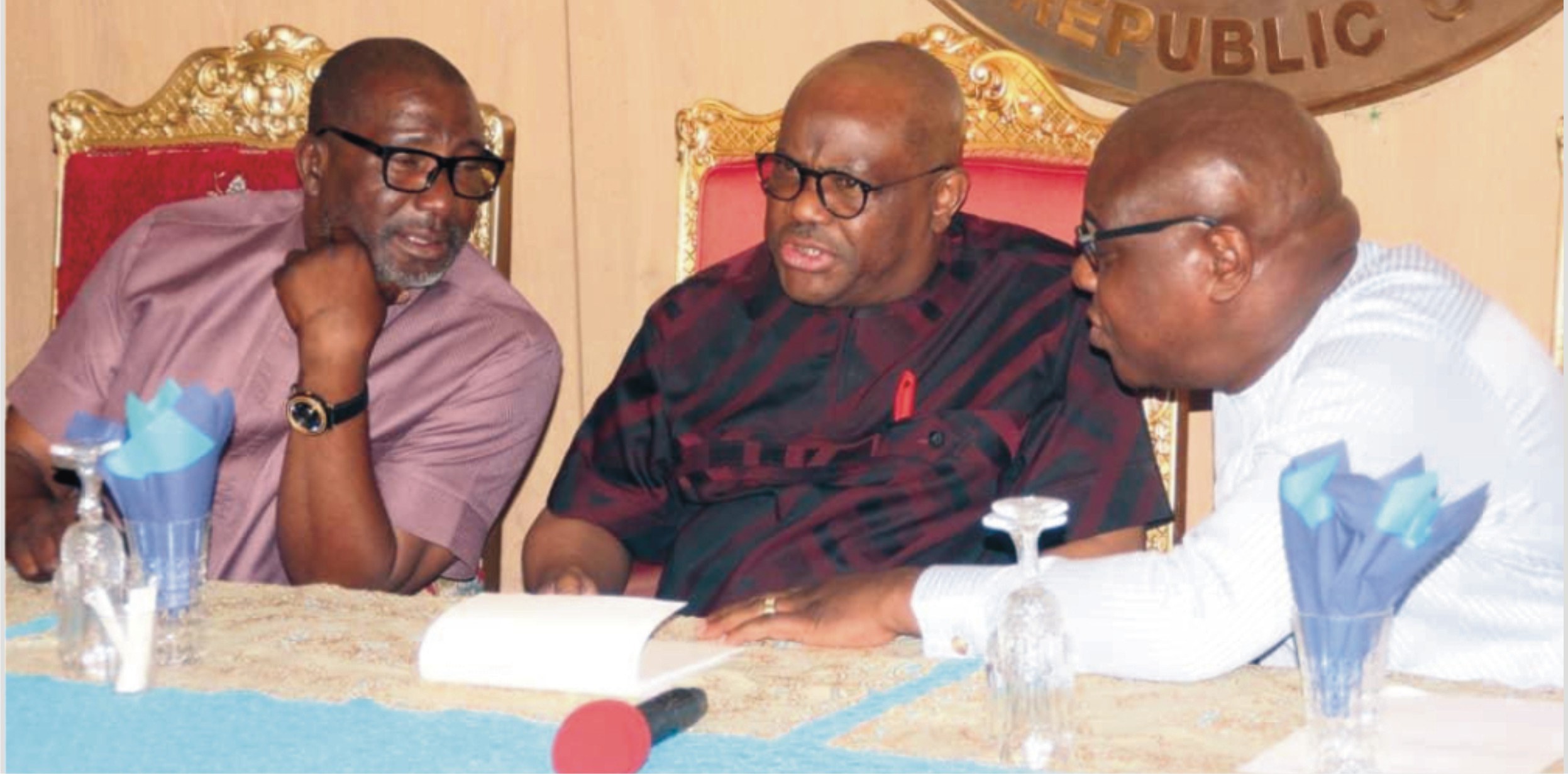
The Rivers State Governor, Chief Nyesom Wike has stated that his second term administration would feature leaders from within the state structure, with a few new officials drawn from outside the system.
Speaking during a Special State Luncheon for members of the Rivers State Second Term Inauguration Committee at the Government House, Port Harcourt, last Wednesday, Wike assured that he would always involve those who worked hard for the success of the administration, especially those who served in the committee.
Wike said: “Most of you or some of you must still be part of the government, the cabinet and other parts of the administration.
“Those of you who are prayer warriors should continue to pray. Generally, it cannot be outside this area. It cannot be. It will be people within the system and some from outside.
“Don’t feel that we have abandoned you. Not at all! Government House is still open to you”, he enjoined members of the committee.
He commended members of the Second Term Inauguration Committee for delivering a world-class transition from first to second term for his administration.
Wike expressed happiness that the committee worked tirelessly and religiously to deliver quality programmes that shaped the commencement of his second term.
“After the successful second term inauguration, the deputy governor and I decided to host the committee for the wonderful inauguration.
“We were filled with happiness, particularly on the day of the second term inauguration. The only day we had a challenge was the day of the Thanksgiving Service. But the committee made amends”, he said.
Responding, the Chairman of the Second Term Inauguration Committee and former Deputy Speaker of the House of Representatives, Rt Hon Austin Opara, thanked the Rivers State governor for the opportunity given them to serve the state.
He formally recommended all members of the Second Term Inauguration Committee for different responsibilities in the forthcoming administration, saying that they lived up expectations.
Opara thanked the Rivers State governor for monitoring the preparations and activities of the committee, which ensured that the members delivered.
Also speaking on behalf of other committee members, Prof Ngozi Ordu, expressed gratitude to Governor Nyesom Wike for the opportunity to serve.
She said that members of the committee went the extra mile to ensure the transition into the second term was successful.
It would be recalled that members of Governor Wike’s Second Term Inauguration Committee were drawn from the former Rivers State Executive Council, former Special Advisers, former and re-elected State and National Assembly members, the academia, top class professionals, members of the business community, local government council chairmen, party chieftains, youth groups, women leaders, opposition party leaders and non-indigenes.
Meanwhile, the former militant leader, Alhaji Asari Dokubo says the scourge of cultism and kidnapping ravaging Nigerian society should not be handled with kid gloves but rather, government should deal decisively with those involved.
Dokubo stated this, last Tuesday, in an interview with correspondents in Government House, Port Harcourt.
The activist expressed opposition to the approach of offering amnesty to cultists by government, saying “instead of treating them as criminals”, which they are, “government is encouraging them by rewarding terror merchants through amnesty.
“My advice has always been that cultism and gangsterism have never helped. The root cause of this is the amnesty programme that was introduced.
“How can you pay money to people who are not working? When they brought this amnesty, I rejected it. This amnesty programme is a bad omen.
“Your father’s salary who has been working is N50,000. He has worked for 30 years, his salary is N50,000. Then you, who has refused to go to school, you are a rapist and a common thief, government will now reward you for being a rapist and a common thief, and pay you N65.000, and ask you to stay at home”, he complained.
He stressed that reward for criminality has discouraged people from embracing hard-work and the dignity and reward that go with it since other youths would emulate those who committed these crimes and ironically get sustained reward through amnesty.
Dokubo regretted that the situation has degenerated to the point that before you build house or embark on any project in the communities, you see group of youths asking you to pay them, such that people have abandoned villages as they take refuge in the cities.
“It is so disgraceful that you wake up in the morning, and you see severed head of a fellow human being decorating our streets”, he said, and urged government not to leave any stone unturned to cleanse the society of the evil of cultism and kidnapping.
He advised government to end the present era of entitlement to criminality in the form of amnesty, stressing that those behind the persistent kidnapping, which he called, ‘stealing of human beings’, and cultism were very few in number, and should be decisively dealt with.
“The government should work with the various security agencies concerned with maintaining law and order to make sure that these people who are few are dealt with.
“Once you cage these few people, the society will be very free, and let us not reward terror merchants.
“Our society today is rewarding terror merchants, and people see them as role models, and also follow suit to make money from criminality”, he said.
He noted that until government does the right thing, the scourge would persist, adding that some traditional rulers that attempted advising the cultists and kidnappers against what they do have become victims.
However, the former freedom fighter noted that his community has not faced the effects of criminality because it has a mechanism that checks criminals, and advised other communities to put in place such needed mechanism to check miscreants, instead of the use of entitlement.
“We have told them that this entitlement mentality, forget it, it is not going to work.
“In my community in Oboma, it doesn’t happen. There is no ‘kpo fire’, there is no one stopping you from building house. Government project comes and nobody stops them; everybody is happy, because there is a mechanism to control these people.
Chris Oluoh



The National Drug Law Enforcement Agency (NDLEA) has intercepted a large consignment of cocaine concealed in heads of imported dry stock fish and arrested a key member of the syndicate responsible for shipping the drugs abroad.
The agency disclosed this in a statement issued yesterday by its Director of Media and Advocacy, Femi Babafemi.
He said the arrest and seizure followed intelligence on trans-border criminal activities.
Babafemi said the intelligence led to a sting operation by operatives of the Murtala Muhammed International Airport Strategic Command of the Agency at the Ojo area of Lagos on Thursday, March 19, 2026.
“In the course of the operation, three jumbo size bags were found in possession of the kingpin 36-year-old Akputa Dickson Ejike.
“A search of the bags led to the recovery of Two Hundred and Thirty-Seven (237) wraps of cocaine buried in the heads of imported dry stock fish locally known as ‘Okporoko.’
“The cocaine pellets have a gross weight of 5.80 kilograms. The consignment was intended for export to Delhi, India,” the statement read.
In a separate operation on Wednesday, March 25, NDLEA operatives from the Directorate of Operations and General Investigation (DOGI) intercepted two consignments bound for the United Kingdom at a courier company in Lagos.
“In one of the shipments that originated from Cotonou, Benin Republic, 1.9 kilograms of methamphetamine were found concealed in automobile filters while the second parcel contains 40 ampoules of Morphine Sulphate and nine ampoules of Fentanyl,” the statement said.
Babafemi added that on March 26, a Special Operations Unit (SOU) raided the home of 46-year-old Omolade Abigail Jolayemi, known as “Iya Ghana,” at 13 Carter Street, Yaba, Lagos.
According to him, she and her associate, 31-year-old Sarah Zainab Agbabiaka, were arrested after operatives recovered 135 blocks of cannabis weighing 76.30 kilograms.
“Same day, the SOU operatives also arrested Anayo Lucky Ohabiro, 39, at Doyin bus stop, Surulere, Lagos following credible intelligence. A total of 78 blocks of Ghana Loud weighing 41kg were seized from him,” he said.
In Ekiti State, the statement added that “an 80-year-old grandpa, Oke Samuel, was on Thursday 26th March arrested by NDLEA operatives during a special raid operation at Mosafuneto camp, Erinmo road, Efon-Alaaye Ekiti. A total of 2.2kg skunk and 1.8grams of methamphetamine were recovered from him.”
Another suspect, 37-year-old Enuwa Kehinde Kingsley, had 894.72 kilograms of skunk seized from an uncompleted building in Ogbese, Akure North, Ondo State.
Elsewhere, 35-year-old Saater Nyam was apprehended at Pevi village, Guma LGA, Benue State, with 116.7 kilograms of skunk on Tuesday, March 24.
In Edo State, a warehouse raid in Ekpoma town, Esan West LGA, on Monday, March 23, led to the arrest of 25-year-old Felix Donald and the seizure of 576.5 kilograms of skunk and 33 bottles of codeine-based syrup.
In Taraba State, Babafemi said NDLEA officers intercepted a truck carrying 100 blocks of compressed skunk weighing 135 kilograms concealed in animal feed bags from Garbachede to Gombe State on Tuesday, March 24.
Two suspects, 21-year-old Osama Mamuda and 22-year-old Auwal Umar, were arrested in connection with the seizure.
Babafemi noted that the agency has also continued its War Against Drug Abuse social advocacy, conducting sensitisation lectures in schools across Cross River, Adamawa, Oyo, Kano, and Lagos states.
Chairman and Chief Executive Officer of NDLEA, Brig. Gen. Mohammed Marwa (Rtd), commended operatives from MMIA, SOU, DOGI, Ekiti, Ondo, Benue, Edo, and Taraba Commands for their efforts and praised all commands nationwide for balancing drug supply reduction with drug demand reduction initiatives.

The Christian Association of Nigeria has called on political leaders at all levels to demonstrate empathy and take urgent steps to ease the growing economic hardship facing Nigerians, as Christians mark Palm Sunday.
In a statement issued on Sunday, CAN President, Archbishop Daniel Okoh, said the significance of Palm Sunday offers timely lessons for leadership, particularly during a period marked by economic strain and global uncertainty.
Reflecting on the biblical account of Jesus’ entry into Jerusalem, Okoh noted that the moment symbolised humility, peace, and purposeful leadership rather than a display of power.
“Jesus entered Jerusalem with calm resolve at a time of uncertainty and expectation. It was not a show of force, but a message of peace, purpose, and hope,” he said.
He stressed that the country’s current socio-economic realities demand similar qualities from those in authority.
“Across Nigeria, many are feeling the weight of the times. The cost of living is rising, and for countless families, daily life is getting harder,” Okoh said.
He linked domestic economic challenges to global developments, particularly tensions involving Iran, Israel, and the United States, which he said are disrupting energy markets worldwide.
“The impact is already here. Fuel is more expensive. Transport costs are rising. Food prices are climbing,” he said, warning that such pressures are intensifying the hardship faced by ordinary citizens.
The CAN president emphasised that in times of uncertainty, the tone and actions of leaders are critical in restoring public confidence.
“For many Nigerians, the concern is simple and immediate: how to cope, how to plan, how to stay afloat. When life feels this uncertain, people need reassurance, stability, and the quiet confidence that those in positions of responsibility understand what they are going through,” he stated.
He further urged leaders to embrace a style of governance rooted in restraint, compassion, and commitment to the common good.
“True leadership is not always loud. It is seen in empathy and in decisions that ease burdens, calm anxieties, and bring people together. This is a time for such wisdom,” Okoh added.
Beyond government, CAN also called on the Church and citizens to promote unity and peace, drawing inspiration from the collective spirit associated with Palm Sunday.
“It reminds us of a moment when people from all walks of life came together with one purpose. That same spirit is needed now. We must stand for peace, strengthen unity, and support one another,” he said.
Addressing young Nigerians and those most affected by the economic downturn, Okoh encouraged resilience and hope.
“The challenges are real, but they are not the end of the story,” he said, urging citizens not to lose faith amid difficulties.
He expressed hope that the lessons of Palm Sunday would inspire renewed commitment to national cohesion and shared progress.
“As we journey through this sacred season, may the spirit of Palm Sunday guide us towards quiet courage, shared purpose, and a renewed commitment to the good of all,” the statement added.

Rivers State Governor, Sir Siminalayi Fubara, has charged the leadership of the All Progressives Congress (APC) in the South -South to be united and work together to ensure that the ruling party achieves its ultimate goal in the region.
The governor who spoke at the South South Zonal Congress in Asaba, Delta State, said working in unity and with a common purpose will enable them deliver optimally to the electoral fortunes of the party in 2027.
“We can only achieve our goal when we are united and we work together. I surely believe that this is the right time, the right people and the right place. My charge to those of you elected today is that the responsibility is going to be very tasking but I believe strongly that they will deliver for our party,” he said.
Fubara expressed confidence that the newly elected leadership of the party would be equal to the task.
He expressed profound gratitude to the Delta State Government for hosting the Zonal Delegates Congress, stressing that he believes that the best will come from the South South region.
The Congress which attracted the creme de la creme of the APC in the zone, saw the re-election of the zonal leadership through consensus. The reinstated leaders were promptly inaugurated at the ceremony.
Some of the dignitaries in attendance include the President of the Senate, Senator Godswill Akpabio, Governors Siminalayi Fubara of Rivers State, Duoye Doris of Bayelsa State, Monday Okpebholo of Edo State, Umo Eno of Akwa Ibom State, Bassey Otu of Cross River State and Sheriff Oboroevwori of Delta State.
Also in attendance were the members of the National Assembly as well as members of the State Houses of Assembly from the South South Zone.
-

 News5 hours ago
RSG Reiterates Commitment To Youth Dev
-

 Business3 hours ago
NSCDC Discloses Illegal Dump Site In Ikwerre Community
-

 News5 hours ago
Kwankwaso Dumps NNPP, May Join ADC Today
-

 Maritime3 hours ago
MWUN Raises Alarm Over Port Security Lapses In Lagos
-

 Business3 hours ago
Yenagoa’s Radisson Hotel Ready December — NCDMB, Other
-

 Maritime3 hours ago
Maritime Workers Demand Reinstatement Of Tally Clerks, Gangway Security Over Port Revenue Loss
-

 Rivers3 hours ago
Education Commissioner Lauds STAN Executive, Appreciates Support
-

 Maritime3 hours ago
NNS Hands Over Two Suspected Stowaways to Immigration Service