
Featured
CCT Trial: Onnoghen Kicks Over Conviction …Heads To Court Of Appeal …We ‘ll React Formally -PDP

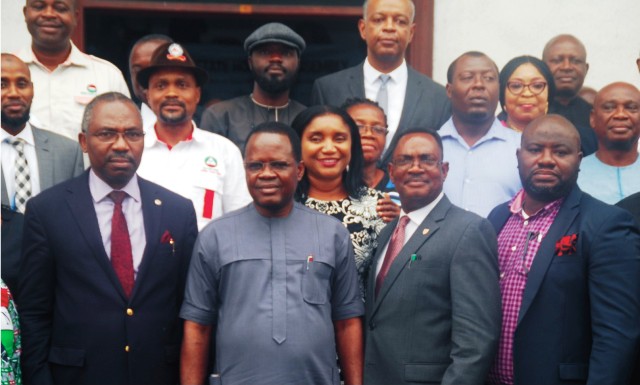
The Code of Conduct Tribunal (CCT), sitting in Abuja, yesterday, convicted the former Chief Justice of Nigeria, Justice Walter Onnoghen, on all the six-count charge the Federal Government preferred against him.
The Danladi Umar-led three-man panel tribunal said it was satisfied that the Federal Government successfully proved its allegation that Onnoghen, who had voluntarily resigned his position as CJN on April 4, acted in breach of the code of conduct for public officers in the country.
But Onnoghen, through his lawyer, Mr. Okon Efut, SAN, gave a hint that he would appeal against his conviction by the CCT.
Though the former CJN declined to speak to journalists, his lawyer, in his reaction, insisted that the judgement was in breach of the fundamental principles of natural justice, equity and good conscience.
He alleged that the verdict was premeditated, adding that the CCT had on January 23 when it granted the ex-parte order President Muhammadu Buhari relied upon on January 25, to remove Justice Onnoghen from office as the CJN, revealed its position on the matter.
Umar had held that evidence of three witnesses that testified in the course of the trial, were not discredited by the defendant who was accused of failing to properly declare his assets, as well as operating five domiciliary foreign bank accounts.
The CCT chairman, who read the judgement, maintained that admission by the embattled former CJN that he forgot to declare the five accounts he operated since 2009, was “weighty enough” to guarantee his conviction.
He held that the defendant was unable to disprove “hard facts” that were brought against him by the prosecution.
“The prosecution has discharged the onus placed on it beyond every iota of doubt. It is clear that the defendant was in clear breach of the code of conduct for public officers. The prosecution successfully established its case, and the defendant is accordingly convicted”, the CCT chairman added.
Consequently, handing its sentence after it declared the defendant guilty, the tribunal, ordered that he is “hereby removed from office as the Chief Justice of the Nigeria, chairman of the National Judicial Council and the Federal Judicial Service Commission.
“Secondly, the defendant is hereby banned from holding any public office for 10 years”.
More so, the tribunal held that Onnoghen’s failure to explain how he amassed “huge amounts of money in his accounts”, was an indication that the funds were acquired illegally.
It, therefore, ordered that the funds should be “confiscated, seized and forfeited to the Federal Government”.
Meanwhile, Onnoghen, who appeared unruffled in the dock while the judgement was delivered, declined offer by the CCT chairman to plead for clemency.
Umar had before he commenced the sentencing, asked the defendant if he would like to make a plea of allocutus (for mercy), but Onnoghen simply bowed his head and told him, “no comment”.
Earlier before the judgment was delivered, the CCT boss, dismissed two preliminary objections the former CJN lodged to challenge the legal propriety of his trial.
Umar held that the CCT had the requisite jurisdiction to try the ex-CJN on the allegation that he falsely declared his assets.
He maintained that FG did not violate any portion of the law by bye-passing the National Judicial Council (NJC) to file the charge.
Umar said the tribunal was minded to overrule itself by departing from the position it took in a similar case the government instituted against Justice Sylvester Ngwuta of the Supreme Court.
The CCT held that sections 158(1) and Paragraph 21(6) of the Third Schedule to the1999 Constitution, as amended, was not applicable in the case since FG did not charge the former CJN as a serving judicial officer, but as an ordinary public officer that acted in breach of the code of conduct for public officers.
“We resolve this issue against the defendant. The tribunal hereby affirm its jurisdiction to entertain the charge against the defendant which is competent.
“Though the tribunal is not unmindful of its previous decision in the case of Ngwuta, the tribunal will not hesitate to overrule itself in any previous decision which it is satisfied was reached on wrong reasons.
“I agree that we should do so in this case. In other words, the tribunal hereby reverses itself as regards the case against Ngwuta.
“The tribunal hereby overrules itself in the case of Ngwuta. The preliminary objection lacks merit and is hereby refused”, Umar held.
In a second ruling, the CCT chairman, said there was no merit in the former CJN’s application that he should recuse himself from the matter considering that he equally has a criminal allegation hanging on his neck.
Umar admitted that though it was a bribery allegation that was levelled against him, he said the Economic and Financial Crimes Commission (EFCC), had in two separate letters dated March 5, 2015, and April 20, 2016, cleared him of any wrongdoing.
He said an initial charge that was entered against him was subsequently withdrawn by the EFCC on November 8, 2018.
“The issue regarding bribery allegation against the chairman has been resolved by the EFCC. All the issues raised by the Applicant have been dealt with without any ambiguity.
“The chairman is competent to proceed with the case”.
Besides, the CCT boss dismissed as unfounded, Onnoghen’s contention that he would not be granted fair hearing since the panel is answerable to the Presidency which was behind his travails.
Umar insisted that though the CCT is not directly under the NJC or the Federal Judicial Service Commission, he said the Presidency does not have any control over its decisions.
“Notwithstanding that the CCT is under the Presidency, that does not mean that it will bow under the whims and caprices of the Presidency or fail to decide cases brought before it dispassionately.
“All judges of courts of superior records are appointed by the President, including Chairman and members of the CCT. That does not reduce them to agents or appendages of the President”, he held.
Meantime, Justice Onnoghen, through his lawyer, Mr. Okon Efut, SAN, gave a hint that he would appeal against his conviction by the CCT.
Efuk said: “The journey has ended today because everything that has a beginning must have an end. So, this day, we have heard that the Chief Justice of Nigeria has been convicted and sentenced. The conviction is out of order, it is unconstitutional. It is a breach of fair hearing because before this day, on the January 23, the same judgement had been passed before now, removing the CJN without a fair hearing.
“So, it was a fair accompli, it was premeditated gas judgment had been passed before today. So, today’s judgement is just a formality and we hold the view that the tribunal has not only breached the constitution of Nigeria, it has breached the fundamental principles of natural justice, equity and good conscience.
“It has not only been able to pass judgement, it has convicted for an offence that was never charged and this is an erosion of the fundamental principles of our constitution. Until some questions are answered, for instance, why is it that the due course of justice was not allowed to flow? Why was judgement passed on January 23 before today, removing the CJN?
“Why is it that today, even after the CJN had tendered his notice of voluntary retirement and the NJC has taken a position, why is it that the tribunal has gone ahead to pass a judgement in total disregard of the independence of the NJC, in total disregard of the powers of the Senate in this matter? We hold a view that the tribunal in reversing itself in the case of Ngwuta, has breached the principle that hold us together.
“This is a sad day in our nation’s democracy and we know that all is not over with this matter. The wheel of justice grinds slowly but surely. This is not a matter that will end here. We shall avail ourselves of all the processes, the hierarchy of the judiciary and we know that the judiciary will redeem itself even though seriously battered and bruised. The judiciary will do justice. Justice has not been done today, but it will surely be done tomorrow. If not by the tribunal, but by our God. Justice will be done by our God”, he added.
It will be recalled that the tribunal had last Monday, reserved judgment on the matter after FG and Onnoghen adopted their final written arguments on Monday. Whereas Onnoghen urged the tribunal to discharge and acquit him, insisting that the FG failed to prove that he committed any offence that is known to the law.
On the other hand, Federal Government, asked the CCT to convict and impose maximum punishment on the former CJN, contending that it successfully established that he acted in breach of the code of conduct for public officers in the country.
The Federal Governemnt had in the charge marked CCT/ABJ/01/19, alleged that Onnoghen’s failure to properly declare his assets, was in violation of section 15(2) of Code of Conduct Bureau and Tribunal Act.
It further alleged that the ex-CJN, who was suspended from office by President Muhammadu Buhari on January 25, operated five foreign bank accounts, contrary to the code of conduct for public officers.
However, in opposition to his trial, Justice Onnoghen, queried the validity of the charge against him, stressing that FG violated established judicial precedents by not allowing the National Judicial Council, NJC, to firstly investigate the allegation against him, before it rushed the matter to the CCT.
He argued that failure to channel the petition against him, as well as the outcome of the investigation that was purportedly conducted on assets declaration forms he submitted to the Code of Conduct Bureau (CCB) to the NJC, rendered the charge invalid.
More so, the defendant urged the CCT to abide by a subsisting Court of Appeal decision in Nganjiwa v Federal Republic of Nigeria (2017) LPELR-43391, to the effect that any misconduct attached to the office and functions of a judicial officer, must first be reported to and handled by the NJC, pursuant to the provisions of the laws.
He maintained that only after the NJC had pronounced against such judicial officer could prosecuting agencies of the Federal Government proceed to initiate a criminal proceeding.
Justice Onnoghen drew attention of the tribunal to its judgment that quashed a similar charge against another Justice of the Supreme Court, Sylvester Ngwuta, on the ground that the NJC ought to have been allowed to look into the matter before the case was filed. He stressed that the two judgments were yet to be set aside by the Supreme Court.
Aside challenging powers of the tribunal to try him, Onnoghen, said he was afraid that he would not be accorded fair hearing by the tribunal which he described as an appendage of the Presidency.
He insisted that he was entitled to fair hearing by an independent and impartial tribunal, under section 36(1) of the 1999 Constitution, as amended.
The defendant argued that the CCB which recommended his trial, the Attorney General of the Federation who is prosecuting him, and the tribunal itself, are all answerable to the Executive Arm of the government.
He equally asked the CCT chairman to disqualify himself from the matter considering that he equally has a criminal allegation pending against him.
Nevertheless, the tribunal, in a ruling on March 11, relied on section 396(2) of the Administration of Criminal Justice Act, ACJA, 2015, and Paragraph 5(5) of its Practice Direction, and held that it would not consider the merit of Onnoghen’s objection to the charge, till conclusion of the trial.
While Federal Government closed its case against the ex-CJN after it produced three witnesses to testify before the tribunal, the embattled former CJN who initially proposed to also call three witnesses to defend the charge, announced his decision to close his defence after his driver testified to the fact that he was present when the defendant submitted his assets declaration forms at CCB’s head office in Abuja.
Onnoghen had on April 4, resigned his position as CJN, shortly after the NJC, sent report of if its investigation into the allegation against him, to President Buhari.
Similarly, the Peoples Democratic Party (PDP) has said that it will react formally to, yesterday’s sacking of the suspended Chief Justice of Nigeria (CJN), Walter Onnoghen, National Publicity Secretary of the party, Kola Ologbondiyan, has said.
Onnoghen was dismissed by Code of Conduct Tribunal, yesterday, in a judgment by its Chairman, Danladi Umar, who also barred him from holding any public office for a period of ten years in addition to forfeiture of cash in five accounts he failed to declare at the Code of Conduct Bureau.
“We will react formally, that’s for sure,” the publicity scribe said, even as he reiterated the support of the party in the fight against corruption.
Also, the Socio-Economic Rights and Accountability Project (SERAP) has sent a Freedom of Information request to Chairman, Code of Conduct Bureau (CCB), Dr. Muhammed Isah, urging him to use his “good offices and leadership position to urgently provide information on specific details of asset declarations submitted to the CCB by successive presidents and state governors since the return of democracy in 1999.”
SERAP is seeking information on: “details of asset declarations by successive presidents and state governors between 1999 and 2019, including details of declarations made immediately after taking offices and thereafter, and for those who have left public offices, at the end of their term of office. Information is also sought on the number of asset declarations so far verified by the CCB and the number of those declarations found to be false and deemed to be in breach of the Code of Conduct for Public Officers, by the Bureau.”
In the FOI request dated 18 April, 2019, and signed by SERAP Deputy Director, Kolawole Oluwadare, the organization said: “While we welcome the judgment by the Code of Conduct Tribunal on Justice Walter Onnoghen, we now urge the CCB to extent its mandates to enforce constitutional provisions on asset declarations by public officers to cover elected officers and to vigorously pursue the prosecution of any such officers who use their powers either as presidents or state governors over public funds to enrich themselves.”
According to the organization, “While judicial corruption is bad, the level of corruption involving many politicians since 1999 and the entrenched culture of impunity of perpetrators is equally appalling. Publishing the asset declarations of elected public officers since the return of democracy in 1999 to date would improve public trust in the ability of the Bureau to effectively discharge its mandates. This would in turn put pressure on public officers like presidents and state governors to make voluntary public declaration of their assets.”
The FOI request read in part: “SERAP is concerned that many politicians hide behind the fact that members of the public do not have access to their asset declarations to make false declarations, and to cover up assets illegally acquired in corruption or abuse of office.



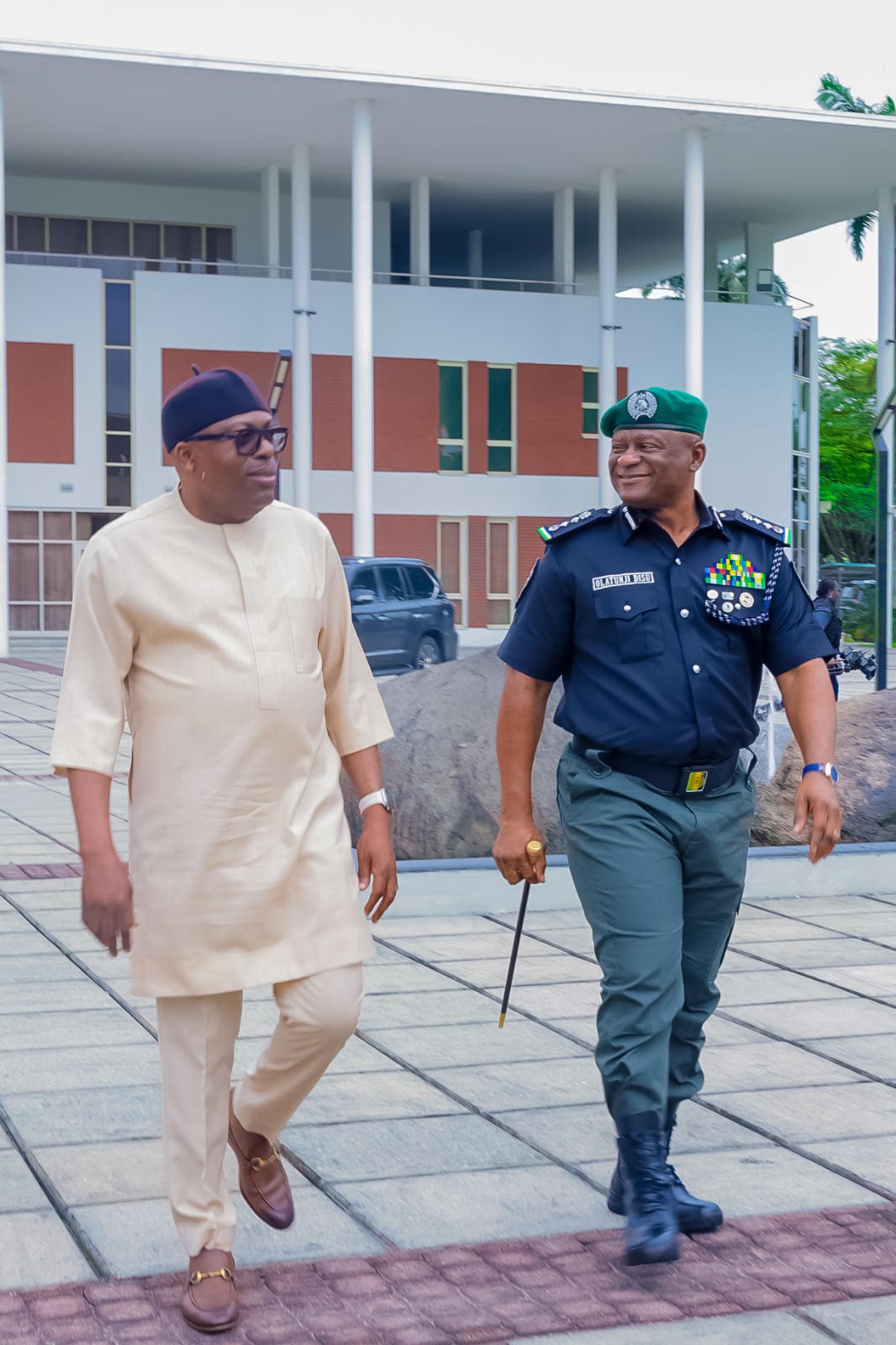
The Rivers State Government has called on stakeholders, community leaders, parents and relevant education authorities to intensify efforts to identify and enrol out-of-school children across Nigeria, stressing that every child deserves access to quality and inclusive education.
Governor Siminalayi Fubara made the call, yesterday, during the regional campaign on engaging community structures to promote the enrolment of out-of-school children and the regional flag-off of the 2026/2027 enrolment drive for southern states, held in Port Harcourt.
Represented by the Secretary to the State Government, Dr Dagogo Wokoma, Governor Fubara reaffirmed that education remains a fundamental pillar of sustainable development and emphasised the need to ensure that no child is left behind because of economic hardship, social background or other barriers to schooling.
He noted that expanding access to education was essential to promoting sustainable development, social inclusion and equal opportunities, enabling children to reach their full potential and contribute meaningfully to society.
The governor urged participating states and communities to translate their commitments into concrete and measurable actions by reaching vulnerable children, strengthening community engagement and encouraging parents and guardians to make their children’s education a priority.
He reiterated the state government’s commitment to initiatives aimed at expanding access to education, particularly for children excluded from formal schooling.
“Rivers State remains committed to supporting initiatives that expand access to inclusive and quality education, particularly for vulnerable children who may have missed the opportunity to attend formal schools,” Fubara stressed.
Also speaking, the Executive Secretary of the Universal Basic Education Commission (UBEC), Aisha Garba, described the growing number of out-of-school children as one of the major challenges confronting the education sector.
She called for a collective and collaborative approach among governments, communities, parents and other stakeholders to address the problem, stressing the need to ensure that no Nigerian child is denied the fundamental right to education.
The programme was organised by the Universal Basic Education Commission in collaboration with the Rivers State Government, as part of efforts to strengthen community participation and promote school enrolment across the southern states for the 2026/2027 academic session.

The Federation Account Allocation Committee (FAAC) has shared the sum of N2.428 trillion among the Federal Government, 36 states government and the 774 Local Government Councils (LGCs) as revenue for the month of September.
The Director, Press and Public Relations, Office of the Accountant-General of the Federation (OAGF), Mr Bawa Mokwa, said this in a statement in Abuja, yesterday.
Mokwa said the allocation was approved by FAAC at its October meeting held in Abuja.
He said the N2.428 trillion distributable revenue comprised of statutory revenue of N1.672 trillion, distributable Value Added Tax (VAT) revenue of N756.587 billion.
Mokwa quoted the FAAC communiqué as saying that total gross revenue of N3.913 trillion was available in the month of September 2026.
He said a total deduction for cost of collection was N131.758 billion while total transfers, refunds and savings of N1.352 trillion.
According to him, a gross statutory revenue of N3.096 trillion was received for the month of September 2026.
“This was higher than the sum of N2.850 trillion received in the preceeding month by N246.384 billion.
“Gross revenue of N816.872 billion was available from the Value Added Tax (VAT) in September 2026.
“This was lower than the N834.843 billion available in the month of August 2026 by N17.972 billion,” he said.
Mokwa explained that the Federal Government received N832.242 billion and the state governments received the sum of N799.872 billion.
He said the LGCs received N560.660 billion, while the sum of N236.049 billion (13% of mineral revenue) was shared to the benefiting state as derivation revenue.
Mokwa said in the N1.672 billion distributable statutory revenue, the Federal Government received N756.583 billion and the State Governments received N383.749 billion.
He said the LGCs received N295.855 billion and the sum of N236.049 billion (13% of mineral revenue) was shared to the benefiting States as derivation revenue.
The director said from the N756.587 billion distributable Value Added Tax (VAT) revenue, the Federal Government received N75.659 billion, the State Governments received N416.123 billion and the LGCs received N264.805 billion.
“In September 2026, Petroleum Profit Tax (PPT), Hydrocarbon Tax (HT), Petroleum Royalties, Import Duty, CET Levies and Excise Duty increased significantly.
“Also, Companies Income Tax (CIT), CGT & SDT, Value Added Tax (VTA), Mineral Royalties, and Gas Flared Penalty, Rental Gas Flared Fee and Misc. Oil Revenue decreased considerably,” he said.
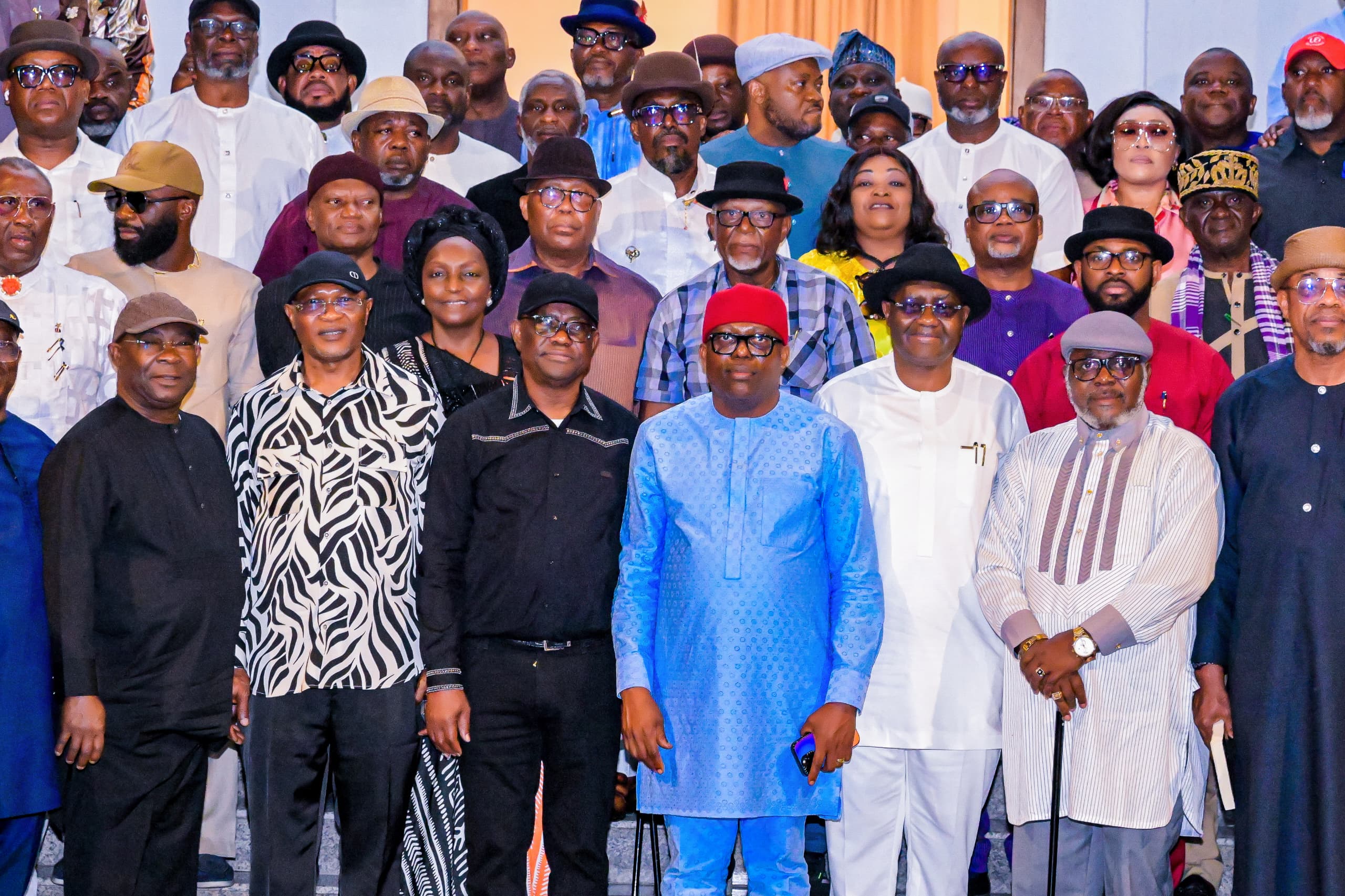
The Nigeria Labour Congress (NLC) has given the Federal Government a two-week ultimatum to reduce the price of petrol, commence renegotiation of the national minimum wage and implement outstanding agreements with workers.
The ultimatum followed a joint meeting of the National Executive Council and Central Working Committee of the NLC held at the Olaitan Oyerinde Hall, Labour House, Abuja.
In a communiqué signed by the NLC President, Joe Ajaero, and made available to newsmen, yesterday, the union said the two-week ultimatum would commence on Friday, October 9, 2026.
It warned that failure by the government to meet its demands would compel the Congress to take further action.
The NLC specifically demanded that the government reduce the price of Premium Motor Spirit to the level it was when the current national minimum wage was signed into law in 2024.
It also demanded the immediate commencement of negotiations for a new minimum wage, implementation of the February 5, 2026, Terms of Settlement reached with the Joint Health Sector Unions and Assembly of Healthcare Professionals, and action on the demands of the Joint Public Sector Negotiating Council.
The Congress further demanded tax relief and immediate wage awards for workers, arguing that the measures were necessary to cushion the impact of rising living costs.
The NLC said, “The current national minimum wage has been rendered worthless by the relentless depreciation of the naira and the astronomical rise in the cost of living.”
It added that workers could no longer meet basic needs, including food, shelter, healthcare, transportation and education, on their current earnings.
The labour body, therefore, demanded that the Federal Government commence renegotiation of the national minimum wage before the end of October.
“NEC-in-session demands that the Federal Government commence the renegotiation of the national minimum wage before the end of this month,” the communiqué stated.
The Congress also linked the erosion of workers’ purchasing power to the high cost of petrol, saying the price of the commodity had continued to drive up transportation costs and the prices of other essential goods.
“The exorbitant pump price of petrol has had a cascading effect on the cost of transportation, food, and other essential goods, further deepening the hardship of workers and the masses,” it said.
The NLC further demanded that the government grant tax relief to workers and immediately introduce wage awards, describing the measures as “the bare minimum required to alleviate the suffering of Nigerian workers and restore a measure of dignity to their lives.”
The latest ultimatum escalates the labour movement’s pressure on the Federal Government after public-sector workers under the Joint National Public Service Negotiating Council embarked on a three-day warning strike earlier in October over rising living costs, petrol prices, wage awards and minimum wage negotiations.
The workers had demanded, among other measures, a reduction in petrol prices and the commencement of negotiations for a new minimum wage.
The NLC had also raised concerns in September over the declining purchasing power of workers, with Ajaero arguing that the N70,000 minimum wage had been overtaken by increases in the cost of food, transportation, housing, education and other essential expenses.
The current minimum wage was approved by President Bola Tinubu in July 2024 after negotiations involving the government, organised labour and the private sector.
Tinubu increased the Federal Government’s offer from N62,000 to N70,000 and agreed that the wage should be reviewed after three years rather than five years.
The NLC’s latest demand comes as the Federal Government announced fresh measures aimed at containing petrol-price pressures.
Yesterday, the Minister of Finance and Coordinating Minister of the Economy, Taiwo Oyedele, said the government was negotiating a ceiling of N1,350 per litre on the ex-gantry or landing cost of petrol, with monthly reviews, as part of measures to reduce price volatility.
The proposed ceiling does not mean petrol would necessarily sell at N1,350 per litre at filling stations.
The government also announced a 30-day discount on petrol dispensed by the Nigerian National Petroleum Company Limited (NNPCL), with priority given to public transporters.
Oyedele said the arrangement was not a return to subsidy but an effort to sell the product at cost.
However, the NLC is seeking a more substantial reduction, insisting that petrol should return to the price level that prevailed when the N70,000 minimum wage was enacted in 2024.
The Congress also called for the implementation of the agreement reached with JOHESU in February, as well as the demands presented by the Joint Public Sector Negotiating Council.
It warned that failure to respond within the two-week period would have consequences.
“Failure of which the NLC will be compelled to take remedial steps as would be directed by the relevant organs,” the communiqué said.
The union consequently directed its affiliates and allies to remain prepared for further action.
“NEC-in-session reaffirms the historical responsibility of the NLC to resist all forms of exploitation and oppression,” it stated, urging its affiliates to remain “on high alert and fully prepared to engage in decisive efforts against all anti-people policies.”
The development also comes amid fresh labour tensions in Abuja, where the FCT Council of the NLC commenced an indefinite strike on Wednesday over disputes with the FCT Administration concerning teachers’ promotion policies.
The council directed workers across public and private establishments to withdraw their services after the expiration of a seven-day ultimatum.
The latest NLC ultimatum puts renewed pressure on the Federal Government to address wage and fuel-price concerns as both sides grapple with disagreements over the implementation of previous labour agreements and measures to cushion the impact of economic reforms.
The NLC said its demands were aimed at protecting workers and the wider population from further deterioration in their standard of living, insisting that Nigerian workers must remain “resolute, organised, and uncompromising” in the struggle for improved living conditions.
-

 Niger Delta7 hours ago
Diri Restates Stance On Lagos-Calabar Coastal Highway
-

 Niger Delta7 hours ago
C’River, NUJ Pay Tribute To Late Guardian Editor
-

 News8 hours ago
NDLEA Recovers Tons Of Illicit Drug Consignments In Nine States
-

 Opinion7 hours ago
Checking Voter Apathy In Nigeria’s Electoral Process
-

 Sports4 hours ago
Nigerian Trio Target Titles At PFL Africa Finals
-

 Politics4 hours ago
2027: DICKSON’S EX-ALLY VOWS TO WORK AGAINST NDC INTEREST IN BAYELSA
-

 Politics4 hours ago
2027: GROUP PLEDGES 40,000 SUPPORTERS FOR COALITION CANDIDATES IN RIVERS
-

 Oil & Energy8 hours ago
S&P Global Warns Hormuz Energy Shock Could Become A Global Food Crisis