
Nation
THE STATES

Borno
The Borno State Road Maintenance Agency (BORMA) has unveiled “Operation Zero Pothole” to repair roads in the state.
The Chairman of the agency, Alhaji Satomi Ahmad told newsmen in Maiduguri that the road repairs project was on major towns in the state.
Ahmad said the agency had completed arrangements to commence work on the roads in Maiduguri metropolis, adding that similar projects would be executed in Biu town.
He listed some of the roads to be fixed to include Post Office-Industrial Court, Jidari-Polo and Pompomari-Jidari.
Ekiti
The Ekiti State House of Assembly has sent letter of protest to the Acting Chairman of Economic and Financial Crimes Commission, Mr. Ibrahim Magu over the arrest and detention of the Commissioner for Finance, Mr. Toyin Ojo and the Accountant General, Mrs. Yemi Owolabi.
In the letter, the Assembly described the arrests of Ojo and Owolabi as “premeditated, malicious, politically motivated, contemptuous and unconstitutional in all ramifications;” saying it smacked of “gangsterism by an agency that derives its power from the constitution but acts in clear contempt of the rule of law.”
The letter, which was dated October 2 and signed by the Speaker, Mr. Kolawole Oluwawole was delivered at the EFCC’s Abuja office last Tuesday.
FCT
Mrs. Patience Jonathan has asked President Muhammadu Buhari to treat her the way her husband, former President Goodluck Jonathan treated Aisha Buhari when he (President Buhari) lost the 2011 presidential election.
Patience, who is under investigation by the Economic and Financial Crimes Commission said this in a statement by her Chief Press Secretary, Belema Meshack-Hart recently.
The former first lady said she was being probed because of the prominent role she played during the build-up to the 2015 elections.
Patience had described Buhari who was the then presidential candidate of the All Progressives Congress as a brain-dead man.
Kaduna
Resident doctors in Kaduna State have begun an indefinite strike over “ the sorry state” of healthcare facilities in state government hospitals.
President, Association of Resident Doctors in the state, Dr. Joseph Jokshan said at a press briefing in Kaduna that the state government had not responded to any of the doctors’ demands issued 21 days ago.
He said that the doctors were pained to begin the strike, but “unfortunately, we cannot effectively carry out these tasks in the current sorry state of our healthcare facilities.”
Jokshan listed issues that prompted the strike to include poor funding, equipping and staffing of hospitals and non- provision of living environment for medical, health workers and patients.
Kano
The Kano State Chapter of the Nigerian Union of Journalists (NUJ) in collaboration with the Islamic Banking and Finance Institute Nigeria (IBFIN) recently organised a sensitisation workshop for journalists in the state on the Fundamentals of Islamic Economy, Banking and Finance.
The Managing Director of the IBFIN, Alhaji Sani Aminu said the aim of the one-day workshop was to enhance the knowledge of the journalists on the importance of non-interest banking in the country.
He said the purpose of choosing journalists to benefit from the training was due to their importance and contributions towards the development of the nation’s economy.
“When you educate a journalist, you educate the entire people because they are enlightening and educating and informing the general public.
Kebbi
Governor Atiku Bagudu of Kebbi State has promised to provide skills acquisition equipment and other materials to inmates of the two prisons in the state with a view to properly rehabilitating them.
Bagudu made the promise in Birnin Kebbi while donating tailoring machines to the inmates of the two prison inmates in the state.
The governor urged the inmates to consider their incarceration as an act of God meant to reform them and not to abuse their personality.
He called on them to change their attitudes, before and after the expiration of their prison terms.
Kogi
Kogi State Government has solicited the co-operation of media organisations in the state to help in sensitising the people on the need to obey environmental sanitation laws.
The Commissioner for Environment and Natural Resources, Mrs Rosemary Osikoya made the call in an interview with newsmen in Lokoja.
According to Osikoya, the call is necessary because the media remains a critical stakeholder to the society and the ministry, adding that it also touches the life of everybody and affects people in several ways.
Kwara
Kwara State Government has received N3.5 billion as its share of the federal allocation for September.
The state Commissioner for Finance, Alhaji Demola Banu who disclosed this in a statement in Ilorin said the amount was an increase over the N2.5 billion it got in August.
Banu gave the breakdown as N2.7 billion being statutory allocation and Value Added Tax (VAT) of N813 million, totaling N3.5 billion.
The commissioner said that the 16 local governments in the state received a combined allocation of N2.5 billion for September, against N1.8 billion they got in August.
Lagos
The Migrants Reintegration Centre in Ibeju-Lekki, near Lagos has rehabilitated no fewer than 100 Nigerians deported from various countries in the past four years.
The operator of the centre, Mrs Bose Aggrey told newsmen in Lagos that the deportees were mostly people, who went abroad in search of greener pastures.
Aggrey, who is also the founder of the Web of Hearts Foundation said that she had been collaborating with the National Commission for Refugees, Migrants and Internally Displaced Persons (NCRMI) in looking after the returnees.
Nasarawa
The Nasarawa State Government says it has sponsored 19 medical and engineering students who are indigenes of the state in United Kingdom and Ukraine universities.
The Executive Secretary of Nasarawa State Scholarship Board, Mr Suleiman Abdulwahib disclosed this in an interview with newsmen recently in Lafia.
Abdulwahib said that over N160 million was spent on foreign scholarship to 16 indigenes of the state who studied medicine and engineering courses in Ukraine from 2007 to 2012.
He added the government had also spent over N33 million on three indigenes who did their post graduate programmes in UK from to 2016.
He explained that although presently, the state did not have any foreign students, it was working out modalities to award scholarships to indigenes to study in foreign countries.
Oyo
Private hospitals, mission homes and traditional birth attendants in Ibadan are recording tremendous increase in patronage following the on-going nationwide strike by health workers.
Reports indicate that the health workers’ strike which began September 20 had affected normal medical services in federal government-owned hospitals and the 54 teaching hospitals in Nigeria.
A survey of patronage in some private hospitals in Ibadan revealed that there was a high increase in the number of in- and out-patients at these hospitals.
At Ibadan Central Hospital, a senior nursing officer who pleaded for anonymity said that the hospital had been treating an average of 76 new patients daily since the strike began.
Plateau
The War Against Indiscipline (WAI) Brigade has trained 85 volunteers to fight indiscipline and corruption in Plateau State according to the State Director of the National Orientation Agency (NOA), Mr Bulus Dabit.
Dabit told newsmen last Monday in Jos that the volunteers went through three months of rigorous training that armed them to tackle the two vices and also inculcate values of patriotism into the society.
“The trainees are ready to serve Nigeria; they are ready to be engaged by the Police for community policing and intelligence gathering,” he said.
He said that the WAI volunteers also known as Community Support Brigade could also augment the efforts of the National Drug Law Enforcement Agency in the fight against drugs abuse.
“Some communities have become notorious for crimes as well as drugs sale and intake”.



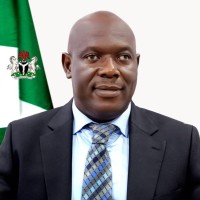
The Hydrocarbon Pollution Remediation Project (HYPREP) has commemorated the 15th anniversary of the release of the United Nations Environment Programme (UNEP) Environmental Assessment Report on Ogoniland, reaffirming its commitment to restoring the environment and improving the livelihoods of affected communities.
In a statement signed by the Project Coordinator, Prof Nenibarini Zabbey, to commemorate the anniversary, HYPREP described the anniversary as a significant milestone in Nigeria’s environmental restoration efforts, noting that the project has made remarkable progress in implementing the recommendations of the landmark UNEP report released on August 4, 2011.
The UNEP report had revealed extensive oil pollution across Ogoniland, severe environmental degradation, and serious public health risks resulting from decades of petroleum operations. It also recommended an initial $1 billion fund to commence the cleanup of the affected communities.
According to HYPREP, the Federal Government formally launched the Ogoni clean-up in 2016, while the Project Coordination Office was established in 2017 to drive the implementation of UNEP’s recommendations.
Zabbey said the current administration has continued to prioritise the project under the Renewed Hope Agenda.
Providing an update on the cleanup, the Project Coordinator disclosed that 30 of the 65 contaminated sites identified by UNEP have been fully remediated, while work is ongoing at several medium- and high-risk locations. It also stated that more than 1.5 million mangrove seedlings have been planted as part of what it described as the world’s largest restoration of oil-degraded mangroves, with over 1,000 hectares of shoreline already rehabilitated.
Zabbey further revealed that 49 Ogoni communities have been connected to potable water schemes through multiple water projects and booster stations aimed at providing safe drinking water across the region.
In the health sector, he said the 100-bed Ogoni Specialist Hospital in Kpite and the 43-bed Cottage Hospital in Buan are nearing completion, adding that several existing health facilities have been upgraded with modern medical equipment, while five ambulances have been donated to improve emergency healthcare services. The Project Coordinator also disclosed that a three-year human health biomonitoring study is being conducted in collaboration with the World Health Organization’s International Agency for Research on Cancer (IARC).
On economic empowerment, Zabbey stated that the Project has created more than 8,000 direct jobs and trained thousands of Ogoni youths and women in various vocational and technical skills, including software development, cybersecurity, aviation, commercial diving, seafaring, mechatronics, and creative arts. The project also reported awarding scholarships to more than 1,000 students, providing grants to small businesses, and supporting persons living with special needs through skills acquisition programmes.
The statement further highlighted ongoing legacy projects, including the Ogoni Power Project and the Centre of Excellence for Environmental Restoration, which it said is about 96 per cent complete. HYPREP also welcomed the recent designation of the Ogoni Wetland as a Ramsar Site of International Importance and pledged to continue promoting biodiversity conservation and sustainable management of the ecosystem.
Marking the anniversary, Zabbey said the progress achieved over the past 15 years demonstrates the collective commitment of government, development partners, stakeholders, and local communities to restoring Ogoniland. He called for renewed collaboration to sustain the cleanup effort, promote environmental sustainability, and support the long-term development of the region. 3
-

 News2 days ago
RSG Targets Nine Million Residents in Mosquito Net Distribution Campaign
-

 Oil & Energy2 days ago
Aiyedatiwa Signs New Electricity Bill
-

 Maritime2 days ago
Marine Minister Commends President Tinubu On NPERA Bill Assent
-

 Oil & Energy2 days ago
NLNG Commissions Research And Innovation Centre In RSU
-

 News2 days ago
KenPoly Holds Eight Convocations, August 29
-

 News2 days ago
RMAFC Completes Revenue Sharing Review, Proposes New Pay
-

 News2 days ago
RSG Begins Another Phase of Projects Commissioning Today
-

 Maritime2 days ago
NAGAFF Petitions IGP Over Alleged Maritime Police Harassment