
Nation
THE STATES

Adamawa
Adamawa State Government last Thursday inaugurated a special task force to tackle environmental problems confronting residents of Yola, the state capital.
Secretary to the State Government (SSG), Dr Umar Bindir, who inaugurated the committee in Yola, urged committee members to stop illegal hawking and trading within the area.
Bindir also advised the committee to remove all the temporary structures along major roads that were not in line with the township development master plan.
He also mandated the committee members to maintain and sustain clearing of drains as well as to control haphazard packing of vehicles along major roads.
Bindir, who directed members to submit their report within three months for implementation, enjoined, them to be fair to all citizens in the discharge of their assignment.
FCT
An NGO, Working to Advance STEM Education for African Women, says it plans to increase the participation of African women in Science, Technology, Engineering and Mathematics (STEM) to 10 per cent by the year 2025.
The Programme Officer of the foundation, Ms. Loveth Obi, made this known in a statement in Abuja on Thursday.
According to her, women can thrive in male dominated career if they are not afraid to take risks, adopt technology in their everyday lives and be abreast with innovations.
“WAAW foundation is working successfully to increase the number of African women in STEM with a target of 10 per cent increase by the year 2025.
“The takeover of technology in almost every business sector has opened up so many doors that the line between what is possible, and impossible has become almost invisible.
Kaduna
The National Orientation Agency (NOA), in Kaduna State has appealed to the people of the State to eschew violence and embrace dialogue to ensure peaceful co-existence.
The State Director of the agency, Zubairu Galadima, made the appeal in a statement signed by the Public Relations Officer of the agency, Patricia Onoja.
According to the director, peaceful co-existence, tolerance and unity are required to attain meaningful development in any society.
He said peace is a fragile commodity that needs to be nurtured always.
“No society can make any developmental progress if it’s citizens refuse to imbibe the culture of tolerance, peace, love and dialogue in resolving their differences.
Kano
The Kano State Agricultural Supply Company (KASCO) is to commence production of 30 metric tons of fertiliser per hour before the end of this year.
Its Managing Director, Alhaji Bala Mohammed, disclosed this when some members of the Northern Elders Forum, led by Prof Ango Abdullahi, visited the company on Wednesday in Kano.
“The state government had acquired new blending machine and nine containers have arrived in Apapa port.
“When the blending machine is installed, the issue of non-availability of fertiliser will be history in the North as it will produce between 25 and 30 metric tons of fertiliser per hour,”he said.
Katsina
A chieftain of the All Progressives Congress (APC) in Katsina State, Alhaji Yusuf Barrista, has called on elected officials to eschew making bogus promises and promoting political violence, especially among youths.
Barrista made the call in an interview with journalists in Dandume, last Thursday.
Barrista warned on the dangers of political violence, noting that such development would always subject the people to hardship and hindered development.
The chieftain stressed the need for more decorum and among politicians so that they could serve the people effectively.
He urged people, especially those living in the rural areas, not to entertain any candidate seeking for votes with bogus promises or capitalised on money to woo their votes.
Kogi
The Senior Special Assistant on Electronic Media to Gov. Yahaya Bello of Kogi State, Mr. Gbenga Olorunpomi, has said that the state government was not owing salaries of civil servants.
Olorunpomi told newsmen in Abuja last Thursday that the government had paid the salaries of all workers cleared by the recently concluded civil servants verification exercise.
“This government came to power at the time civil servants were on strike; the issue that led to the strike was that of the salaries owed to the workers for many months.
“At that time, all schools in the state were shut down; the government of Governor Yahaya Bello then decided that the only way to tackle this was to do total civil service verification.
“In the process, we found out that the state had plenty issues; about 83,000 personnel were withdrawing salaries from the state and this is a state that is barely 25 years old.
Nasarawa
Nasarawa State chapter of the Nigeria Union of Teachers (NUT), has donated educational materials worth N9 million to primary schools in the state.
Among the items shared out to head teachers of the schools in Lafia last Thursday were 5,500 copies of registers, 2,400 lesson note books, dusters and dossiers.
Its chairman, Mr Francis Jatau, who supervised the exercise, said that it was the second time the union was distributing educational materials to the schools.
He said that the union supplied the items after complaining severally to the government without any positive response.
“We do not have money but had to do this so that system will not degenerate further,” he said.
He said that the gesture was to complement government efforts.
Ogun
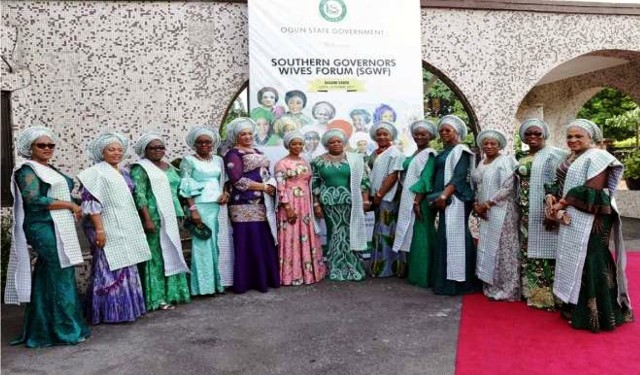
The Ogun State Government has announced the retirement of the General Managers of the State Television (OGTV), Mr Dele Bolujoko and State Broadcasting Corporation (OGBC), Mr Tunde Awolana.
The government last Wednesday advised the affected managers to proceed on compulsory retirement from the public service.
The Head of Service, Abayomi Sobande, said in a statement in Abeokuta that Governor Ibikunle Amosun, had accepted the notices of voluntary retirement of the affected General Managers.
Sobande said the retirement of the general managers took immediate effect.
“On behalf of the Governor of Ogun State, I wish to seize this opportunity to appreciate the contributions of these General Managers to the development of the state and wish them success in their future endeavours”, he noted.
Osun
A 37-year-old man, Mukaila Shamotu, was last Thursday, arraigned in an Osogbo Chief Magistrates’ Court for allegedly stealing food items valued at N109,000.
Shamotu of no fixed address is facing a two-count charge of burglary and theft.
The prosecutor, Insp. Rasak Olaiwola, told the court that the accused committed the offences between May 8 and May 9 at Ota-Efun area in Osun.
Olaiwola said Shamotu broke into the shop of Oyekan Funke and stole some food items: bag of rice, bag of beans, 25 litres of groundnut oil, and 25 litres of red oil among others, worth N109, 000.
Olaiwola said the offences contravened Sections 413 and 383 of the Criminal Code, Cap 34, Vol.11, Laws of Osun, 2003.
Sokoto
Governor Aminu Tambuwal of Sokoto State has called on All Progressives Congress (APC)-controlled States to key into Federal Government’s programmes and replicate its achievements in their domains.
He made the call at the opening of the Second Quarterly Meeting of Secretaries of State Governments (SSGs) controlled by APC in Sokoto on Thursday.
Tambuwal said that keying into Federal Government’s activities would ensure rapid socio-economic development of the nation.
“Almost two years after coming to power, the Federal Government has recorded significant achievements, especially in the areas of security, job creation, agriculture, education, youth empowerment among others.
“ Now that the nation is at a crossroad, it becomes imperative for all APC member-states to ensure that a worthy turning-point is propelled.
Zamfara
The Association of Local Government Chairmen of Nigeria (ALGON), Zamfara State chapter, has welcomed the peace talks with armed bandits initiated by the state government to address security challenges in the state.
The association made the commendation in a statement signed by its Chairman, Alhaji Bello Dankande, and made available to newsmen in Gusau, on Wednesday.
“The peace talks initiated by the state government has yielded positive results as thousands of the bandits have surrendered their weapons and denounced their criminal acts.
“This has also returned peace to all communities throughout the state and our people are now returning to their normal lives, “ Dankande said.
He said many markets which were closed as a result of activities of the bandits were now being reopened as the displaced members of affected communities were returning home.



The Hydrocarbon Pollution Remediation Project (HYPREP) has commemorated the 15th anniversary of the release of the United Nations Environment Programme (UNEP) Environmental Assessment Report on Ogoniland, reaffirming its commitment to restoring the environment and improving the livelihoods of affected communities.
In a statement signed by the Project Coordinator, Prof Nenibarini Zabbey, to commemorate the anniversary, HYPREP described the anniversary as a significant milestone in Nigeria’s environmental restoration efforts, noting that the project has made remarkable progress in implementing the recommendations of the landmark UNEP report released on August 4, 2011.
The UNEP report had revealed extensive oil pollution across Ogoniland, severe environmental degradation, and serious public health risks resulting from decades of petroleum operations. It also recommended an initial $1 billion fund to commence the cleanup of the affected communities.
According to HYPREP, the Federal Government formally launched the Ogoni clean-up in 2016, while the Project Coordination Office was established in 2017 to drive the implementation of UNEP’s recommendations.
Zabbey said the current administration has continued to prioritise the project under the Renewed Hope Agenda.
Providing an update on the cleanup, the Project Coordinator disclosed that 30 of the 65 contaminated sites identified by UNEP have been fully remediated, while work is ongoing at several medium- and high-risk locations. It also stated that more than 1.5 million mangrove seedlings have been planted as part of what it described as the world’s largest restoration of oil-degraded mangroves, with over 1,000 hectares of shoreline already rehabilitated.
Zabbey further revealed that 49 Ogoni communities have been connected to potable water schemes through multiple water projects and booster stations aimed at providing safe drinking water across the region.
In the health sector, he said the 100-bed Ogoni Specialist Hospital in Kpite and the 43-bed Cottage Hospital in Buan are nearing completion, adding that several existing health facilities have been upgraded with modern medical equipment, while five ambulances have been donated to improve emergency healthcare services. The Project Coordinator also disclosed that a three-year human health biomonitoring study is being conducted in collaboration with the World Health Organization’s International Agency for Research on Cancer (IARC).
On economic empowerment, Zabbey stated that the Project has created more than 8,000 direct jobs and trained thousands of Ogoni youths and women in various vocational and technical skills, including software development, cybersecurity, aviation, commercial diving, seafaring, mechatronics, and creative arts. The project also reported awarding scholarships to more than 1,000 students, providing grants to small businesses, and supporting persons living with special needs through skills acquisition programmes.
The statement further highlighted ongoing legacy projects, including the Ogoni Power Project and the Centre of Excellence for Environmental Restoration, which it said is about 96 per cent complete. HYPREP also welcomed the recent designation of the Ogoni Wetland as a Ramsar Site of International Importance and pledged to continue promoting biodiversity conservation and sustainable management of the ecosystem.
Marking the anniversary, Zabbey said the progress achieved over the past 15 years demonstrates the collective commitment of government, development partners, stakeholders, and local communities to restoring Ogoniland. He called for renewed collaboration to sustain the cleanup effort, promote environmental sustainability, and support the long-term development of the region. 3
-

 News2 days ago
RSG Targets Nine Million Residents in Mosquito Net Distribution Campaign
-

 Oil & Energy2 days ago
Aiyedatiwa Signs New Electricity Bill
-

 Oil & Energy2 days ago
NLNG Commissions Research And Innovation Centre In RSU
-

 Maritime2 days ago
Marine Minister Commends President Tinubu On NPERA Bill Assent
-

 News2 days ago
KenPoly Holds Eight Convocations, August 29
-

 News2 days ago
RSG Begins Another Phase of Projects Commissioning Today
-

 News2 days ago
RMAFC Completes Revenue Sharing Review, Proposes New Pay
-

 Maritime2 days ago
NAGAFF Petitions IGP Over Alleged Maritime Police Harassment