
Opinion
Teenagers And Mobile Phones

An empirical study about uses and abuses of mobile phones has revealed that teenagers are the most affected among mobile phones users. According to a 2007 study by research finn lGR, 50-70% of 12-14 years teenagers make use of mobile phones and the number is higher among 15-17 years old, it has also been observed that one in three teens sends more than 100 text messages a day or 300 texts in a month or less.
The possession of mobile phones by young people has been a global phenomenon in recent years and indeed an integral part of teenagers’ daily lives which for the majority the most popular form of electronic communication and undoubtedly the most beneficiary interactive hub for most teens around the globe.
Do these teenagers really need mobile phone? They would undoubtedly say that mobile phone is essential to their happiness and social standing.
Mobile phone which is firstly known for reaching out to families and friends through phone calls and text messages now with the development of technologies performs multipurpose task! functions with the aid of inbuilt applications like games, cameras, videos, music, internet access and social networking sites like Facebook, Twitter, We chat, Skype, whatsapp and so on it has whatsoever re-shaped, reorganized and altered several social facet particularly on teenagers.
Mobile phone usage among teenagers has both positive and negative impacts in their lives some of the advantages include, having information at their fin-gertips, with the rise of smart phones and internet access, information or ideas are guar-anteed, they source for information and familiarize them-selves with things around them. Homeworks and general studies are no longer as daunting/challenging as before.
Moreso, with the help of some useful applications and search engines like Dichongries, Wikchonaries, Google, Bing,Yahooetc, they search and research, gathering information and at the same time gaining more ideas on multiple issues and knowing what goes in the wider society hence, improving their knowledge.
Mobile phones also enable them to develop their skills, become creative by having the chance to practice creative thinking with the use of digital contents.
However; in abundance of skills opportunities, they avail themselves at that tender age to new opportunities like making stories out of pictures, creating movies, documentaries and also ameliorate their reading and writing skills using mobile phones.
Mobile phones have however improved connection and networking among teenagers in reaching their families and friends with the availability of social networking sites on mobile phones like face book, twitter, whatsapp, skype and others, they communicate/interact with their loved ones through chatting, exchange of pictures and video calls without missing a moment especially when distance is a barrier.
It also enhances their living and provides them with security like being able to reach out for help while in dangerous situations or getting directions in an unfamiliar terrains and also their parents being able to trace their whereabouts.
Mobile phones usage among teenagers acquaint them with so many things in the absence of their parents or caregivers, they are no longer ignorant of things around them, they read widely and explore by themselves, become knowledgeable on the difficulties formerly encountered, with internet access they clear their doubts.
Nevertheless, mobile phone usage among teenagers has been one of the problems seen in the society today, its negative impact has deluded the mind, behavior, attitudes of many young people today. For instance, in schools where mobile phones are allowed to be used by students in classrooms, they get easily distracted while lessons are going on because instead of encoding what is being taught, they rather engage themselves in chatting with friends, visiting one website to another. They no longer give proper time to their studies rather they spend much time playing games, listening to music watching videos, surfing the internet and texting with their mobile phones.
These teenagers, collect money from their parents for purchase of textbooks and other learning materials for school in return use the money for recharge cards and mobile subscription which will enable them gain access to internet where they download games, music, videos of all sorts which could be explicit in nature.
Due to over exposure to the internet, teens who are more vulnerable becomes victims of online bullying, intimidation and all forms of harassment by online preys. Sex predators trails minors who stay alone and try to take advantage of their innocence, how often we hear or read of a teenager whose life is endangered after chatting with an “innocent stranger” who turns out to have diabolic motives.
Moreso, teenagers are easily impressionable, the pressure to feel at par with their peers who use expensive mobile phones, irrespective of whether their parents can afford it or not can cause self esteem issues in such easily impressionable teens, this may resort to stealing, lying and extortion of money to be able to afford such.
Moreover they become so attached to their phones especially at home that they no longer know their responsibilities rather they spend much time texting, chatting, playing games, watching videos or surfing the internet and this addiction can cause danger to their health like brain tumor due to the phone radiation, lack of concentration or sleep deprivation.
As vulnerable/impression-able these teens could be, from exchange of phone numbers, the female gender thus, begin to develop feelings towards the male counterparts and can be lured into deceitful act like sex exchange of explicit photograph hence at that tender age they become exposed to sexual activities.
Due to over exposure to internet activities, as they visit one website to another, downloading all sorts of applications, games, videos irrespective of age restriction, they become victims of harmful contents online. Sometimes, they are misled by the information seen online as a result, they begin to see the world from another perspective.
Chisom resides in Port Harcourt
Onyia Chisom



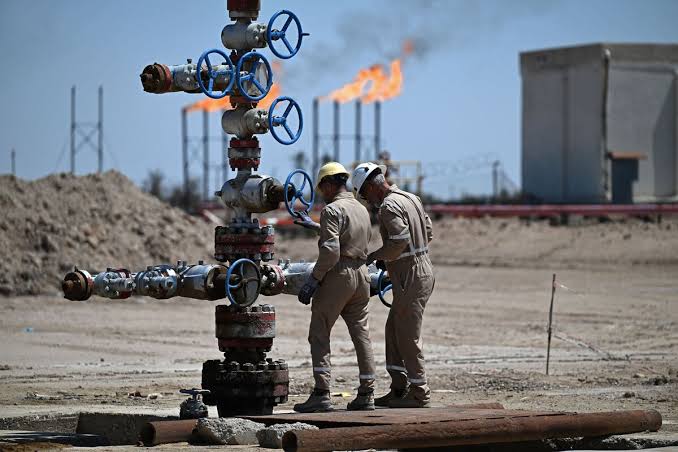
Quote: “No oil vessel, commercial contract or operational deadline is worth the loss of innocent lives; where environmental grievances are ignored and dialogue gives way to confrontation, the entire society pays a price that no compensation can adequately erase.”

Quote:”The value of wealth is
Will and gifts are subjects
A Will is an important legal
Where documentation is
This does not mean every
Properly completed lifetime
Property owners must also
My appeal is simple: let us
-

 Education2 days ago
FCE Yola Graduates 3,555 Teachers , Seeks Upgrade to University
-

 Sports2 days ago
Nigerian Trio Target Titles At PFL Africa Finals
-

 Niger Delta2 days ago
Diri Restates Stance On Lagos-Calabar Coastal Highway
-

 Niger Delta2 days ago
C’River, NUJ Pay Tribute To Late Guardian Editor
-

 News2 days ago
NDLEA Recovers Tons Of Illicit Drug Consignments In Nine States
-

 Opinion2 days ago
Checking Voter Apathy In Nigeria’s Electoral Process
-

 Politics2 days ago
2027: DICKSON’S EX-ALLY VOWS TO WORK AGAINST NDC INTEREST IN BAYELSA
-

 Politics2 days ago
2027: GROUP PLEDGES 40,000 SUPPORTERS FOR COALITION CANDIDATES IN RIVERS