
Nation
THE STATES

Adamawa
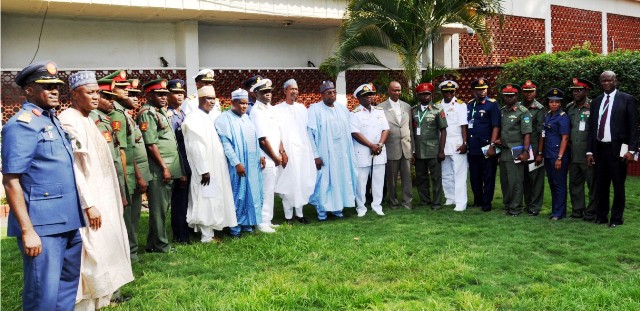
The Adamawa State Commissioner for Information and Strategy, Malam Ahmad says that, the state government Sajoh, has set up a High Powered Committee to resuscitate all skills acquisition centres in the state.
Sajoh, told newsmen, Thursday in Yola that the decision was taken at the State Executive Council meeting on Wednesday.
Sajoh said that, the committee had Gov.Bindow Jibrilla as chairman with some commissioners and some stakeholders in empowerment and poverty alleviation as members.
“The new focus of this government is youth empowerment, we are reappraising the skills acquisition centres.
“We have taken it so seriously that council has set up a High Powered Committee with the Governor as the Chairman and Chief of Staff to the Governor as Vice-Chairman.
Benue
The National Population Commission (NPC), last Thursday said, it has started the third phase of the Enumeration Area Demarcation (EAD) in Benue State for the 2018 National Population Census.
Mrs Patricia Kupchi, NPC Federal Commissioner in Benue, told newsmen in Makurdi that, the exercise started in Ohimini Local Government Area of the state.
She said that, enumerators would move round communities in the area to number and divide houses into enumeration areas, using satellite maps.
According to her, the exercise is aimed at dividing the enumeration areas into smaller units for effective census coverage.
FCT
Foreign Affairs Minister, Geoffrey Onyeama says, Nigeria is in need of about one billion dollars (N314.8bn) for recharging of drying Lake Chad.
The minister told newsmen last Wednesday in Abuja that the fund would also take care of the humanitarian needs of persons affected by Boko Haram insurgency in North East Nigeria.
Onyeama said that, an international conference of donor countries and agencies has been scheduled in Oslo, Norway, to raise the funds on February 24.
He said the conference was being put together with the support of Germany and Norway, who galvanised the international community to support Nigeria’s efforts in addressing its humanitarian challenge.
Jigawa
Director of Jigawa State Primary Health Care Development Agency, Dr Shehu Sambo, last Thursday said, 3,260 children below the age of five in the state had died of malnutrition between 2010 and 2016.
Sambo disclosed this in a paper presentation on overview of Community-Based Management of Acute Malnutrition at the ongoing advocacy meeting on management of severe acute malnutrition by UNICEF, Bauchi field office.
He explained that, 36,271 out of 280,980 children admitted within the period under review were defaulters who did not complete treatment, hence some of them might have died thereafter while 20,226 of them were cured.
The Director noted that, it was worrisome that over 800 children died of malnutrition in the state in 2016 alone.
Katsina
The Katsina State Government says it has earmarked N12.3 billion for the completion and rehabilitation of some dam projects to boost water supply and irrigation in the state.
The Special Adviser to the Governor on Budget and Economic Planning, Alhaji Abdullahi Imam, said this during a news conference on Thursday in Katsina.
He said N5 billion had been set aside for the completion of Zobe water supply project in Dutsin-ma Local Government Area of the state.
Imam said that, when completed, the project would improve water supply to Kankia, Charanchi, Bindawa, Rimi Batagarawa and Katsina Local Government Areas.
“Government also sets aside N3 billion for the regional water supply in Danja Local Government Area to boost water supply and irrigation, particularly tomato and sugarcane production.
Kano
Kano State Executive Council has approved N780 million for the continuation of projects in various sectors in the state.
The state Commissioner for Information, Malam Muhammad Garba, made this known while briefing newsmen on the outcome of the State Executive Council meeting on Thursday in Kano.
Garba explained that, N60 million was approved for the procurement of chairs and desks for schools by the Ministry of Education.
Garba also said that, 37 junior secondary schools would be upgraded to Senior Secondary Schools and 66 new Junior Secondary Schools would be constructed.
Kogi
Kogi State House of Assembly last Wednesday in Lokoja passed the 2017 appropriation bill of N174.8 billion for the fiscal year.
The bill, passed during special plenary sitting in Lokoja, was based on expected revenue of N174.8 billion and an expenditure of same figure, giving it a balanced outlook.
The budget is made up of Recurrent Revenue of N81.66 billion and Capital Receipts of N93.18 billion as well as Recurrent Expenditure of N58.531 billion and Capital Expenditure of N116.320 billion, amounting to N174.851 billion.
Passage of the Appropriation Bill followed the adoption of report of the Assembly’s Committee on Appropriation and Budget Monitoring as well as clause-by-clause consideration by the Committee of the Whole during the special sitting.
Kwara
The Kwara State Government has earmarked N3.2billion for the take-off of two new campuses of the Kwara State University (KWASU) to be sited in Osi and Ilesa-Baruba.
The state Commissioner for Information and Communication, Alhaji Babatunde Ajeigbe, disclosed this on Thursday during a news conference on the outcome of the State Executive Council’s meeting held on Wednesday, February 22.
The briefing was also attended by the Special Adviser to the governor on Legal Matters, Mr Suleiman Atolagbe, the Senior Special Assistant (SSA), Dr Muideen Akorede and the Chief Press Secretary (CPS), Alhaji Abdulwahab Oba.
Ajeigbe said, the N3.2 billion was for the construction of roads, students’ hostels, lecture theatres, offices and water reticulation for the two campuses.
Lagos
The raid of Sango Ota Rice Garage last Tuesday night by operatives of the Nigeria Customs Service (NCS) sent “shivers down the spines” of Alaba Rago market rice sellers in Lagos.
The sellers, who expressed fear of a raid by officials of the Customs Service, had adopted more strategies to woo customers.
Some of the sellers told newsmen last Thursday in Lagos that Customs officials ought to restrict their operations to the borders.
According to them, there is no reason for Customs to go into the markets to harass sellers whose business is to sell the commodity and fend for their families.
Nasarawa
The National Union of Road Transport Workers (NURTW) says it has commenced training of drivers on safety strategies to adopt while transporting pregnant women with complications to health facilities.
The Consultant of the NURTW Emergency Transport Scheme Alhaji Ismail Balogun, made this known on Thursday in Lafia, Nasarawa State, while addressing members of the union.
Balogun said that the training was to curb the increasing rate of maternal mortality.
He said that 30 drivers selected from Doma and Nasarawa-Eggon Local Government Areas of the state would benefit from the scheme.
According to him, the training will focus on the safety strategies to adopt while transporting pregnant women with complications to health facilities for proper medical attention.
Ogun
The management of the Home Grown School Feeding Programme in Ogun State last Thursday assured that it remained committed to effective service delivery to benefitting pupils across public primary schools in the state.
The Programme Manager, Mrs Tinuola Shopeju, stated this during an interactive session with food vendors engaged under the programme in Abeokuta-North and Abeokuta-South local government areas of the state.
Shopeju explained that additional vendors would be considered to adequately meet the demands of the beneficiaries.
She assured that the department would sustain the interaction with the vendors at regular intervals, to ensure prompt service delivery and feedback towards resolving various challenges confronting them.
The programme manager enjoined them not to hesitate to forward their observations, as and when due, for necessary attention.
Plateau
A total of 450 entries from 32 secondary schools across Plateau State have been received for this year’s Plateau Internal Revenue Service (PSIRS) Essay Writing Competition.
The students are expected to write on taxation in the state, and specifically offer suggestions toward enhancing such receipts in Plateau.
The Chairman of the eight-man panel of judges assessing the entries, Chief Vonjen Lar, disclosed this to newsmen last Wednesday in Jos.
Lar, a retired Permanent Secretary, described the response from the students and schools as, “very positive and “encouraging”.
“We have already started marking the scripts; we shall move through various stages and eventually arrive at the best three.



As the world marked the 2026 International Day of the Girl Child on Sunday, October 11, 2026, a non-governmental organisation, Stand Up for Women Society (SWS) has intensified its campaign against child marriage, urging schoolgirls to prioritise education, protect their rights and develop skills for a better future.
The organisation joined the global observance of the day under the theme, “International Day of the Girl Child: End Child Marriage and Invest in Girls’ Rights,” with a sensitisation programme at Government Girls Secondary School, Oromenike, D-Line, Port Harcourt, Rivers State.
Led by its Vice Chairperson, Daba Benebo, the group engaged the students in discussions on the dangers of early marriage, teenage pregnancy, sexual abuse and other challenges that threaten the education, safety and development of the girl child.
Speaking during the programme, Benebo urged the students to reject early marriage and remain focused on their studies, stressing that education would empower them to make informed decisions about their lives and future.
She cautioned the girls against allowing anyone to deprive them of their right to education and dignity, advising them to report cases of harassment, abuse and other violations of their rights to the appropriate authorities.
Benebo assured the students that SWS remained available to support them whenever they encountered violations of their rights.
She also encouraged them to maintain discipline and responsible conduct while avoiding behaviours that could expose them to negative influences and jeopardise their future.
Beyond formal education, the SWS vice chairperson urged the students to acquire vocational skills that could provide additional opportunities for economic independence and help them navigate future challenges.
The sensitisation programme, enlivened by singing, dancing and to share their views and experiences on issues affecting the girl child interactive sessions, provided an opportunity for the students to share their views and experiences on issues affecting the girl child.
One of the major issues raised during the discussion was the appropriate age for marriage. While some participants maintained that 18 years was the constitutionally approved age, the discussion highlighted the need to consider not only age but also the maturity, preparedness and responsibilities associated with marriage.
The speaker stressed that marriage required adequate mental and emotional preparation, as well as the capacity to shoulder its responsibilities.
She therefore advised the students to concentrate on acquiring a sound education before considering marriage, noting that education would equip them with the knowledge and skills needed to make responsible decisions and manage family life.
The issue of teenage pregnancy also featured prominently during the question-and-answer session.
In addressing the subject, the speaker explained that pregnancy could occur even at the age of 12, using the example to underscore the vulnerability of young girls to the consequences of early sexual activity.
She advised the students to avoid sexual intercourse and prioritise their education, personal safety and future aspirations.
The discussion also examined the difficulties some girls encounter when living with hostile spouses, relatives or guardians.
Benebo encouraged the students to cultivate patience, humility and diligence, noting that these qualities could help them navigate difficult situations and build a brighter future.
However, she warned that patience and humility should never be interpreted as an obligation to endure violence, abuse or degrading treatment.
She urged girls experiencing hostile or abusive living conditions to seek help from their parents, trusted adults or appropriate support services rather than remain in environments that could expose them to physical or emotional trauma.
“When such happens, please return to your parents and engage in petty trade or learn a skill to support your education rather than stay in a hostile environment,” Benebo stressed.
The programme also underscored the importance of protecting girls from early marriage and other harmful practices that can disrupt their education, compromise their well-being and limit their opportunities in life.
It also reinforced the need for families, schools, communities and relevant organisations to work together to ensure that girls have access to education, vocational training, protection and the support they need to realise their potential.
For SWS, the message was clear: empowering the girl child begins with protecting her rights, investing in her education and equipping her with the confidence and skills to make informed choices about her future.
Stories by Kevin Nengia
The Egberipapa Foundation has unveiled a mass transit scheme aimed at easing transportation difficulties and improving connectivity among communities in the three Kalabari local government areas of Asari-Toru, Degema and Akuku-Toru in Rivers State.
The initiative, established by former Caretaker Committee Chairman of Akuku-Toru Local Government Council, High Chief Sobomabo Jackrich, popularly known as Egberipapa, is designed to make transportation more accessible and affordable for residents across the Kalabari area.
The scheme was launched on Monday, October 12, 2026, and is expected to address longstanding transportation challenges confronting residents, particularly those in riverine and hard-to-reach communities.
Communities expected to benefit from the initiative include Krakrama, Minama, Angulama, Sangama, Omekwe-Tariama and Omekwe-Ama.
The project is expected to ease movement within and beyond the Central Group area, while providing residents with a more convenient means of transportation for their daily activities.
For decades, transportation difficulties have posed significant challenges to several Kalabari communities, making movement between settlements both cumbersome and expensive. These challenges have also affected commercial activities, social interactions and access to essential services.
The introduction of the mass transit scheme is therefore expected to provide relief to residents, strengthen inter-community connections and stimulate economic activities across the benefiting communities.
Beyond improving mobility, the initiative could contribute to community development by facilitating the movement of people and goods, supporting local businesses and enhancing social and economic interactions within the Kalabari area.
As the scheme gets underway, attention will be focused on its implementation, accessibility and sustainability, as well as its capacity to deliver lasting transportation benefits to the target communities.
The initiative represents a potentially significant step towards addressing transportation challenges and promoting grassroots development across the Kalabari Kingdom.
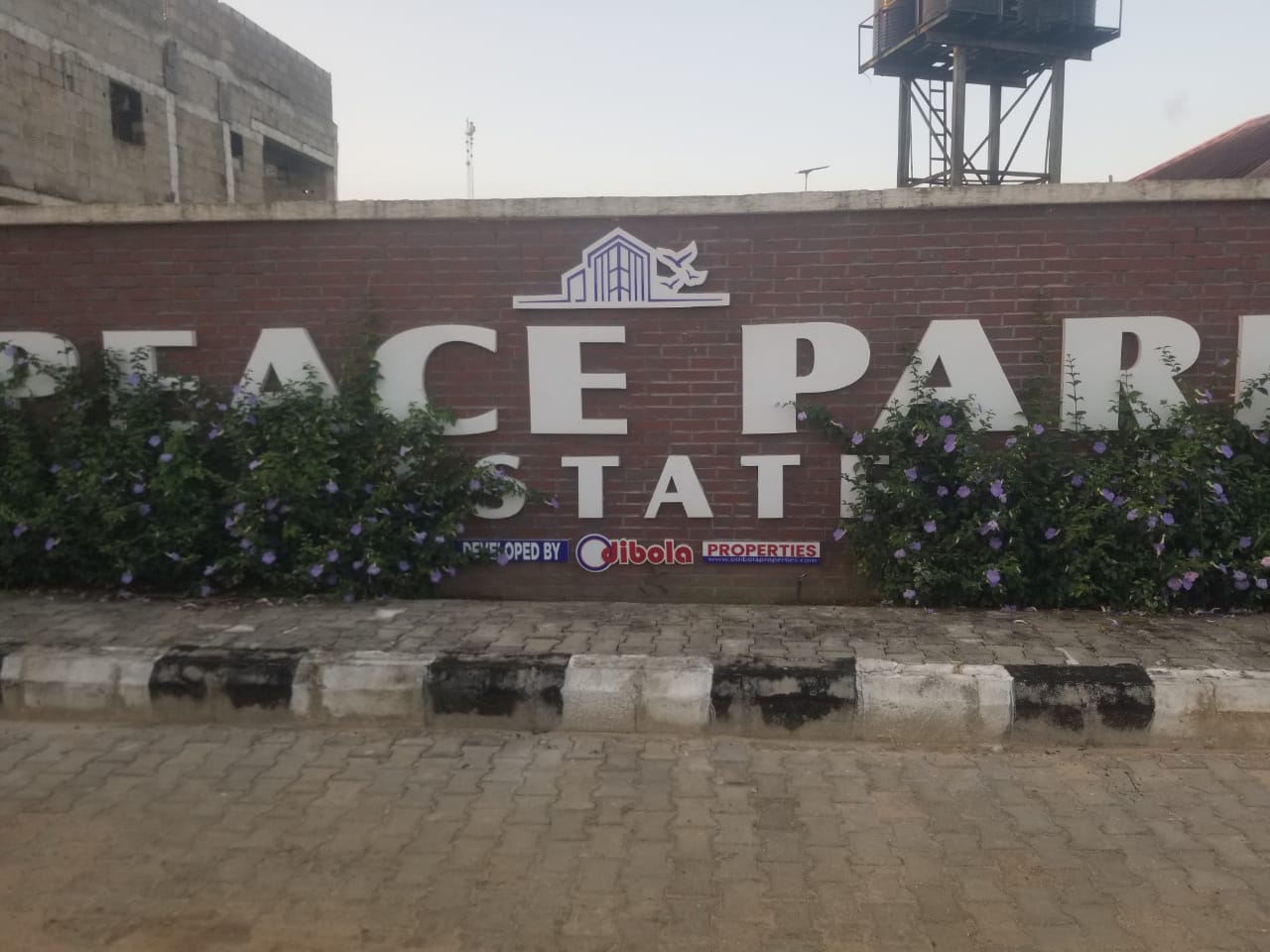
The Amaewhule family of mbodo Aluu in Ikwerre Local Government Area of Rivers State has cautioned members of the public against entering into any land transaction involving a disputed property known as “Ada Oro Fam Land,” located behind the OPM Church along Airport Road.
The family, through its legal counsel, Barrister Ndubuisi Agumagu, issued the warning amid an ongoing legal dispute over the ownership and control of the property, which is said to comprise more than 900 plots of land.
The matter is currently before the Isiokpo High Court of Rivers State in a suit numbered IHC/246/CS/2026, presided over by Justice Sobere Biambo.
The claimants in the suit include Chief Green Amaewhule and others, while Fabulous Amaewhule and Odibola Properties are listed among the respondents.
Counsel to the Amaewhule family, Barr Ndubuisi Agumagu, advised prospective land buyers and members of the public to exercise caution and refrain from purchasing any portion of the disputed property pending the determination of the case by the court.
According to the legal counsel, the property is a family estate belonging collectively to the Amaewhule family, and no individual member of the family has the authority to unilaterally dispose of portions of the land.
The counsel specifically maintained that Fabulous Amaewhule, one of the respondents in the suit, does not have the legitimate authority, according to the family’s position before the court, to sell portions of the disputed property.
The family further warned that anyone who proceeds to purchase land from the respondents while the matter remains before the court would be doing so at their own risk.
It stressed that such buyers could potentially lose their investments should the court eventually deliver judgment against the validity of the transactions.
The legal team said the warning became necessary to prevent unsuspecting members of the public from committing their resources to a property whose ownership and right of disposition are currently the subject of judicial determination.
The family also urged prospective investors, developers and land buyers to conduct proper legal inquiries and obtain independent verification of the status of the property before committing funds to any transaction relating to it.
The Amaewhule family said its position was intended to protect members of the public from possible financial losses and further legal complications while the case remains sub judice, stressing that interested parties should await the final determination of the court.
Akujobi Amadi