
Opinion
Curbing The Menace Of Herdsmen
Like defence, security is one area any government that is worth its salt should prioritise. In fact, security of lives and properties should be the number one priority of every government. This is because it is the only ‘manifestoe’ that is explicitly stated in the constitution. Infact, advanced democracies spend a substantial percent of their gross national product (GNP) on defence and security.
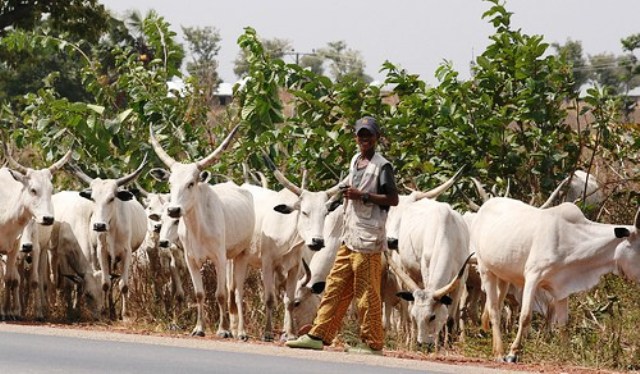
There is no doubt that Nigeria is currently under economic and security challenges. For instance, the increasing heinous activities of the Fulani herdsmen in the North are worrisome. The way and manner they perpetrate the acts of killing and destruction of properties as well as farm crops without any form of intervention by the Federal Government has attracted different comments and expression of ill-feelings from many Nigerians.
For instance, Ekiti State Governor, Ayodele Fayose recently accused the Federal Government of giving tacit support to the members of the Miyetti Allah Cattle Breeders Association of Nigeria (MACBAN) to invade the state and kill innocent citizens.
According to Fayose, a statement issued by the group on Saturday, October 22, 2016 openly threatening to wage war against Ekiti State government and the people under the pretext that four cattle belonging to its members were killed by the Ekiti Grazing Enforcement Marshal (EGEM), without the Federal Government cautioning the group confirmed that it is giving the group a covert support.
At a press conference in Ado Ekiti, he said; “the silence of the Federal Government has no doubt further confirmed the insinuation that there is an alleged plot by the herdsmen to invade some border towns and villages in Ekiti and cause chaos, so as to justify the evil agenda of declaration of a state of emergency on the state.”
Fayose recalled that over 1,000 people were killed in Benue State in May, last year during which the association said the reason was for the killing of over 800 cattle by the Tiv youths, noting that “up till now, no one has been arrested for the massacre”.
Also in August, 2016, suspected herdsmen were on the prowl in Kobin village, Sanga Local Government Area, where about 20 people were mowed down.
In fact, the menace is not restricted to the North. A number of killings, raping, kidnapping and wanton destruction of property and farmlands by herdsmen has been recorded in other parts of the country in recent times.
Women from Ossissa community in Ndokwa-East Local Government Area of Delta State recently blocked the Ughelli-Asaba Expressway for about seven hours to protest alleged incessant harassment by suspected Fulani herdsmen. The protesters demanded that the Fulani herdsmen should vacate their land as people can no longer go to their farms for fear of being attacked by Fulani herdsmen.
Angered by the nefarious acts of the marauders all over the country, the Sultan of Sokoto, Alhaji Muhammad Sa’ad Abubakar III urged the Federal Government to commence prosecution of any arrested killer herdsman in order to show that government is serous in its fight against insecurity in the country.
President Muhammadu Buhari has at several occasions reiterated his government’s commitment to get rid of security threats and violent crimes in every part of Nigeria. If the President meant his words, he must restructure his security institutions or apparatuses to counter the terrorism posed by Fulani herdsmen. This has become necessary because weak security institution partly aids the spread of insurgency.
The Federal Government should develop the political will to confront the ravaging herdsmen who are equally dangerous as the Boko Haram insurgents. The government cannot succeed if it is unable to meet its basic responsibilities to the people. As a responsible government, this administration should not relent to secure a better Nigeria for our children.
The Federal Government should as a matter of security considerations regulate the activities of herdsmen through a legislation or law to ensure that the practice of cattle rearing does not constitute a security risk to anyone.
There are very terrible herdsmen whose utmost aim is to clash with farmers and kill. They behave as criminals and so must be treated as criminals. Therefore, the Federal Government should arrest and prosecute killer herdsmen to serve as deterrent to others.
It is disheartening to note that Nigeria is more divided along ethnicity and religion than ever before. This poses serious threat to our unity. There is the need for the North and all other ethnic groups in the country to strive to re-unite Nigeria and stop all kinds of killing in the name of ethnic, political or religious rivalry or fanaticism.
The Federal Government on its part should intervene and find out the root cause(s) of the incessant clashes between herdsmen and farmers.
It is also disheartening to observe that many commissions of inquiries and peace committees instituted to trace the causes of the several cases of killing and crises allegedly caused by Fulani herdsmen in different parts of the North and others have been unsuccessful. All the recommendations for solutions have hit the rock largely because the Federal Government, past and present, did not display political will to implement the recommendations of the panels.
It is scandalous that since the escalation of the crises in 2011, not a single person has been arrested, prosecuted and convicted for the several murders that have traces of herdsmen terrorism. It could be thought that the failure of government to apprehend and prosecute the perpetrators of the heinous crimes in Southern Kaduna and elsewhere seem to encourage the propensity for violence as means of redressing perceived grievances. So, government must take pro-active measures against killer herdsmen before it gets out of hands.
Shedie Okpara

Opinion
Time and Season Can Tell
Opinion
Why Adaeze Deserves A Second Chance
Opinion
Empowering Youth Through Agriculture
Quote:”While job seeking youths should continuously acquire skills and explore opportunities within their immediate environment as well as in the global space through the use of digital platforms, government, corporate/ multinational organizations or the organised private sector should generate skills and provide the enabling environment for skills acquisition, through adequate funding and resettlement packages that will provide sustainable economic life for beneficiaries”.
The Governor of Rivers State, Sir Siminalayi Fubara, recently urged youths in the Rivers State to take advantage of the vast opportunities available to become employers of labour and contribute meaningfully to the growth and development of the State. Governor Fubara noted that global trends increasingly favour entrepreneurship and innovation, and said that youths in Rivers State must not be left behind in harnessing these opportunities. The Governor, represented by the Secretary to the State Government, Dr Benibo Anabraba, made this known while declaring open the 2026 Job Fair organised by the Rivers State Government in partnership with the Nigeria Employers’ Consultative Association (NECA) in Port Harcourt. The Governor acknowledged the responsibility of government to create jobs for its teeming youth population but noted that it is unrealistic to absorb all job seekers into the civil service.
“As a government, we recognise our duty to provide employment opportunities for our teeming youths. However, we also understand that not all youths can be accommodated within the civil service. This underscores the need to encourage entrepreneurship across diverse sectors and to partner with other stakeholders, including the youths themselves, so they can transition from being job seekers to employers of labour,” he said. It is necessary to State that Governor Fubara has not only stated the obvious but was committed to drive youth entrepreneurship towards their self-reliance and the economic development of the State It is not news that developed economies of the world are skilled driven economies. The private sector also remains the highest employer of labour in private sector driven or capitalist economy though it is also the responsibility of government to create job opportunities for the teeming unemployed youth population in Nigeria which has the highest youth unemployed population in the subSahara Africa.
The lack of job opportunities, caused partly by the Federal Government’s apathy to job creation, the lack of adequate supervision of job opportunities economic programmes, lack of employable skills by many youths in the country have conspired to heighten the attendant challenges of unemployment. The challenges which include, “Japa” syndrome (travelling abroad for greener pastures), that characterises the labour market and poses threat to the nation’s critical sector, especially the health and medical sector; astronomical increase in the crime rate and a loss of interest in education. While job seeking youths should continuously acquire skills and explore opportunities within their immediate environment as well as in the global space through the use of digital platforms, government, corporate/ multinational organizations or the organised private sector should generate skills and provide the enabling environment for skills acquisition, through adequate funding and resettlement packages that will provide sustainable economic life for beneficiaries.
While commending the Rivers State Government led by the People First Governor, Sir Siminilayi Fubara for initiating “various training and capacity-building programmes in areas such as ICT and artificial intelligence, oil and gas, maritime, and the blue economy, among others”, it is note-worthy that the labour market is dynamic and shaped by industry-specific demands, technological advancements, management practices and other emerging factors. So another sector the Federal, State and Local Governments should encourage youths to explore and harness the abounding potentials, in my considered view, is Agriculture. Agriculture remains a veritable solution to hunger, inflation, and food Insecurity that ravages the country. No doubt, the Nigeria’s arable landmass is grossly under-utilised and under-exploited.
In recent times, Nigerians have voiced their concerns about the persistent challenges of hunger, inflation, and the general increase in prices of goods and commodities. These issues not only affect the livelihoods of individuals and families but also pose significant threats to food security and economic stability in the country. The United Nations estimated that more than 25 million people in Nigeria could face food insecurity this year—a 47% increase from the 17 million people already at risk of going hungry, mainly due to ongoing insecurity, protracted conflicts, and rising food prices. An estimated two million children under five are likely to be pushed into acute malnutrition. (Reliefweb ,2023). In response, Nigeria declared a state of emergency on food insecurity, recognizing the urgent need to tackle food shortages, stabilize rising prices, and protect farmers facing violence from armed groups. However, without addressing the insecurity challenges, farmers will continue to struggle to feed their families and boost food production.
In addition, parts of northwest and northeast Nigeria have experienced changes in rainfall patterns making less water available for crop production. These climate change events have resulted in droughts and land degradations; presenting challenges for local communities and leading to significant impact on food security. In light of these daunting challenges, it is imperative to address the intricate interplay between insecurity and agricultural productivity. Nigeria can work toward ensuring food security, reducing poverty, and fostering sustainable economic growth in its vital agricultural sector. In this article, I suggest solutions that could enhance agricultural production and ensure that every state scales its agricultural production to a level where it can cater to 60% of the population.
This is feasible and achievable if government at all levels are intentional driving the development of the agricultural sector which was the major economic mainstay of the Country before the crude oil was struck in commercial quantity and consequently became the nation’s monolithic revenue source. Government should revive the moribund Graduate Farmers Scheme and the Rivers State School-to-Land agricultural programmes to operate concurrently with other skills acquisition and development programmes. There should be a consideration for investment in mechanized farming and arable land allocation. State and local governments should play a pivotal role in promoting mechanized farming and providing arable land for farming in communities. Additionally, allocating arable land enables small holder farmers to expand their operations and contribute to food security at the grassroots level.
Nigeria can unlock the potential of its agricultural sector to address the pressing needs of its population and achieve sustainable development. Policymakers and stakeholders must heed Akande’s recommendations and take decisive action to ensure a food-secure future for all Nigerians.
By: Igbiki Benibo
-
Politics4 days agoAPC Releases Adjusted Timetable For Nationwide Congresses, Convention
-
Sports21 hours ago2026 WC: Nigeria, DR Congo Awaits FIFA Verdict Today
-
Sports4 days ago
DG NIS Wants NSC Board Constituted, Seeks Increased In Funding
-
Business4 days agoCustoms Seek Support To Curb Smuggling In Ogun
-
Featured4 days agoINEC Proposes N873.78bn For 2027 Elections, N171bn For 2026 Operations
-
Sports4 days agoSWAN Rivers Set-up Five Functional Committees
-
News4 days ago
Police Bust Kidnapping Syndicate In PH
-
Sports4 days ago
NSC Disburses N200m Training Grants To 26 Athletes
