
Nation
THE STATES

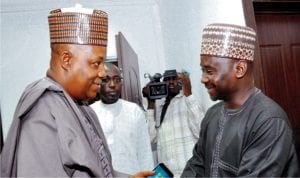
Director General, National Emergency Management Agency (nema), Alhaji Sani Sidi (right), welcoming Governor Kashim Shettima of Borno State to nema headquarters in Abuja, recently.
Borno
The Borno State Command of the Nigeria Security and
Civil Defence Corps (NSCDC) has arrested a dismissed police corporal for allegedly extorting money from members of the public.
The Commandant of the corps, Mr Ibrahim Abdullahi, made the disclosure in an interview with newsmen in Maiduguri.
Abdullahi said that the suspect was arrested at the post office area in Maiduguri, following intelligence reports.
He said that the 27-year-old former policeman, who gave his name as Hussaini Musa, was dismissed from the Kano State Police Command.
“The suspect is not holding any identification card so he uses some of his pictures to deceive people that he is an officer.
“He came to Borno State on a visit to his grandparents and decided to open his own police custody.
Ekiti
An Ado-Ekiti Magistrates’ Court has remanded 27-
year-old Sunday Opesanmi;40-year-old Falilat Odesanmi, and a minor in prison custody over alleged kidnap of two children.
Prosecutor Bayo Ajiboye told the court that the accused persons committed the offence on March 30 at Ise-Ekiti.
He alleged that the accused, on the said date, unlawfully kidnapped two children of the same parent, and kept them in an uncompleted building at the outskirt of Ise-Ekiti.
“The offence is punishable under Section 3 and 4 of Ekiti State Kidnap and Terrorism Laws 2005.
Ajiboye said that he had duplicated their case file and sent to the Director of Public Prosecution (DPP) for legal advice.
FCT
The Nigerian Conservation Foundation (NCF), has
called for the proper management of Trees Outside the Forests (TOFs) as an alternative to recovering the 25 per cent recommended forests cover in the country.
The Director General of the foundation, Mr Adeniyi Karunwi made the call in an interview with newsmen in Abuja.
Trees Out side Forests (TOFs) according to the Food Agriculture Organisation (FAO), are trees found on agricultural, grazing, and unproductive lands along canals, railways, roads and in human settlements.
According to him, the trees play an important role in urban greening and regulation of micro-climate.
“It becomes pertinent to put our interests in Trees Outside Forests (TOFs) and the role they play in urban greening and regulation of the micro-climate”, he said.
Kaduna
A new Commissioner of Police, Mr Adamu Ibrahim has
assumed duty in Kaduna State.
Ibrahim, a member of the National Institute of Policy and Strategic Studies, took over from Mr Umar Shehu.
A statement made available to newsmen in Kaduna by the Command’s Public Relation Officer, DSP Abubakar Zubairu, did not indicate the reason for the deployment,
According to the statement the new CP hails from Ruwan Dorowa in Maru Local Government Area of Zamfara.
He joined the service in 1986 and was at one time the Deputy Force Secretary and also served as CP in Abia.
Ibrahim , who has a degree in Geography from University of Sokoto and Masters in Law Enforcement and Criminal Justice from Ahmadu Bello University, Zaria, had attended many professional courses.
Kano
The Kano State Ministry of Land and Physical Plan
ning has constituted a technical committee on land allocation for the construction of petrol stations.
The information is contained in a statement issued by the ministry’s Public Relations Officer, Alhaji Balarabe Abdullahi, which was made available to newwmen.
The statement quoted Abdullahi as saying the committee was mandated to screen applications for the construction of filling stations in the state.
He stated that “the screening will enable the committee to verify the distance between one filling station and another, as well as the suitability of proposal on location of the filling stations.”
He then urged the committee members to work hard toward realising the objectives for which the committee was set.
Kebbi
The Kebbi State Government said it had released N314
million for the payment of registration and tuition fee for indigent students in national and foreign institutions.
Dr Sahabi Yauri, the Executive Secretary of the state’s Scholarship Board, disclosed this in an interview with newsmen in Birnin Kebbi recently.
Yauri said that out of the amount, N147 million was for tuition, registration and tenancy for 30 indigent students studying Medicine in Indian universities.
He added that N97 million was for the fees of 30 students studying Medicine, Dentistry and Surgery in Sudanese universities, while N70 million was for 5,000 indigent students studying in tertiary institutions in the country.
Lagos
The Association of Marine Engineers and Surveyors
(AMES) in Nigeria said it had postponed the forthcoming Maritime Technical Summit to enable the Secretariat readjust the logistics for members coming from outside Lagos State.
The AMES President, Mr Charles Uwadia stated this in an interview with newsmen in Lagos.
He said that the event earlier scheduled for April 11 would hold on April 21.
According to him, the key issue to top the agenda of the Maritime Technical Summit is “Challenges of Maritime Transport Industry in Nigeria,”
“We want to use this summit to advise stakeholders and government on how to maintain their vessels, and how to eliminate sub-standard vessels in our waters.”
Nasarawa
The District Head of Akwanga in Nasarawa State, Chief
Anthony Yamusa, has called on Nigerians to live in peace and tolerate one another irrespective of ethnic, religious and political affiliation.
Yamusa made the call during the presentation of staff of office and certificate to Mr John Enakuaza, the newly appointed Wakili Eggon community of Kurmin Tagwaye, Akwanga Local Government Area of the state.
He said that peace, tolerance and unity were drivers of national development.
“The importance of traditional institution to the socio-economic development of any society cannot be over emphasized, hence the need for the installation and presentation of the certificate of office to Wakili Eggon of Kurmin Tagwaye so as to promote peace among his subjects.
Niger
President Muhammadu Buhari has enjoined the Nige
rian Armed Forces to sustain the tempo in the ongoing war against insurgency in the North-East of the country to stamp out terrorism.
Buhari gave charge while inaugurating the Nigerian Army Properties Limited (NAPL) mega filling station in Minna.
The president was represented by the Chief of Defence Staff (CDS), Gen. Abayomi Olonisakin.
Buhari said: “I applaud the successes of the armed forces in counter insurgency operations in the North-East and urge you to sustain the tempo”.
Osun
The Agency for Food, Drug Administration and Con
trol (NAFDAC) in Osun has confiscated fake and unregistered drugs worth millions of Naira in Osogbo and Ilesha areas of the state.
The agency also sealed off some pharmacies and sachet water factories in the state for not meeting up to the set standard.
Officer in charge of Investigation and Enforcement of the agency, Mr Francis Onaniwun, said the essence of the raid was to sanitise the market and ensure that only wholesome products approved by NAFDAC were in circulation.
Onaniwun, who led officials of the agency in the operation, said the agency would not relent in its effort in safeguarding the lives of the people.
Some of the pharmacies sealed by NAFDAC in Osogbo included Akol Pharmaceutical Limited and Raphabalm Pharmacy, while Felfam Healthcare and Supermarket at Fegbewesa were given strong warning.
The agency also sealed off Topawo Feeds Services at Alekuwodo and Atlab Farm Products located at Okinni, Osogbo, for selling unregistered animal feeds.
Oyo
The senator representing Oyo North, Fatai Buhari,
has assured Nigerians that President Muhammadu Buhari will fix the nation’s problems and restore its lost glory.
Buhari told newsmen in Ibadan that the president had good intentions, and was committed to restoring the lost glory, adding that it would be achieved.
“President Buhari and the APC have good plans to transform Nigeria into a better country, and this I am sure he will achieve within the period of four years.
“Nigerians voted for the party and we will not betray the confidence reposed in us, they should just be more patient,” he said.
The lawmaker apologised to Nigerians on behalf of the party for the current situation in the nation and added that it was not a new development.
Zamfara
The Commanding Officer, 223 Light Tank Battalion,
Gusau, Zamfara, Lt.- Col. Aliyu Adamu, said soldiers from the Battalion had killed four ”bandits” in the state.
Adamu said that the soldiers also injured several others in a shootout at Hajiya bush in Gusau Local Government Area of the state.
The commanding officer made the disclosure to newsmen at the Army operational office in Gusau where the recovered weapons were also displayed.
He said officers and men of the battalion laid siege in one of the bandits’ hideouts and engaged them in a gun battle during which four of them were killed.
Adamu added that five AK 45 assault rifles were recovered along with 205 rounds of AK 45 bullets.



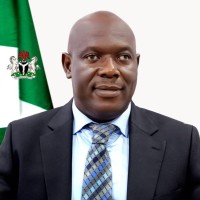
The Hydrocarbon Pollution Remediation Project (HYPREP) has commemorated the 15th anniversary of the release of the United Nations Environment Programme (UNEP) Environmental Assessment Report on Ogoniland, reaffirming its commitment to restoring the environment and improving the livelihoods of affected communities.
In a statement signed by the Project Coordinator, Prof Nenibarini Zabbey, to commemorate the anniversary, HYPREP described the anniversary as a significant milestone in Nigeria’s environmental restoration efforts, noting that the project has made remarkable progress in implementing the recommendations of the landmark UNEP report released on August 4, 2011.
The UNEP report had revealed extensive oil pollution across Ogoniland, severe environmental degradation, and serious public health risks resulting from decades of petroleum operations. It also recommended an initial $1 billion fund to commence the cleanup of the affected communities.
According to HYPREP, the Federal Government formally launched the Ogoni clean-up in 2016, while the Project Coordination Office was established in 2017 to drive the implementation of UNEP’s recommendations.
Zabbey said the current administration has continued to prioritise the project under the Renewed Hope Agenda.
Providing an update on the cleanup, the Project Coordinator disclosed that 30 of the 65 contaminated sites identified by UNEP have been fully remediated, while work is ongoing at several medium- and high-risk locations. It also stated that more than 1.5 million mangrove seedlings have been planted as part of what it described as the world’s largest restoration of oil-degraded mangroves, with over 1,000 hectares of shoreline already rehabilitated.
Zabbey further revealed that 49 Ogoni communities have been connected to potable water schemes through multiple water projects and booster stations aimed at providing safe drinking water across the region.
In the health sector, he said the 100-bed Ogoni Specialist Hospital in Kpite and the 43-bed Cottage Hospital in Buan are nearing completion, adding that several existing health facilities have been upgraded with modern medical equipment, while five ambulances have been donated to improve emergency healthcare services. The Project Coordinator also disclosed that a three-year human health biomonitoring study is being conducted in collaboration with the World Health Organization’s International Agency for Research on Cancer (IARC).
On economic empowerment, Zabbey stated that the Project has created more than 8,000 direct jobs and trained thousands of Ogoni youths and women in various vocational and technical skills, including software development, cybersecurity, aviation, commercial diving, seafaring, mechatronics, and creative arts. The project also reported awarding scholarships to more than 1,000 students, providing grants to small businesses, and supporting persons living with special needs through skills acquisition programmes.
The statement further highlighted ongoing legacy projects, including the Ogoni Power Project and the Centre of Excellence for Environmental Restoration, which it said is about 96 per cent complete. HYPREP also welcomed the recent designation of the Ogoni Wetland as a Ramsar Site of International Importance and pledged to continue promoting biodiversity conservation and sustainable management of the ecosystem.
Marking the anniversary, Zabbey said the progress achieved over the past 15 years demonstrates the collective commitment of government, development partners, stakeholders, and local communities to restoring Ogoniland. He called for renewed collaboration to sustain the cleanup effort, promote environmental sustainability, and support the long-term development of the region. 3
-

 News2 days ago
RSG Targets Nine Million Residents in Mosquito Net Distribution Campaign
-

 Oil & Energy1 day ago
Aiyedatiwa Signs New Electricity Bill
-

 Oil & Energy1 day ago
NLNG Commissions Research And Innovation Centre In RSU
-

 Maritime1 day ago
Marine Minister Commends President Tinubu On NPERA Bill Assent
-

 News2 days ago
KenPoly Holds Eight Convocations, August 29
-

 News2 days ago
RSG Begins Another Phase of Projects Commissioning Today
-

 News2 days ago
RMAFC Completes Revenue Sharing Review, Proposes New Pay
-

 Maritime1 day ago
NAGAFF Petitions IGP Over Alleged Maritime Police Harassment