Connect with us

Nation

THE STATES

Published

on

Benue

A 28-year-old student, Japhet Fahonum, has appeared
before a Makurdi Magistrates’ Court, charged with raping a 15-year-old mentally challenged girl.
Fahonum, who resides at Benseer Street, Owner Occupier, Makurdi, is facing a one-count charge of rape.
The Prosecutor, Insp. Terzungwe Kajo told the court that a brother of the victim reported the case at the “E’’ Division Police Station, Makurdi on January 1.
Kajo said that the complainant alleged that the accused lured his sister, who is mentally challenged, out on the night of the fateful day and had unlawful carnal knowledge of her.

FCT

Some education stakeholders have blamed poor standards
in Nigeria’s basic education system on the absence of quality teachers, poor infrastructure and inadequate funding.
The educationists made the observation in separate interviews with newsmen across the country.
Mr Ishaya Tabat, a lecturer with Kaduna State College of Education, Gidan Waya, said that dearth of quality teachers and poor funding remained the major set-backs to efforts at strengthening education at the basic level.
Tabat said that 90 per cent of teachers in primary and junior secondary schools lacked the basic training needed to teach at that level.
Jigawa

Alhaji Ali Alkali, Sole Administrator, Malammadori Local
Government of Jigwa State, has urged members of the state’s taskforce Committee on Revenue to be diligent in their duties.
Alkali told newsmen in Malammadori that it was imperative for the committee to be fair and just in the discharge of its duties.
He said that such commitment to duty would ensure financial probity and boost the council’s revenue base.
The sole administrator commended traders’ associations and cooperative bodies for their support to the committee, adding that the gesture had facilitated smooth operation of the committee.
Kogi

The new Kogi State governor, Alhaji Yahaya Bello, said
that he was ready for action and determined to give the state a new direction.
He also said he would use President Muhammadu Buhari as his model for governance, stressing that  his administration would have zero tolerance for corruption.
Bello, in his inaugural address, laden with emotion as he wept while recognising notable personalities in his life, especially his late father, said it would not be business as usual with him at the helms of affairs in the state.

Kaduna
The Senate Committee on Defence, has  commenced in
vestigation into the Army/Shiite clash in Zaria, Kaduna State, which occurred on December 12, 2015.
Chairman of the committee, Senator  Ahmad Lawal told newsmen in Kaduna shortly after a meeting with Gov. Nasiru El-Rufai, that their interaction with all interested parties would be in secret.
“We have come for a courtesy call and we have had a meeting with the Nigerian Army led by the General Officer Commanding, 1 Division.
“We are also meeting the Director DSS and also the Commissioner of Police, “ he said.

Kano
Alhaji Gambo Danpass, a chieftain of All Progressives
Congress (APC) in Kano State, has advised President Muhammadu Buhari to use the money recovered from looted funds to develop the education sector.
Danpass gave the advice in an interview with newsmen in Kano on Saturday,saying that there was need for the Federal Government to use the recovered money to promote education particularly in the area of science and technology.
“The Federal Government should channel the money in the education sector especially science and technology; government needs to encourage students to study sciences,” he said.

Lagos
A 27-year-old commercial sex worker, Faith Imojire, who
allegedly assaulted a policeman, has been arraigned in an Ikeja Magistrates’ Court in Lagos.
The accused, who gave no fixed address, is facing a charge of assault.
The prosecutor, Cpl. Mike Unah, told the court that the accused committed the offence on January 21 at No. 14 Aromire St., Ikeja, Lagos.
Unah said the accused assaulted one Sgt. Friday Orah by beating him up and attempting to seize his rifle.
He said the policeman was trying to settle a dispute between the accused and a man who refused to pay her after having sex with her.
“In the process of settling the fight, the man escaped and the accused pounced on the policeman, blaming him for allowing the man to escape.

Nasarawa

A Mararaba Grade 1 Area Court, Aso Pada, has dissolved
the three-year-old marriage between Shehu Habeb and his wife, Marufia Afolabi, for lack of understanding.
Habeb, 38, who resides at Mararaba, Nasarawa State, said that his wife no longer respect him, noting that he was tired of the relationship.
“Please I want an end to this marriage because I cannot continue any longer with the constant misunderstanding and lack of respect.
The petitioner said that the marriage was contracted in 2013 and blessed with a male child.
Marufia, 35, denied all the allegations, saying that Habeb was just tired of the marriage and did not love her anymore.
She said that all effort to settle the issue proved abortive, she therefore, urged the court to grant her husbands request.

Oyo

An Oyo State High Court in Ibadan has  fixed February
16 for hearing in a motion seeking to stop the Olubadan-in-Council from appointing the new Olubadan of Ibadan land.
Justice Muktar Abimbola fixed the date at the resumed hearing of a case filed by Chief Adebayo Oyediji and others against the state government, the Council and other contending lines to Olubadan throne.
Our correspondent  reports that Oyediji of Seriki Chieftancy line is claiming that it is the turn of their line to produce the next Olubadan, following the death of Oba Samuel Odunlana.
The plaintiff is challenging the alleged consistent occupation of the throne by the Olubadan chieftaincy line and the Balogun Chieftaincy line.

Ogun

The Public Complaints Commission (PCC) has petitioned
the Chief Judge (CJ) of Ogun State, Justice Olatokunbo Olopade, over alleged unlawful detention of seven persons by Ota Chief Magistrates’ Court, without trial.
The PCC Commissioner for Ogun, Mrs Oluyemisi Dawodu, submitted the petition in Abeokuta when she paid a courtesy call on the Judge.
A copy of the petition made available to  newsmen Dawodu said that the suspects, who are between ages 16 and 23, had been in prison custody since July 19, 2014.
She said the suspects had been kept behind bar on the claim that the court was yet to receive an advice from the Director of Public Prosecution (DPP) on their alleged crime.
Dawodu said that the perpetual detention of the suspects without trial is an infringement on their fundamental rights.

Plateau
The Minister of Power, Works and Housing, Mr
Babatunde Fashola, has advised communities to shun actions inimical to the construction of infrastructure that enhance development.
Fashola made that call while addressing newsmen at the end of an assessment tour of the 132/33KV sub-station in Pankshin, Plateau State.
He said his call became imperative after learning from the state government that the project, since completion, had not been operational due to land dispute involving host communities.
“As you can see here in Pankshin sub-station, the problem we have is that the community is standing in the way of its own development — right of way to give them power.

Zamfara
The High Level Women Advocacy, a group sponsored
by UNICEF, on Thursday said the high level of poverty in Zamfara is limiting access to education by school-aged girls in the state.
The leader of the group, Suwaiba Barau made the assertion in an interview with newsmen in Gusau.
“The major factor limiting the development of girl child education in this state is poverty, because some children have no financial support to further their education to secondary or tertiary schools, some cannot even finish their primary schools.
“Even when government is giving free education some parents cannot take care of their children up to the finishing time.
“Some children are very good, some are brilliant but little financial problem can delay them the chance to move ahead positively in life, which is highly unfortunate,’’ she noted.
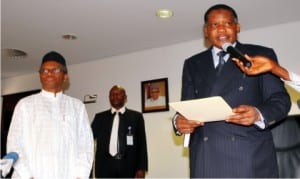
Chairman, Army-Shitee Clash Judicial Commission of Inquiry, Justice Mohammed Garba (right), taking oath of office before Governor Nasir El-Rufai of Kaduna State, during the inauguration of the judicial commission of inquiry in Kaduna on Friday.


Chairman, Army-Shitee Clash Judicial Commission of Inquiry, Justice Mohammed Garba (right), taking oath of office before Governor Nasir El-Rufai of Kaduna State, during the inauguration of the judicial commission of inquiry in Kaduna on Friday.

Continue Reading

Nation

Ogoni Mangrove Wetlands Gain International Recognition As Ramsar Site

Published

on

The Hydrocarbon Pollution Remediation Project (HYPREP) has announced that the mangrove wetlands in Ogoniland have been officially designated a Ramsar Site of International Importance by the Secretariat of the Ramsar Convention on Wetlands.

The designation, according to HYPREP, underscores the global ecological significance of Ogoniland’s mangrove wetlands and highlights ongoing restoration efforts aimed at addressing environmental degradation in the area.

In a press statement issued by the Project Coordinator of HYPREP, Prof Nenibarini Zabbey, the recognition was described as a major milestone for the agency, the people of Ogoni and other stakeholders working towards environmental restoration in the region.

Zabbey explained that the mangrove wetlands, which cover more than 31,700 hectares, consist of islands, tidal creeks, mudflats and mangrove forests that support a wide range of biodiversity. The ecosystem provides habitat for several species including fin fish, shellfish, crustaceans, crocodiles, turtles and the endangered grey parrot.

He noted that beyond biodiversity conservation, the wetland also provides essential ecosystem services such as fisheries production, flood control, water purification and carbon storage. According to him, the international recognition will further support local livelihoods, promote ecotourism and bring global attention to the region.

The HYPREP coordinator disclosed that the designation followed a meticulous process that began in 2024 when the project submitted a memorandum to the National Council on Environment seeking support for the recognition of the Ogoni wetlands as a Ramsar site.

Following the council’s review and approval, the Honourable Minister of Environment and Chairman of HYPREP’s Governing Council, Balarabe Abbas Lawal, formally wrote to the Ramsar Convention Secretariat requesting international recognition of the wetlands.

After a comprehensive ecological assessment, the Ramsar Secretariat granted the designation, officially recognising the Ogoniland wetlands as one of the world’s sites of international importance.

Zabbey said the recognition would strengthen ongoing environmental restoration efforts in the area and encourage stronger conservation measures and sustainable management of the wetlands for the benefit of present and future generations.

He added that the designation also fulfils a key recommendation of the United Nations Environment Programme (UNEP) Environmental Assessment Report on Ogoniland, marking another significant step in the implementation of the report’s recommendations.

The HYPREP project coordinator reaffirmed the agency’s commitment to restoring the Ogoni environment through the remediation of oil-polluted land, shorelines and mangrove ecosystems.

He also called for collective responsibility and stakeholder support to sustain the progress of the Ogoni cleanup programme and facilitate the development of a comprehensive and sustainable management plan for the Ogoni mangrove wetlands.

Continue Reading

Nation

Perm Sec Explains Success Of FGM Elimination Programme In Rivers

Published

on

The Permanent Secretary, Rivers State Ministry of Social Welfare and Rehabilitation, Mrs Lauretta Davies-Dimkpa, has attributed the successes of the 12-day programme organised for adolescent girls aimed at eliminating Female Genital Mutilation(FGM) in some parts of the State to the ability of the respective stakeholders to take ownership of the programme.

Mrs Davies-Dimkpa, who dropped the hint in an interview at the end of the programme in Elele-Alimini Community in Emohua Local Government Area on Saturday, said the event had a buy-in component, an ownership mentality, whereby facilitators, staff, and everyone involved took ownership of the project.

She explained that the Rivers State Ministry of Social Welfare and Rehabilitation, in collaboration with the United Nations Children’s Fund (UNICEF) and the United Nations Population Fund (UNFPA) had packaged a series of training sessions for adolescent girls aimed at ending the practice of Female Genital Mutilation (FGM) in some communities across the State.

According to her, the initiative was designed to educate young girls on the harmful effects of the practice and empower them to become advocates against it within their communities.

She noted that the programme, which lasted for several weeks, targeted adolescent girls from different local government areas where the practice is still prevalent, stressing that
data collected by UNICEF and the Ministry revealed that Female Genital Mutilation is still practised in some parts of the State, prompting the need for intensified sensitisation and community engagement.

Mrs Davies-Dimkpa explained that the programme adopted a “train-the-trainer” approach where adolescent girls were educated on the dangers of the practice and encouraged to share the knowledge with their peers, families and communities.

“This is a programme by the Rivers State Ministry of Social Welfare and Rehabilitation with support from UNICEF and UNFPA to train adolescent girls towards ending Female Genital Mutilation, which is still practised in some local government areas,” she said.

She further explained that each participating local government area had a three-day training session, with the exercise running for a total of 12 days.

The local government areas, where the programme took place, she noted, included Ahoada West, Abua-Odual, and Emohua, adding that the initiative is part of broader efforts by the state government and development partners to eliminate harmful traditional practices and protect the rights and wellbeing of girls.

She revealed that prior to the training of the adolescent girls, the Ministry and its partners had also engaged community facilitators, including older women and men, to sensitise them on the dangers associated with Female Genital Mutilation.

According to her, the involvement of community leaders and adults is essential in addressing the cultural and social factors that sustain the practice.

Speaking on the response of the participants, the permanent secretary expressed satisfaction with the level of engagement and enthusiasm shown by the girls throughout the training sessions.

She noted that many of the participants said they were learning about the harmful effects of Female Genital Mutilation for the first time.

“The girls are between the ages of 12 and 17 and from the interactions we had with them, they were very excited. Some of them are hearing these things for the first time and never knew that the practice is harmful,” she said.

She expressed optimism that the knowledge gained from the training would enable the girls to serve as advocates for change within their communities.

She added that the Rivers State Government, alongside its partners, would continue to intensify efforts and expand community-based interventions aimed at ending the practice across the State.

Meanwhile, the participants for Emohua Local Government Area were drawn from Elele-Alimini, Egbeda, Rumuji, Ibaa, Rumuekpe, Rumuakunde, Eligbarada, and Ogbakiri Communities.

The participants,who spoke in separate interviews described the training as eye-opening, noting that it helped them better understand issues surrounding adolescent health, personal hygiene, reproductive health, and the harmful consequences of Female Genital Mutilation.

Favour Azukwu from Rumuekpe community, said the programme provided a deeper understanding of the dangers associated with the practice, particularly its impact on the health and wellbeing of girls and women.

She explained that the training sessions exposed participants to the medical, social and psychological effects of Female Genital Mutilation, including severe bleeding, infections and complications during childbirth.

She revealed that she personally experienced the practice at the age of 12 and suffered heavy bleeding afterwards, an experience that has strengthened her determination to advocate for its eradication.

According to her, many communities still practise Female Genital Mutilation because it is perceived as a cultural tradition, despite the dangers associated with it.

“I do not support Female Genital Mutilation because there are many dangers involved. I experienced severe bleeding when it was done to me as a child.

Another participant, Glory Ken, a 16-year-old secondary school student from Rumuji community, said the programme broadened her understanding of several important topics affecting adolescents.

She explained that beyond the discussion on Female Genital Mutilation, the training also focused on issues such as personal hygiene, reproductive health, peer education, and self-care.

According to her, the sessions helped participants understand the importance of making informed health decisions and supporting one another as peer educators.

“I learned about many things that affect young people in society and how to take care of myself. I also learned that Female Genital Mutilation is harmful to our health. The message I am taking back to my community is that this practice should stop,” she said.

Also speaking, Goodness Kenjika Nyeche described the programme as very impactful.

She noted that the training equipped participants with the skills and confidence to educate others about the harmful effects of Female Genital Mutilation.

She said she plans to organise sensitisation among adolescents in her community, particularly girls between the ages of 10 and 19, to ensure they understand the dangers associated with the practice.

“I learned many things from this programme and I feel very good about it. I will educate other young girls in my community and help them understand why Female Genital Mutilation should not continue,” she said.

For Queen Dike from Ibaa community, the programme helped clarify misconceptions surrounding the practice.

She explained that in some communities, the practice is still referred to as circumcision and is viewed as part of cultural identity.

She said the training helped participants understand that Female Genital Mutilation involves the cutting or removal of parts of the female genital organs and that it has serious health consequences.

She stressed that awareness and education are key to ending the practice, especially among communities that continue to uphold it as tradition.

“I think the programme is very helpful because many people still believe it is part of culture. More awareness is needed so people can understand why it should stop,” she said.

Another participant, MyJoy Echika Amadi, said the programme provided critical information about adolescent health and the dangers associated with Female Genital Mutilation.

She described the initiative as enlightening and said it encouraged young people to become advocates for change in their communities.

According to her, participants were encouraged to use various platforms such as churches, peer groups, schools and community gatherings to spread awareness about the harmful effects of the practice.

“This programme has enlightened us about the dangers of Female Genital Mutilation. I will do my best to create awareness in my community and encourage people to stop the practice,” she said.

Many of the participants emphasised that the knowledge gained during the programme has empowered them to challenge harmful traditions and promote healthier practices among young people.

They also called on the Rivers State Government, development partners and civil society organisations to sustain the sensitisation campaigns and extend the training to more communities across the State.

According to them, empowering young people with the right information will play a critical role in eliminating Female Genital Mutilation and protecting the rights, health and dignity of girls in Rivers State.

The participants expressed appreciation to the Rivers State Ministry of Social Welfare and Rehabilitation, UNICEF and UNFPA for organising the programme and for investing in the wellbeing and future of adolescent girls in the State.

Continue Reading

Nation

UNIZIK Honours Business Mogul, Ezekwe, For Philanthropism

Published

on

The Nnamdi Azikiwe University (UNIZIK) has conferred the Award of Digital Academic Promoter on the Managing Director and Chief Executive Officer of Arrowconn Group, High Chief (Dr.) Emeka Ezekwe, for his philanthropic gestures.
Chief Ezekwe received the philanthropist award during a landmark technical workshop organised by the Department of Business Education, Faculty of Technology and Vocational Education, Nnamdi Azikiwe University (UNIZIK), Awka, recently.
Making the presentation, the Vice Chancellor of the university, Prof. Ugochukwu Stanley Anyaehie, said the award was in recognition of Ezekwe’s philanthropic contributions, academic support, and dedication to human capital development, hailing his commitment to bridging industry and academia.
Ezekwe who is also the Chairman of Port Harcourt Chamber of Commerce Professional Services and Consultancy Trade Group, delivered a keynote address at the event with a theme: “Technicalities and Application of Artificial Intelligence (AI) in Business and Education.”
In his address, Ezekwe described the current AI surge as a civilizational shift rather than a mere technological upgrade.
He compared AI’s rapid trajectory to past innovations like electricity, computers, the Internet, and mobile phones, which he said, progressed from luxuries to necessities.
“AI is reshaping value creation, knowledge sharing, and decision-making at unprecedented speed. It has moved from experimentation to execution, powering business forecasting, academic research, digital learning, and strategic decisions,” he said.
The business mogul, however, warned that in business, delays lead to losses, while in education, irrelevance spells failure.
“AI is no longer optional, it is a necessity,” he declared.
Ezekwe highlighted the critical AI skill gap, driven by curriculum lags, limited training, and fear of the unknown, but stressed the bigger danger which is exclusion.
“Those who master AI will shape markets, education, and policy; those who lag will be shaped by others,” he said.
The Arrowconn Group boss also outlined AI’s practical advantages for businesses —including data-driven strategies, smarter investments, scalable customer insights, and competitive edges for SMEs.
In education, he clarified that AI empowers rather than replaces teachers, enabling personalized learning, efficient lesson planning, assessment support, and accelerated research.
He advocated a shift from rote memorization to critical thinking, creativity, and problem-solving, while preserving human strengths in engagement, judgment, and collaboration.
Ezekwe urged ethical AI development, warning that “technology without values is dangerous,” and called on institutions like UNIZIK to update curricula, train educators, promote interdisciplinary work, forge industry partnerships, and produce graduates who are solution providers in an AI-driven world.
The workshop also marked the unveiling of the maiden edition of the UNIZIK Journal of Business Education and Entrepreneurship, reinforcing the department’s push for scholarly innovation in AI applications.
Continue Reading

Trending