
News
US Lambasts Gov Shema Over ‘Cockroach’ Comments …Challenges FG To Defeat Boko Haram

The United States Government said yesterday that it is deeply troubled by statements credited to Governor Ibrahim Shehu Shema of Katsina State calling for the killing of the “cockroaches of politics.”
“The rhetorical threat of violence undermines the democratic process and is utterly unacceptable in a democratic society,” “The United States reiterates its call upon all Nigerians to refrain from advocating, fomenting, or condoning violence before, during, or after the elections. The US Embassy in Abuja said in a statement.
As Nigeria looks ahead to the February 2015 general elections, the Mission said, the U.S. strongly supports a free, transparent, credible, inclusive, and non-violent electoral process.
“Participants in the electoral process must demonstrate passion for their convictions and beliefs in a manner that shows respect for opposing differences. “The Nigerian Constitution itself states it is the duty of every citizen to “respect the dignity of other citizens and the rights and legitimate interests of citizens to live in unity and harmony,” the statement read.
Meanwhile, the United States Government said Nigeria should defeat Boko Haram but military power alone will not be enough to win the bigger war on terrorism.
Deputy Chief of Mission at the US Embassy in Abuja Maria Brewer said the American Government fully supports Nigeria and the Nigerian people on its war on terror.
“Let me be clear – the United States wants Nigeria to win its war on terrorism, and we fully support the Nigerian people in their struggle,” Brewer said in Lagos, western Nigeria, during her keynote address at the 2014 Annual Lecture of the Hubert H. Humphrey Fellowship Programme with the theme “Managing Down Insurgency: The American Experience. Over the last decade, the United States has learned that defeating terrorism requires more than just military power,” Brewer added.
She said as friends and partners, the U.S. provides support to Nigeria in the form? of equipment and training and both countries also share lessons learnt in combatting terrorism.
Brewer said America learnt that winning the war on terrorism requires the protection of civilian population and development in impoverished areas where extremism takes root, noting that it also requires accessible education opportunities for all and a free and fair press that can report openly and without fear of reprisal.
“And perhaps more importantly, it requires viable alternatives for young people who remain vulnerable to the lure of extremism due to lack of opportunities,” she said.
Fighting terrorism, she Brewer said, requires civilians and military to work together to defeat the enemy on the battle field and then address the root causes with good ideas and policies.
“Focusing primarily on the population, rather than the enemy, and reinforcing the legitimacy of governments at the local, state and federal level, reduces the influence of terrorists.” “American counterterrorism strategies rest on the assumption that the decisive effort is rarely military, although security is the essential ?prerequisite for success, “ she added.
Brewer, however, hinted that for the United States to fully support Nigerian security efforts, issues of accountability should be addressed.
“The United States stands ready to support Nigeria and its security services as they fulfill they fulfill those responsibilities with restraint and impartiality. “
Human Rights Watch and Amnesty International have accused Nigerian military of committing grave human rights abuses as it fights Boko Haram in the Northeast.
Beyond the battle field, Brewer said the US Government, through the Department of State, ?the Centers for Disease Control and Prevention, the U.S. Agency for International Development, and other government agencies, invests substantially in Nigeria in healthcare, strengthening of democracy, the rule of law, economic growth and education.
“We are assisting the Ministry of Justice and Economic and Financial Crimes Commission. We are also providing training in counterterrorism and investigative techniques,” she said.
Nigeria’s renowned professor of International Law at the University of Lagos and a member of the Governing Council of the Nigerian Institute of International Affairs Prof. Akindele Babatunde Oyebode said the refusal of America to help Nigeria militarily has moved the country close to Moscow.
Oyebode wondered why America refuses to sell weapons to Nigeria or use its drones stationed not far away in Niger Republic and called for help and support “by those who profess friendship with Nigeria in our moment of travails”.
For Dr. Abiola Akiyode-Afolabi of the Women Advocates Research and Documentation Centre (WARD), said Nigeria should address underlining causes to insurgency before success can be achieved.
She said the impact of violence goes beyond loss of lives as the conflicts hold back social and economic development.
“Government should set up a national counter terrorism architecture that will harmonise national counterterrorism efforts,” she recommended during her address.
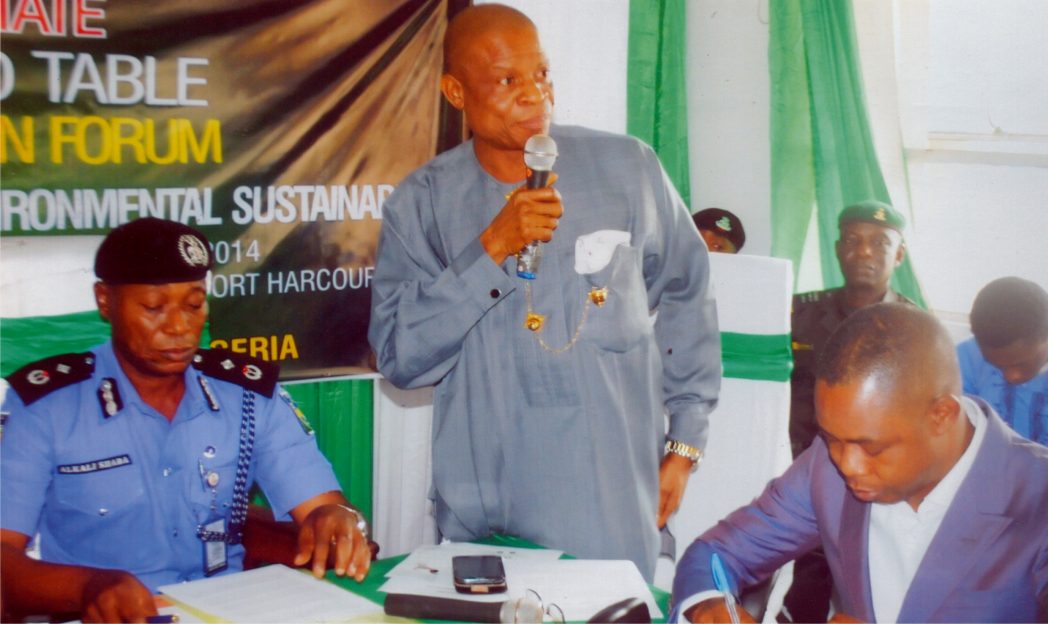
Rivers State Director, National Orientation Agency, Mr Oliver Wolugbom (middle) delivering an address, during the 14th Rivers State NOA roundtable, in Port Harcourt, recently. With him are Sole Administrator, Rivers Waste Management Agency, Mr Ade Adeogun (right) and a police officer. Photo: Prince Obinna Dele



Nigeria’s crude oil production has surged to an 11-month high in May, 2026, with the country exceeding its Organisation of the Petroleum Exporting Countries (OPEC) production quota.
The average crude oil production recorded during the month of May represents 102 per cent of Nigeria’s 1.5mbpd of production quota allocated by the OPEC.
The production report released by the Nigerian Upstream Petroleum Regulatory Commission (NUPRC), yesterday, disclosed that Nigeria’s oil production averages 1,530,354 barrels of crude oil and 170,446 barrels of condensates per day (bpd).
According to the report, this brings the total combined production to 1, 700, 800 barrels per day and consolidating Nigeria’s position as Africa’s largest oil producer.
The report said the production performance during the review period remained robust, with combined crude oil and condensate output ranging between a low of 1.51 million bpd and a peak of 1.86 million bpd.
It said the May 2026 production figures represented the highest recorded by Nigeria since July 2025, when output surged to 1,712,282.
“In strict crude oil terms (excluding condensates), the 1.53 million barrels recorded in May 2026 represents the highest Nigeria has witnessed since January 2025 when crude oil production hit 1.538mbpd.
“The latest crude oil production statistics thus represents a 15-month high on a month on month basis, production rose by 2.77 per cent in May 2026 as against 1.48mbpd in April,” it said.
The report said the broader production trend over the last five months had also remained positive.
It said combined crude oil and condensate output increased from 1.48 million bpd in February to 1.54 million bpd in March, 1.66 million bpd in April, and then 1.7 million bpd in May, underscoring sustained growth in Nigeria’s hydrocarbon production levels.
According to the report, among production streams, Bonny Terminal led the pack with a total blend of 293,870 bpd, closely followed by Forcados Terminal at 289,900 bpd, Qua Iboe ranked third with 173,360 bpd, while Escravos Oil Terminal contributed 135,470 bpd.
It said the Odudu (Amenam Blend) completed the top five production streams, accounting for 63,250 bpd during the month under review.
The NUPRC attributes the rise in production to a sustained positive momentum as operations remained stable throughout the reporting period with no significant pipeline or facility outages recorded.
Additionally, all previously scheduled turnaround maintenance activities had been successfully completed, contributing to improved operational reliability and production efficiency.
The House of Representatives, yesterday passed a landmark constitutional amendment bill to establish state police nationwide, marking a significant milestone in Nigeria’s decades-long debate over decentralising policing and strengthening internal security.
The bill, titled “A Bill for an Act to Alter the Constitution of the Federal Republic of Nigeria, 1999 to Provide for the Establishment of State Police and for Related Matters (Sixth Alteration) Bill, 2026,” was approved during consideration at the Committee of the Whole, presided over by Speaker of the House, Rt. Hon. Tajudeen Abbas.
Voting commenced after the Deputy Speaker and Chairman of the House Committee on Constitution Review, Hon. Benjamin Kalu, presented the report on the proposal and canvassed support from lawmakers, stressing the need for a more decentralised policing framework to effectively address the country’s growing security challenges.
The exercise was conducted manually, with members raising their hands to indicate their positions. At the end of the voting, 289 lawmakers voted in support of the bill, one member abstained, while none voted against it, reflecting overwhelming bipartisan backing for the far-reaching reform.
The proposed amendment seeks to fundamentally restructure Nigeria’s policing architecture by creating both Federal and State Police formations.
One of the bill’s key provisions amends Section 214 of the 1999 Constitution to formally establish the Federal Police and the State Police. Under the proposal, the National Assembly would be empowered to prescribe the structure, organisation, administration and powers of the Federal Police, while also providing the legal framework and minimum standards for the establishment and operation of state police services.
The bill stipulates that no state police formation shall commence operations unless it is established by a law enacted by the relevant State House of Assembly and certified as complying with national minimum standards prescribed by an Act of the National Assembly.
It further provides that until a state police force becomes operational, the Federal Police shall continue to exercise policing powers and responsibilities within such states.
In a bid to preserve the autonomy of state police formations and prevent undue federal interference, the bill limits federal intervention in states’ internal security affairs. Under the proposal, the Federal Police may intervene only where there is a complete breakdown of law and order, upon the request of a governor or where a state police force becomes unable to function due to administrative, financial or other operational challenges.
The amendment also proposes significant changes to the police’s appointment and command structure.
Under the amended Section 215 of the Constitution, the Inspector-General of Police would be appointed by the President on the advice of the Nigeria Police Council from among serving members of the Federal Police, subject to confirmation by the National Assembly.
Similarly, a State Commissioner of Police would be appointed by a governor on the advice of the Nigeria Police Council from among serving officers of the State Police, subject to confirmation by the respective State House of Assembly.
The bill empowers governors to issue lawful directives to State Commissioners of Police on matters relating to public safety and the maintenance of law and order. However, where a commissioner considers such directives unlawful or inconsistent with accepted policing standards, the matter may be referred to the Nigeria Police Council, whose decision shall be final.
The proposal also amends Section 84 of the Constitution by replacing references to the “National Police Council and the Federal Police Service Commission” with the “Nigeria Police Council and the Police Service Commission.”
The passage of the bill by the House represents one of the most far-reaching security reforms contemplated since the return to democratic rule in 1999 and is expected to rekindle nationwide debate on issues relating to funding, accountability, operational control and safeguards against abuse.
With the House’s approval, the constitutional amendment bill will now proceed to the Senate for concurrence. Thereafter, it must secure the endorsement of at least two-thirds of the State Houses of Assembly and receive presidential assent before becoming part of the Constitution of the Federal Republic of Nigeria.
If eventually enacted, the legislation would usher in a new era of multi-layered policing in Nigeria and could redefine the country’s approach to tackling banditry, terrorism, kidnapping and other forms of violent crimes through a more localised security architecture.
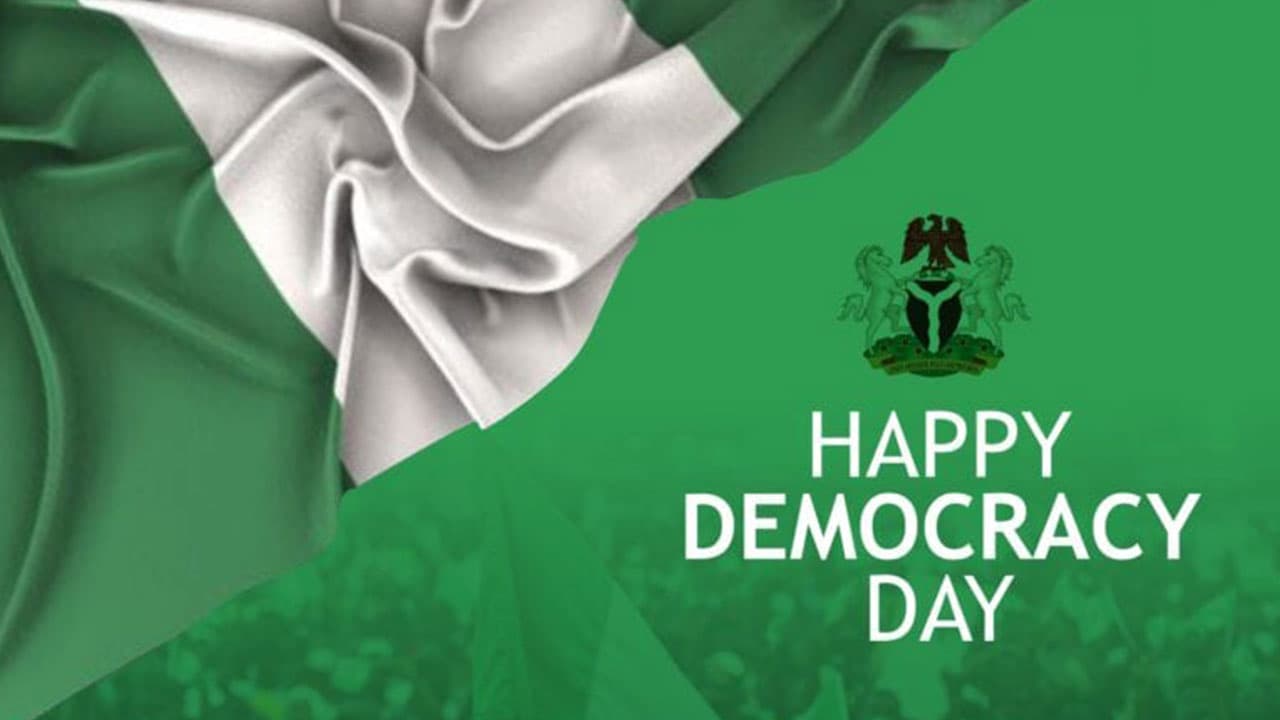
The Federal Government has declared today, public holiday to commemorate Nigeria’s 27 years of unbroken democratic rule.
This is contained in a statement in Abuja, by the Permanent Secretary, Ministry of Interior, Magdalene Ajani.
Ajani said that the Minister of Interior, Dr Olubunmi Tunji-Ojo, made the declaration on behalf of the federal government.
Tunji-Ojo reaffirmed the federal government’s commitment to the preservation of democratic ideals, rule of law, transparency, accountability and inclusive governance.
He assured that the ministry in collaboration with relevant security agencies woulsd continue to take appropriate measures in maintaining and strengthening Nigeria’s internal security.
The minister noted that a secured and stable environment was essential to democracy and national development.
He urged Nigerians to see the holiday as an opportunity for civic reflection.
“As we mark this historic day, every Nigerian is encouraged to remain law-abiding, uphold the institutions that sustain our democracy, and remember that the strength of any democracy lies ultimately in the character of its citizens,” he said.
He also said that June 12 every year remained a significant day in Nigeria’s history in honour of the courage, resilience and sacrifices of Nigerians whose efforts made democratic governance possible.
“Their legacies continue to inform the values and responsibilities of the Nigerian state,”Tunji-Ojo added.
-
Nation5 days ago
Asarama Kingdom Condemns Gruesome Murder of A Commercial Vehicle Driver
-
Rivers5 days ago
Monarch Raises Alarm Over Defamatory Politics … Urges For Unity In Ogoni
-
News5 days ago
Nigeria, Ethiopia Seal Agreement To Transfer 100 Nigerian Prisoners
-
News5 days ago
Nigeria No Longer Safe For Drug Cartels – Marwa
-
News5 days ago
Xenophobia: 268 Nigerian Returnees Arrive In Lagos From S’Africa
-
 News5 days ago
FG Declares Today Public Holiday To Mark Democracy Day
-
Women5 days ago
Nigerian Women And Dividends Of Democracy
-
Business5 days ago
FG Approves $1 Bn AFCFTA Credit Facility For Nigerian Exporters