
Business
FG To Review Real Sector Policies

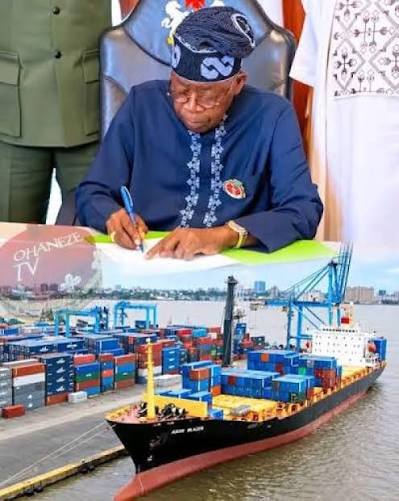
The Presidential Advisory Council, a body set up to assist the Federal Government in driving the Nigeria Industrial Revolution Plan, has disclosed plans to review policies in the real sector.
This was disclosed in a paper presented by the council in a special meeting in Lagos, a copy of which was obtained by our correspondent on Thursday.
The proposed review, according to the paper, follows complaints of numerous problems confronting the business community by entrepreneurs in the country.
The President of the Nigerian Association of Chambers of Commerce, Industries, Mines and Agriculture, Alhaji Mohammed Abubakar, had, while speaking on the state of the economy recently, said the business community had been confronted with numerous problems.
These, he said, ranged from taxes and levies being demanded by the three tiers of government to constant changes in governments’ policies.
According to Abubakar, the situation creates the usual untold burden and distractions for business operators.
As a result, he called for the harmonisation of taxes and levies throughout the country in order to mitigate the incessant harassment of businesses by tax officials.
While commending the federal government for the constitution of a Presidential Advisory Council, he said there should be more efforts to make the business environment more conducive.
The Lagos Chamber of Commerce and Industry had, also recently, stated that the sector had consistently remained at the bottom of its Business Confidence Index table by steadily recording negative confidence levels.
The chamber said the medium and small manufacturing enterprises were the most hit by the lingering challenges constraining productive activities in the country.
The LCCI advisory board at a recent meeting, said to engender real sector growth and avert recurring incidence of changing policies, there should be an elimination of one-on-one concession with specific firms.
Rather, the board advised that sector-wide policies applicable to all firms should be developed. This, it said, would ensure sustainability of government policies.
According to the paper, the PAC also recommended the removal of bans or high tariffs for commodities in which product prohibitions mechanisms had remained ineffective in protecting such industries, and where smuggling activities remained unabated.




-

 Niger Delta8 hours ago
Diri Restates Stance On Lagos-Calabar Coastal Highway
-

 Niger Delta8 hours ago
C’River, NUJ Pay Tribute To Late Guardian Editor
-

 News9 hours ago
NDLEA Recovers Tons Of Illicit Drug Consignments In Nine States
-

 Opinion8 hours ago
Checking Voter Apathy In Nigeria’s Electoral Process
-

 Sports5 hours ago
Nigerian Trio Target Titles At PFL Africa Finals
-

 Education6 hours ago
FCE Yola Graduates 3,555 Teachers , Seeks Upgrade to University
-

 Politics5 hours ago
2027: DICKSON’S EX-ALLY VOWS TO WORK AGAINST NDC INTEREST IN BAYELSA
-

 Politics5 hours ago
2027: GROUP PLEDGES 40,000 SUPPORTERS FOR COALITION CANDIDATES IN RIVERS