
Opinion
Of National Pride And Consciousness

National pride is not the negative connotation of arro
gance, irresponsibility and falsehood. It is the loftiness of place and positive assertion of the worth of a nation. All individuals share in the worth of a nation; this feeling helps the individual tremendously in respect of self assertion and personal growth. National pride motivates citizens to work hard; it makes them aim at the objectives of a nation and vow to make her the best country to live in. National pride is a drive to development and identity.
On the contrary, national shame humiliates a nation and makes her and the individual to suffer set back and sorrow. If a nation is ranked the first nation on the crime list in the world, it is a shame. If all universities in a country are never among the best twenty in the world ; it is assumed that scholars and researchers are not productive in that country. National pride and self worth shrink in adversity – the nation and the individual look gloomy and sad.
Indeed national pride is expressed through our national pledge in Nigeria:
I pledge to Nigeria, my country
To be faithful loyal and honest
To serve Nigeria with all my strength
To defend her unity
And uphold her honour and glory
So help me God.
The key words are faithfulness, honesty, unity, honour and glory. It is a promise which everyone should make to Nigeria, love and service. It is the rhythmic expression which makes it memorable and important. Nigeria is not portrayed as a national cake, a toy for children to use at will, nor should the pledge be left for children to recite at school. It is not only thought provoking but determination which everyone in the nation makes to be faithful in every job given him; to be honest in serving the country as one is expected to serve himself; to propagate unity and brotherhood among ethnic nationalities; to bring honour to Nigeria in every endeavour and to honour Nigeria as a sovereign nation and; to give glory to Nigerians when they excel to promote the nation in all spheres.
The national Anthem calls for commitment:
Arise, o compatriots, Nigeria’s call obey
To serve our fatherland
With love and strength and faith
The labour of our heroes past
Shall never be in vain
To serve with heart and might
One nation bound in freedom,
Peace and unity.
Oh God of creation direct our noble cause
Guide our leaders right;
Help our youth the truth to know
In love and honesty to grow
And living just and true
Great lofty heights attain
To build a nation where peace and
Justice shall reign.
The good aspects of the past have relevance to the present; one should learn from noble heroes of the past and strive to attain the heights they have kept, perhaps surpass them. Hierarchizing achievement is important for the assessment of the growth of a nation through data collection in all fields. National identity is possible when people are committed; when equality of all men is possible before the law; when everyone is treated fairly and encouraged to attain any lofty height possible. It is when this brotherhood is created that there shall be peace and progress. These are the messages coded in-between the lines of the National Anthem. Great nations are built through pledges and anthems they believe in and practice religiously.
The first thing that identifies a nation is language. A nation that speaks one language is much more unified than any that speaks more than one language. It is a means of communication through which people pass on information, share ideas, express worldview and relate to one another. Language strengthens the love of people for their nation and themselves; it prevents artificial cultural traffic deadlock, promotes conviviality.
Language is the means of education. One language saves cost and time for teachers and learners. It is easier to develop the curriculum for one language, grammar, syntax, semantics and other aspects of it than several languages competing for development and attention. Nigeria is a country that Yoruba, Igbo and Hausa are the three major languages much more developed than the other languages which are over two hundred. The three languages are taught at the primary, secondary and university levels; a few languages are taught at the first and second levels. Few are taught at the primary school level only. It is unfortunate that very few are almost extinct. Everyone is growing conscious of the necessity to develop his or her language for communication and nation building.
The British people are known for their suit; the French people for their suit. These nations have other ways of dressing that are peculiar to them. Nigerians are known for Atibo over trousers or clothes tied over shorts. Another type is agbada . These have hats associated with them. Women have their own traditional high-head-gear headties over blouses and clothes tied in two layers, to the knees and ankles. Indeed most ethnic groups have different ways of dressing that are peculiar to them.
Some nations of the world have been identified with products of their own – Japan, Taiwan, America and others. Some of them are cars, computers, ceiling fans and electrical instruments, upholstery, wooden doors, air-conditioners, aeroplanes, clocks of various types, printers, televisions, refrigerators, cameras and others too numerous to mention. The product(s) of every nation marks it out giving it a good name or a bad one depending on the nature of the product, its durability and relevance to consumers.
There could be few other ways of forging national identity or pride but the ones mentioned here are the Pledge, National Anthem, language, clothes and economic products. Commitment, love and determination foster unity; these promote development in arts and science. Development is not possible if the people do not consciously develop the positive attitude to productivity which must start with mental orientation; this catalyses into practical orientation. In this way consciousness is developed and the expected immaterial and material development follows.
Dr. Ngaage teaches at the Niger Delta University, Bayelsa State.
Barine Ngaage



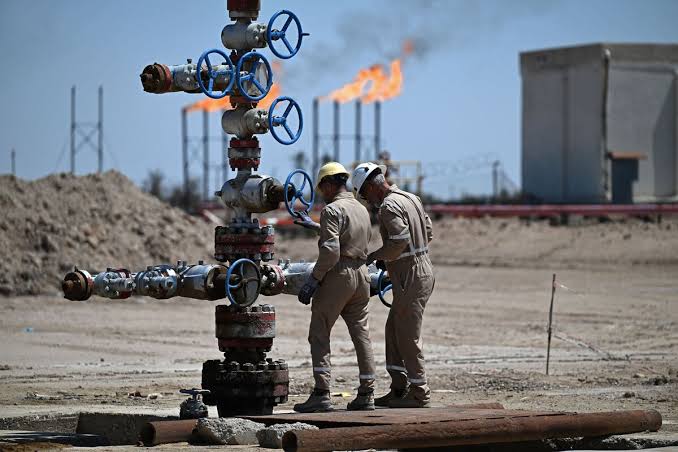
Quote: “No oil vessel, commercial contract or operational deadline is worth the loss of innocent lives; where environmental grievances are ignored and dialogue gives way to confrontation, the entire society pays a price that no compensation can adequately erase.”

Quote:”The value of wealth is
Will and gifts are subjects
A Will is an important legal
Where documentation is
This does not mean every
Properly completed lifetime
Property owners must also
My appeal is simple: let us
-

 Niger Delta12 hours ago
Diri Restates Stance On Lagos-Calabar Coastal Highway
-

 Niger Delta12 hours ago
C’River, NUJ Pay Tribute To Late Guardian Editor
-

 News13 hours ago
NDLEA Recovers Tons Of Illicit Drug Consignments In Nine States
-

 Opinion11 hours ago
Checking Voter Apathy In Nigeria’s Electoral Process
-

 Sports9 hours ago
Nigerian Trio Target Titles At PFL Africa Finals
-

 Education9 hours ago
FCE Yola Graduates 3,555 Teachers , Seeks Upgrade to University
-

 Politics9 hours ago
2027: DICKSON’S EX-ALLY VOWS TO WORK AGAINST NDC INTEREST IN BAYELSA
-

 Politics9 hours ago
2027: GROUP PLEDGES 40,000 SUPPORTERS FOR COALITION CANDIDATES IN RIVERS