
Nation
THE STATES

Adamawa
Adamawa Muslim Pilgrim’s Welfare Board has received an initial allocation of 2,401 seats from the National Hajj Commission for the 2012 Hajj.
The Administrative Secretary of the board, Malam Musa Lamurde, disclosed this in an interview with newsmen in Yola.
Musa explained that the seats had been distributed to the 21 local government areas of the state.
He said a committee had been set up to train and enlighten the intending pilgrims on how to perform the Hajj.
Lamurde called on the Hajj commission to allow state pilgrims boards to feed their respective pilgrims during the Hajj in Saudi Arabia.
Benue
Benue State House of Assembly has passed the bill seeking to amend the 2007 Local Government Law .
Our correspondent reports that with the passage of the bill, the tenure of elected local government councils in the state would be slashed from three to two years.
The bill was passed last Tuesday by the legislature during its plenary session through a voice vote conducted by Speaker David Iorhemba.
Iorhemba said that local council caretaker committees would be appointed to oversee the affairs of the councils for six months.
He said the committees would comprise seven members – chairman, vice chairman and five supervisory councillors.
He further said that the committees would be dissolved after inauguration of elected councils.
FCT
The Federal High Court in Abuja has directed the Economic and Financial Crimes Commission (EFCC) to serve former Gov. Timipre Sylva of Bayelsa with summons by substituted means.
The court gave the order in Abuja on Monday following the EFCC’s request.
EFCC had on February 24, dragged Sylva to court on alleged misappropriation of N6.46 billion state funds.
Justice Adamu Bello gave the order in a ruling on an exparte motion filed by Mr Festus Keyamo, counsel to the prosecutor.
“The application is granted.
“So, the prosecutor is now authorised to either serve the accused person by pasting the service on the gate of his house at No 3 River Niger Street, Maitama, Abuja or through publication in not less than two national dailies.’’
The prosecutor had sought the order of the court to allow it to serve Sylva the summons by substituted means “in view of his evasive nature.’’
The anti-graft agency, in suit number FHC/ABJ/CR/23/2012, claimed that Sylva and others now at large, committed the offence between October 2009 and February 2010.
Gombe
The Chief (Mai) of Tula in Kaltungo Local Government Area of Gombe State, Alhaji Abubakar Buba, has called on entrepreneurs to invest on the rich tourism potential in the area.
The Monarch made the call in an interview with newsmen in Kaltungo.
Buba said such investment would boost the economy of the state and improve the lives of the people there.
“I am calling on both local and international investors to invest in Tula because in the North East I would say, Tula stands out to be different in terms of the weather, the high altitude and the historical background of the chiefdom.”
He said Governor Ibrahim Dankwambo had assured the people of the area of his plan to develop the tourist sites in the area to attract investors.
He identified resorts and hotels as well as iron and solid minerals, as some of areas in which the investors can put in their money.
Jigawa
The Fadama III Office, in collaboration with the Jigawa Government, has disbursed the sum of N189 million to farmers to boost commercial agriculture in the state.
The Fadama National Project Coordinator, Mr Tayo Adewumi disclosed this during the inauguration ceremony of the project and disbursement of cheques in Dutse.
Adewunmi said that 36 Fadama Community Associations and 432 Fadama User Groups in the state would benefit from the programme.
Represented by the Zonal Coordinator, Alhaji Bala Shaibu, Adewunmi said that the project’s concept was “community-demand-driven”, adding that every stakeholder in the business must be carried along.
He urged beneficiaries to use the funds for the intended purpose so as to produce more food for consumption and for export.
In his remarks, Gov. Sule Lamido, said that his government was committed to boosting agriculture, being the occupation of the teeming populace in the state.
Kwara
The National Association of Nigerian Students (NANS) says it will continue to embrace policies and programmes which promote unity and peace among students.
The association stated this in a release in Ilorin against the background of the ongoing 13th West Africa University Games (WAUG) at the University of Ilorin.
The release issued by the association’s Sports Director, Saheed Ninalowo, was made available to newsmen.
The association said policies and programmes like WAUG would bring together students and other youths across the world to share common ideas and values.
“The Games provided a medium of bringing all students across West African universities together to agitate and discuss policies and programmes that affect their existence,,’’ it said.
Lagos
A pan-Yoruba socio-political group, Atayese, on Tuesday, urged the state governors to each organise referenda in their respective states and ethnic nationalities to determine what the people wanted.
At a news conference in Lagos, the Chairman of the group, Chief Tokunbo Ajasin, said it was the people’s desires that should be reflected in the presentations at the national conference Nigerians were clamouring for.
“The agitations for a sovereign national conference are okay but it must be preceded by a referendum.
“The people of each ethnic nationality must be allowed to decide on issues that they want to bring to a national discourse,” he said.
Ajasin suggested that the referenda should not be delayed to avoid more tension in the polity.
Nasarawa
The Nasarawa State House of Assembly has passed the N104 billion appropriation bill for the state for 2012.
The House Speaker, Ahmed Musa-Mohammed, said that the appropriation bill was increased by over N7 billion to N104 billion to enable the government complete pending projects.
Musa-Mohammed said that the increase was specifically to construct three kilometres of road in each of the 13 local government areas of the state.
He said that the Clerk of the House had been directed to produce a copy of the bill for ratification by the Committee on Finance and subsequent assent by the governor.
Before the passage of the budget, Muhammed Baba- Igbako, representing Udegye/Loko Constituency, had urged the House to expunge the provision for establishment of an airport in Lafia from the budget.
Niger
The prevalence rate of HIV/AIDS has dropped from 6.2 per cent to 4.0 per cent in Niger, Director General, Niger Action Committee on HIV/AIDS Mr Baba Umaru, has said.
“The drop was due to effective awareness campaign embarked upon by the committee across the state,” Umaru said on Monday in Minna in an interview with newsmen.
He added that the support and cooperation received by the committee from the government also contributed in reducing the pandemic.
The director general said the services of the committee had been made available in all the 25 local government areas of the state.
Osun
More than 73,000 children under the age of five years were immunised against polio in Olorunda Local Government Area of Osun during the second round of the 2012 immunisation exercise.
The Council’s Immunisation Officer, Mrs Jumoke Akande, disclosed this on Tuesday in an interview with newsmen in Osogbo.
Akande said the exercise was to ensure that all children between 0 to 59 months were given oral polio vaccine to protect them against poliomyelitis.
“ A day-old child is expected to be immunised at least few hours after birth until the child is nine months to have the normal routine immunisation,’’ she said.
Plateau
The Plateau government has earmarked N8 billion for the construction of additional water reservoirs to mitigate water shortage in Jos metropolis and adjourning towns.
The amount would also be deployed to overhaul old water pipes and lay new ones to address persistent shortage of potable water in the state.
The Commissioner for Water Resources, Mr. Idi Waziri, told newsmen in Jos that an initial N2.2 billion earlier released by the state government was used to rehabilitate three water treatment plants.
He explained that the rehabilitated plants would provide 140 million litres of water daily to the metropolis.
“This will improve the situation drastically as only 30 million litres are currently being pumped out,’’ he said.
Waziri, however, declared that the full potential would be achieved only when all the old pipes were overhauled and more water reservoirs constructed.
“We have finished the mechanical aspect which is the rehabilitationof the three water treatment plants.
Sokoto
The President of the Pontifical Council on Inter-religious Dialogue at the Cardinal James Tauran, Vatican, has called for sustained dialogue to ensure global peace and unity.
Tauran made the call in Sokoto when he paid a courtesy call on Gov. Aliyu Wamakko as part of his one-week working tour of Nigeria.
Tauran also said the fight against illiteracy and diseases should be fought collectively by Muslims and Christians globally.
“There must be moral formation and we must be peace-makers in the churches, mosques, schools and the universities, among others.’’
He said that in spite of the cultural and religious diversities, dialogue brings about change at all levels.
“In spite of all the diversities of religions, cultures and ethnicity, we are all the same and it is good to live together.’’
He commended the existing cordial relationship between the Muslims and Christians in Sokoto State, describing the state as a model in NIgeria.



As the world marked the 2026 International Day of the Girl Child on Sunday, October 11, 2026, a non-governmental organisation, Stand Up for Women Society (SWS) has intensified its campaign against child marriage, urging schoolgirls to prioritise education, protect their rights and develop skills for a better future.
The organisation joined the global observance of the day under the theme, “International Day of the Girl Child: End Child Marriage and Invest in Girls’ Rights,” with a sensitisation programme at Government Girls Secondary School, Oromenike, D-Line, Port Harcourt, Rivers State.
Led by its Vice Chairperson, Daba Benebo, the group engaged the students in discussions on the dangers of early marriage, teenage pregnancy, sexual abuse and other challenges that threaten the education, safety and development of the girl child.
Speaking during the programme, Benebo urged the students to reject early marriage and remain focused on their studies, stressing that education would empower them to make informed decisions about their lives and future.
She cautioned the girls against allowing anyone to deprive them of their right to education and dignity, advising them to report cases of harassment, abuse and other violations of their rights to the appropriate authorities.
Benebo assured the students that SWS remained available to support them whenever they encountered violations of their rights.
She also encouraged them to maintain discipline and responsible conduct while avoiding behaviours that could expose them to negative influences and jeopardise their future.
Beyond formal education, the SWS vice chairperson urged the students to acquire vocational skills that could provide additional opportunities for economic independence and help them navigate future challenges.
The sensitisation programme, enlivened by singing, dancing and to share their views and experiences on issues affecting the girl child interactive sessions, provided an opportunity for the students to share their views and experiences on issues affecting the girl child.
One of the major issues raised during the discussion was the appropriate age for marriage. While some participants maintained that 18 years was the constitutionally approved age, the discussion highlighted the need to consider not only age but also the maturity, preparedness and responsibilities associated with marriage.
The speaker stressed that marriage required adequate mental and emotional preparation, as well as the capacity to shoulder its responsibilities.
She therefore advised the students to concentrate on acquiring a sound education before considering marriage, noting that education would equip them with the knowledge and skills needed to make responsible decisions and manage family life.
The issue of teenage pregnancy also featured prominently during the question-and-answer session.
In addressing the subject, the speaker explained that pregnancy could occur even at the age of 12, using the example to underscore the vulnerability of young girls to the consequences of early sexual activity.
She advised the students to avoid sexual intercourse and prioritise their education, personal safety and future aspirations.
The discussion also examined the difficulties some girls encounter when living with hostile spouses, relatives or guardians.
Benebo encouraged the students to cultivate patience, humility and diligence, noting that these qualities could help them navigate difficult situations and build a brighter future.
However, she warned that patience and humility should never be interpreted as an obligation to endure violence, abuse or degrading treatment.
She urged girls experiencing hostile or abusive living conditions to seek help from their parents, trusted adults or appropriate support services rather than remain in environments that could expose them to physical or emotional trauma.
“When such happens, please return to your parents and engage in petty trade or learn a skill to support your education rather than stay in a hostile environment,” Benebo stressed.
The programme also underscored the importance of protecting girls from early marriage and other harmful practices that can disrupt their education, compromise their well-being and limit their opportunities in life.
It also reinforced the need for families, schools, communities and relevant organisations to work together to ensure that girls have access to education, vocational training, protection and the support they need to realise their potential.
For SWS, the message was clear: empowering the girl child begins with protecting her rights, investing in her education and equipping her with the confidence and skills to make informed choices about her future.
Stories by Kevin Nengia
The Egberipapa Foundation has unveiled a mass transit scheme aimed at easing transportation difficulties and improving connectivity among communities in the three Kalabari local government areas of Asari-Toru, Degema and Akuku-Toru in Rivers State.
The initiative, established by former Caretaker Committee Chairman of Akuku-Toru Local Government Council, High Chief Sobomabo Jackrich, popularly known as Egberipapa, is designed to make transportation more accessible and affordable for residents across the Kalabari area.
The scheme was launched on Monday, October 12, 2026, and is expected to address longstanding transportation challenges confronting residents, particularly those in riverine and hard-to-reach communities.
Communities expected to benefit from the initiative include Krakrama, Minama, Angulama, Sangama, Omekwe-Tariama and Omekwe-Ama.
The project is expected to ease movement within and beyond the Central Group area, while providing residents with a more convenient means of transportation for their daily activities.
For decades, transportation difficulties have posed significant challenges to several Kalabari communities, making movement between settlements both cumbersome and expensive. These challenges have also affected commercial activities, social interactions and access to essential services.
The introduction of the mass transit scheme is therefore expected to provide relief to residents, strengthen inter-community connections and stimulate economic activities across the benefiting communities.
Beyond improving mobility, the initiative could contribute to community development by facilitating the movement of people and goods, supporting local businesses and enhancing social and economic interactions within the Kalabari area.
As the scheme gets underway, attention will be focused on its implementation, accessibility and sustainability, as well as its capacity to deliver lasting transportation benefits to the target communities.
The initiative represents a potentially significant step towards addressing transportation challenges and promoting grassroots development across the Kalabari Kingdom.
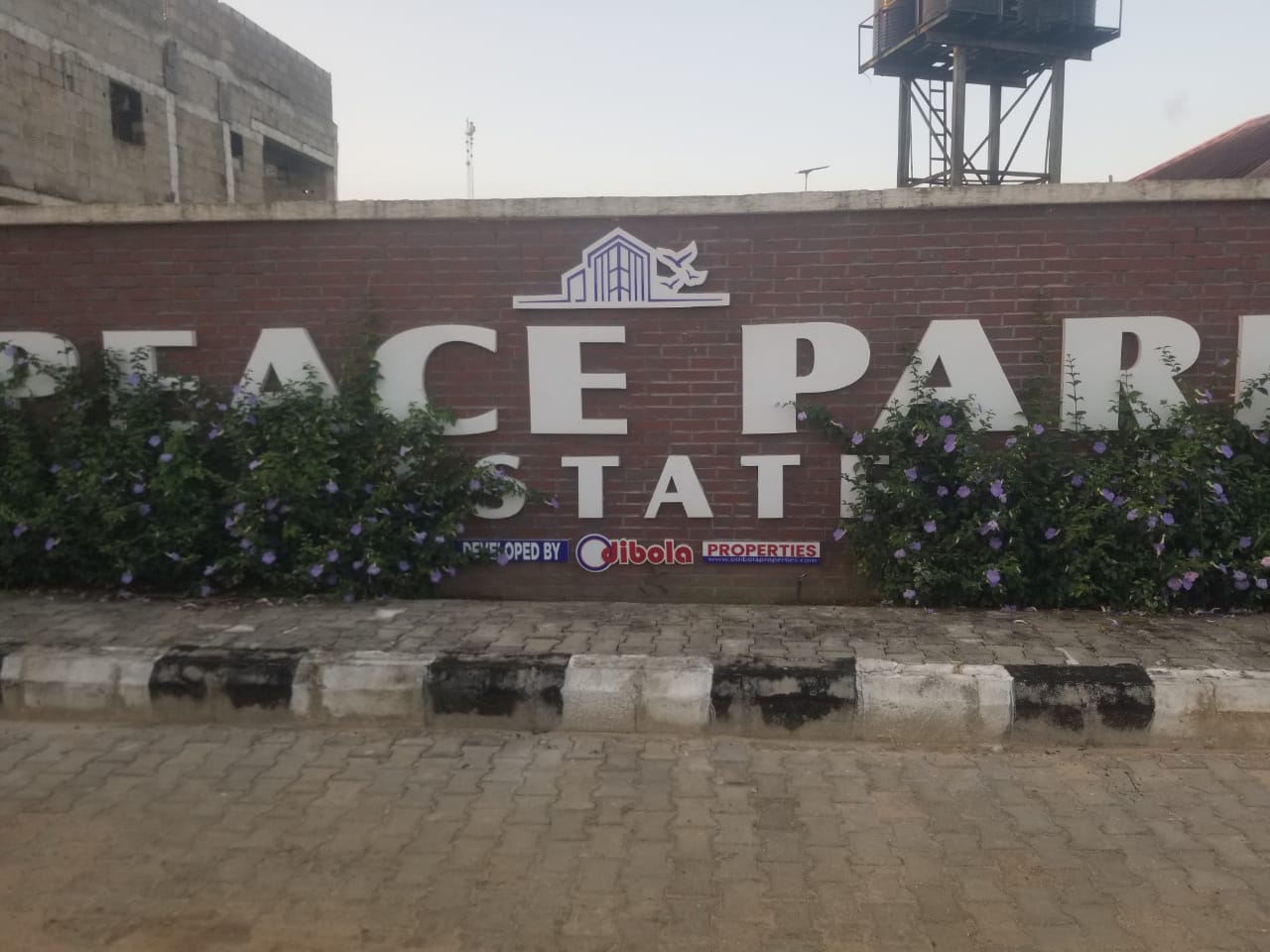
The Amaewhule family of mbodo Aluu in Ikwerre Local Government Area of Rivers State has cautioned members of the public against entering into any land transaction involving a disputed property known as “Ada Oro Fam Land,” located behind the OPM Church along Airport Road.
The family, through its legal counsel, Barrister Ndubuisi Agumagu, issued the warning amid an ongoing legal dispute over the ownership and control of the property, which is said to comprise more than 900 plots of land.
The matter is currently before the Isiokpo High Court of Rivers State in a suit numbered IHC/246/CS/2026, presided over by Justice Sobere Biambo.
The claimants in the suit include Chief Green Amaewhule and others, while Fabulous Amaewhule and Odibola Properties are listed among the respondents.
Counsel to the Amaewhule family, Barr Ndubuisi Agumagu, advised prospective land buyers and members of the public to exercise caution and refrain from purchasing any portion of the disputed property pending the determination of the case by the court.
According to the legal counsel, the property is a family estate belonging collectively to the Amaewhule family, and no individual member of the family has the authority to unilaterally dispose of portions of the land.
The counsel specifically maintained that Fabulous Amaewhule, one of the respondents in the suit, does not have the legitimate authority, according to the family’s position before the court, to sell portions of the disputed property.
The family further warned that anyone who proceeds to purchase land from the respondents while the matter remains before the court would be doing so at their own risk.
It stressed that such buyers could potentially lose their investments should the court eventually deliver judgment against the validity of the transactions.
The legal team said the warning became necessary to prevent unsuspecting members of the public from committing their resources to a property whose ownership and right of disposition are currently the subject of judicial determination.
The family also urged prospective investors, developers and land buyers to conduct proper legal inquiries and obtain independent verification of the status of the property before committing funds to any transaction relating to it.
The Amaewhule family said its position was intended to protect members of the public from possible financial losses and further legal complications while the case remains sub judice, stressing that interested parties should await the final determination of the court.
Akujobi Amadi