
Nation
THE STATES

Adamawa
The Minister of State for Foreign Affairs, Dr. Nurudeen Muhammed has appealed to traditional rulers to join the Federal Government’s renewed effort in the fight against human trafficking and child labour.
Muhammed made the appeal on last Thursday in Yola when he paid an advocacy visit to Lamido of Adamawa, Alhaji Barkindo Mustapha, in his palace.
He said that traditional rulers had a vital role to play in the campaign against human trafficking and child labour in view of their positions in the society.
The Minister said that checking the menace of human trafficking and child labour was one of the protocol endorsed by ECOWAS Heads of Governments.
Mustapha urged government to always carry the tradit
Benue
The Benue Commissioner of Police, Mr John Haruna,has warned politicians in the state against acts capable of breaching the peace.
Haruna handed down the warning in Makurdi while briefing newsmen on the activities of the command in combating crime in the state.
He warned that the police would deal decisively with any politician who engages in nefarious activities to promote selfish and divisive interest.
The commissioner said that policemen had been deployed to identified flashpoints and on the highways to contain criminal activities and road accidents.
Haruna lamented that the state was almost “being consumed in cultism”, and announced plans by security agencies to curtail the menace, including the perennial clashes between farmers and cattle rearers.
FCT
Bwari Area Council has expressed its determination to sanitise the area through recycling of waste and wealth generation.
Mr. Haruna Labaran, the Head of Department of Environment in the council, told newsmen in Bwari, FCT, that the exercise would cover Ushafa, Dutse, Kubwa, Dei-dei, Dawaki and Mpape.
He said the decision to recycle waste was informed by the reckless manner people went about the collection, transportation and disposal of waste without regard to environmental health standard.
According to him, poor environmental standard is responsible for up to 75 per cent of the diseases that are ordinarily preventable.
The head of department urged residents to comply with the directive, noting that the exercise would open up the area for economic activities and development.
Gombe
Ibrahim Dankwambo of Gombe State Governor has presented a budget of N93.3 billion to the state House of Assembly for the 2012 fiscal year against its N79.4 billion for the 2011 fiscal year.
Presenting the budget, tagged “Budget of Reality”, the governor said that the budget would be financed from a total revenue of N50 billion.
He said that the government hoped to collect N4.6 billion as Internally Generated Revenue (IGR), while N40 billion was estimated to be from statutory allocation.
Dankwambo added that N3.4 billion would come from excess crude oil, N1 billion from the Nigerian National Petroleum Corporation (NNPC), N500 million from Exchange Rate Gain and N500 million from other sources.
He noted that the total budget deficit for the year would be N1 billion.
Jigawa
The newly established Federal University, Dutse, has admitted 350 students, the Vice-Chancellor, Prof. Jibrila Amin, has said.
Amin said during the foundation laying ceremony of Computer Laboratory Complex of the university that the school admitted 200 students as directed by the National Universities Commission (NUC).
He said the institution submitted 150 additional names to the Joint Admissions and Matriculation Board for harmonised admissions expected to be published soon.
Kano
The Federal Road Safety Corps (FRSC) says 280 persons were killed and 2,433 others injured in road traffic accidents in Kano State between January and December.
The Sector Commander, Mr Ahmed Kogari, told newsmen in Kano last Thursday that the figures resulted from 770 accidents during the period under review.
He said that there was a reduction in the accident figure this year compared with last year’s figure, which he did not give.
“We are able to achieve this through intensive public enlightenment campaigns, enforcement of traffic rules and regulations as well as continuous surveillance, monitoring and patrol activities.”
Kebbi
The National Programme on Immunisation (NPI), in Kebbi has identified cases of missed children on immunisation days as the major reason for emergence of fresh polio cases.
.This is contained in a statement signed by the Kebbi NPI Manager, Hajiya Saudatu Abdullahi and made available to newsmen in Birnin Kebbi.
The LGAs that had high percentage of missed children during immunisation included Gwandu 49.3 per cent, Jega 19.2 per cent, Maiyama 19.2 per cent, Arewa 16.6 per cent, Ngaski 14.3 per cent.
The state chairman of ALGON and Binrin Kebbi LGA, Alhaji Musa Dan-Ilela, blamed the programme for not including the councils at the initial stage.
Lagos
The Association of Senior Civil Servants of Nigeria (ASCSN) last Thursday cautioned labour leaders in political offices to guide against anything that would undermine industrial relations in the country.
Mr Solomon Onaghinon, Secretary General, ASCSN, stated this in an interview with newsmen in Lagos.
Onaghinon expressed worry that most labour leaders appointed into political offices, often get involved in negative means of settling industrial disputes.
Onaghinon said that such means of resolving disputes was against industrial relation practice and could weaken labour movement.
Oyo
The Kola Daisi Foundation (KDF) has donated an ambulance to the Kola Daisi Centre for Primary and Community Health being managed by the University College Hospital (UCH),Ibadan.
Speaking at the event in Yemetu, Ibadan, the Chairman of KDF, Prof. Niyi Osuntogun, said the ambulance would assist the health centre in conveying patients to the hospital during emergencies.
Osuntogun commended the founder of the centre, Chief Kola Daisi, saying his philanthropic activities were worth emulating.
“Wealthy Nigerians should emulate the good works Chief Kola Daisi has done in the course of rendering selfless service to humanity,’’ he said.
Plateau
The Plateau Government is to appoint caretaker committees for its local government councils in January preparatory to election, Mr. Alexander Mwolwus, Special Adviser to Governor Jonah Jang on Political Affairs, has said.
The tenure of the current council officials expires January 15, 2012, but the amended Electoral Act has yet to be passed into law.
“Since the tenure of the incumbent officials will lapse between Jan. 15 and 17, 2012, the governor shall have no alternative but to appoint caretaker committees that will take charge,’’ the official told newsmen in Jos.
Mwolwus explained that the new electoral law would empower the PLASIEC to conduct local council polls within 30 days.
He explained that the People’s Democratic Party (PDP) was already preparing for the election with its congresses beginning on Jan. 4.
Meanwhile, Mr Peter Daylop, Chairman, Plateau State Independent Electoral Commission (PLASIEC), has said that the Commission was still awaiting the new Electoral Act.
Sokoto
The Court of Appeal sitting in Sokoto has quashed the judgment of the Kebbi State Governorship Election Tribunal which nullified the election of Gov. Usman Dakingari.
Reacting to the verdict,Dakingari advised his supporters to be moderate in celebrating court’s judgment and called on the opposition parties to join his administration in moving the state forward.
Justice Laraba Mohammed, who led three other members of the tribunal, had on Nov. 13, nullified Dakingari’s election and ordered a fresh one within 90 days.
Justice Amiru Sanusi, who led four other Justices of the court, ruled in favour of Dakingari and set the judgment of the lower court aside.
Mr Ogene Nero, counsel to the CPC and its gubernatorial candidate, Alhaji Abubakar Gari-Malam, said they will appeal against the judgment at the Supreme Court.
The Kebbi State Chairman of the CPC, Alhaji Suleiman Nasiha, also said the party would appeal against the judgment within the 21 days stipulated by law.
Zamfara
Former Commissioner for Finance in Zamfara, Danbuba Mohammed says lack of focus on medium and long-term development plans by governments is responsible for socio-economic crisis in the country.
Mohammed made the statement in an interview with newsmen in Gusau shortly after Governor Abdulaziz Yari presented the state’s 2012 budget of N120.8 billion to the House of Assembly.
.He said the budget captured the essence of consistency and continuity in government policies, adding that it had also raised public hopes and expectations.
“This is the first time in several years that we are witnessing a medium-term development strategy captured in the budget with practicable ideas on how to actualise the plan for concrete development.’’



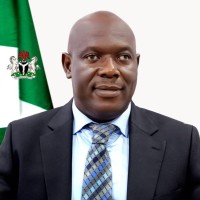
The Hydrocarbon Pollution Remediation Project (HYPREP) has commemorated the 15th anniversary of the release of the United Nations Environment Programme (UNEP) Environmental Assessment Report on Ogoniland, reaffirming its commitment to restoring the environment and improving the livelihoods of affected communities.
In a statement signed by the Project Coordinator, Prof Nenibarini Zabbey, to commemorate the anniversary, HYPREP described the anniversary as a significant milestone in Nigeria’s environmental restoration efforts, noting that the project has made remarkable progress in implementing the recommendations of the landmark UNEP report released on August 4, 2011.
The UNEP report had revealed extensive oil pollution across Ogoniland, severe environmental degradation, and serious public health risks resulting from decades of petroleum operations. It also recommended an initial $1 billion fund to commence the cleanup of the affected communities.
According to HYPREP, the Federal Government formally launched the Ogoni clean-up in 2016, while the Project Coordination Office was established in 2017 to drive the implementation of UNEP’s recommendations.
Zabbey said the current administration has continued to prioritise the project under the Renewed Hope Agenda.
Providing an update on the cleanup, the Project Coordinator disclosed that 30 of the 65 contaminated sites identified by UNEP have been fully remediated, while work is ongoing at several medium- and high-risk locations. It also stated that more than 1.5 million mangrove seedlings have been planted as part of what it described as the world’s largest restoration of oil-degraded mangroves, with over 1,000 hectares of shoreline already rehabilitated.
Zabbey further revealed that 49 Ogoni communities have been connected to potable water schemes through multiple water projects and booster stations aimed at providing safe drinking water across the region.
In the health sector, he said the 100-bed Ogoni Specialist Hospital in Kpite and the 43-bed Cottage Hospital in Buan are nearing completion, adding that several existing health facilities have been upgraded with modern medical equipment, while five ambulances have been donated to improve emergency healthcare services. The Project Coordinator also disclosed that a three-year human health biomonitoring study is being conducted in collaboration with the World Health Organization’s International Agency for Research on Cancer (IARC).
On economic empowerment, Zabbey stated that the Project has created more than 8,000 direct jobs and trained thousands of Ogoni youths and women in various vocational and technical skills, including software development, cybersecurity, aviation, commercial diving, seafaring, mechatronics, and creative arts. The project also reported awarding scholarships to more than 1,000 students, providing grants to small businesses, and supporting persons living with special needs through skills acquisition programmes.
The statement further highlighted ongoing legacy projects, including the Ogoni Power Project and the Centre of Excellence for Environmental Restoration, which it said is about 96 per cent complete. HYPREP also welcomed the recent designation of the Ogoni Wetland as a Ramsar Site of International Importance and pledged to continue promoting biodiversity conservation and sustainable management of the ecosystem.
Marking the anniversary, Zabbey said the progress achieved over the past 15 years demonstrates the collective commitment of government, development partners, stakeholders, and local communities to restoring Ogoniland. He called for renewed collaboration to sustain the cleanup effort, promote environmental sustainability, and support the long-term development of the region. 3
-

 News2 days ago
RSG Targets Nine Million Residents in Mosquito Net Distribution Campaign
-

 Oil & Energy1 day ago
Aiyedatiwa Signs New Electricity Bill
-

 Oil & Energy1 day ago
NLNG Commissions Research And Innovation Centre In RSU
-

 Maritime1 day ago
Marine Minister Commends President Tinubu On NPERA Bill Assent
-

 News2 days ago
KenPoly Holds Eight Convocations, August 29
-

 News2 days ago
RSG Begins Another Phase of Projects Commissioning Today
-

 News2 days ago
RMAFC Completes Revenue Sharing Review, Proposes New Pay
-

 Maritime1 day ago
NAGAFF Petitions IGP Over Alleged Maritime Police Harassment